Tag

Biosphere

All articles tagged with #biosphere

Earth’s Last Green Era Could End in About 1.9 Billion Years
science6 days ago

Earth’s Last Green Era Could End in About 1.9 Billion Years

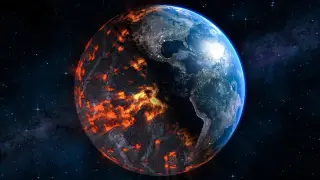
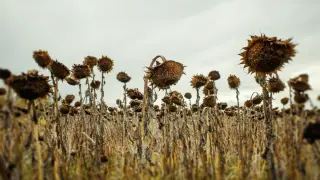
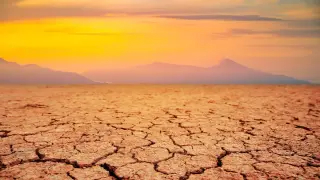
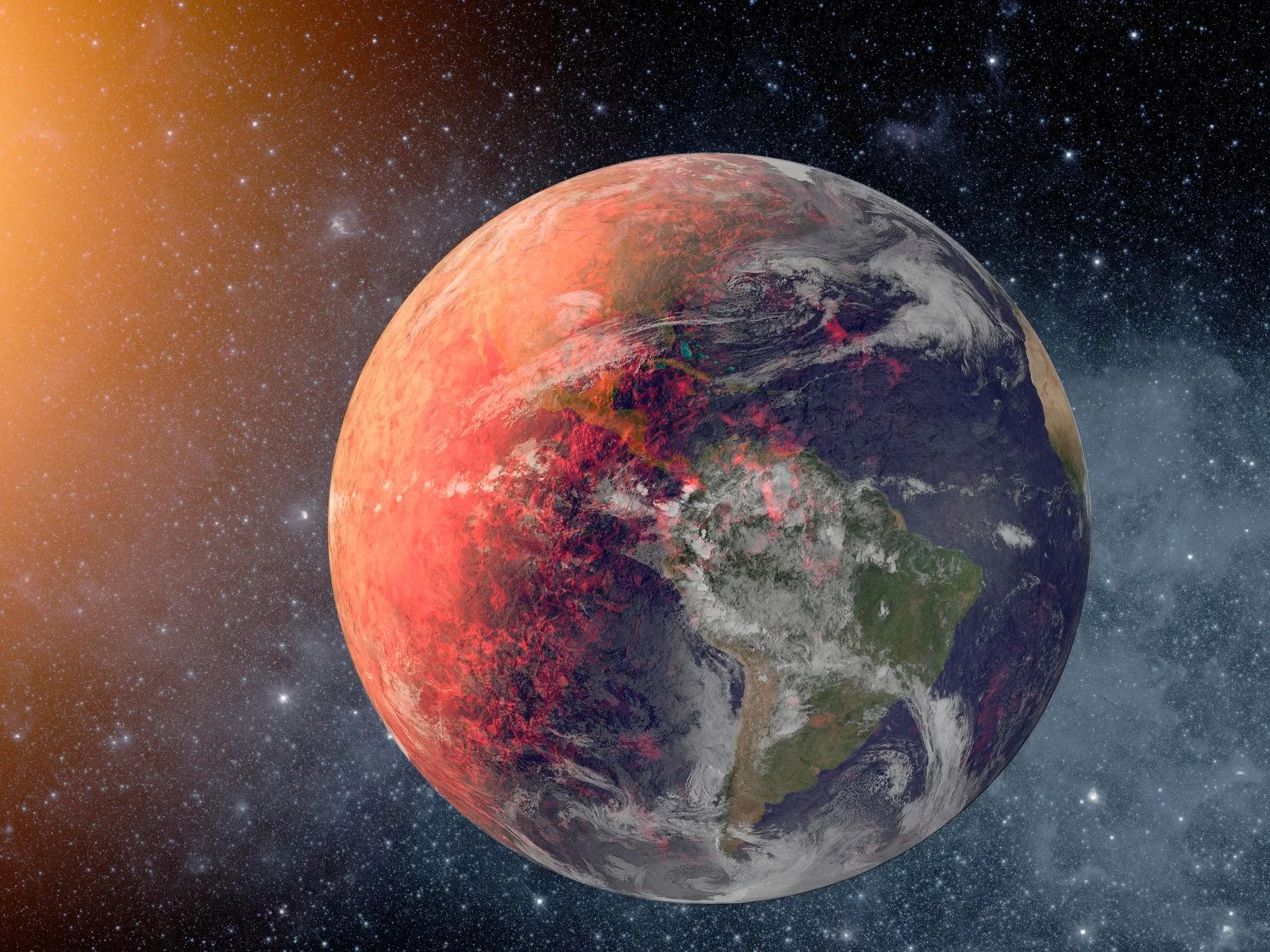
A 3D climate-model study projects that Earth's vegetative biosphere could persist for about 1.84–1.87 billion years as the Sun brightens. Depending on how the carbonate-silicate weathering cycle responds to warming, CO2 may steadily drop and starve plants (strong weathering) or temperatures could climb to around 65°C (weak weathering), placing the maximum plant lifetime at roughly 1.87 billion years. The researchers note that evolution, future technology, or geoengineering could extend this, potentially making the biosphere’s lifetime similar to the duration of Earth’s oceans.

Earth Could Host Life For 1.8 Billion More Years Amid Sun's Brightening, Study Says
science9 days ago

Earth Could Host Life For 1.8 Billion More Years Amid Sun's Brightening, Study Says

A study using 29 climate models suggests Earth's vegetative biosphere could persist about 1.8 billion years longer as the Sun brightens, delaying ocean loss and food-web collapse. The work highlights plant strategies that tolerate warming and lower CO2, implying the biosphere could adapt to future conditions, though exact evolutionary outcomes remain uncertain.

Earth’s life could endure 1.8 billion more years as the sun brightens
science10 days ago

Earth’s life could endure 1.8 billion more years as the sun brightens

A new study in Journal of Geophysical Research Atmospheres, using 29 climate models, suggests Earth’s vegetative biosphere could persist for about 1.8 billion years as the Sun brightens and oceans are lost, extending far beyond earlier estimates. The researchers account for varying CO2 levels and plant types (including CAM plants like succulents and orchids) and emphasize that this is a broad projection; evolutionary adaptations could further extend or shorten life’s persistence. The work refines understanding of biosphere longevity and has implications for studying habitability on other worlds.

Three Cosmic Hurdles Keeping Aliens From Visiting Earth
science1 month ago

Three Cosmic Hurdles Keeping Aliens From Visiting Earth

Although recent UAP releases and a Steven Spielberg film spark talk of extraterrestrials, the piece argues aliens may exist but probably haven’t visited Earth due to three factors: the vastness of space makes interstellar travel impractical within lifetimes, time dilation complicates near-light-speed journeys, and the enormous energy and radiation challenges such travel would entail; Earth’s unique biosphere may also pose a difficult destination for any visiting civilization. Even with thousands of exoplanets and potential microbial life on places like Mars, Europa, Enceladus, or Titan, there’s no confirmed evidence of intelligent life, and SETI searches remain inconclusive.

Majority of Earth's Land Now Outside Safe Environmental Limits
environment10 months ago

Majority of Earth's Land Now Outside Safe Environmental Limits

A new study reveals that 60% of Earth's land has exceeded safe ecological limits, primarily due to human activity like land conversion and biomass use, with significant impacts on climate and ecosystems, especially in Europe, Asia, and North America. The research emphasizes the urgent need for global biosphere protection and integrated climate policies.

"Biology and Technology: Comparing Information Transmission Speed"
science-and-technology2 years ago

"Biology and Technology: Comparing Information Transmission Speed"

A study led by astrophysicist Manasvi Lingam estimates that the biosphere, the sum total of Earth's life, currently moves more information per second than the technosphere, the sum total of human technology. By 2113, however, the rapid expansion of digital technology is projected to surpass the biosphere in terms of information transfer. This raises questions about the implications for the evolution of our species and the planet, highlighting the power of a global perspective on information and life.

"The Rise of Non-Biological Communication: Earth's Future in 2120"
science-and-technology2 years ago

"The Rise of Non-Biological Communication: Earth's Future in 2120"

The rate of data exchange between living organisms on Earth is estimated to be about 10^24 bits per second, while the rate of digital data exchange by humans is about 10^15 bits per second. However, the exponential growth of our digital data could soon surpass the biosphere's data exchange rate. If this trend is typical for advanced civilizations, the dominant form of communication on other planets may be technological rather than biological. This could have significant consequences for non-human life and our search for alien civilizations.

"Unveiling the Mystery of 'Dark Oxygen': Underground Cells Produce Oxygen in Absence of Light"
science3 years ago

"Unveiling the Mystery of 'Dark Oxygen': Underground Cells Produce Oxygen in Absence of Light"

Researchers have discovered that underground microbes are capable of producing oxygen through a process called dismutation, challenging previous assumptions about the sources of dissolved oxygen in groundwater. By breaking down nitrites, these microbes generate oxygen that can leak out of their cells and benefit other oxygen-dependent organisms. This finding not only sheds light on the evolution of the subterranean biosphere but also has implications for understanding the potential for life in other environments, such as Mars and Jupiter's moon Europa. The discovery highlights the need to reevaluate our understanding of life's requirements and the vastness of Earth's biosphere.

film-review3 years ago

"Biosphere: A Hidden Gem of 2023 Cinema"

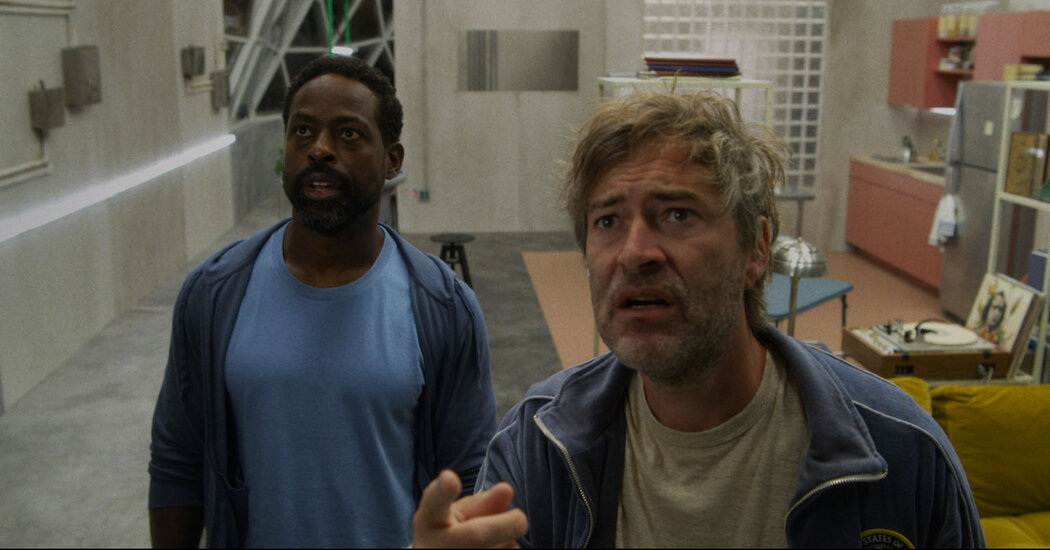
"Biosphere" is a lopsided sci-fi parable that falls short due to grating dialogue and a stagey feel. The film follows two men trapped in a biodome running out of food, with one of them undergoing intersex changes. The movie explores their shifting relationship and philosophical differences but fails to develop their characters beyond surface-level traits. The dialogue is filled with hand-holding and armchair psychology, overshadowing the potential exploration of their evolving bond. While the film offers a fantasy of what could be, it ultimately lacks depth and relies on slapstick comedy.

"Biosphere: A Gripping Sci-Fi Indie with Two Survivors in a Post-Apocalyptic World"
movies3 years ago

"Biosphere: A Gripping Sci-Fi Indie with Two Survivors in a Post-Apocalyptic World"

In the film "Biosphere," directed by Mel Eslyn, two childhood friends, Billy (played by Mark Duplass) and Ray (played by Sterling K. Brown), are the only survivors after Billy, a petulant and anti-intellectual former president, destroys the planet. The movie explores their relationship and the challenges they face in a geodesic dome as they confront their past and contemplate the possibility of change. While the film balances comedy and drama, it also raises questions about the potential for human evolution and the consequences of bad governance.

Earth's Limits Breached: Urgent Need for Safer and Fairer Future.
environment3 years ago

Earth's Limits Breached: Urgent Need for Safer and Fairer Future.

An international team of scientists from the Earth Commission has identified eight “safe” and “just” boundaries spanning five vital planetary systems: climate change, the biosphere, freshwater, nutrient use in fertilisers and air pollution. Humanity has exceeded the safe and just limits for four of five systems, with aerosol pollution being the sole exception. Urgent action, based on the best available science, is now needed to return our planetary systems back within safe and just boundaries through just means.