Tag

Curtin University

All articles tagged with #curtin university

Curtin University Review Links Type 2 Diabetes to 53% Higher Alzheimer’s Risk
health-and-medicine4 days ago

Curtin University Review Links Type 2 Diabetes to 53% Higher Alzheimer’s Risk

A systematic review of 40 studies finds that people with type 2 diabetes have a 53% higher risk of developing Alzheimer’s disease, with an estimated incidence of 4.7 new cases per 1,000 person-years. The study, led by Dr. Emmanuel Adewuyi at Curtin University, distinguishes this association from causation and highlights that administrative claims data likely undercount cases compared to clinical diagnoses. While geographic and medication variations exist, the findings suggest a significant burden of Alzheimer’s among diabetic populations, prompting calls for better risk stratification in healthcare systems.
Chemical Fingerprint Vanishes 2.5 Billion Years Ago, Marking Start of Plate Tectonics
science12 days ago

Chemical Fingerprint Vanishes 2.5 Billion Years Ago, Marking Start of Plate Tectonics

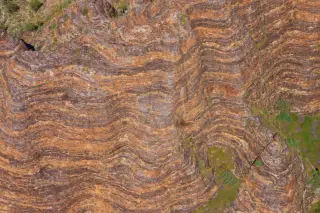
Researchers at Curtin University have identified a distinct chemical fingerprint in over 1,200 ancient rocks that abruptly disappears around 2.5 billion years ago. This vanishing signature suggests a fundamental shift in how Earth formed its crust, marking the likely onset of modern plate tectonics. The finding provides the clearest geological evidence yet for when Earth’s dynamic geological engine activated, distinguishing it from stagnant planets like Mars and Venus.

Lead Isotope Data Pinpoints 2.6 Billion-Year-Old Shift in Earth's Crust Recycling
science14 days ago

Lead Isotope Data Pinpoints 2.6 Billion-Year-Old Shift in Earth's Crust Recycling

Researchers at Curtin University have identified a distinct chemical fingerprint in ancient rocks that vanished approximately 2.6 billion years ago, marking a pivotal shift in how Earth formed its crust. By analyzing lead isotopes in over 1,200 rock samples, the team found that a specific signature, present in rocks older than 2.63 billion years, abruptly disappeared, suggesting a transition from localized crustal reworking to large-scale recycling. This finding offers the clearest geological evidence yet for when modern plate tectonics began, distinguishing Earth from tectonically inactive planets like Mars and Venus.

Lead Isotopes Reveal Earth’s Tectonic Engine Switched On 2.7 Billion Years Ago
science15 days ago

Lead Isotopes Reveal Earth’s Tectonic Engine Switched On 2.7 Billion Years Ago

Researchers identified a distinct chemical fingerprint in ancient rocks that vanished approximately 2.7 billion years ago, suggesting a major shift in how Earth formed its crust. This abrupt change likely marks the onset of modern plate tectonics, which regulates climate and shapes continents. The discovery provides the clearest geological evidence yet for when Earth’s dynamic geological engine activated, distinguishing it from stagnant planets like Mars and Venus.

Chemical Analysis Confirms Heme in 115-Million-Year-Old Dinosaur Bone
science23 days ago

Chemical Analysis Confirms Heme in 115-Million-Year-Old Dinosaur Bone

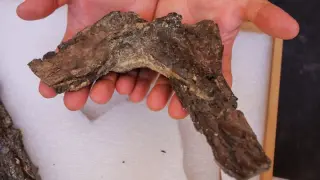
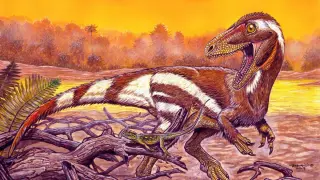
Researchers have identified the strongest evidence yet of preserved red blood cells in a 115-million-year-old dinosaur fossil. By combining microscopic imaging with chemical analysis, the team detected heme, a key component of hemoglobin, within the bone of Aratasaurus museunacionali. While this discovery challenges previous assumptions about molecular preservation, experts remain divided on whether the structures are genuine blood cells or artifacts of fossilization.

Chemical Analysis Confirms Heme in 115-Million-Year-Old Dinosaur Bone
science24 days ago

Chemical Analysis Confirms Heme in 115-Million-Year-Old Dinosaur Bone

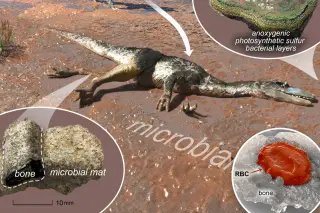
A study published in the Proceedings of the National Academy of Sciences reports the first chemical confirmation of heme, a key component of hemoglobin, within the fossilized vascular canals of a 115-million-year-old dinosaur. Researchers from Curtin University analyzed a juvenile Aratasaurus museunacionali leg bone recovered from Brazil in 2008. The findings suggest that specific mineralization processes, particularly involving manganese oxide, may have preserved delicate cellular structures and biomolecules for over a hundred million years, challenging previous assumptions about the limits of molecular preservation in fossils.

Chemical Analysis Confirms Heme in 115-Million-Year-Old Dinosaur Bone
science24 days ago

Chemical Analysis Confirms Heme in 115-Million-Year-Old Dinosaur Bone

Researchers at Curtin University have identified fossilized red blood cells and heme molecules in the leg bones of a 115-million-year-old Aratasaurus museunacionali from Brazil. Published in the Proceedings of the National Academy of Sciences, the study uses chemical and microscopic evidence to confirm these structures are biological remnants, not contamination. The preservation is attributed to rapid burial in a low-oxygen, microbe-rich environment where manganese compounds stabilized the tissue. This finding challenges previous assumptions that soft tissues and blood molecules cannot survive deep time, suggesting museum collections may hold untapped molecular data.

health1 month ago

Muscle Loss, Not Weight, Shows Strongest Link to Dementia Risk in New Review

A systematic review of over 80 studies finds that sarcopenia, or age-related muscle loss, is associated with a 42% higher risk of dementia, a stronger link than obesity. While obesity raises risk in middle age, it is linked to a 17% lower risk in those over 65, suggesting complex age-dependent relationships. Researchers emphasize maintaining muscle strength through activity and nutrition as a key strategy for healthy aging and cognitive protection.

"Unveiling Secrets of Ancient Supernova Stardust in Meteorites"
astronomy2 years ago

"Unveiling Secrets of Ancient Supernova Stardust in Meteorites"

Researchers at Curtin University have discovered a rare dust particle in an ancient meteorite, formed by a star other than our sun, using a technique called atom probe tomography. The particle has an exceptionally high isotopic ratio of magnesium, indicating formation in a recently discovered type of star—a hydrogen burning supernova. This discovery, detailed in the Astrophysical Journal, provides insights into cosmic events beyond our solar system and pushes the boundaries of both analytical techniques and astrophysical models.

"Newly Discovered Supernova Remnant Unveiled by Astronomers"
astronomy2 years ago

"Newly Discovered Supernova Remnant Unveiled by Astronomers"

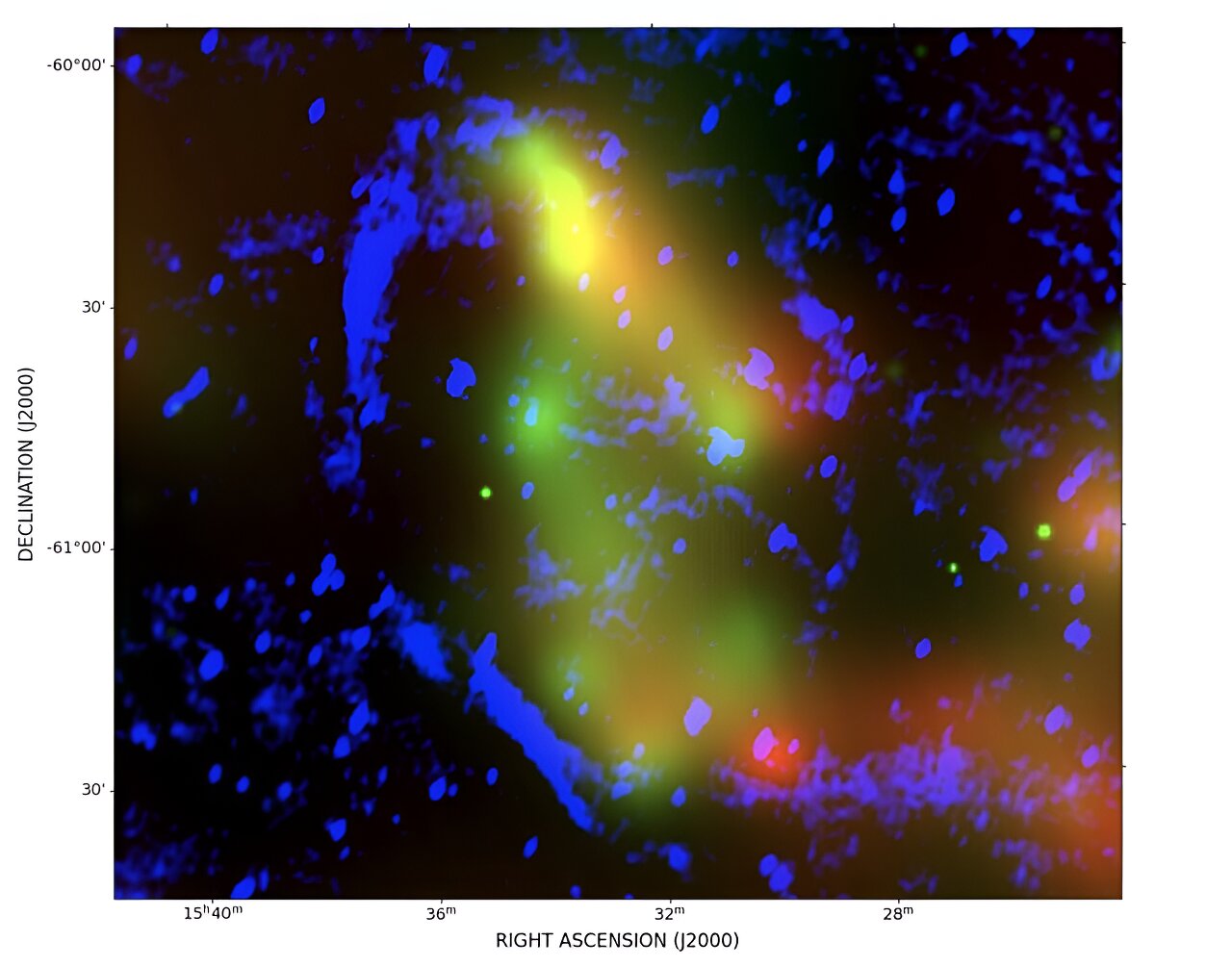
Astronomers from Curtin University and other institutions have discovered a new supernova remnant (SNR) named G321.3-3.9, located 3,300 light years away. The elliptical SNR is estimated to be a few thousand years old and was confirmed using radio and X-ray data. The SNR's distance, diameter, and age were estimated, but uncertainties remain due to limited data. Further observations are planned to search for a pulsar association, which could provide more accurate measurements of the SNR's properties.

"Revealing the Enigma: Unraveling Earth's Deepest Gemstone"
science-and-technology3 years ago

"Revealing the Enigma: Unraveling Earth's Deepest Gemstone"

Scientists from Curtin University have discovered the missing ingredient in the formation of pink diamonds by studying the Argyle volcano in Western Australia. In addition to deep carbon and tectonic plate collisions, the stretching of continents during continental break-ups creates pathways for diamond-bearing magma to rise to the Earth's surface. The researchers found that the stretching of landmasses created gaps in the Earth's crust, allowing diamond-carrying magma to emerge. This discovery could aid in the search for new pink diamond deposits worldwide. The Argyle volcano, which has produced over 90% of the world's pink diamonds, is situated at the suture of two ancient continents, making it a unique source of these rare gems.