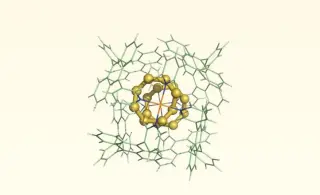
Researchers have detected elemental sulfur in mammalian cells for the first time, revealing that human and mouse cells actively produce S8 rings to limit oxidative damage. This finding challenges previous assumptions that only bacteria, plants, and fungi utilize elemental sulfur, suggesting a new metabolic pathway in mammals.
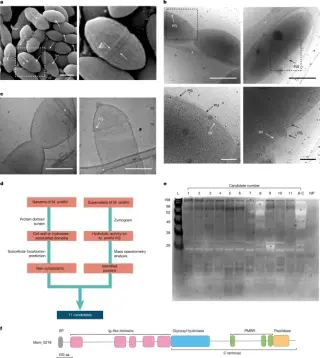
Researchers have identified ArmA, a new enzyme from the gut methanogen Methanobrevibacter smithii, which acts as the first specific hydrolase for archaeal peptidoglycan. By digesting this cell wall component, scientists revealed a previously unknown structure involving a novel sugar called N-acetylarmosamine. This discovery overturns a 50-year-old model of archaeal cell walls and provides a critical tool for studying methanogen biology, similar to how muramidases are used for bacteria.
Researchers gamma-sterilized soil, sealed it in jars, and observed oxygen consumption and carbon-dioxide production for six years despite no living cells, suggesting metabolism-like chemistry can persist without life and offering clues about prebiotic processes.
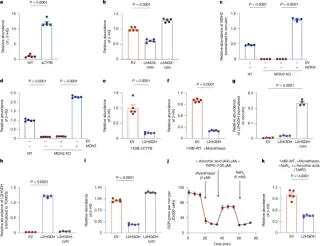
A Nature study shows mitochondrial l-2-hydroxyglutarate (l-2-HG) acts as a physiological signaling metabolite rather than a mere toxin. An elevated mitochondrial NADH/NAD+ ratio drives MDH2 to reduce 2-OG to l-2-HG; mitochondrial L2HGDH then oxidizes l-2-HG back to 2-OG without requiring a functional electron transport chain. Proteome-wide assays identify the KDM4 family of H3K9 demethylases as l-2-HG targets, linking the metabolite to repression of specific nascent transcripts and increased H3K9me3 at particular loci in mouse embryonic stem cells. In vivo, forcing L2HGDH expression lowers l-2-HG, impairs postnatal growth, increases mortality, and reveals selective renal vulnerabilities; in kidneys, reduced l-2-HG correlates with loss of H3K9me3 at L1MdTf retrotransposons and activation of stress/inflammation pathways. Together, these results establish mitochondrial l-2-HG as a regulated signaling metabolite with tangible physiological and epigenetic effects.
Mukhammad Aziz Umurzokov, an aspiring brain surgeon and talented musician, was among the victims of a shooting at Brown University, where he was attending a study session with friends when the gunman opened fire, resulting in two deaths and nine injuries.
Scientists in Taiwan have developed a new biochemical pathway called the McG Cycle that significantly enhances plant growth and carbon fixation, with potential applications in forestry, agriculture, and climate change mitigation, though it raises ecological and ethical concerns.
A new study suggests that simple chemical processes may explain how proteins, essential for life, first formed on Earth, shedding light on the origin of life.
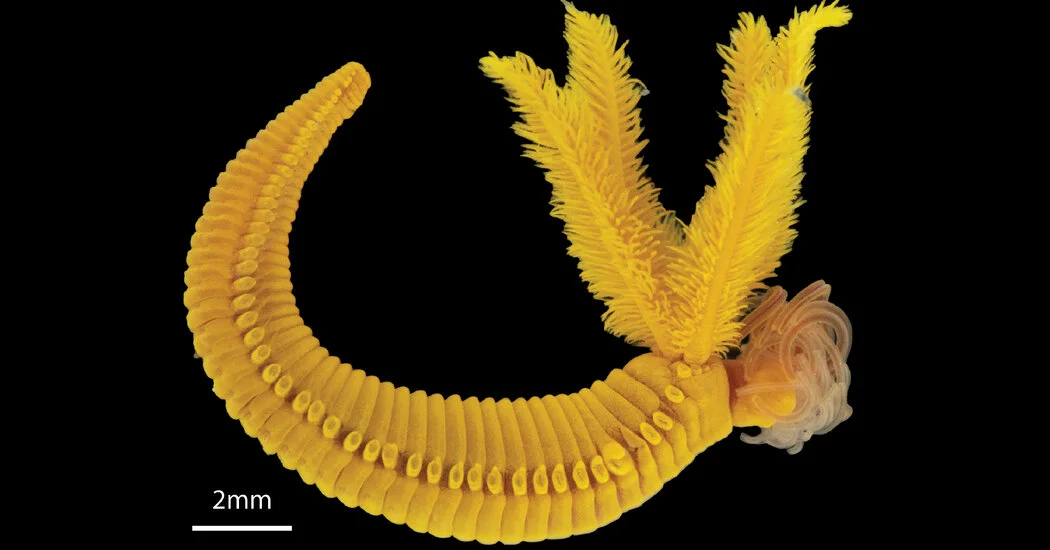
A deep-sea polychaete worm, Paralvinella hessleri, survives high arsenic levels by converting it into a less toxic mineral through a process that combines arsenic with sulfide, revealing a novel biological adaptation to extreme environments.
Researchers at the University of California San Diego have discovered a potential mechanism for the formation of early Earth protocells, which could explain the origins of life. The study, published in Nature Chemistry, reveals that simple molecules like cysteine and short-chain choline thioesters can spontaneously form lipid membranes when catalyzed by silica glass. This process, which does not require enzymes, could have led to the creation of protocell-like structures capable of sustaining biochemical reactions, offering insights into how life might have emerged from non-living matter.
Dr. Bengt Samuelsson, a Nobel Prize-winning biochemist known for his groundbreaking research on prostaglandins and related molecules that led to treatments for inflammation, glaucoma, and allergies, has died at 90 due to heart disease. His work at the Karolinska Institute significantly advanced the understanding of lipid mediators in the body.
Researchers from ELSI and CalTech have modeled the evolutionary history of metabolism, revealing that only eight new reactions are needed to bridge ancient geochemistry with modern biochemistry. This study, published in Nature Ecology & Evolution, highlights the cyclic nature of biochemical evolution and the critical role of ATP, suggesting that even extinct biochemical reactions can be rediscovered through modern biochemistry.
Researchers from ELSI and CalTech have modeled the evolutionary history of metabolism, revealing that only a few "forgotten" biochemical reactions are needed to transform simple geochemical compounds into complex molecules of life. By using the Kyoto Encyclopedia of Genes and Genomes database, they identified that modifying just eight reactions could bridge geochemistry and biochemistry, suggesting that even extinct reactions can be rediscovered from modern biochemical clues.
Researchers at the University of Wisconsin–Madison have developed a tool that allows them to program molecules to move around a cell to specific locations over time, essentially organizing and orchestrating cellular activities. By engineering interactions between specific proteins, they have created highly specified patterns to induce cellular behaviors and functions, offering potential for new treatments and the study of cellular activity in living organisms. This innovative tool has multiple potential uses for scientists interested in engineering specific cellular activities or studying cellular activity in a living organism.
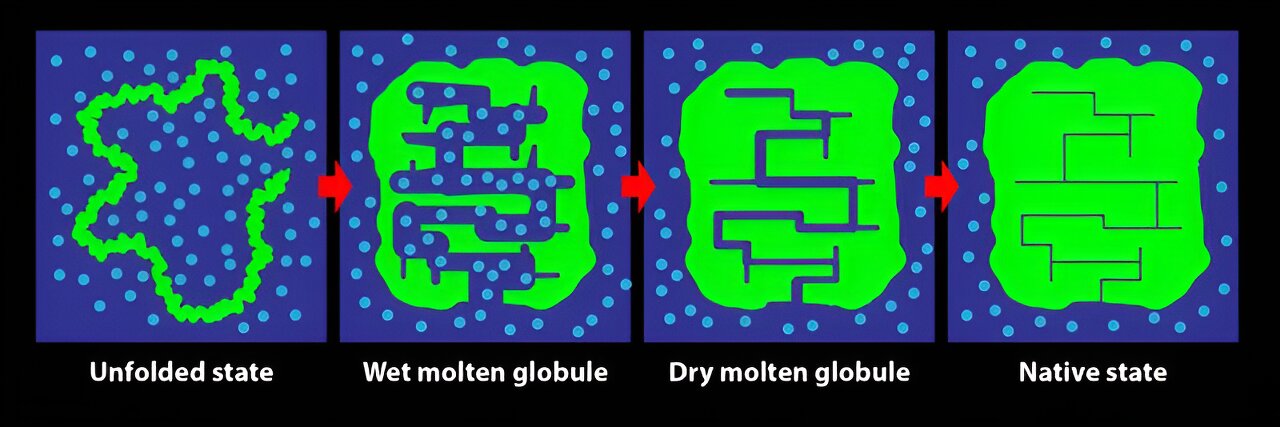
Scientists have discovered a new, intermediate state in the process of protein folding, showing that folding can occur in two stages, one fast and the next much slower. This newly observed dry molten globule state, occurring over a period of 3–10 milliseconds, was found to be a crucial step in the protein folding process. The discovery provides insight into the structural evolution of proteins and may have implications for understanding diseases related to protein misfolding.
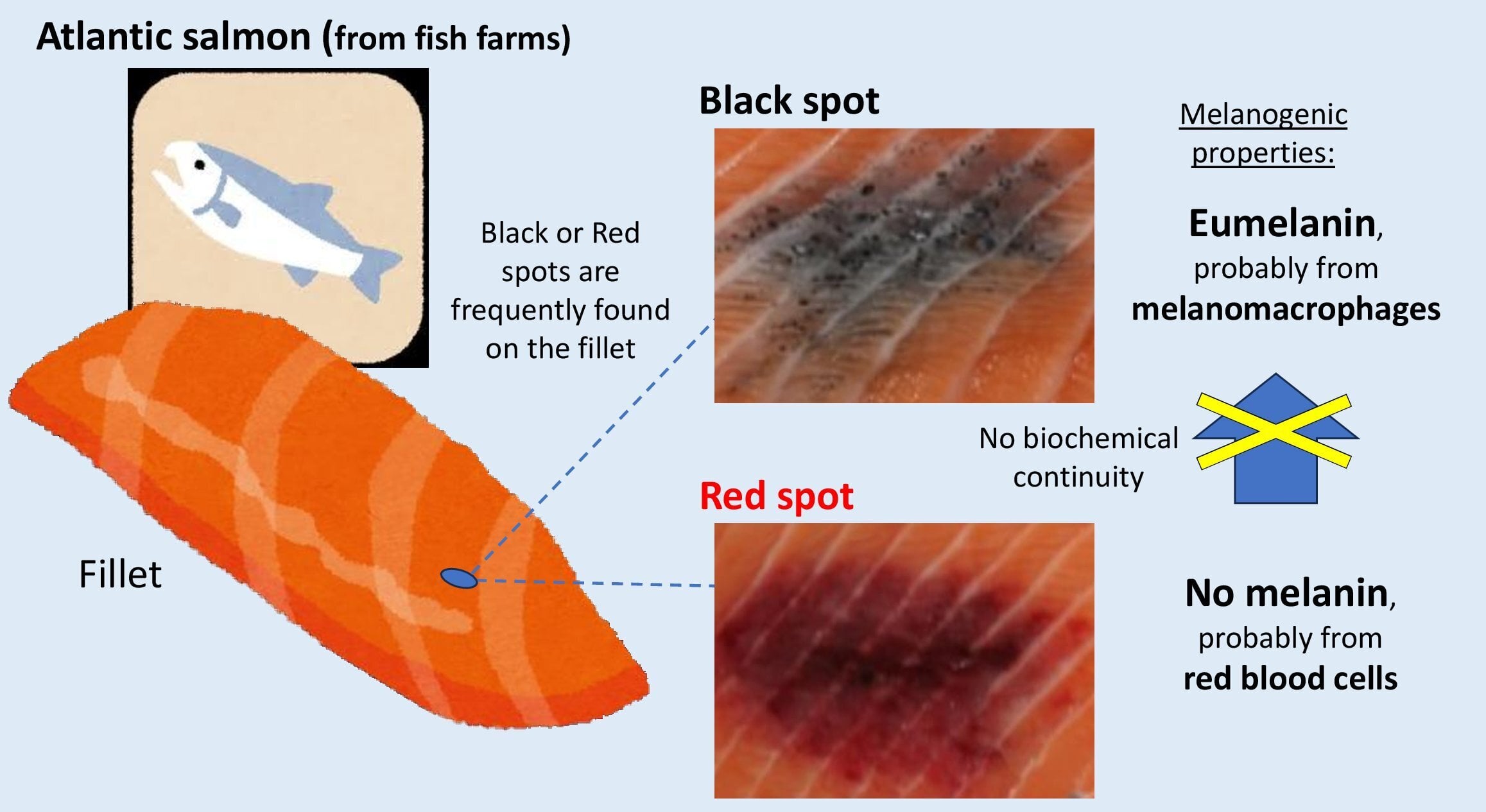
Researchers have found that black spots on reared Atlantic salmon filets contain eumelanin, while red spots do not detectably contain melanin, indicating different cellular origins for the two types of spots. The biochemical discontinuity between the red and black spots suggests that their pigments derive from distinct origins, namely red blood cells and melanomacrophages. This finding is an important step toward understanding the issue of discolorations on salmon filets, which has become a significant problem for commercial seafood farming, and may lead to further research to prevent these lesions.