Tag

Juice Mission

All articles tagged with #juice mission

Ganymede’s Vast Hidden Ocean Remains Sealed Beneath 150km of Ice
science2 months ago

Ganymede’s Vast Hidden Ocean Remains Sealed Beneath 150km of Ice

Jupiter’s largest moon, Ganymede, likely harbors a liquid water reservoir exceeding Earth’s total surface ocean volume, yet this vast body remains concealed beneath an estimated 150-kilometer ice shell. While magnetic data from Galileo and Hubble confirm the ocean’s existence, no direct evidence proves it has ever reached the surface. Upcoming ESA missions will probe the ice’s structure but will not drill into the water, leaving the question of surface-ocean exchange unresolved.
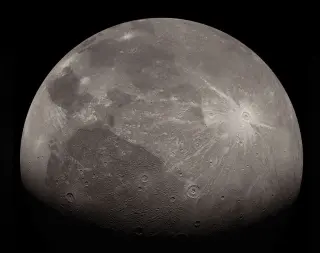

Ganymede: The Moon That Defies Planetary Definitions
science3 months ago

Ganymede: The Moon That Defies Planetary Definitions

Jupiter's largest moon, Ganymede, possesses a diameter exceeding that of Mercury, a differentiated internal structure, and its own magnetic field, challenging traditional distinctions between moons and planets. While it orbits Jupiter rather than the Sun, its physical complexity suggests it functions as a full-sized world. Upcoming ESA missions aim to investigate its subsurface oceans and magnetic dynamo, which may hold more water than Earth's surface.

Juice mission spots interstellar comet 3I/ATLAS to sharpen Earth's distant-asteroid warning
science7 months ago

Juice mission spots interstellar comet 3I/ATLAS to sharpen Earth's distant-asteroid warning

ESA's Juice spacecraft imaged interstellar comet 3I/ATLAS as it skimmed the Sun, illustrating how deep-space observations can reveal distant objects not visible from Earth and improve early warning by refining their orbits, a capability that complements Earth-based tracking and planetary-defense efforts.

JUICE Captures 120+ Images of Interstellar Comet 3I/ATLAS Near the Sun
space8 months ago

JUICE Captures 120+ Images of Interstellar Comet 3I/ATLAS Near the Sun

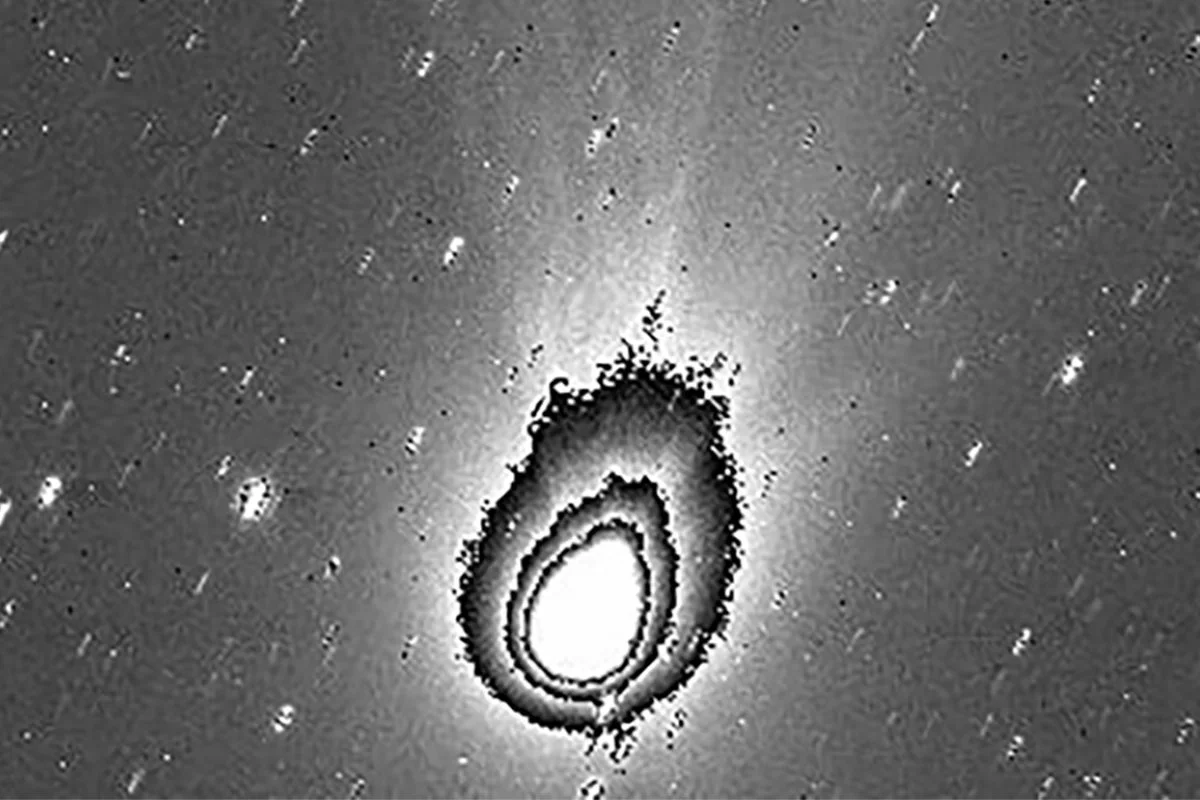
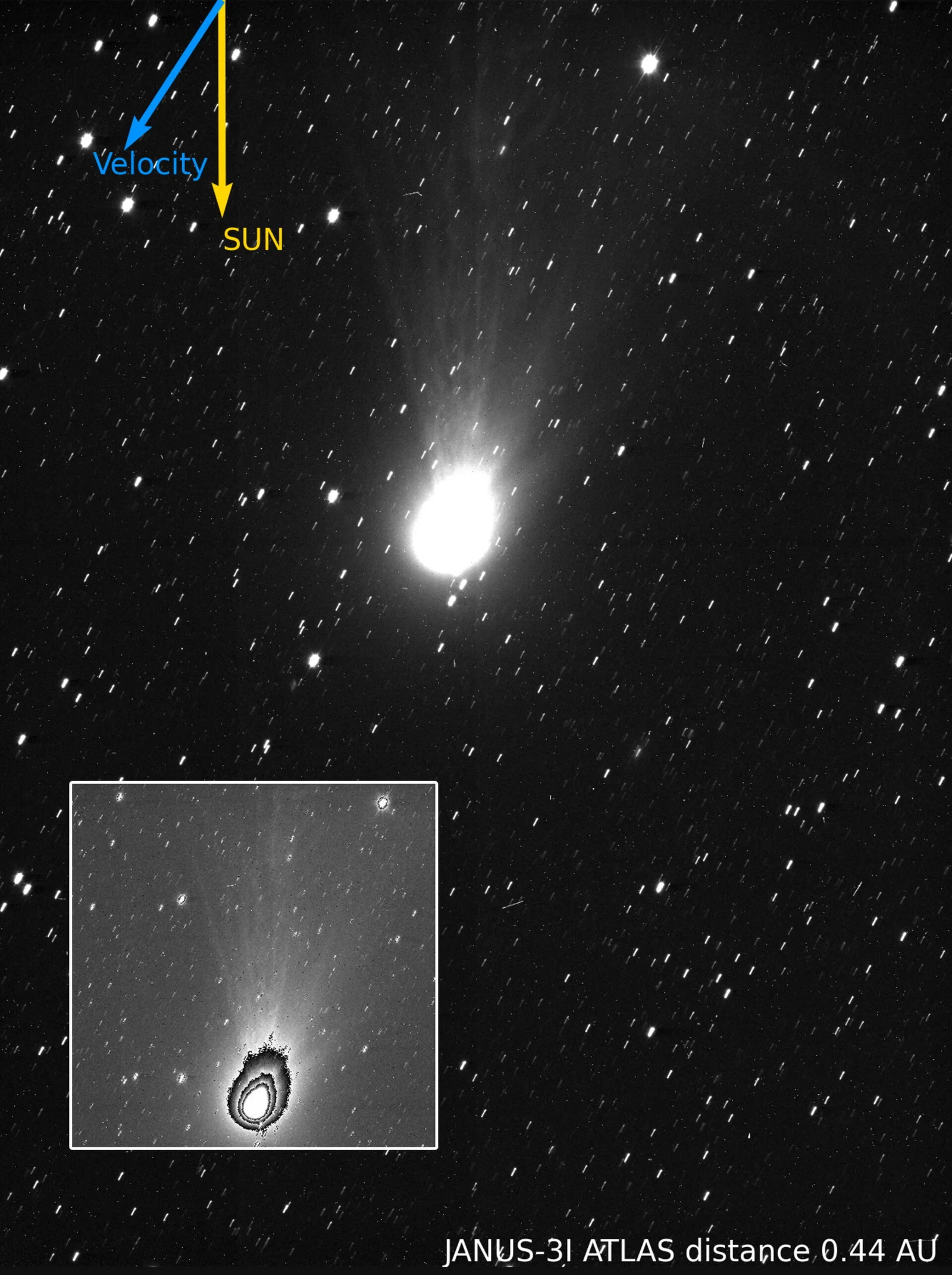
ESA's JUICE spacecraft captured over 120 JANUS images of interstellar comet 3I/ATLAS on 6 November 2025, revealing a bright coma, a long tail and jets as it passed about 66 million km from the Sun; five of JUICE's instruments (JANUS, MAJIS, SWI, PEP, UVS) gathered data to study the comet’s composition and behavior, with teams continuing analysis as data are processed.

Juice space camera captures interstellar comet 3I/ATLAS in vivid detail
space9 months ago

Juice space camera captures interstellar comet 3I/ATLAS in vivid detail

ESA's Juice mission captured the first image of interstellar comet 3I/ATLAS with its JANUS camera, showing the coma and a long tail seven days after perihelion as Juice sat about 66 million km away. Five instruments (JANUS, MAJIS, SWI, PEP, UVS) collected data to study the comet’s activity and composition, with teams now analyzing the results and planning a late-March synthesis of findings.

Jupiter Mission to Study Interstellar Comet 3I/ATLAS Unveiled
space-exploration1 year ago

Jupiter Mission to Study Interstellar Comet 3I/ATLAS Unveiled

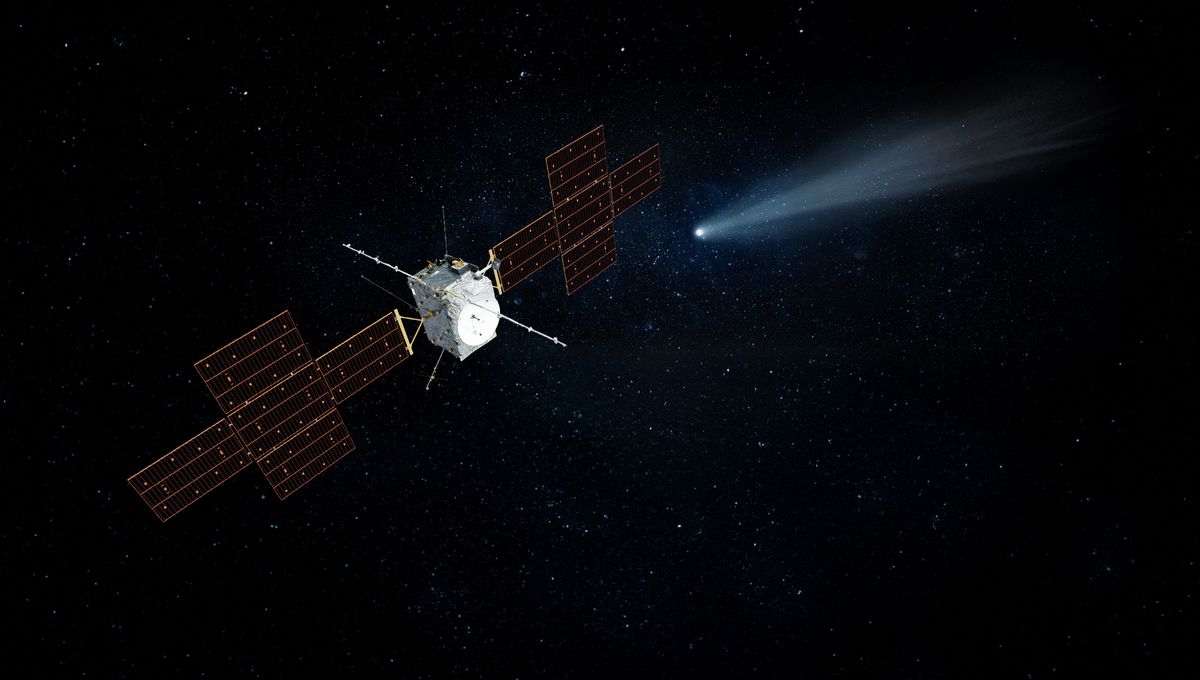
The European Space Agency's JUICE spacecraft will unexpectedly observe interstellar comet 3I/ATLAS in November 2023 from a distance, providing rare remote sensing data before its main mission to study Jupiter's moons in the early 2030s. This unplanned observation offers a unique opportunity to study an interstellar object, with data expected to arrive in 2026.

ESA's JUICE Mission: Key Highlights and Historic Flyby
space-exploration2 years ago

ESA's JUICE Mission: Key Highlights and Historic Flyby

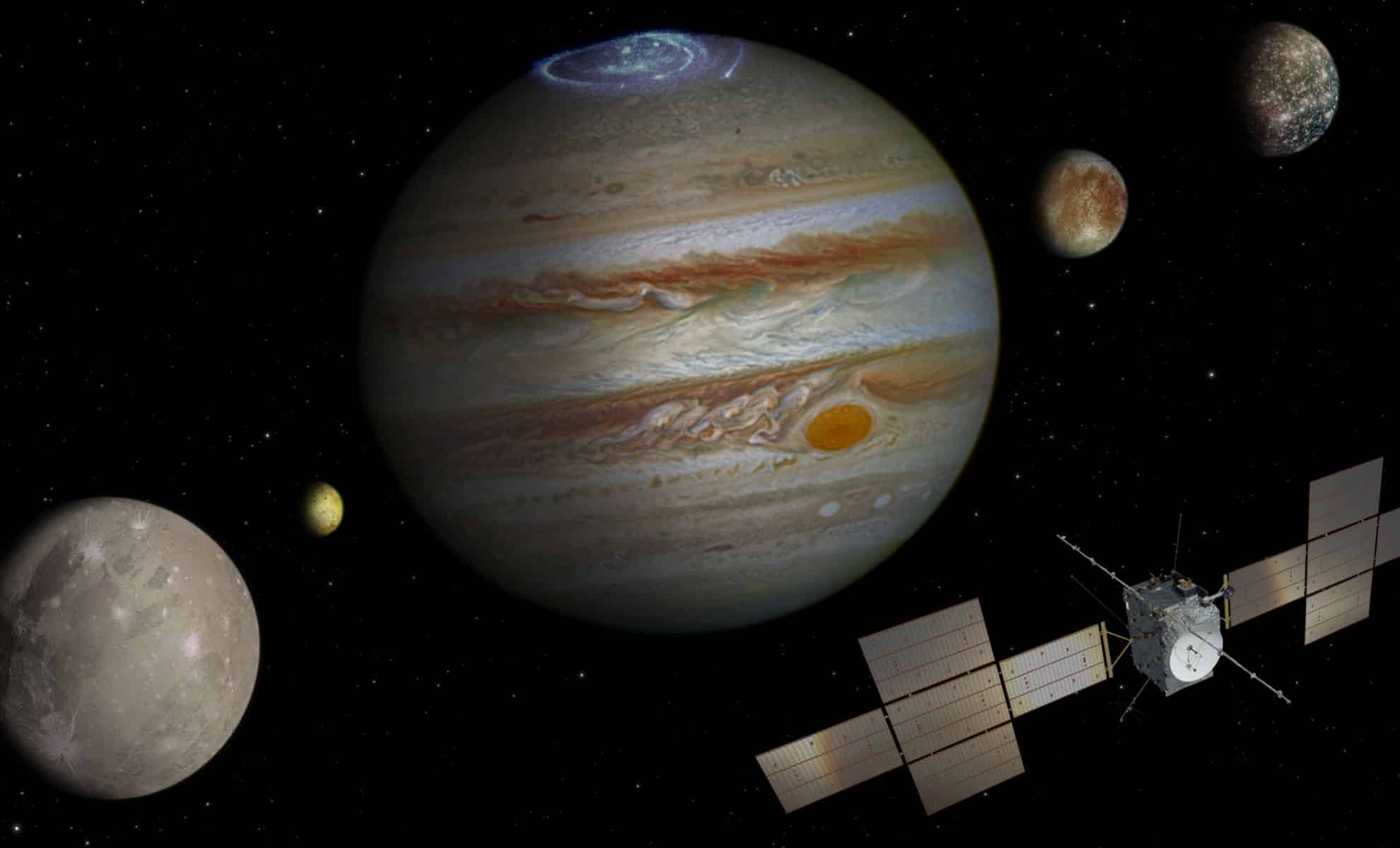
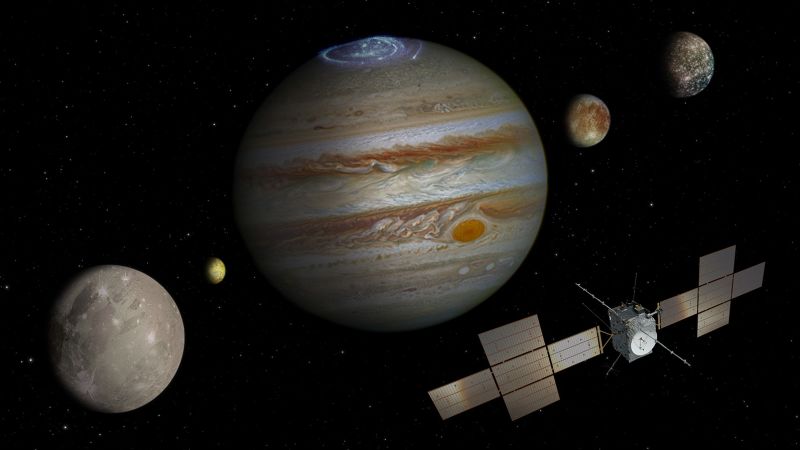
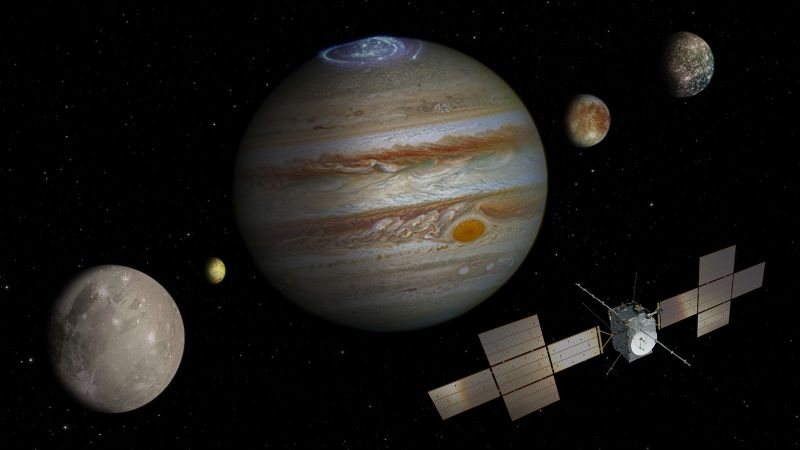
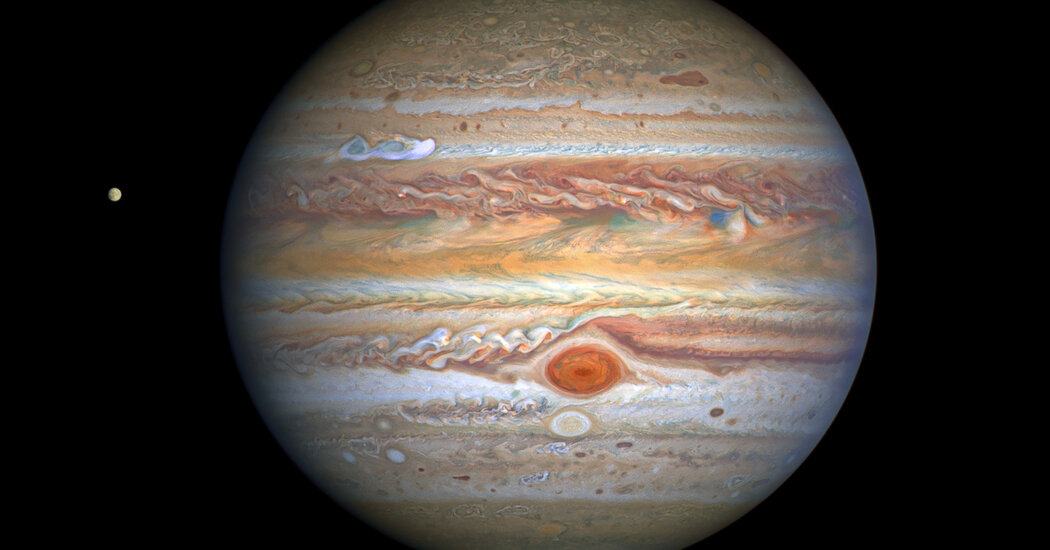
The European Space Agency's JUICE mission, launched on April 14, 2023, aims to explore Jupiter and its icy moons, including Europa, Ganymede, and Callisto, to study their composition, geology, and potential habitability. The mission involves complex navigation, including a critical lunar-Earth flyby in August 2024, to propel the spacecraft towards Jupiter. Equipped with advanced instruments, JUICE will investigate subsurface oceans, surface compositions, and Jupiter's atmosphere and magnetosphere, contributing to our understanding of the Jovian system and the search for extraterrestrial life.

"Juice Mission Navigates Callisto Encounter in Virtual Reality Rehearsal"
space2 years ago

"Juice Mission Navigates Callisto Encounter in Virtual Reality Rehearsal"

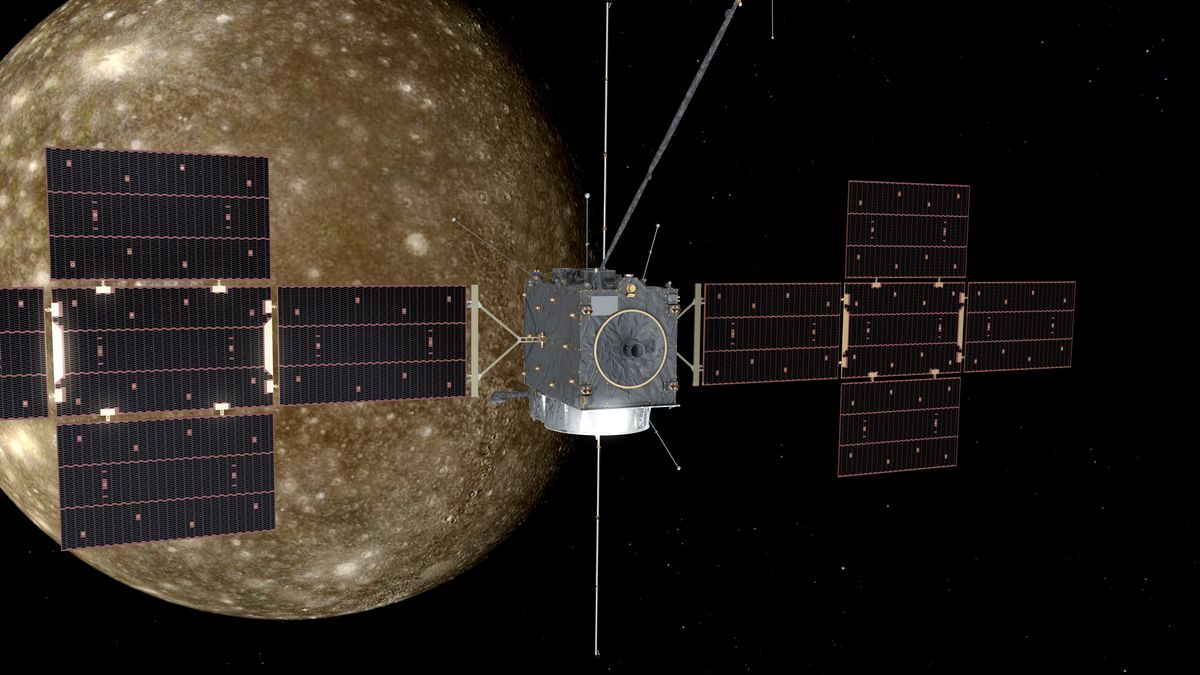
The JUICE mission, set to reach Jupiter in 2031, recently simulated a flyby of Jupiter's moon Callisto using the spacecraft's engineering model at the European Space Operations Centre. The mission faces challenges due to time delays in communication with Earth, requiring the spacecraft to autonomously adjust its orientation to observe surface features during flybys. The upcoming Lunar-Earth Gravity Assist in August will provide the spacecraft with additional velocity as it prepares for its journey to Jupiter.

Mysterious Abundance of Oxygen on Jupiter's Moon Callisto Baffles Scientists
space-science3 years ago

Mysterious Abundance of Oxygen on Jupiter's Moon Callisto Baffles Scientists

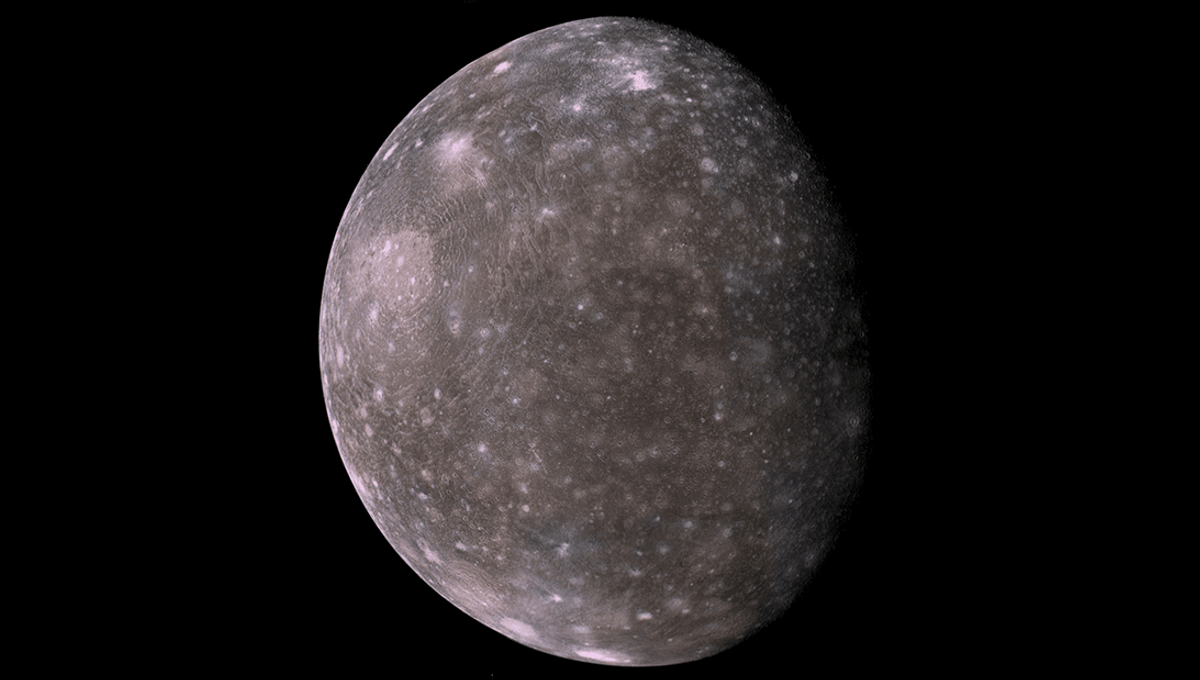
Jupiter's moon Callisto, the third-largest moon in the Solar System, has been found to have a significant amount of oxygen, much more than expected. Previous experiments suggested that the oxygen was produced through electronic sputtering and chemical reactions, but the observed amount of oxygen exceeds these predictions by several orders of magnitude. Scientists are now seeking to understand the source of this excess oxygen through future observations, such as those planned during the upcoming JUICE mission to Jupiter's icy moons.

Europe's Ariane 5 successfully launches JUICE mission to explore Jupiter's icy moons.
space3 years ago

Europe's Ariane 5 successfully launches JUICE mission to explore Jupiter's icy moons.

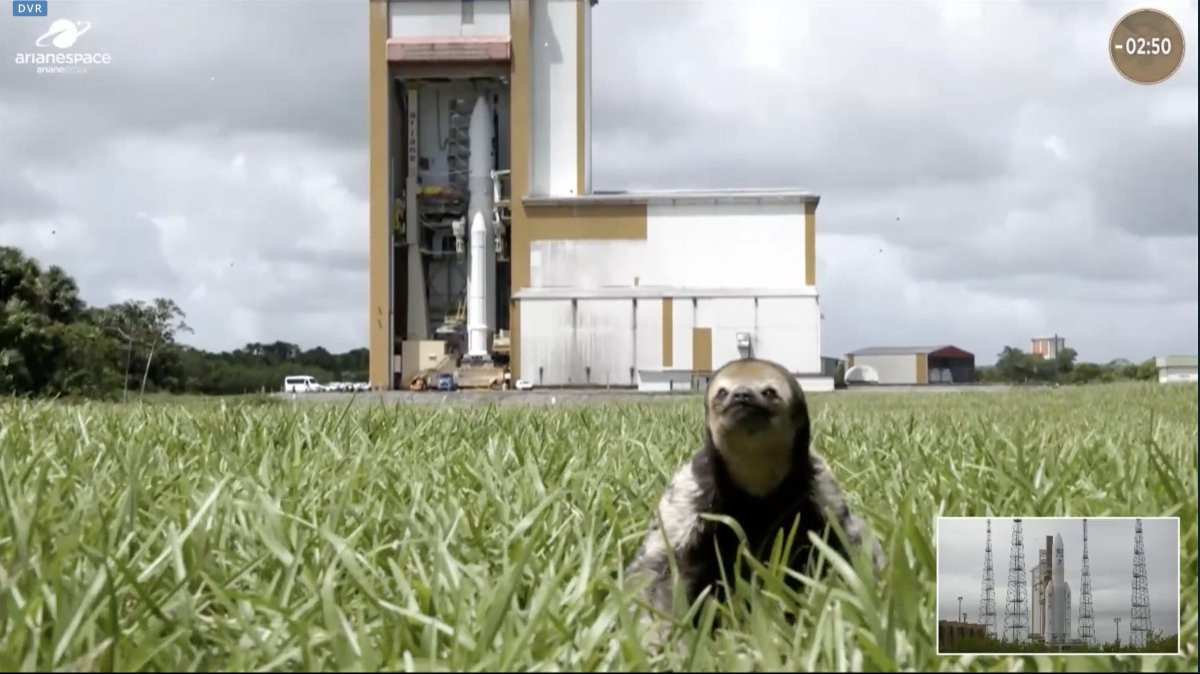
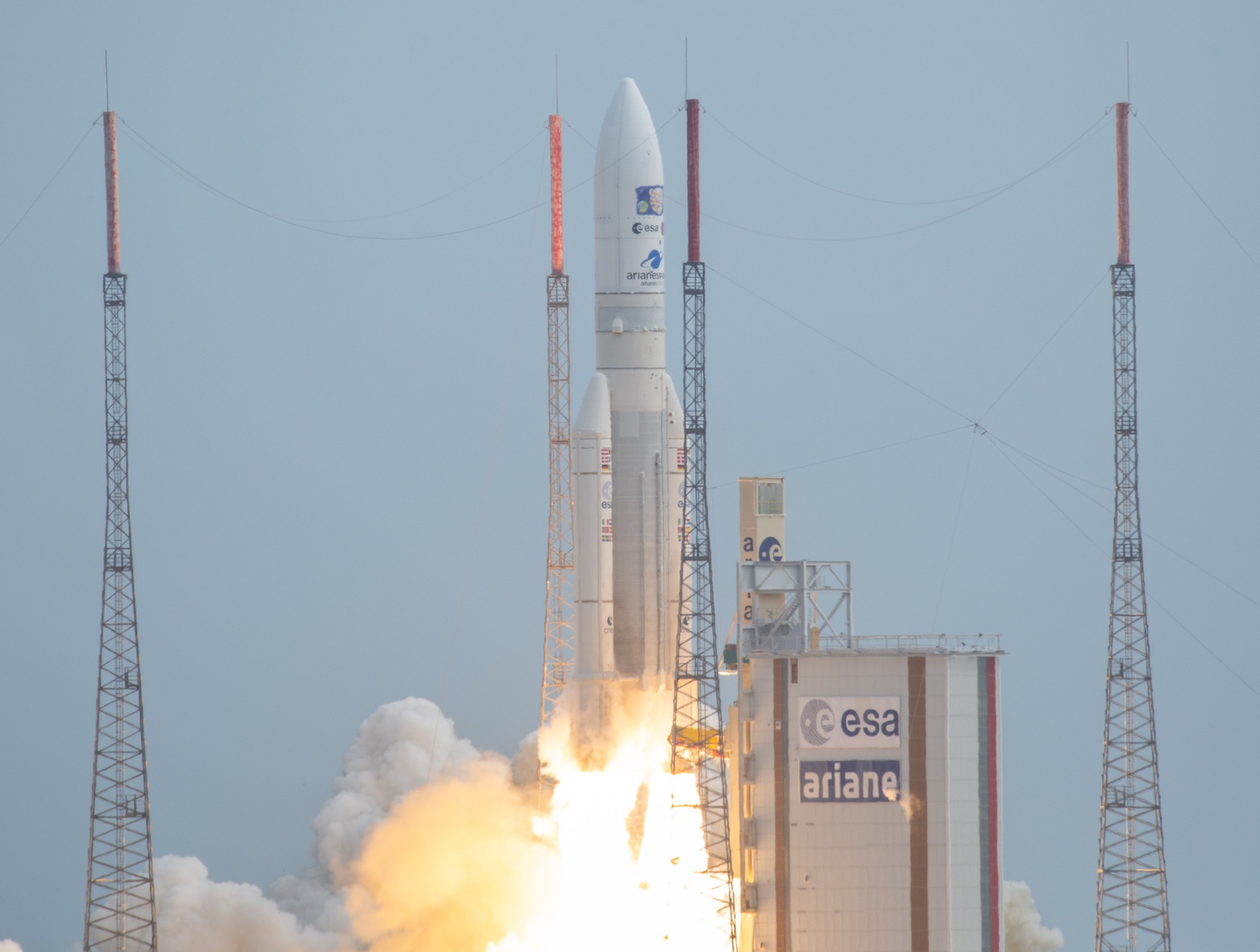
An Ariane 5 rocket successfully launched the Jupiter Icy Moons Explorer (JUICE) spacecraft on an eight-year journey to Jupiter. The Airbus-built spacecraft will perform several gravity-assist flybys to reach Jupiter and three of its largest moons. JUICE will enter orbit around Jupiter in July 2031, performing 35 flybys of Europa, Ganymede and Callisto to characterize their surfaces and subterranean oceans, including determining if they are habitable. The launch was the penultimate flight of the Ariane 5 rocket, which is being replaced by the Ariane 6.

Juice Mission Launches to Explore Jupiter's Icy Moons.
space3 years ago

Juice Mission Launches to Explore Jupiter's Icy Moons.

The European Space Agency's Jupiter Icy Moons Explorer mission, or Juice, has been launched to explore Jupiter and its three largest moons, Ganymede, Callisto, and Europa, which are believed to have subsurface oceans that could potentially harbor life. The spacecraft will take eight years to reach Jupiter and will spend about three and a half years orbiting the gas giant and conducting flybys of the moons. The mission has five main objectives, including characterizing the moons and determining if they are potentially habitable for life.

Europe's "Juice" mission set to explore Jupiter's icy ocean worlds.
space3 years ago

Europe's "Juice" mission set to explore Jupiter's icy ocean worlds.

The European Space Agency's Juice mission is set to launch on Thursday to explore Jupiter and its three largest moons, Ganymede, Callisto, and Europa, which are believed to have subsurface oceans that could potentially harbor life. The spacecraft will take eight years to reach Jupiter and will spend three and a half years orbiting the gas giant and conducting flybys of the moons. The mission aims to determine if the moons are habitable and to search for evidence of the building blocks of life. The spacecraft is equipped with 10 instruments to study the moons' composition, structure, and magnetic fields.

Europe's Ambitious "Juice" Mission to Jupiter and Its Moons Set to Launch
space3 years ago

Europe's Ambitious "Juice" Mission to Jupiter and Its Moons Set to Launch

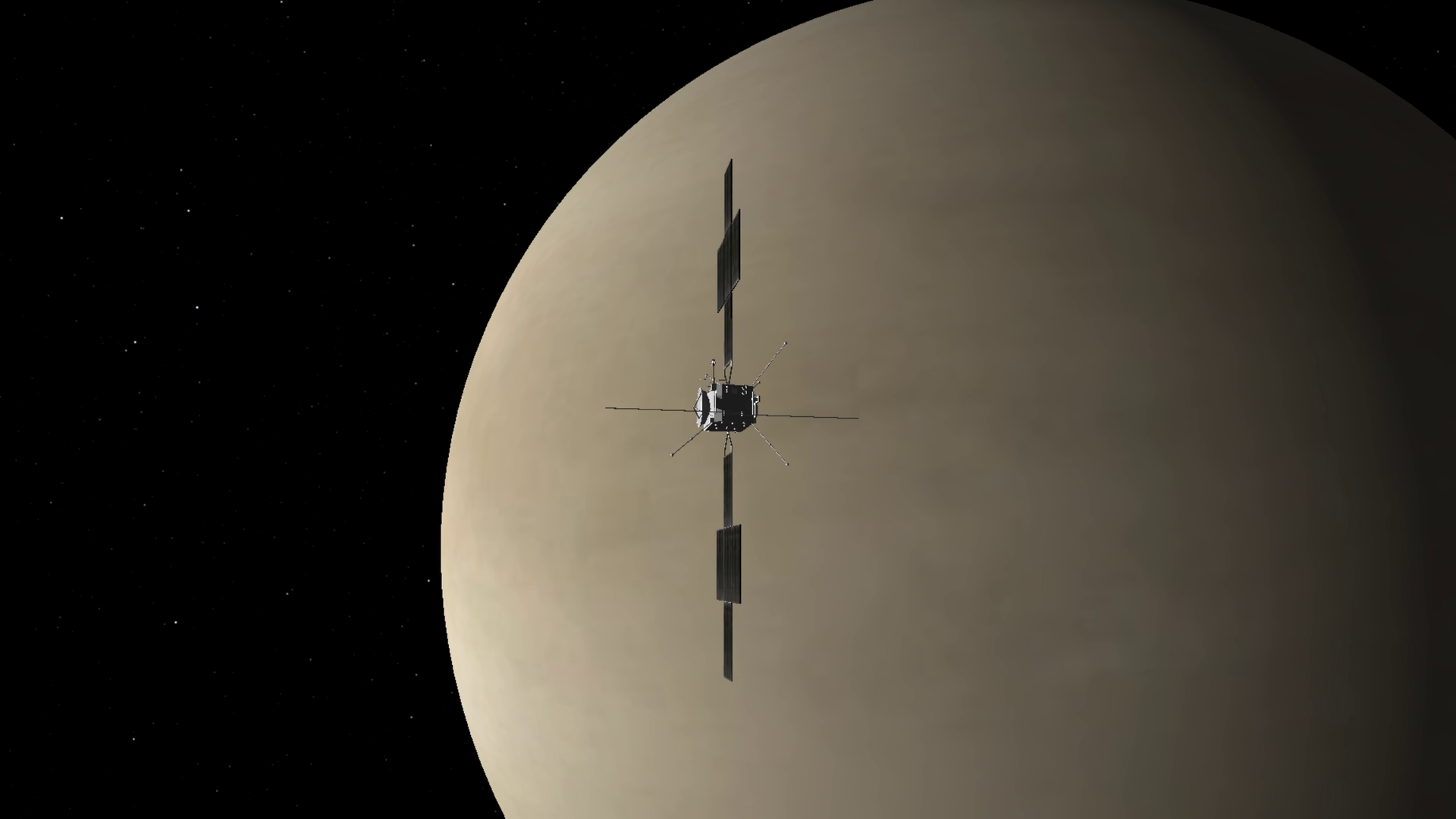
The European Space Agency's Juice mission will launch on April 13 to study three of Jupiter's moons, Callisto, Europa, and Ganymede, which could offer clues in the search for extraterrestrial life. The spacecraft will take more than eight years to reach Jupiter, with a series of gravitational assists past Venus, Mars, and Earth. Juice will perform 35 flybys of the moons, searching for magnetic signals and other evidence to confirm the presence and size of oceans sloshing under their surfaces. The mission's primary objective is the study of Ganymede, the first spacecraft to orbit a moon in the outer solar system.