Tag

Max Planck Institute

All articles tagged with #max planck institute

Theoretical 'Time Liquid' Emerges from Chaotic Heat in New Physics Model
science26 days ago

Theoretical 'Time Liquid' Emerges from Chaotic Heat in New Physics Model

Physicists at the Max Planck Institute for the Physics of Complex Systems have proposed a new state of matter called a 'time liquid.' This theoretical phase retains short-term temporal order even when long-range coherence breaks down, similar to how liquid water maintains local structure after ice melts. The state emerges from a discrete time crystal subjected to fluctuating electromagnetic drivers, potentially restoring time-translation symmetry on average.


German Physicists Set New Record for Quantum Superposition Using Rydberg Atoms
science1 month ago

German Physicists Set New Record for Quantum Superposition Using Rydberg Atoms

A team led by Hendrik Hegels at the Max Planck Institute of Quantum Optics in Germany has created the largest optical 'Schrödinger's cat' state to date. By utilizing Rydberg atoms, which have electrons loosely bound to their nuclei, the researchers achieved a superposition size of alpha squared 2.4, surpassing the previous record of 1.4. This experiment helps probe the boundary between quantum and classical physics.

Charged Raindrops Cause Dielectric Breakdown in Metal Coatings
science2 months ago

Charged Raindrops Cause Dielectric Breakdown in Metal Coatings

A new study published in Nature reveals that electrically charged water droplets can corrode metal by causing dielectric breakdown in protective coatings. Researchers from the Max Planck Institute for Polymer Research found that water sliding across surfaces like leaves or plastic acquires a static charge. When these charged drops hit coated metals, the electric field is strong enough to punch through insulating layers like Teflon, exposing the metal to corrosion. This mechanism, previously overlooked, may explain degradation in cars, ships, and cultural heritage sites.

New CloudKite Data Reveals Hidden Hotspots Driving Rain Formation in Warm Clouds
science3 months ago

New CloudKite Data Reveals Hidden Hotspots Driving Rain Formation in Warm Clouds

Researchers from the Max Planck Institute for Dynamics and Self-Organization have identified specific, localized structures within warm clouds that facilitate raindrop formation. Using a custom helium balloon device called CloudKite, the team discovered that droplet clustering occurs in intermittent hotspots rather than uniformly across the cloud. These findings address a long-standing gap in atmospheric science and could improve the accuracy of global climate forecasts.

Ancient Neanderthal Gene Variant Boosts Muscle Mass in Modern Humans
science3 months ago

Ancient Neanderthal Gene Variant Boosts Muscle Mass in Modern Humans

A study in Current Biology reveals that a Neanderthal-derived growth hormone receptor variant, present in up to 24% of South Asians, increases muscle mass and alters jaw structure in modern humans. Lab tests show this variant boosts cell growth by 40%, while large-scale biobank data confirms carriers have 270 grams more muscle. The effects emerge at puberty, linking ancient interbreeding to contemporary physical traits.

Scientists Uncover Mysterious Interstellar Tunnel Connecting Solar System to Distant Stars
science1 year ago

Scientists Uncover Mysterious Interstellar Tunnel Connecting Solar System to Distant Stars

Astronomers from the Max Planck Institute have discovered a network of interstellar tunnels of hot plasma connecting our Solar System to other star systems, within the Local Hot Bubble formed by ancient supernovae, challenging the notion of space as a void and suggesting a complex, interconnected cosmic environment.

Sun-like Stars May Produce Superflares More Frequently Than Expected
science1 year ago

Sun-like Stars May Produce Superflares More Frequently Than Expected

A new study reveals that powerful superflares, which are tens of thousands of times more intense than typical solar flares, erupt from sun-like stars approximately every 100 years, much more frequently than previously thought. These superflares could have significant impacts on Earth's technological systems and biosphere, though their exact effects remain uncertain. The research, conducted by the Max Planck Institute for Solar System Research, analyzed data from NASA's Kepler space telescope, suggesting that the mechanisms behind solar and stellar flares are consistent across sun-like stars.

New Insights Unveiled in Higgs Boson Research
science1 year ago

New Insights Unveiled in Higgs Boson Research

Researchers at the Max Planck Institute have announced new findings on the Higgs boson, enhancing our understanding of its interactions with W and Z bosons, which are crucial to the Standard Model of particle physics. These discoveries, presented at the International Conference on High Energy Physics, confirm theoretical predictions and set the stage for future research at the High-Luminosity Large Hadron Collider. The findings not only validate existing theories but also open possibilities for discovering new particles or forces, potentially reshaping our understanding of the universe.

New Insights into Higgs Boson and Quark Interactions Revealed
science2 years ago

New Insights into Higgs Boson and Quark Interactions Revealed

Researchers at the Max Planck Institute have made significant advancements in understanding the Higgs boson's interactions with other particles, particularly W and Z bosons, using data from the Large Hadron Collider. These findings, presented at the ICHEP 2024, confirm theoretical predictions of the standard model and enhance our understanding of particle mass acquisition. The results also set the stage for future research at the High-Luminosity LHC, potentially uncovering new physics beyond the standard model.

Real-Time Ovulation Captured: A Breakthrough for Infertility Treatment?
science2 years ago

Real-Time Ovulation Captured: A Breakthrough for Infertility Treatment?

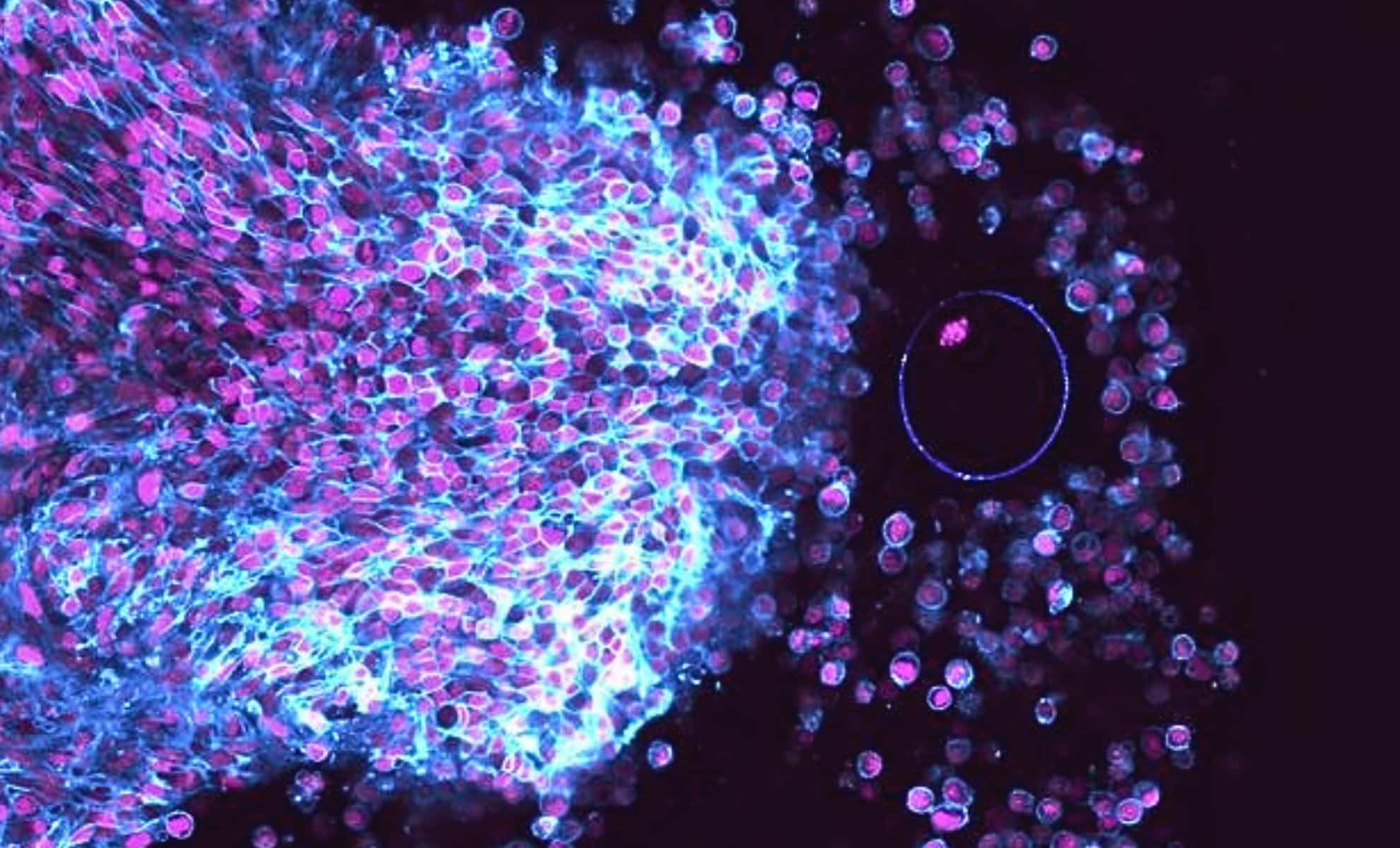
Researchers at the Max Planck Institute have captured the first real-time video of ovulation, revealing the process in unprecedented detail. This breakthrough, achieved through advanced microscopy and live tissue culture techniques, allows scientists to observe the three key phases of ovulation, potentially revolutionizing infertility treatments. By understanding ovulation more precisely, this discovery could lead to improved diagnostics and treatments for conditions like polycystic ovary syndrome (PCOS), marking a significant advancement in reproductive medicine.

Breakthrough in Quantum Entanglement of Light and Sound
science2 years ago

Breakthrough in Quantum Entanglement of Light and Sound

Researchers at the Max-Planck-Institute for the Science of Light have developed a method to entangle optical photons with phonons, representing a significant advancement in quantum entanglement. This hybrid entanglement, achieved through Brillouin scattering, allows for stable connections between light and sound particles, even at higher temperatures, and could enhance quantum communication and computing. The study, published in Physical Review Letters, highlights the potential of this technique in various quantum applications.

CERN's Higgs Boson Research Unveils New Physics Insights
science2 years ago

CERN's Higgs Boson Research Unveils New Physics Insights

Researchers at the Max Planck Institute have made significant advances in understanding the interactions of the Higgs boson with other particles, particularly W and Z bosons, using data from the Large Hadron Collider. These findings, presented at the ICHEP 2024, confirm theoretical predictions of the Standard Model and pave the way for future research at the High-Luminosity LHC. The results could potentially reveal new particles or forces, expanding our understanding of the universe.

"Uncovering the Genetic Links to Left-Handedness: Insights from Rare Variants"
science-and-technology2 years ago

"Uncovering the Genetic Links to Left-Handedness: Insights from Rare Variants"

Researchers at the Max Planck Institute have identified rare protein-altering genetic variants associated with left-handedness, shedding light on the inheritable nature of this trait. Using data from the UK Biobank, they found that microtubule-related genes, such as TUBB4B, may play a role in setting up brain asymmetries. Additionally, genes associated with autism, DSCAM and FOXP1, were linked to left-handedness, providing potential insights into conditions like autism and schizophrenia. The study highlights the complexity of handedness as a polygenic trait and paves the way for further exploration of brain asymmetry in embryonic development.

"Unearthing Down Syndrome: Ancient DNA Reveals Genetic Signatures in Historic Humans"
archaeologygenetics2 years ago

"Unearthing Down Syndrome: Ancient DNA Reveals Genetic Signatures in Historic Humans"

A new study analyzing the DNA of almost 10,000 people from ancient and pre-modern societies has identified 6 cases of Down syndrome in past human populations, with one specimen dating back 5,500 years. The research aims to trace the origins of these individuals and understand how prehistoric societies treated people with Down syndrome and other rare conditions. The study, led by researchers at the Max Planck Institute for Evolutionary Anthropology, utilized a new statistical model to identify these cases and shed light on the treatment and integration of individuals with genetic conditions in ancient communities.