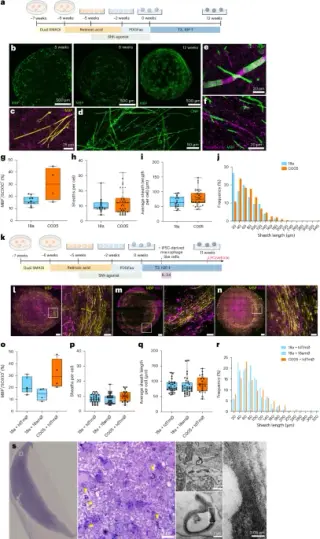
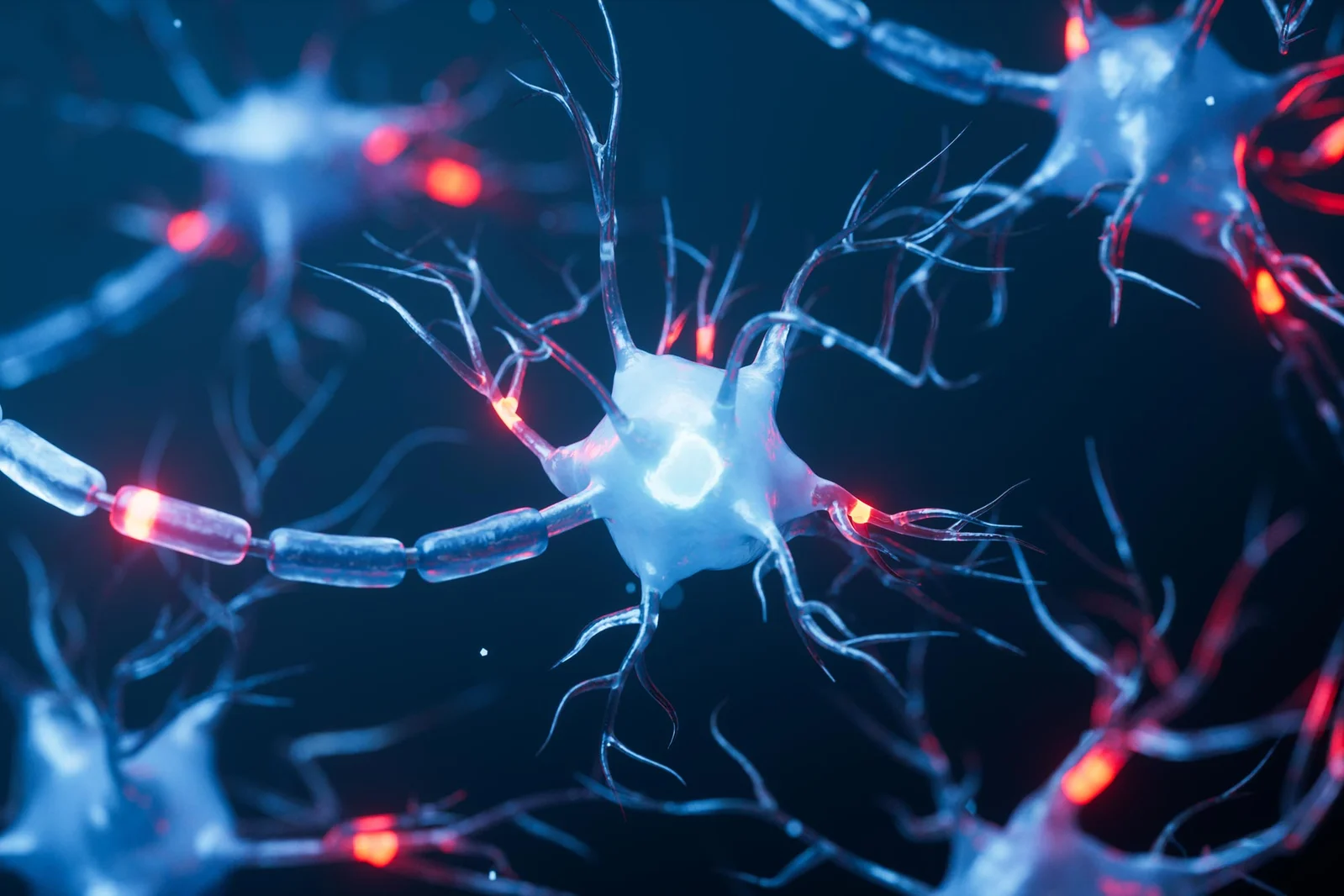
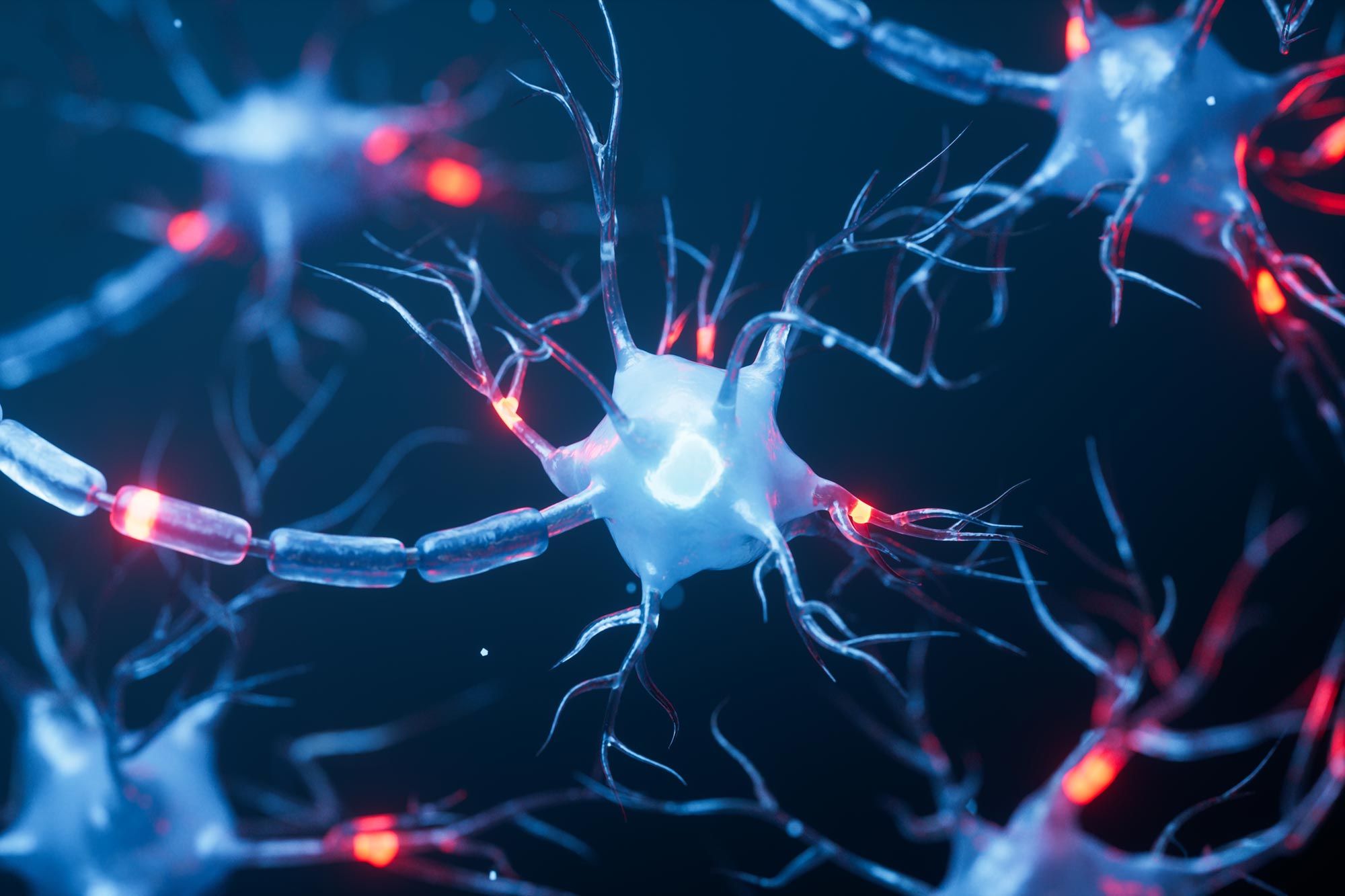
Researchers have developed a human-induced pluripotent stem cell (iPSC) spheroid model that accurately simulates myelin damage and repair in the central nervous system. This system allows for the study of remyelination processes, including microglial response and oligodendrocyte regeneration, offering a new platform for drug screening in multiple sclerosis.
A small multimodal MRI study (47 adults) found lasting brain tissue and neurochemical changes in people with long COVID and those who recovered, compared with never-infected controls. Using myelin-sensitive imaging, diffusion MRI, and MR spectroscopy, researchers observed elevated myelin signals in several regions for both groups, with distinct patterns (higher signals in brainstem and cerebellum for the recovered group; higher signals in the precentral gyrus and middle temporal gyrus for long COVID). Diffusion reductions were noted in various regions, and neurochemical shifts differed (long COVID: higher N-acetyl-aspartate; recovered: higher glutamine). Some myelin measures correlated with physical and cognitive impairment. However, the study is small and cross-sectional, so it cannot establish causality or track changes over time; larger longitudinal work is needed to determine whether these changes are permanent or reversible.
A preclinical study identifies CN045 as a lead small molecule that promotes maturation of oligodendrocyte progenitor cells (OPCs) into myelin-producing cells and modestly increases remyelination in a mouse model of MS, suggesting potential for a remyelination therapy but requiring optimization and later testing in people.
A University of Connecticut study found that the senolytic combo dasatinib and quercetin (D+Q) damaged brain myelin in mice, particularly in the corpus callosum, by changing oligodendrocyte cells and limiting myelin production. The small animal results raise safety concerns for D+Q in ongoing trials and off-label use, underscoring the need for further CNS-focused testing before widespread adoption.
A Notre Dame team directly compares the CPZ and LPC MS demyelination models using single-cell RNA sequencing and human tissue, showing distinct genetic and cellular footprints and revealing that CPZ better models oligodendrocyte stress/repair while LPC captures immune responses; by matching model lesions to human MS data, the study provides a roadmap for choosing the right preclinical model to pursue remyelination therapies rather than only immune suppression.
Scientists mapped glucose in the developing brain and found that high local glucose drives oligodendrocyte progenitor cell (OPC) proliferation via nuclear acetyl-CoA produced by the enzyme ACLY, while lower glucose cues these cells to mature into myelin-forming oligodendrocytes. In ACLY-deficient mice, ketogenic diets can partially rescue myelin deficits by providing an alternative fuel source. This reveals a metabolic switch that times and regionalizes myelin formation during a critical late-gestation window (roughly 32–40 weeks in humans), with implications for premature white-matter injury and potential myelin-repair strategies in diseases like multiple sclerosis.
A study combining MRI data from 185 sleep-deprived adults with animal experiments shows sleep loss thins brain myelin and disrupts cholesterol delivery, slowing interhemispheric signal transmission and leading to attention, memory, and motor impairments. Restoring myelin-related processes in animals by boosting cholesterol suggests a biological target for intervention. To protect brain health when sleep is limited, aim for 7–9 hours of sleep, consume healthy fats to support myelin, take short naps, optimize the sleep environment, and maintain regular exercise.
A study suggests a yak-adapted gene called Restat, which boosts a vitamin A–related molecule (ATDR), may help repair the myelin sheath around nerves. In mice engineered with the mutation and exposed to low-oxygen conditions, researchers saw thicker, healthier myelin and faster repair after damage, offering a potential new avenue for treating multiple sclerosis and possibly other nerve-damage conditions.
A multinational study introduces Xi–αNET, a generative model that links EEG signals (the background ξ and alpha rhythms) to the brain’s physical wiring and axonal conduction delays across ages 5–100 using the HarMNqEEG dataset. The findings show alpha frequency scales with myelin-driven conduction speed, producing a U-shaped trajectory of conduction delays with age and slower rhythms in older adults; the model also detects Parkinson’s-related alpha slowing, highlighting potential EEG-based brain-health benchmarks and early disease flagging via normative charts.
A gain-of-function mutation in the high-altitude Retsat gene helps restore myelin and promote nerve repair in mice by boosting vitamin A–derived metabolites that support oligodendrocyte maturation. The study, published in Neuron (March 13, 2026), suggests a natural, body-made pathway to treat myelin-related conditions such as multiple sclerosis and cerebral palsy, potentially reducing the need for immune-targeting drugs by enhancing innate regenerative processes.
University of Connecticut researchers report that the anti-aging drug combination dasatinib and quercetin (D+Q) causes significant myelin loss and corpus callosum damage in mice, with younger animals affected more. The oligodendrocytes shift to a less mature, energy-stressed state, suggesting safety concerns for preventive use and offering new clues for understanding multiple sclerosis.
A study links a Tibetan high-altitude gene mutation (Retsat) found in yaks to improved myelin protection and rapid repair in a mouse model, via elevated ATDR (a vitamin A metabolite) that promotes oligodendrocyte maturation, pointing to potential MS therapies using existing biological pathways.
A rat study shows psilocybin and MDMA trigger adaptive myelination, repairing the brain’s insulation (myelin) in fear circuits and producing long-lasting reductions in anxiety-like behavior; blocking myelin repair abolishes the benefits, indicating myelin remodeling is a key mechanism for durable psychedelic-assisted PTSD therapy and should complement, not replace, psychotherapy.
New research links sleep loss to damage in oligodendrocytes that insulate neurons, thinning myelin and slowing brain signaling in rats, while human MRI data show reduced white-matter integrity with poorer sleep. In rats, sleep deprivation disrupted cholesterol handling by oligodendrocytes and slowed inter-regional communications, but restoring cholesterol transfer with cyclodextrin improved function, suggesting a potential target for mitigating sleep-loss effects, though human confirmation is needed.
Scientists discovered that losing a small, critical segment of myelin disrupts brain communication by impairing the transmission of signals between the cortex and thalamus, which can lead to cognitive issues similar to those seen in Multiple Sclerosis. The study highlights the importance of myelin in maintaining the structure of neural information transfer and suggests potential avenues for future recovery strategies.