Tag

Myopia

All articles tagged with #myopia

Screen Time Is Rewriting Our Bodies, Doctors Warn
health1 month ago

Screen Time Is Rewriting Our Bodies, Doctors Warn

Doctors say smartphones are reshaping our bodies through years of hunching and scrolling, coining the term 'phone body.' With Americans spending about seven hours daily on screens, 'tech neck' can develop as forward head posture strains the cervical discs, and posture tweaks—such as reclining 25-30 degrees with lumbar support—can help but reversibility is limited once cells die. While kids’ rising myopia is linked more to reduced outdoor time (roughly two hours daily in bright light) than screens alone, adults face mainly eyestrain and broader health signals like grip strength, which reflect lifestyle factors. Prevention centers on mindful posture, balanced screen use, outdoor activity, and staying physically active.
Is your phone reshaping your body? The hidden health costs of screen time
health1 month ago

Is your phone reshaping your body? The hidden health costs of screen time

New science suggests heavy device use may be subtly changing our bodies: forward head posture stressing the neck, rising myopia with outdoor light offering protective effects, potential skin issues under wearables, and declines in grip strength and motor skills—especially in younger people. Practical fixes include lifting screens to eye level, taking regular breaks, spending more time outdoors with sunscreen, and engaging in hands-on activities to strengthen hands and coordination.

Indoor Habits and Dim Light May Push Global Myopia to 50% by 2050
science5 months ago

Indoor Habits and Dim Light May Push Global Myopia to 50% by 2050

Researchers warn that up to 50% of people worldwide could be nearsighted by 2050, driven not only by screen time but also indoor living and dim lighting. A SUNY Optometry study in Cell Reports found that focusing on near tasks in low light causes greater pupil constriction and reduced retinal illumination, stressing the eye and potentially promoting eyeball elongation. Outdoor time remains protective; US myopia rose from ~25% to 42% since the 1970s, and treatments may have limited impact if daily habits don’t change.

Indoor Light and Close-Range Viewing May Drive the Global Myopia Rise
science6 months ago

Indoor Light and Close-Range Viewing May Drive the Global Myopia Rise

A SUNY College of Optometry study with 34 participants suggests indoor lighting and sustained near-work can alter how the eye accommodates, converges, and constricts pupils in myopes, with contrast more influential than brightness in driving inward eye movements. This may weaken a retinal pathway and create a feedback loop that worsens myopia, offering a new hypothesis for the global rise (projected ~40% of youth affected by 2050). The study is small and not longitudinal, so outdoor vs indoor effects remain unproven and more research is needed.

Dim Indoor Light May Be Fueling the Global Myopia Boom
health6 months ago

Dim Indoor Light May Be Fueling the Global Myopia Boom

A SUNY College of Optometry study published in Cell Reports suggests that dim indoor lighting combined with prolonged close focus may excessively constrict the pupil and reduce retinal illumination, potentially contributing to the global rise in nearsightedness; the idea is still speculative and requires more testing, but it could influence prevention strategies.

Expert Claims Vision Can Be Improved at Any Age
health-and-wellness11 months ago

Expert Claims Vision Can Be Improved at Any Age

Dr. Bryce Appelbaum emphasizes that vision can be improved at any age through exercises and lifestyle adjustments, challenging the notion that eyesight decline is inevitable. He advocates for practices like the 20-20-20 rule, eye push-ups, and outdoor activities to enhance eye and brain function, potentially delaying or reducing dependence on glasses, even for myopia and presbyopia. Additionally, he highlights the importance of proper screen habits, diet rich in omega-3s and antioxidants, and eye coordination exercises to maintain and improve visual health.

health-and-nutrition11 months ago

Omega-3 Fatty Acids May Protect Against Myopia

Research suggests that dietary omega-3 polyunsaturated fatty acids may help protect against myopia and support neurological health, with sources including fatty fish, seafood, and certain plant oils. Quality and sourcing are important to avoid rancidity and contamination. While eating fish like salmon provides benefits, supplements can be useful, especially if dietary intake is low. Overall, increasing omega-3 intake through diet or supplements may offer significant health benefits, but individual needs vary.

"Eye Exercises: Ophthalmologist Debunks the Hype"
health2 years ago

"Eye Exercises: Ophthalmologist Debunks the Hype"

An ophthalmologist explains that there is no strong scientific evidence supporting the effectiveness of eye exercises in eliminating the need for glasses or providing long-term benefits for conditions like myopia, hyperopia, or presbyopia. While some vision therapy may help with specific ocular issues like eye misalignment, general eye health is best maintained through regular eye exams, limiting screen time, following the 20-20-20 rule, spending time outdoors, and avoiding smoking. Blue light blockers and supplements lack substantial evidence for improving vision or reducing eye strain.

"Rising Concern: Screen Addiction and Children's Eye Health"
health2 years ago

"Rising Concern: Screen Addiction and Children's Eye Health"

Top eye surgeons are warning of a growing risk of blindness in children due to excessive screen time and lack of outdoor activities, leading to a surge in cases of myopia. Children as young as four are now wearing special contact lenses to counter the problem, with some experiencing severe short-sightedness. The prolonged use of screens and reduced time spent outdoors during the Covid pandemic have exacerbated the issue, prompting calls for parents to limit screen time and ensure children get ample daylight exposure.

"Report: Gen Zers at Risk of 'Blindness Epidemic' from Excessive Phone Use"
health2 years ago

"Report: Gen Zers at Risk of 'Blindness Epidemic' from Excessive Phone Use"

Gen Zers are facing a potential epidemic of near-sightedness due to excessive screen time and lack of sunlight exposure, leading to serious vision problems and even blindness, according to a leading eye surgeon. The pandemic has exacerbated this trend, with studies showing a strong link between time spent outdoors and lower risk of near-sightedness. Experts are urging parents to limit screen time and encourage outdoor activities to mitigate the risk of vision problems among young people.

"Report: Gen Zers at Risk of 'Blindness Epidemic' from Excessive Phone Use"
health2 years ago

"Report: Gen Zers at Risk of 'Blindness Epidemic' from Excessive Phone Use"

Gen Zers are facing a potential blindness epidemic due to increased screen time and lack of sunlight exposure, leading to a significant rise in myopia rates. Experts warn that the lack of natural sunlight and excessive screen time are causing serious vision problems, with near-sightedness increasing by 46% in the UK and 59% among teenagers in the US. The pandemic has exacerbated this trend, and studies show that time spent outdoors is strongly linked to a lower risk of near-sightedness. Urgent action is needed to address this issue and prevent a future surge in vision-related health problems among young people.

"Rising Risk of Gen Z Blindness Due to Lack of Outdoor Time"
health2 years ago

"Rising Risk of Gen Z Blindness Due to Lack of Outdoor Time"

Leading eye surgeon warns of a potential future blindness crisis among Gen Z due to excessive screen time and lack of outdoor activity, leading to a significant increase in myopia. The surge in short-sightedness, particularly among children, is attributed to prolonged screen exposure and reduced time spent outdoors. Serious cases of myopia can lead to blindness and increase the risk of developing other eye conditions, posing a significant burden on healthcare systems like the NHS. Efforts to address this issue include calls for more NHS funding and increased awareness about the impact of screen time on eye health.

Understanding and Treating Nearsightedness: A Comprehensive Guide
health2 years ago

Understanding and Treating Nearsightedness: A Comprehensive Guide

Myopia, or nearsightedness, affects 4 out of 10 people globally, with the number expected to rise to 5 out of 10 by 2050, prompting concerns from the American Academy of Ophthalmology. Genetics and environmental factors play a role in its development, with extensive close-up activities and decreased time spent outdoors being contributing factors. While myopia cannot be permanently reversed, treatments such as specialized contact lenses, eye drops, vision therapy, and lifestyle adaptations can help slow its progression. Surgery and orthokeratology are also options, but the most common treatment is wearing corrective lenses.

"iPhone Screen Distance: Protecting Eyes and Reducing Eye Strain"
technology2 years ago

"iPhone Screen Distance: Protecting Eyes and Reducing Eye Strain"

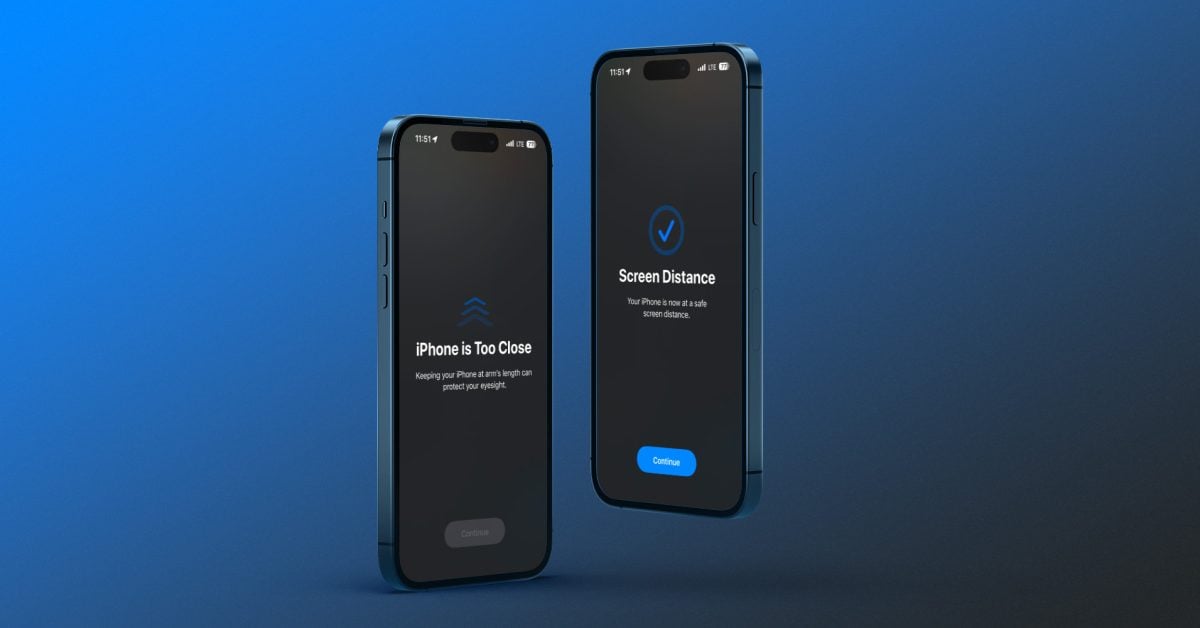
Apple's new health feature, Screen Distance, available on iOS 17 and iPadOS 17, helps prevent eye strain and reduce the risk of myopia by encouraging users to keep their devices at least 12 inches away from their eyes. The feature measures the distance between the screen and the user's eyes, and the data collected remains on the device and is not shared with Apple. Users can enable Screen Distance in the Settings app under Screen Time.