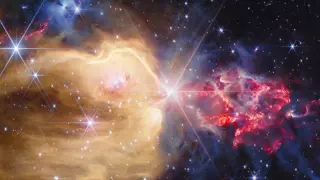
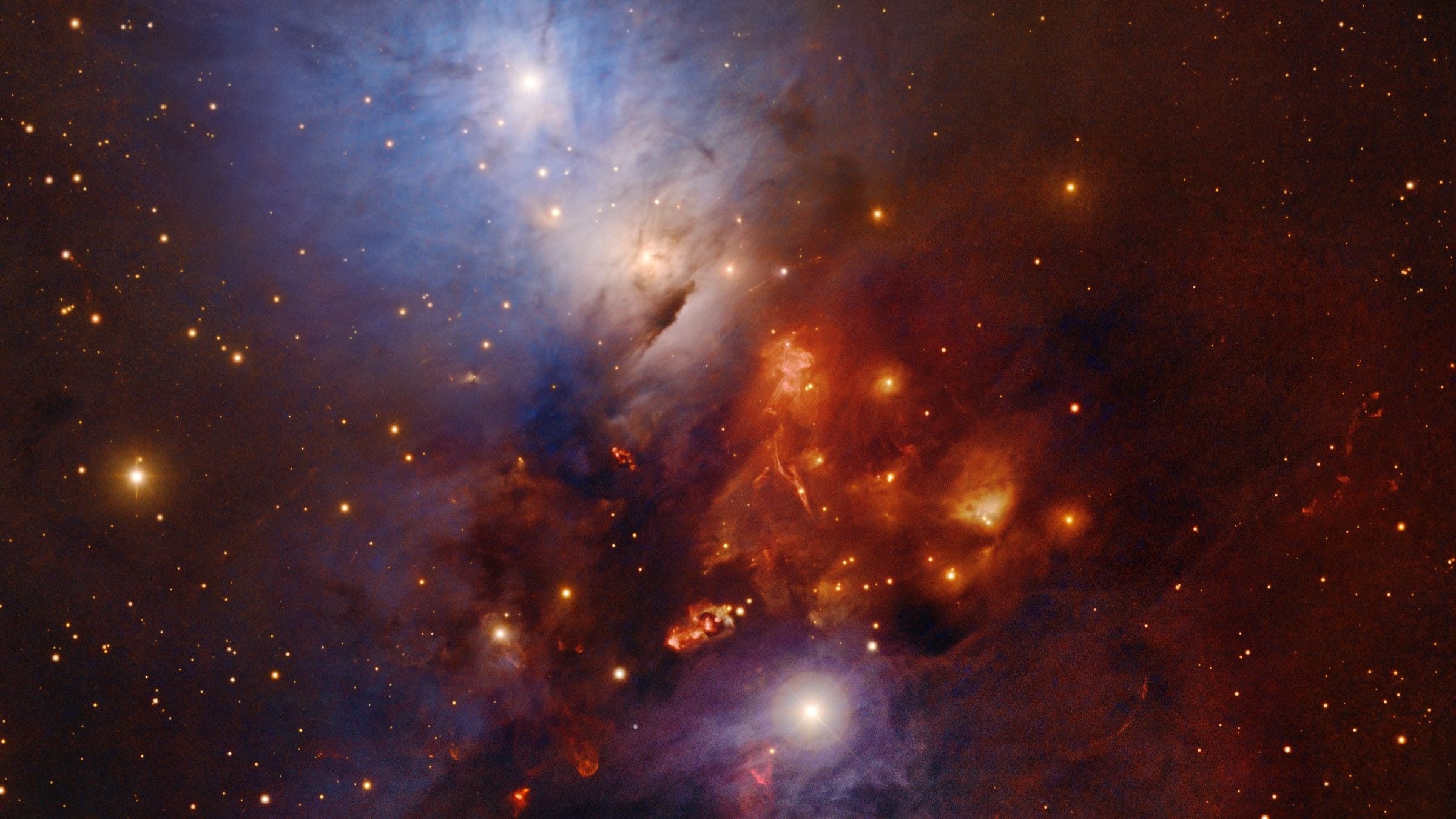
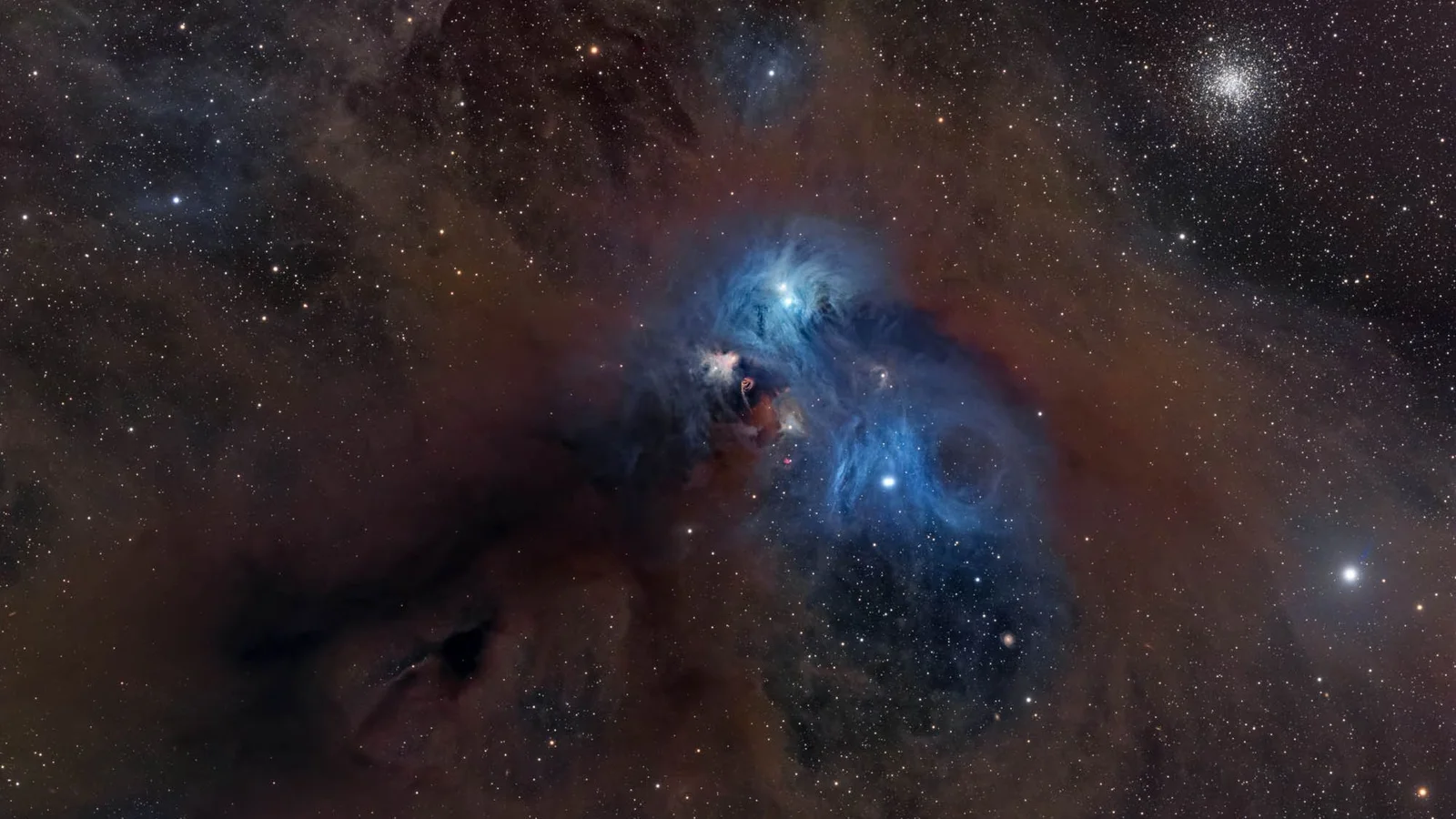
The James Webb Space Telescope has released a new near-infrared image of the Flower Bud Nebula (NGC 7129), revealing over 100 young protostars forming within a dense cloud of gas and dust located 3,300 light-years away.
Anker has expanded far beyond chargers into a diversified lineup of five owned brands: Anker Solix (portable power stations and home energy storage), AnkerWork (office webcams and accessories), Eufy (smart home security and cleaning devices with a focus on local storage and fewer required subscriptions), Soundcore (broad range of affordable audio products), and Nebula (portable projectors and home theater gear). The brands illustrate Anker’s move into power storage, smart-home surveillance, audio, and projection, with Solix targeting large-appliance power needs, Eufy emphasizing privacy-friendly options, and Nebula offering scalable projector solutions from 1080p to 4K.
New MOTHRA telescope images of the Helix Nebula reveal material ejected by dying stars moving as fast clumps that create bow shocks and shed star-made elements into surrounding gas, illustrating the cosmic recycling that seeds future stars, planets, and possibly life; the debris lingers for about 10,000 years before fully dispersing.
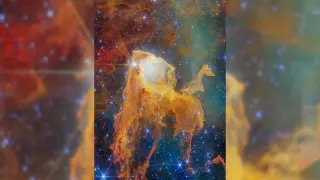
Space.com's space photo of the day spotlights a James Webb Space Telescope image of the Carina Nebula, nicknamed the “Treasure Chest,” revealing about 70 young stars (the most massive around 19 solar masses) nestled in a 7,500-light-year cloud. The star cluster is estimated to be about 1.3 million years old, a revision from earlier 100,000-year figures, illustrating how JWST observations refine our understanding of star formation and cluster evolution in massive nebulae.
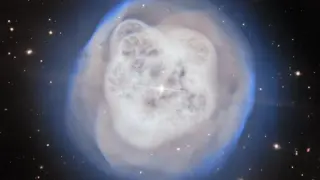
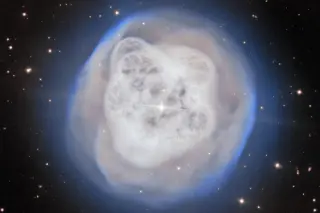
A new image of the Crystal Ball Nebula (NGC 1514) taken with Hawaii’s Gemini North telescope shows a dying star in a binary system about 1,500 light-years away; as the primary star sheds its outer layers, its orbiting companion stirs the expanding gas into intricate, cloudlike shapes, with colors tracing hot hydrogen and oxygen. Captured by the Gemini Multi-Object Spectrograph atop Maunakea, the view highlights how planetary nebulae form and evolve on short astronomical timescales, roughly 10,000 years, while astronomers monitor changes over years to learn how mass is lost and shells expand.
A color image from the Gemini North Telescope reveals the Crystal Ball Nebula (NGC 1514), a 1,500-light-year-away binary star system in which a dying star casts off its outer layers, heating the ejected gas to tens of thousands of degrees to create a glowing, billowing spherical cloud.
Astronomers using NOIRLab released a striking image of the Crystal Ball Nebula—a spherical planetary nebula formed as a sun-like star sheds its outer layers, offering a crystal-like view of the star’s final act.
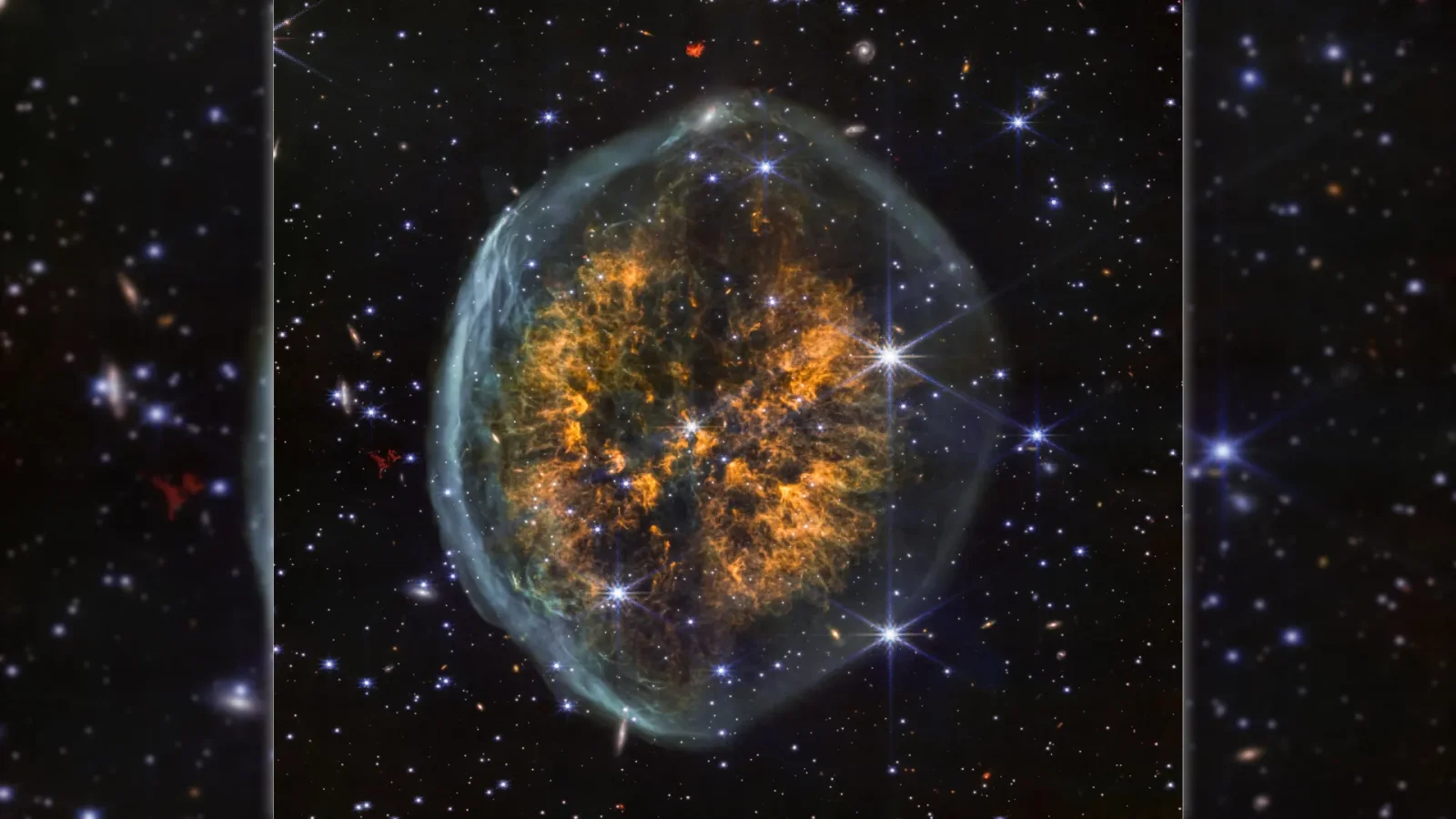
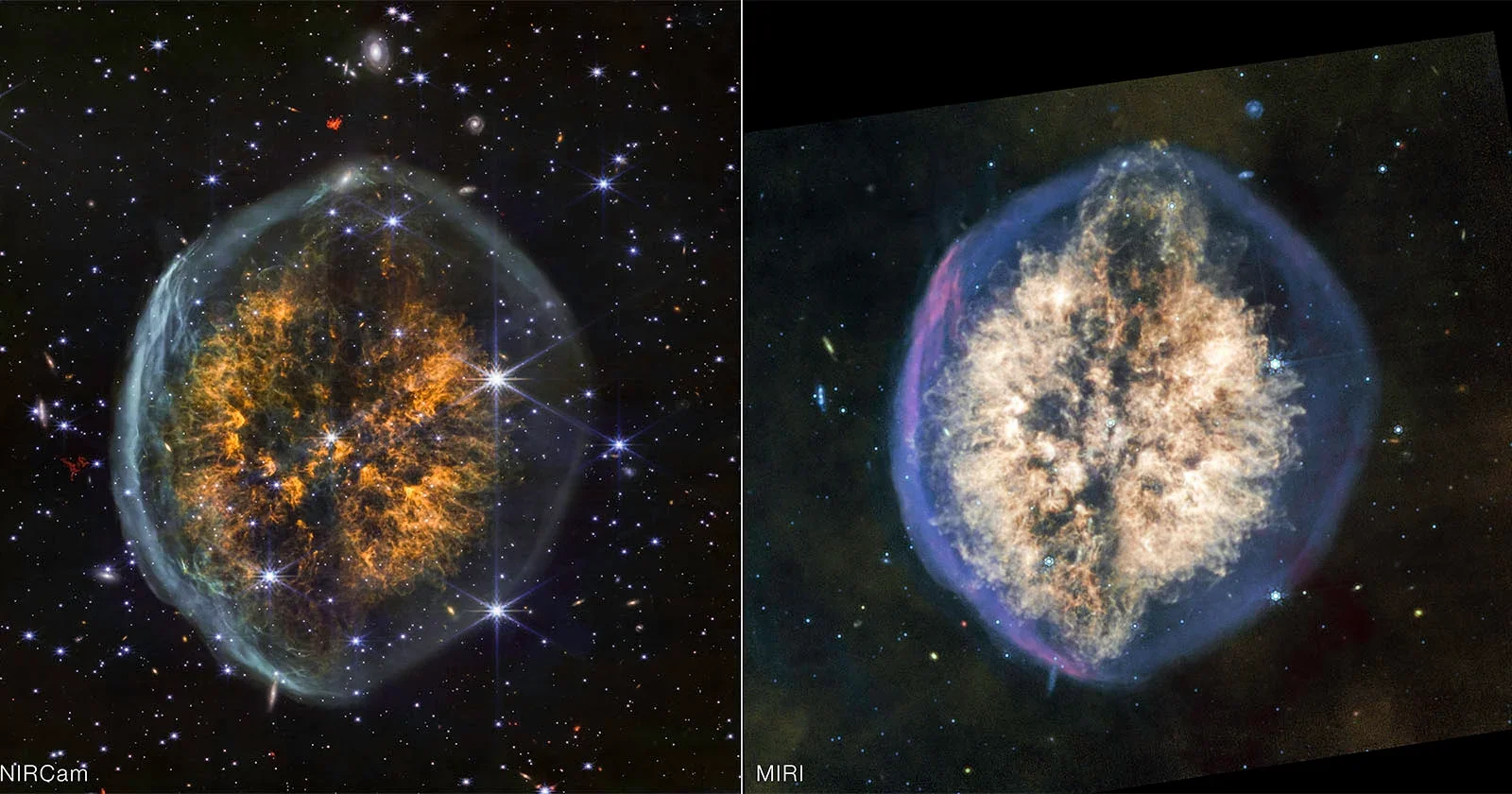
NASA's James Webb Space Telescope has captured infrared images of the PMR 1 nebula, nicknamed Exposed Cranium, surrounding a dying star and resembling a brain inside a transparent skull. Webb’s data reveal an outer hydrogen-rich shell and a darker central lane likely carved by material jets from the star, offering a rare look at a short-lived phase as the star sheds its layers before either becoming a white dwarf or ending in a supernova, depending on its mass.
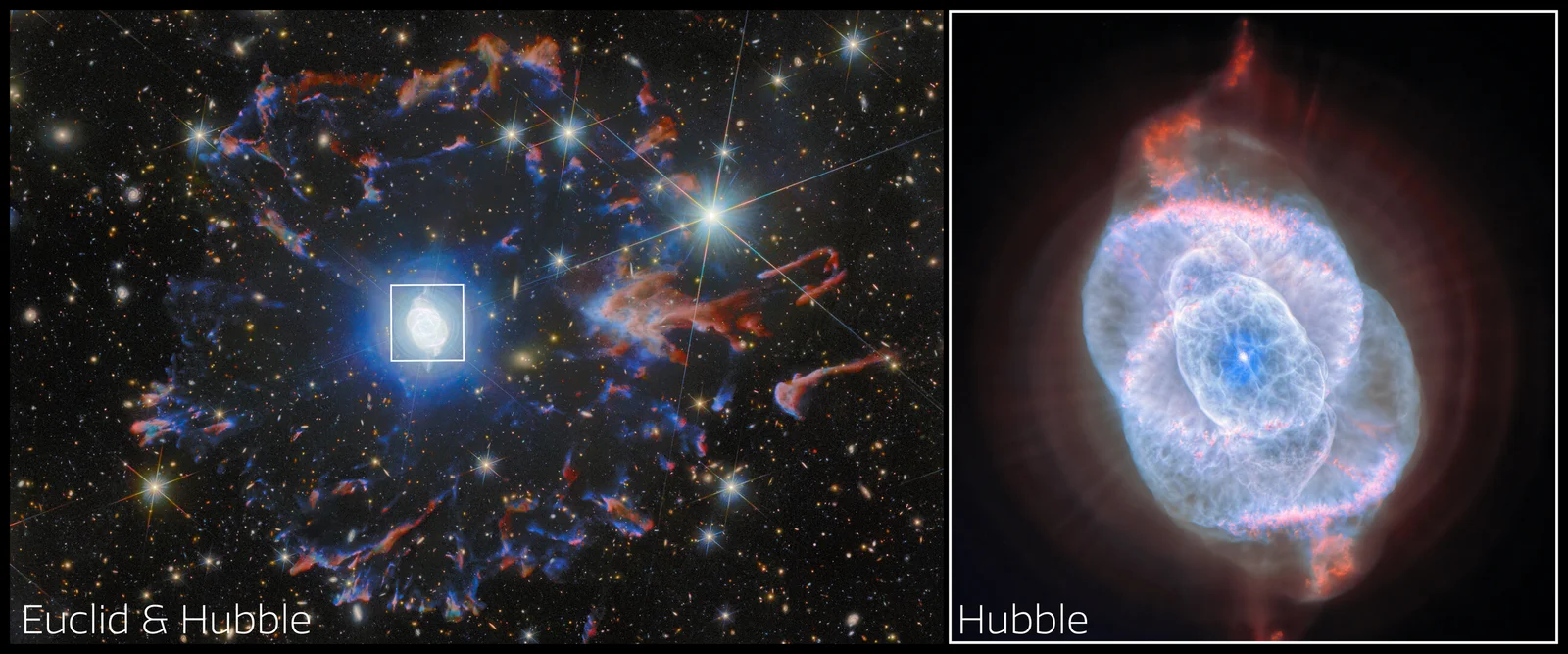
Using a combined Hubble and Euclid view, the Cat's Eye Nebula (NGC 6543) is shown in new detail: Hubble reveals the intricate core with concentric shells and jets from episodic mass loss of the dying star, while Euclid’s wide-field imaging places it among distant galaxies about 4,300 light-years away in Draco.
NASA's James Webb Space Telescope released two high‑resolution infrared images of the Exposed Cranium Nebula (PMR 1) using NIRCam and MIRI, revealing a brain‑like dark lane and distinct outer shell as a dying star sheds its layers; the two portraits—one from NIRCam and one from MIRI—show different internal details and illustrate Webb’s leap in resolution since the 2013 Spitzer image, while the star’s mass remains uncertain and its ultimate fate could be a supernova or a cooling white dwarf.
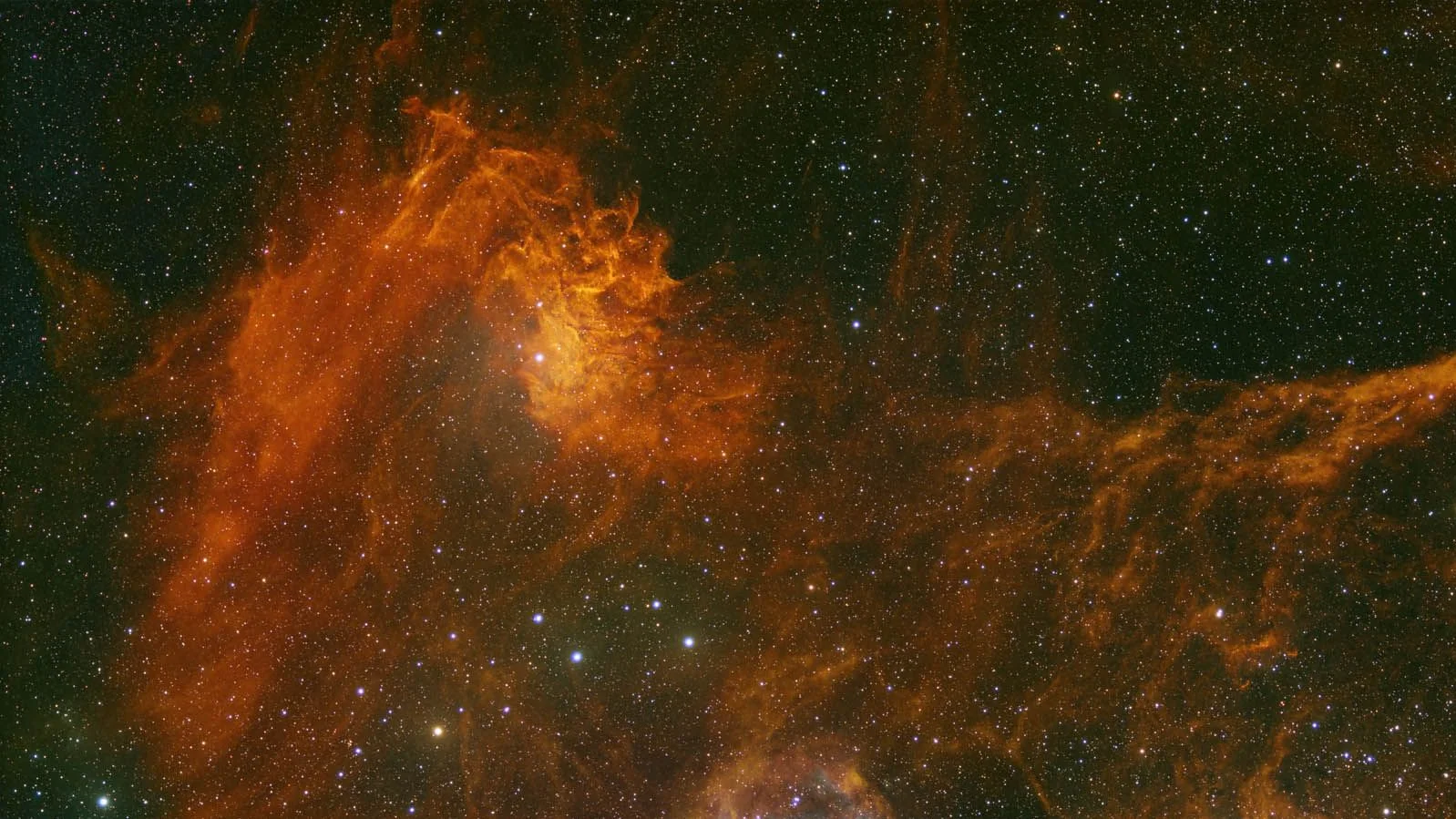
Astrophotographer Greg Meyer captured a dramatic long‑exposure view of the Flaming Star Nebula around the runaway star AE Aurigae in Auriga, about 1,500 light-years away. The flame-like glow comes from radiation emitted by AE Aurigae ionizing surrounding hydrogen; the image, captured with a Radian Raptor 61 mm telescope and nearly 21 hours of exposure, was processed in Adobe Lightroom and Photoshop with PixInsight to reveal a sprawling nebula scene that includes the Tadpole Nebula at the bottom.
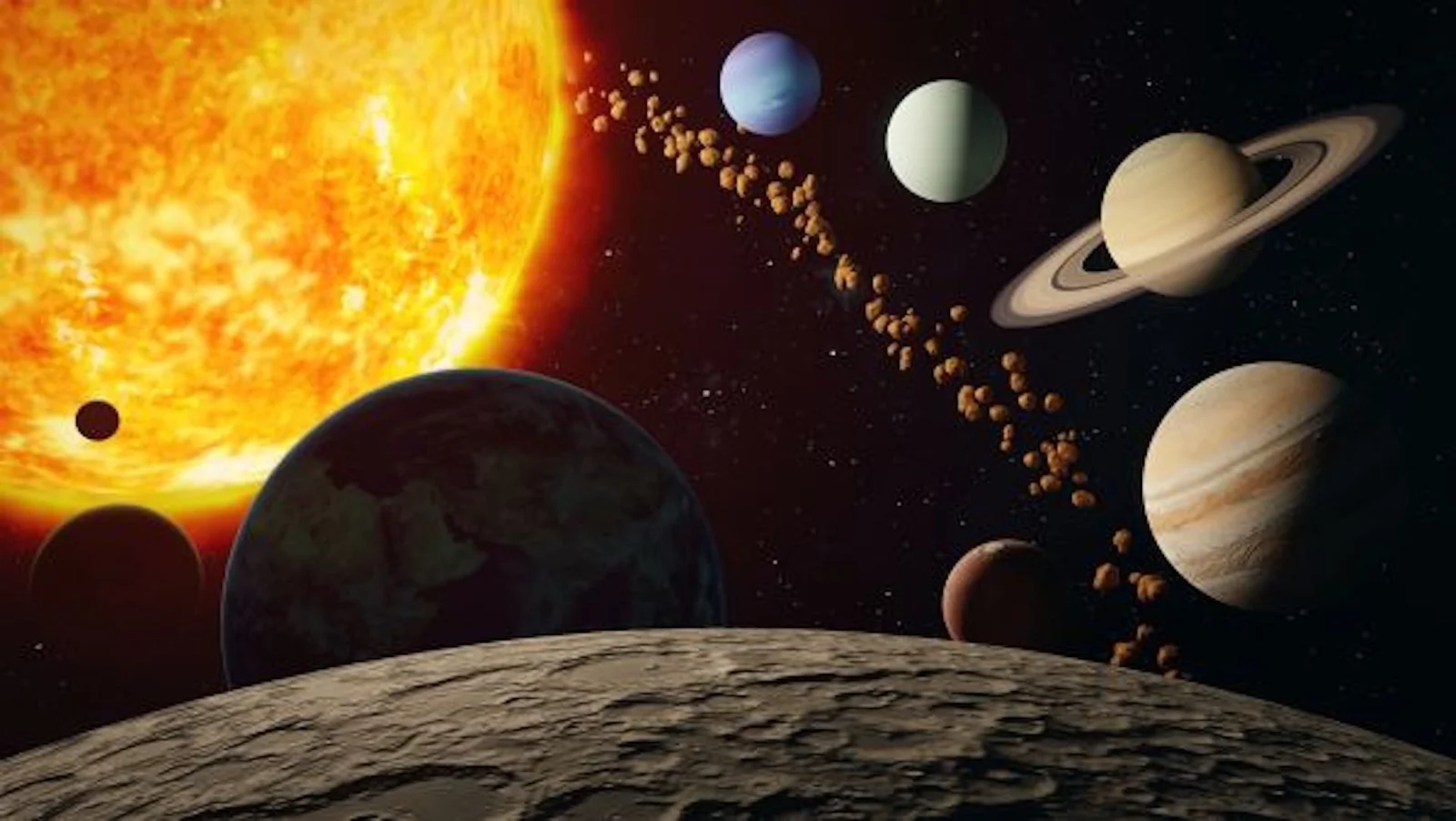
The Sun and planets all orbit in a single, flat disk aligned to the ecliptic because the solar nebula collapsed with rotation; similarly, the Milky Way and Local Group lie in near-planes (galactic and supergalactic), though these planes tilt relative to one another. “Down” isn’t universal in space—it depends on the reference plane—demonstrating how initial angular momentum during formation shapes the cosmos’s familiar flat structure from the solar system outward.
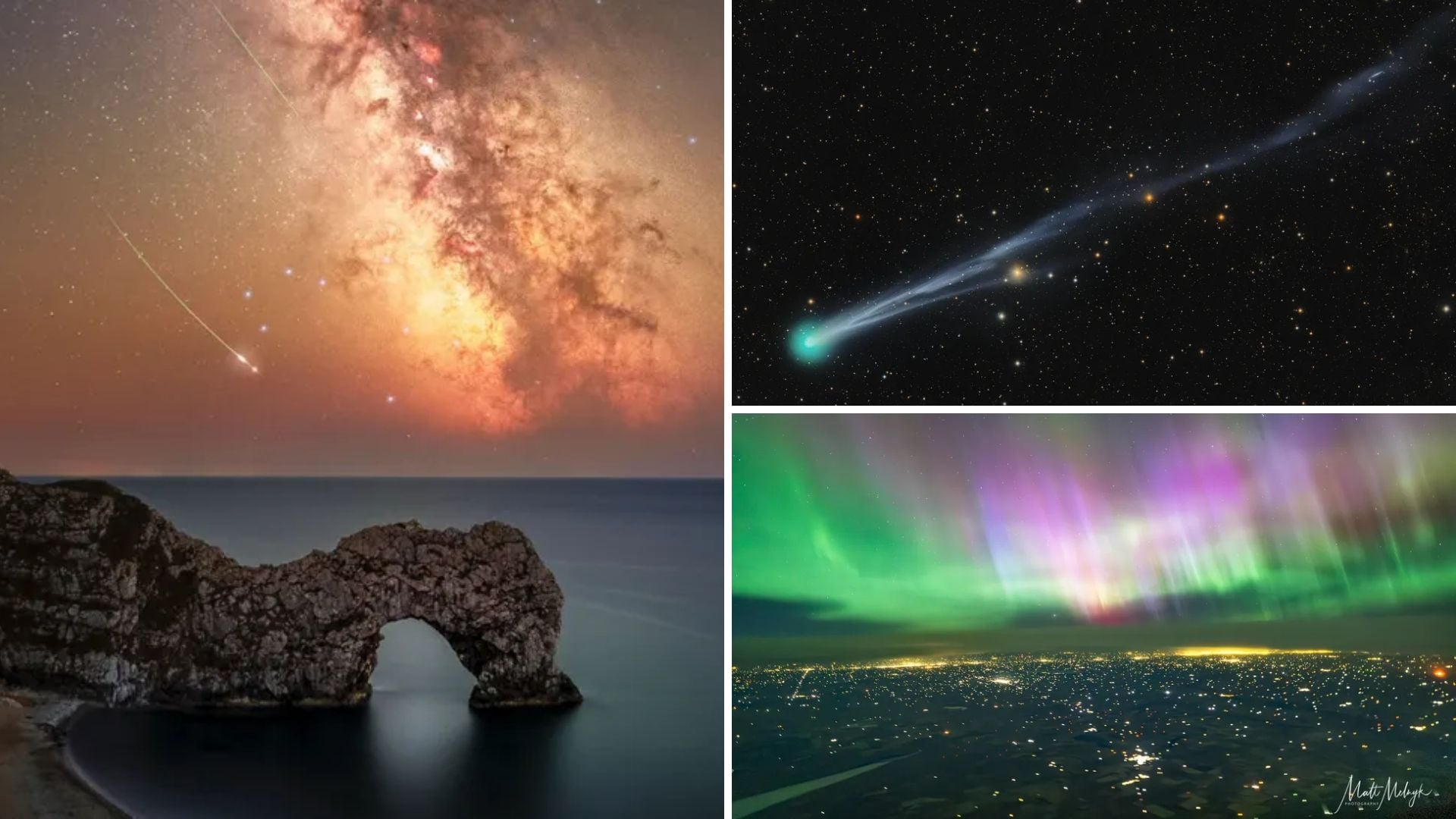
In 2025, space enthusiasts shared stunning astrophotography images capturing solar prominences, nebulae, eclipses, comets, auroras, and other celestial phenomena, showcasing the beauty and complexity of the universe.
A new high-resolution image of the reflection nebula NGC 1333 and the binary star system SVS 13 reveals over 400 molecular rings, each marking past energetic outbursts from a young star, providing direct observational evidence of star formation processes and the history of stellar activity.
Astrophotographer Greg Meyer captured a stunning image of the Raging Baboon Nebula, a colorful cosmic cloud resembling a baboon's face, located 500 light-years away in the constellation Corona Australis, using advanced telescopes and cameras over 13 nights.