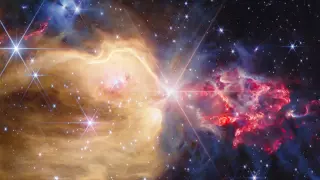
The James Webb Space Telescope has released a new near-infrared image of the Flower Bud Nebula (NGC 7129), revealing over 100 young protostars forming within a dense cloud of gas and dust located 3,300 light-years away.
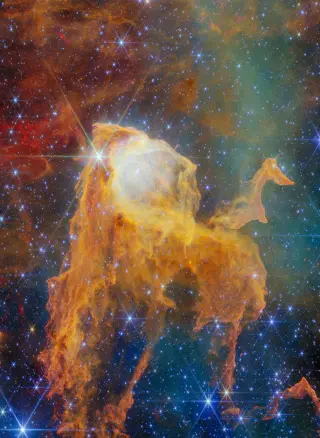
The James Webb Space Telescope has captured a new image of the Carina Nebula, highlighting a cometary globule nicknamed the 'Treasure Chest.' This feature contains a cluster of approximately 70 young stars, the most massive of which is 19 times the mass of the Sun. The cluster is estimated to be 1.3 million years old, though some earlier estimates suggested it could be as young as 100,000 years. The distinctive shape of the globule is sculpted by intense radiation and winds from nearby massive stars, including Eta Carinae and the Trumpler 16 cluster. Webb's Near-Infrared Camera (NIRCam) allows astronomers to see through the dust, revealing the glow of these newborn stars and the circumstellar discs surrounding them, which may eventually form planets.
The James Webb Space Telescope has released its August 2026 Picture of the Month, revealing the interior of the 'Treasure Chest' cometary globule in the Carina Nebula. Located 7,500 light-years away, this region contains a cluster of approximately 70 young stars, including a rare O-type star 19 times the mass of the Sun. Webb’s Near-Infrared Camera penetrated the dense dust to show that these stars are surrounded by circumstellar disks, the raw material for planet formation. The image highlights a scientific race between star formation and the intense ultraviolet radiation from nearby Eta Carinae, which threatens to erase these disks before planets can form.
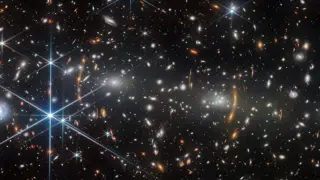
The James Webb Space Telescope captured the galaxy cluster MACS J0553.4-3342, formed about 4.4 billion years ago using its near‑infrared camera (NIRCam). The article highlights JWST’s ability to serve as a time machine by viewing light that has traveled across cosmic distances, revealing a cluster in its formative stages, a capability that extends beyond what Hubble has shown. It also reminds readers that light from stars visible to the naked eye has similarly traveled huge distances to reach us, offering a glimpse into the universe’s past both through advanced telescopes and everyday starlight.
NASA’s James Webb Space Telescope detected a faint 10-kilometer moon, S/2025 U1, orbiting near Uranus’s inner rings—an object missed by Voyager 2 and Hubble but revealed by Webb’s long infrared exposures. The moon orbits about 56,000 km from Uranus’ center, completing a near-circular orbit in under half a day, and is part of the inner Uranian system, helping explain ring–moon interactions. The discovery raises Uranus’s known moon count to 29 and suggests more tiny bodies may lurk in glare; future missions could map rings and refine the orbits and masses of these small moons.
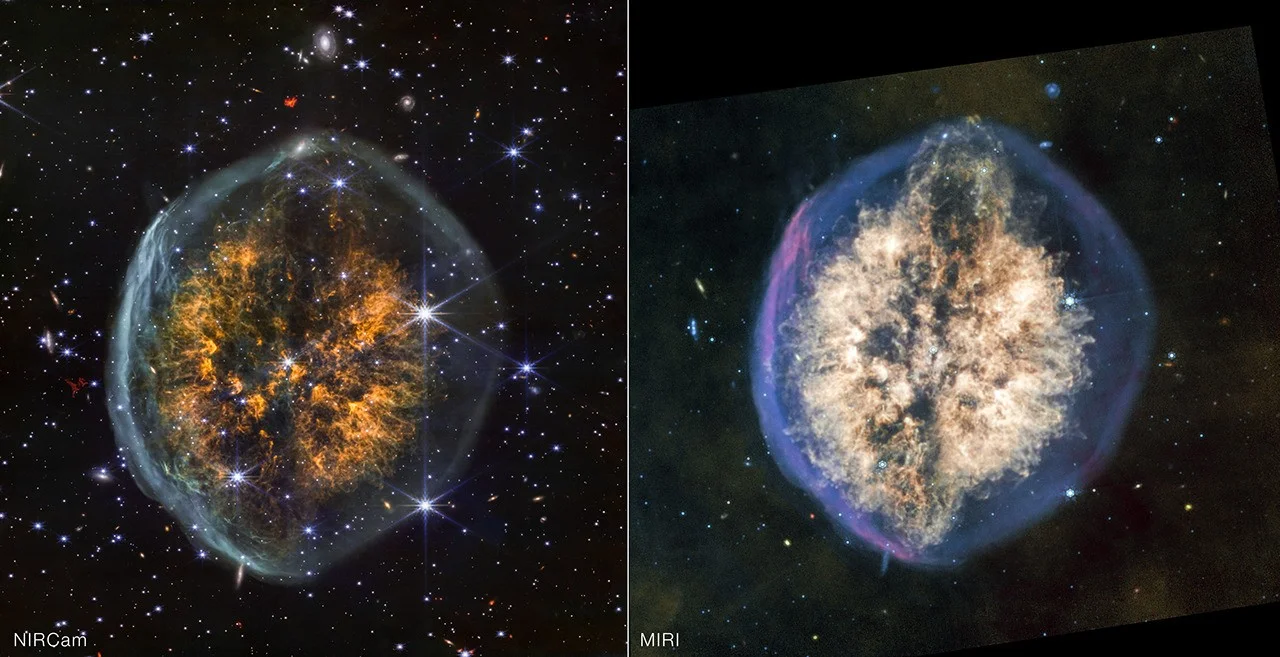
NASA’s James Webb Space Telescope has captured new infrared views of PMR 1, the Exposed Cranium nebula, revealing a brain-like structure around a dying star. Webb’s NIRCam and MIRI images show that near-infrared light reveals more stars and background galaxies while mid-infrared highlights glowing dust and a dark central lane that contributes to the nebula’s split-brain appearance. The features trace an outer hydrogen shell and a richer inner gas cloud, hinting at past outbursts or jets. The star’s ultimate fate—whether it becomes a white dwarf or a supernova—depends on its mass, and Webb’s observations help illuminate how dying stars shed their envelopes.
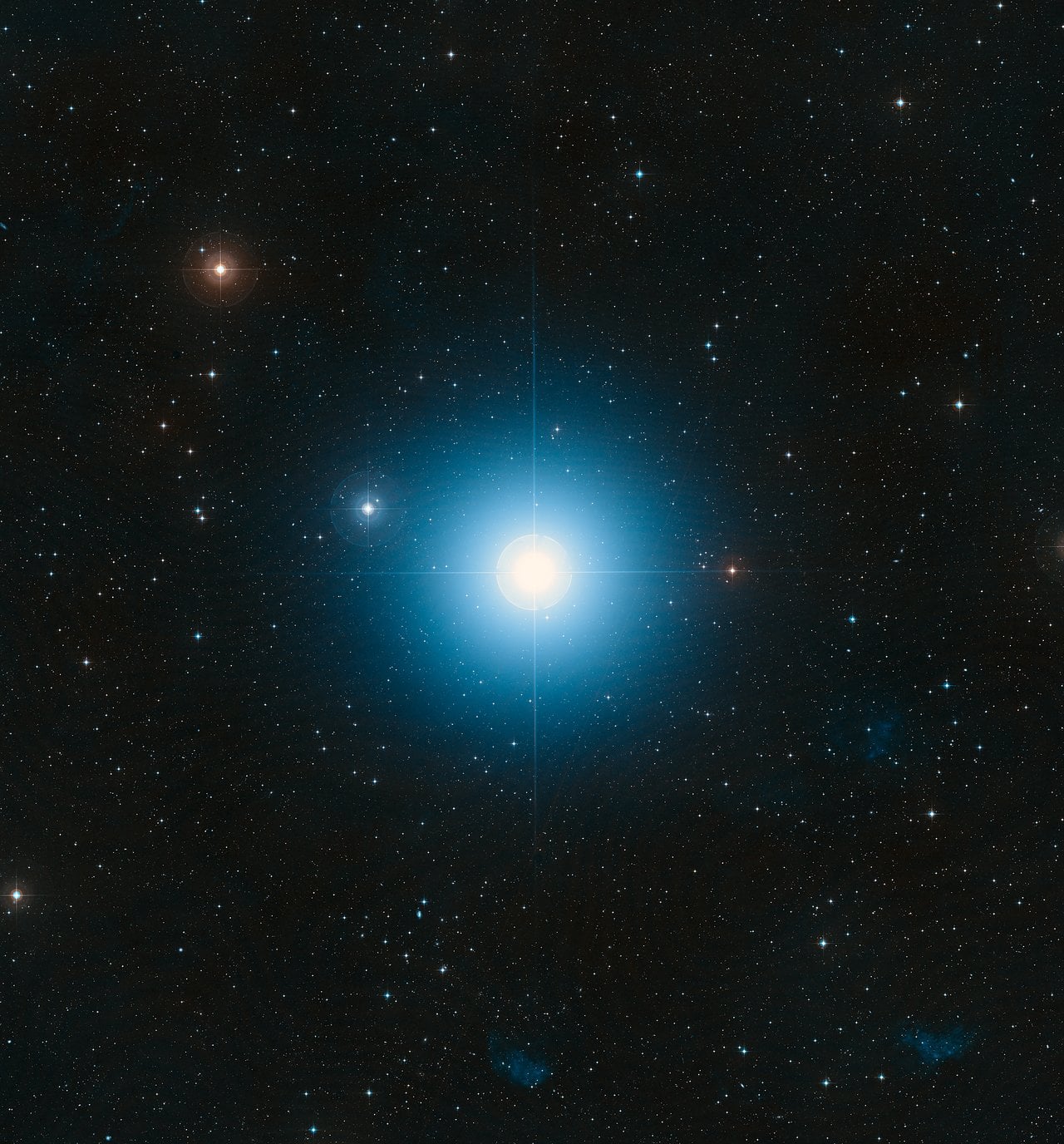
The James Webb Space Telescope (JWST) has been used to study the Fomalhaut system, a nearby and bright star system with a complex dusty disk. Previous observations suggested the presence of an exoplanet, Fomalhaut b, but recent research using the JWST's NIRCam instrument has cast doubt on its existence. While 10 sources were detected in the dusty rings, one object at the edge of the inner dust ring remains unexplained. If confirmed as an exoplanet, it would have significant interactions with the inner debris disk. Further observations are planned to determine the nature of this object and explore the complex disk structure of the Fomalhaut system.
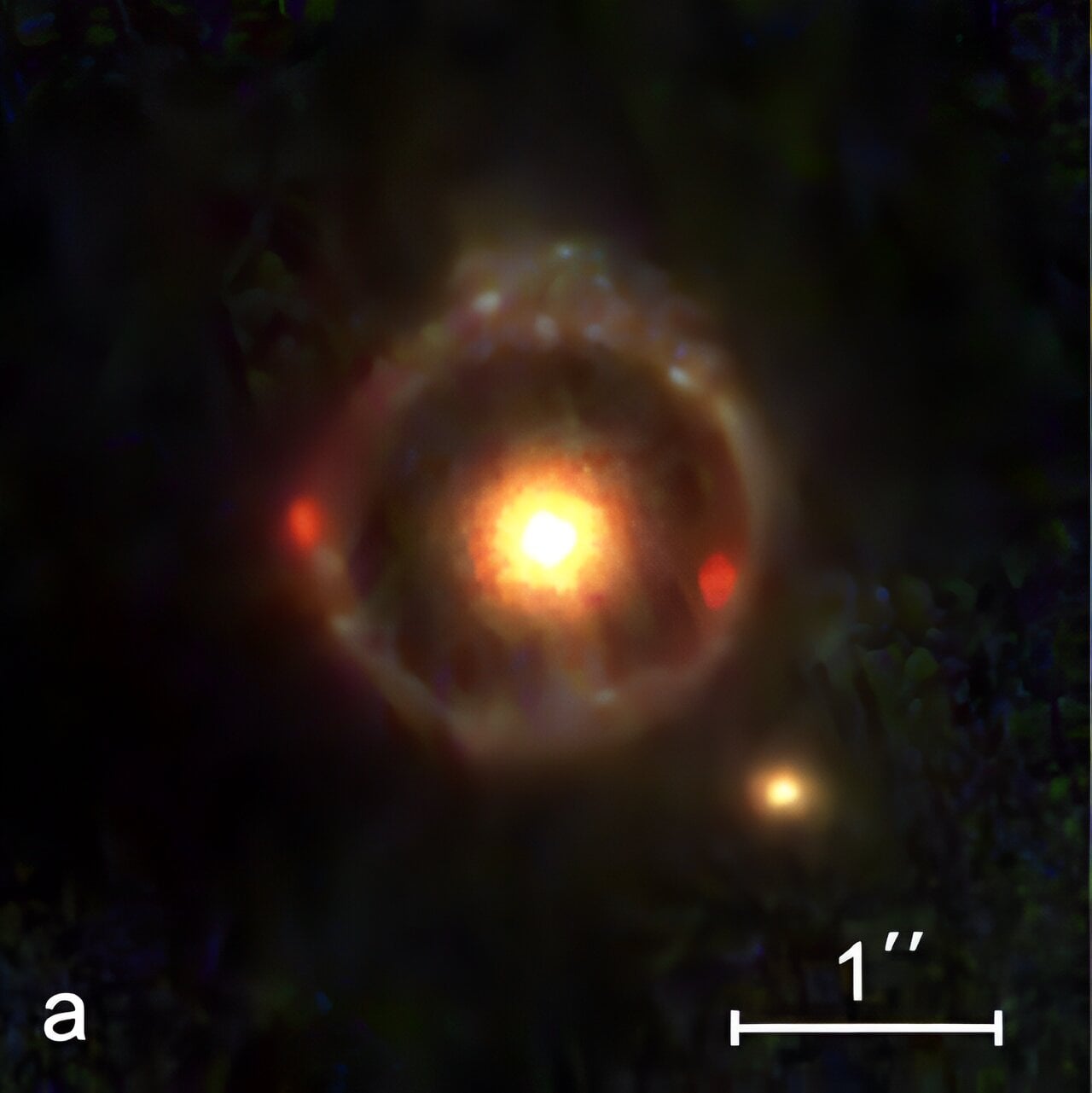
Astronomers using the James Webb Space Telescope (JWST) have discovered a massive and compact quiescent galaxy, designated JWST-ER1, as part of the ongoing COSMOS-Web survey. The galaxy exhibits a complete Einstein ring, a phenomenon caused by gravitational lensing. JWST-ER1 has a redshift of 1.94, a radius of approximately 21,500 light years, and an estimated mass of 650 billion solar masses. The galaxy is almost perfectly round and shows no obvious signs of star formation or irregularities. Further observations are needed to investigate its mass and determine if it is the central galaxy of a cluster progenitor.
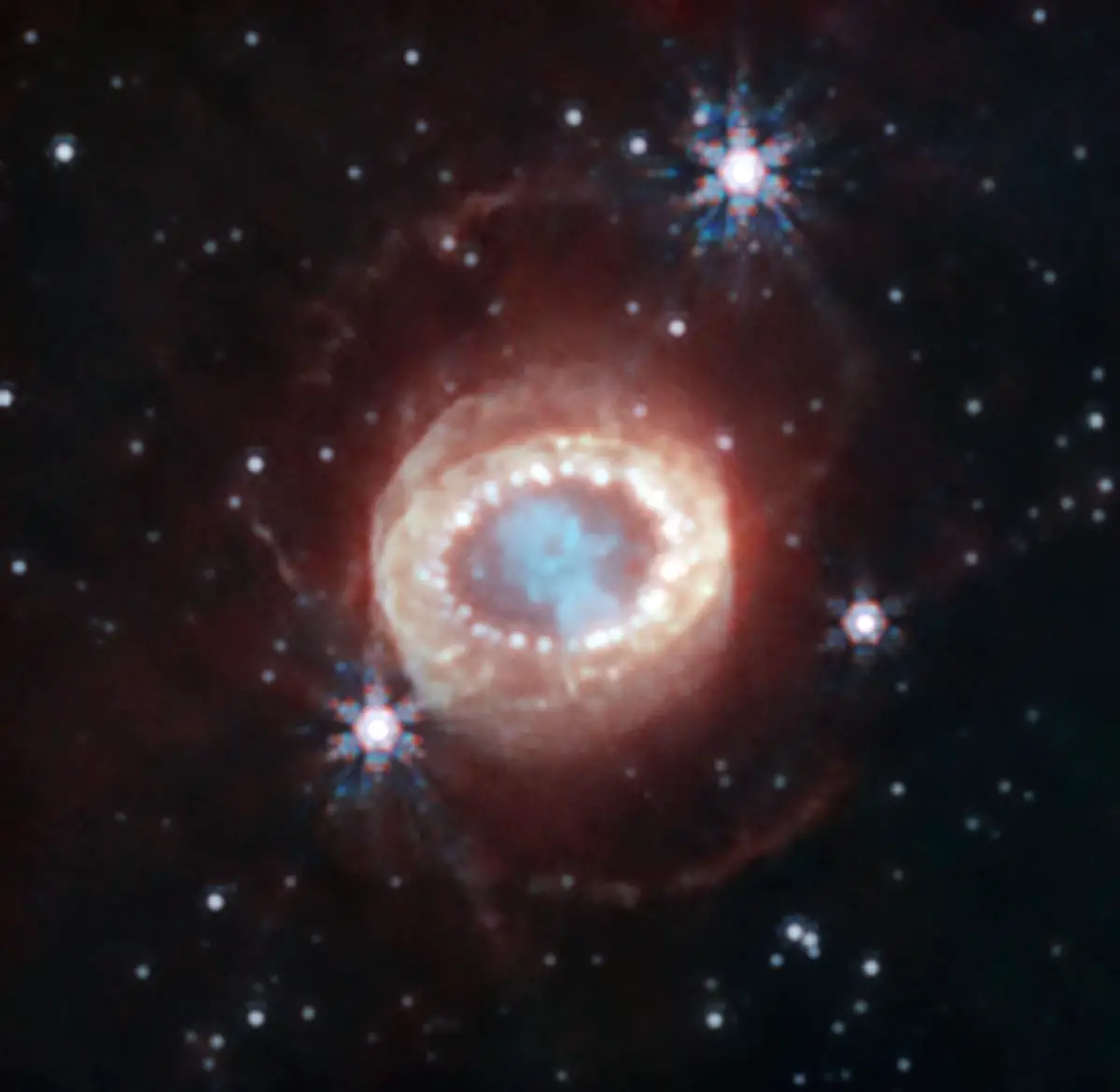
NASA's James Webb Space Telescope has captured detailed images of Supernova 1987A, revealing new structures and providing insights into the development of supernovas over time. The telescope's NIRCam instrument uncovered crescent-like structures, previously unseen, which are believed to be part of the outer layers of gas ejected from the explosion. The high-resolution images offer unprecedented clarity and detail, surpassing the observations made by the now-retired Spitzer telescope. Webb will continue to study the supernova, collaborating with other observatories to unravel its mysteries and gain further insights into its past and future.
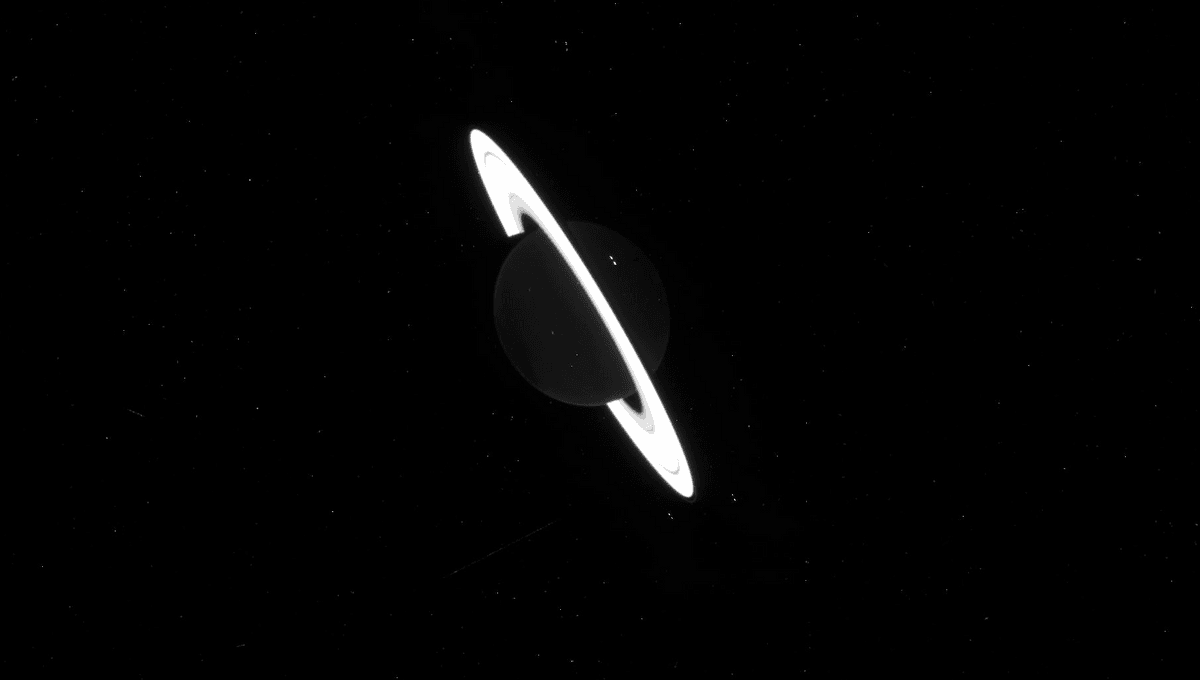
The James Webb Space Telescope (JWST) has captured stunning images of Saturn and its rings using different filters, including the Near-Infrared Camera (NIRCam) instrument. The F323N filter used in one image makes Saturn almost disappear against the blackness of space, while the rings dominate the image due to their reflection of radiation. The spots of light on Saturn are cosmic rays affecting the image and will be removed in processing. The JWST also observed the TRAPPIST-1 system during its two-hour observation period.