Tag

Planetesimals

All articles tagged with #planetesimals

Chemical fingerprints reveal Earth and Mars built via opposite planetary recipes
astronomy3 days ago

Chemical fingerprints reveal Earth and Mars built via opposite planetary recipes

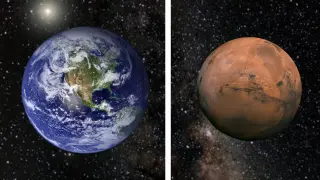
A new study in Nature Astronomy reveals that Earth and Mars, despite forming side-by-side in the same solar system, developed through fundamentally different processes. Earth’s mass is primarily derived from pebble accretion, while Mars’s is dominated by planetesimal collisions. Researchers analyzed volatile elements in planetary mantles to determine these distinct formation histories.
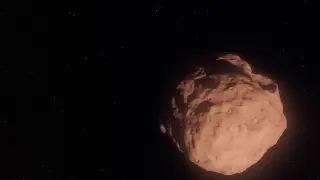
Early Outer Solar System Planetesimals Were Mostly Heat-Formed Chondrule Rock, Study Says
science20 days ago

Early Outer Solar System Planetesimals Were Mostly Heat-Formed Chondrule Rock, Study Says

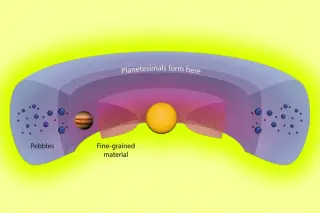
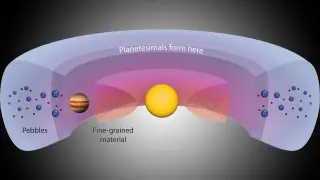
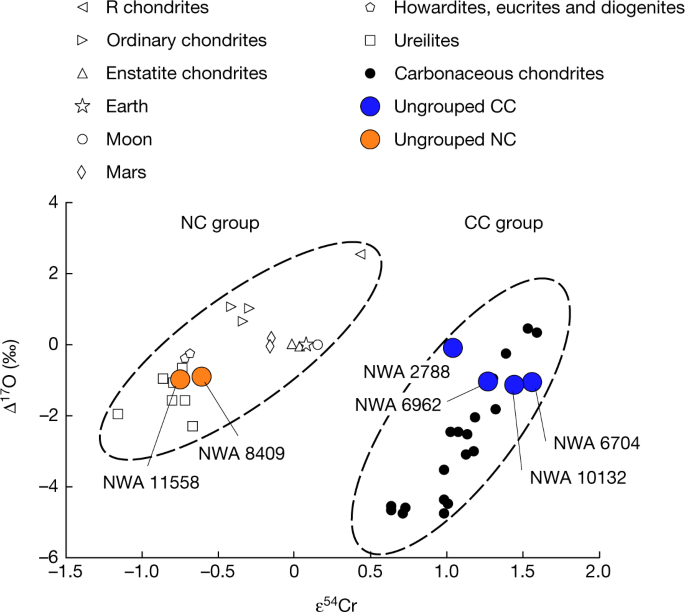
New analysis of carbonaceous iron meteorites shows the first outer-Solar-System planetesimals contained just 8–17% fine, volatile-rich matrix and 83–92% chondrules—heated rock beads formed when aluminium-26 decayed, melted interiors, and drove core formation. Aerodynamic gas drag in the protoplanetary disk caused larger chondrules to drift and concentrate while fine dust stayed with the gas, effectively filtering out much ice-rich material from the earliest bodies. This early selective construction extends a pattern seen in younger meteorites and implies the outer disk’s composition was shaped from the start by particle size and gas dynamics, not by temperature alone.

Webb and Hubble Uncover 27 Tiny Distant Objects Beyond Neptune
space25 days ago

Webb and Hubble Uncover 27 Tiny Distant Objects Beyond Neptune

The JWST and Hubble teamed up to identify 27 newly discovered Trans-Neptunian Objects beyond Neptune, each under about 40 km across. Using infrared measurements to determine sizes and analyzing color/composition, the researchers found that the smallest TNOs retain pristine surfaces, challenging expectations that collisions would heavily alter them. The deep survey—described in two papers in The Astronomical Journal—reveals similar size distributions for both the cold Kuiper Belt and the hot scattered-disk populations, implying planetesimal formation produced comparable sizes regardless of the disk’s conditions and raising questions about the rate or effects of distant impacts.

Space snowmen in the Kuiper Belt: a new clue to their formation
astronomy7 months ago

Space snowmen in the Kuiper Belt: a new clue to their formation

New simulations show that spinning clouds of pebble-sized particles can form contact binaries—two linked bodies—and even triple planetesimals, offering a simple explanation for space snowmen in the Kuiper Belt; the study finds about 4% of simulated planetesimals become contact binaries, a share below the previously thought 10–25%, and notes that more detailed particle modeling could raise that fraction.

Gentle Gravity Shapes Peanut-Shaped Kuiper Belt Objects
science7 months ago

Gentle Gravity Shapes Peanut-Shaped Kuiper Belt Objects

A new study using 54 simulations of pebble clouds (each with 100,000 particles) shows that peanut-shaped Kuiper Belt objects like Arrokoth can form through gentle gravitational collapse rather than violent impacts. About 29 of the simulations produced Arrokoth-like contact binaries, supporting the idea that such objects arise from mild formation processes, though only about 3% of the planetesimals formed a contact binary in the model, indicating more work is needed.

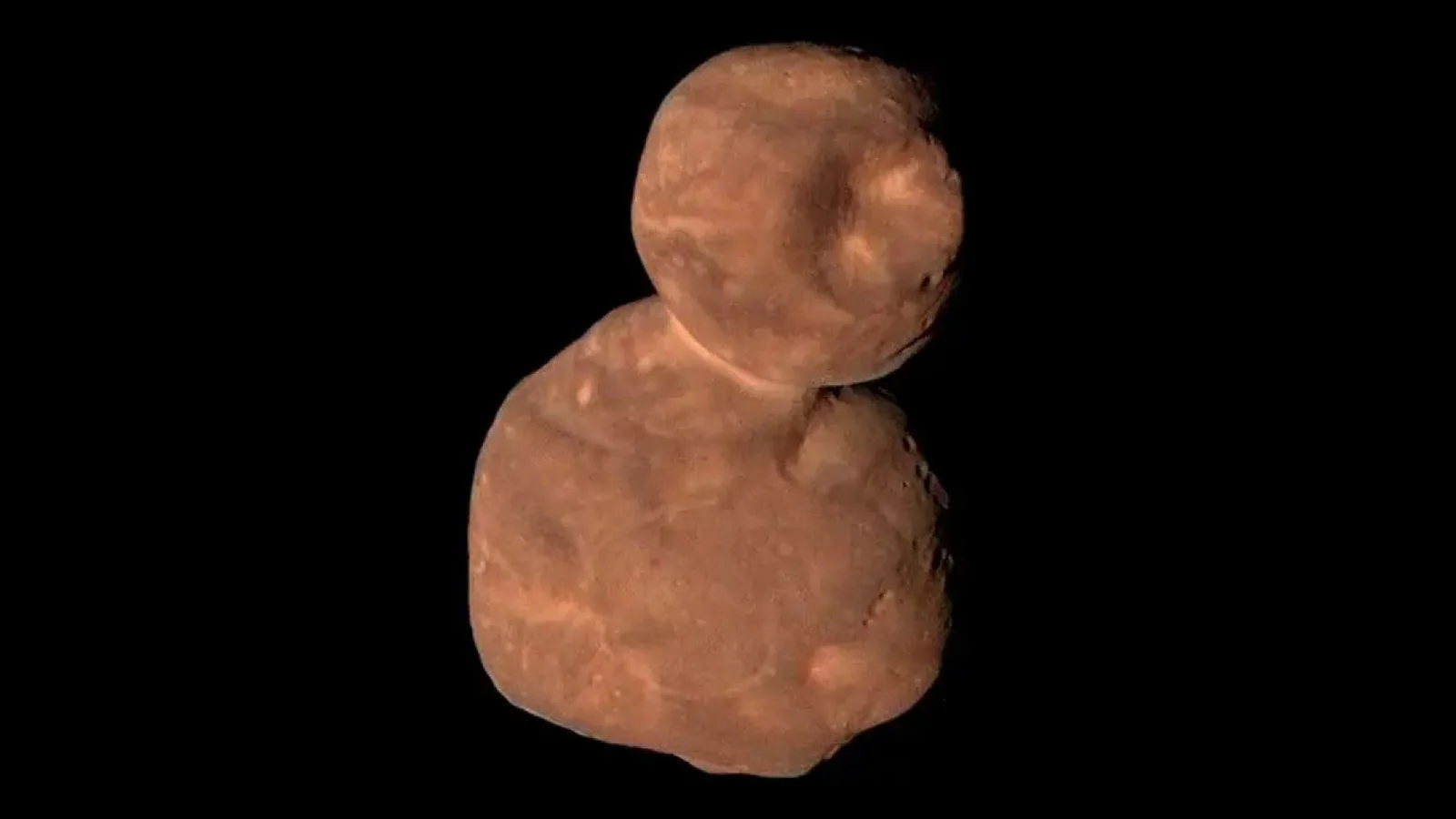
Pebble-cloud collapse may forge Arrokoth’s snowman shape
space7 months ago

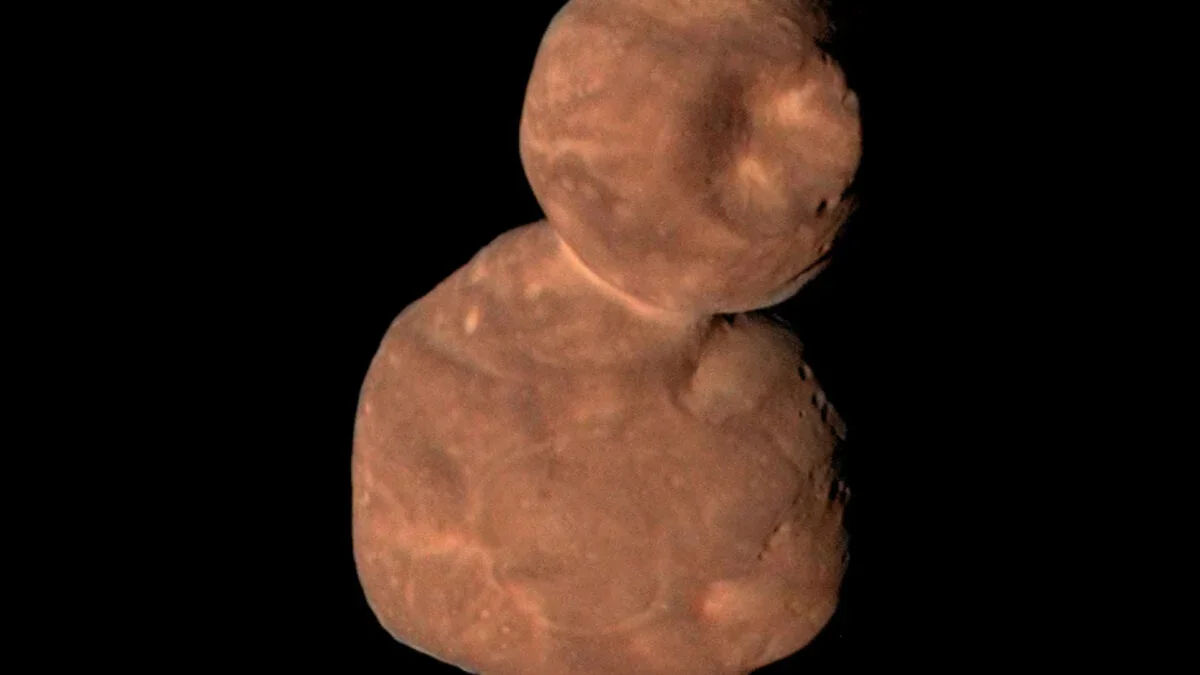
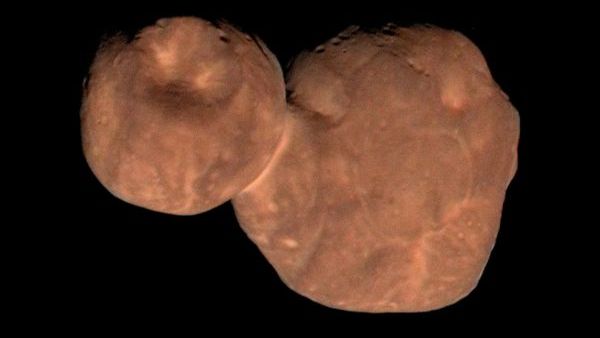
Pebble-cloud collapse may forge Arrokoth’s snowman shape

New computer simulations show that gentle gravitational collapse of pebble clouds in the early solar system can produce double-lobed, snowman‑like bodies such as Arrokoth, via two small planetesimals merging at about 5 meters per second to form a contact binary. The results support a gentle formation path for Kuiper belt objects, though the model predicts about 4% of objects form this way, while telescopic surveys suggest higher fractions, implying other formation routes may also contribute.

Unveiling the Secrets of Arrokoth: Insights into Solar System Formation
space3 years ago

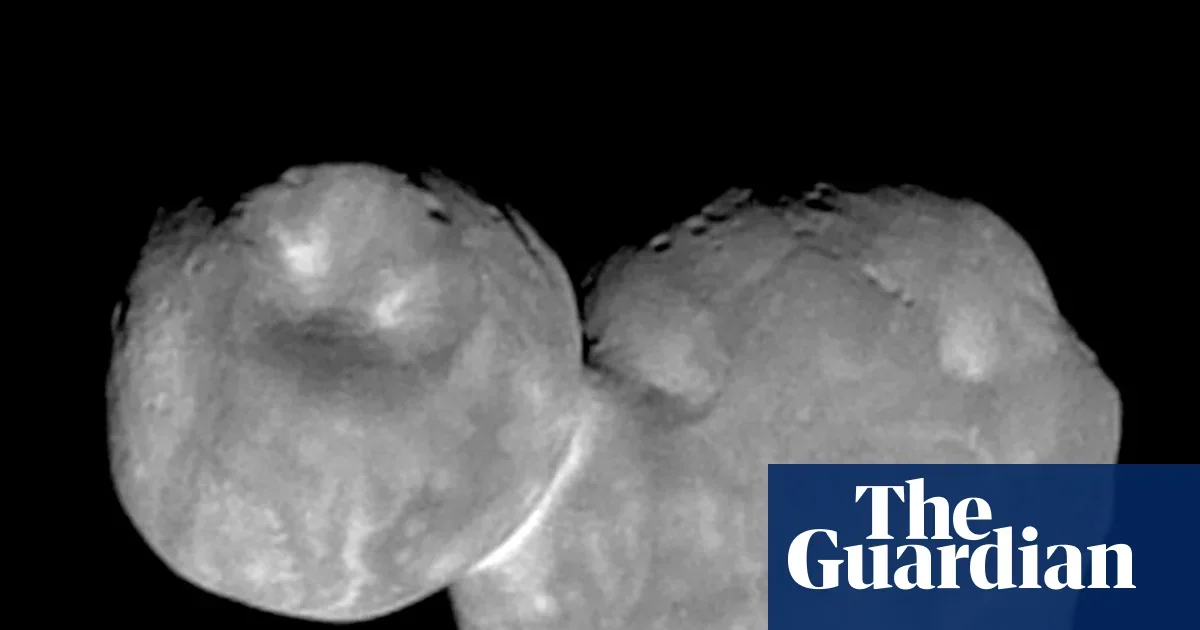
Unveiling the Secrets of Arrokoth: Insights into Solar System Formation

A new study on the trans-Neptunian object Arrokoth has revealed that its lobes are dotted with mounds, suggesting a common origin and shedding light on the formation of planetesimals in our solar system. The mounds share similar shape, size, color, and albedo, indicating that they clumped together to form the lobes. This discovery supports the streaming instability model of formation, where gentle collisions allow smaller objects to accumulate into larger ones. The findings may require a reevaluation of theories about planetesimal formation and could have implications for future missions targeting similar objects.

Webb telescope discovers multiple celestial debris belts and hidden planets beyond our Solar System.
science3 years ago

Webb telescope discovers multiple celestial debris belts and hidden planets beyond our Solar System.

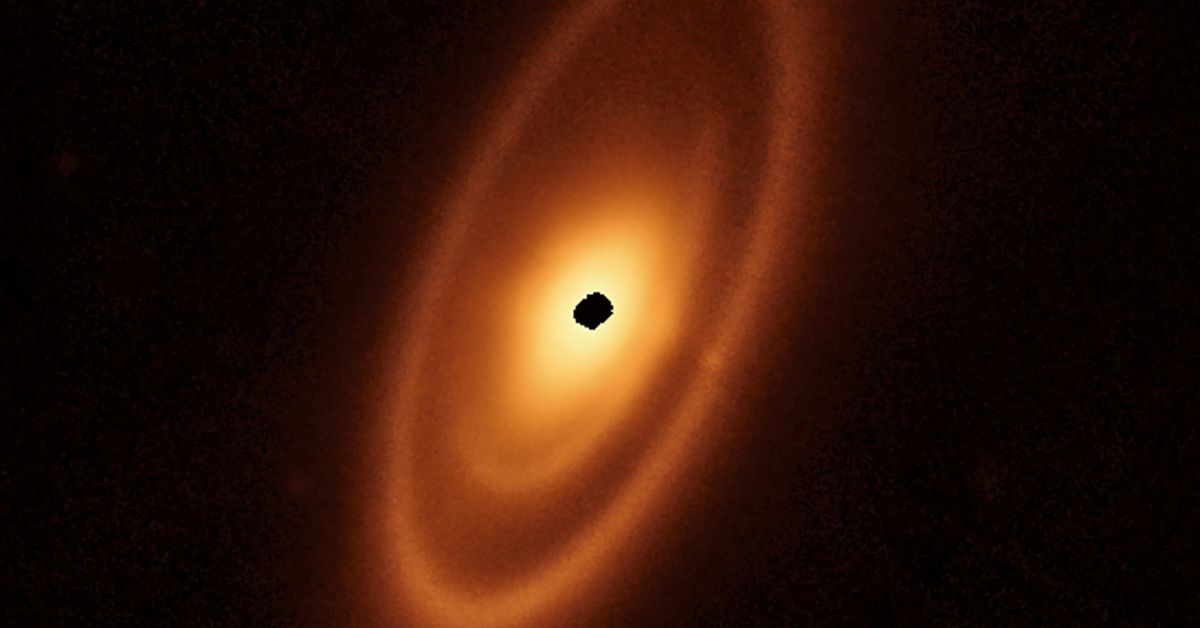
The James Webb Space Telescope has observed three concentric dusty rings of debris orbiting Fomalhaut, one of the brightest stars in our night sky located 25 light years from Earth. These three belts appear to be populated by objects called planetesimals, some of which are thought to join together early in a star system's history to form planets while others remain as debris like asteroids and comets. The observations offer insight into planetary beginnings and provide the fullest view to date of such structures outside our solar system.

The Origins of Earth's Water: Insights from Planetary Formation and Space Observations.
astronomy3 years ago

The Origins of Earth's Water: Insights from Planetary Formation and Space Observations.

A new study suggests that the degassing of early-formed planetesimals restricted the delivery of water to Earth during its formation. The research proposes that the water content of the inner solar system was initially higher than previously thought, but the process of degassing removed much of the water from the planetesimals before they could merge to form Earth. This finding sheds light on the origin of Earth's water and the volatile content of the inner solar system.