Tag

Protoplanetary Disks

All articles tagged with #protoplanetary disks

JWST traces a ticking clock for planet formation across 72 young stars
science5 days ago

JWST traces a ticking clock for planet formation across 72 young stars

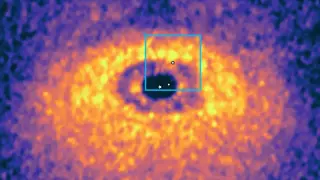
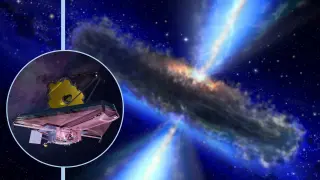
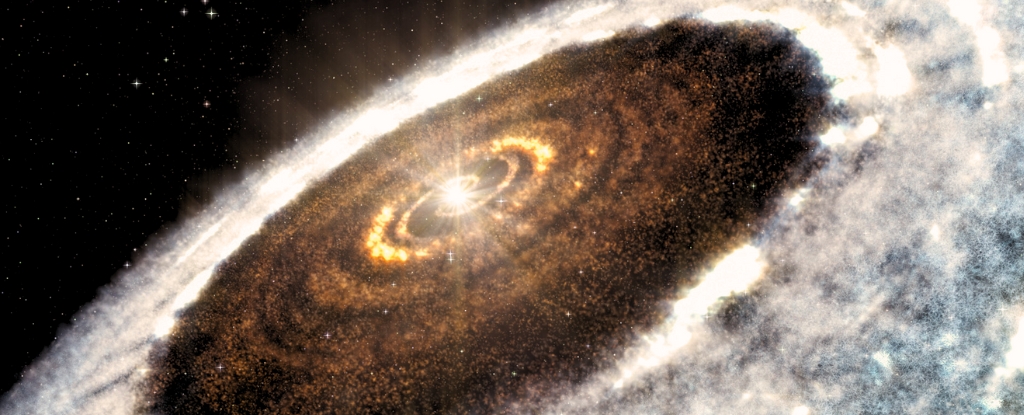
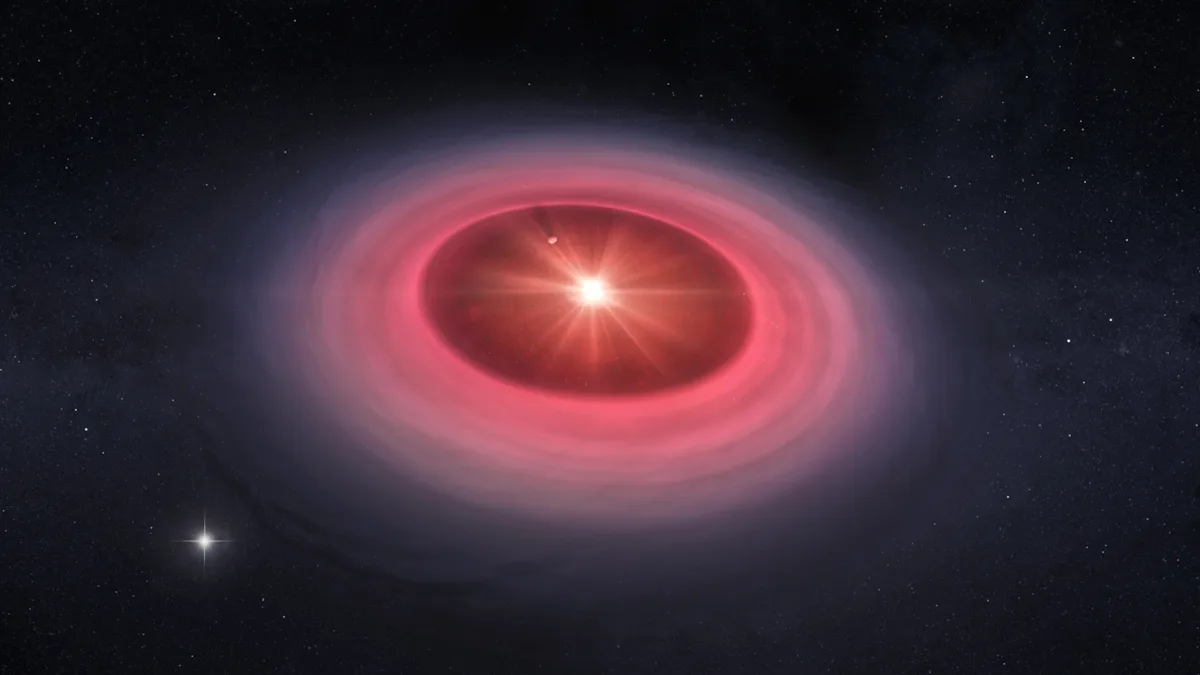
Using JWST's Mid-Infrared Instrument, astronomers followed 72 young sun-like stars to map how planet-forming material escapes their disks. The findings show gas-dust disks disperse through two shifting regimes: early, magnetically driven jets and winds dominate mass loss, and as disks thin, high-energy stellar radiation drives photoevaporation. This evolving mechanism sets a fundamental clock for when gas giants can form and helps explain where different types of planets are likely to emerge.

JWST spotlights Orion A as a bustling stellar nursery
space2 months ago

JWST spotlights Orion A as a bustling stellar nursery

NASA’s James Webb Space Telescope released a detailed image of the Orion A giant molecular cloud, a 290‑light-year filament about 1,300 light-years away that hosts thousands of young stars and their protoplanetary disks. The region has formed roughly 3,000 stellar objects over the past few million years, making it one of the closest and most active stellar nurseries. The JWST image, issued as the telescope’s Picture of the Month, underscores the mission’s transformative impact on studying star and planet formation since its July 2022 launch.

Two suns, more worlds: binary stars may birth more planets than single stars
space4 months ago

Two suns, more worlds: binary stars may birth more planets than single stars

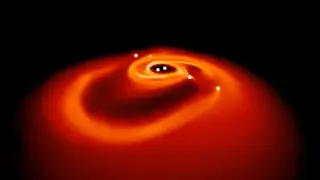
New simulations suggest planets may form more easily in the outer parts of circumbinary disks around binary stars, as inner zones near the stars are too chaotic. Beyond a “forbidden zone,” disks can become gravitationally unstable and fragment to form multiple planets—often gas giants—while some worlds may be ejected as rogue planets. The study implies binary-star systems could host many planets, making Tatooine-like worlds less rare, and points to ALMA, JWST, and future telescopes to observe such disks; over 50 circumbinary planets are already known.

Evidence Suggests Life’s Building Blocks Originated in Space
science1 year ago

Evidence Suggests Life’s Building Blocks Originated in Space

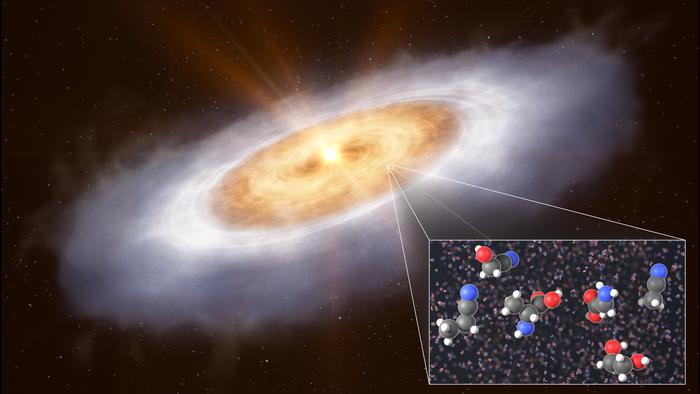
Astronomers using ALMA detected 17 complex organic molecules in a young star's protoplanetary disk, including precursors to amino acids and nucleobases, suggesting that life's chemical roots are inherited from earlier interstellar stages and can continue to develop during planet formation, especially during stellar outbursts that release these molecules into detectable gas phases.

New Imaging Techniques Unveil Early Stages of Planet Formation
science1 year ago

New Imaging Techniques Unveil Early Stages of Planet Formation

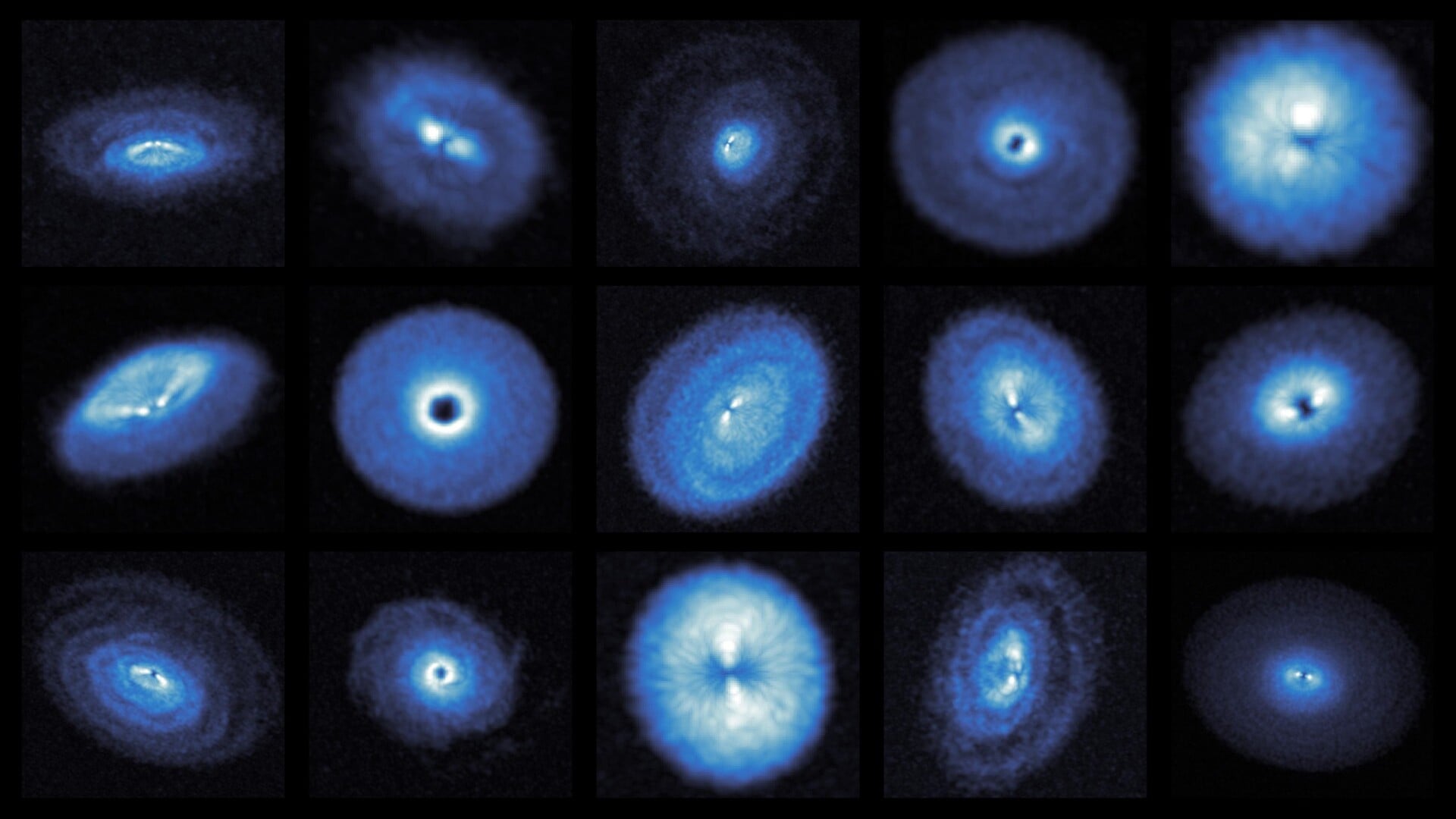
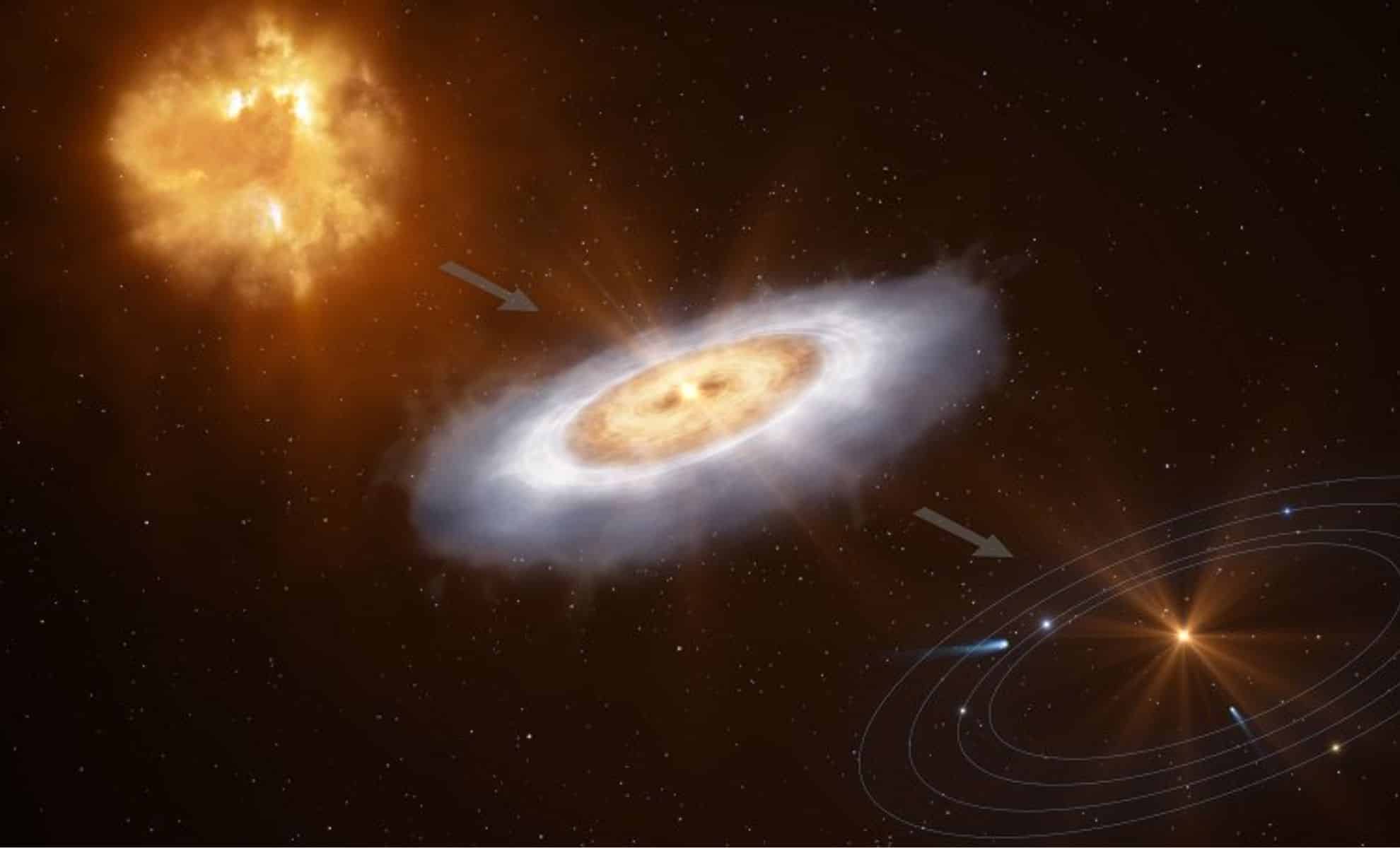
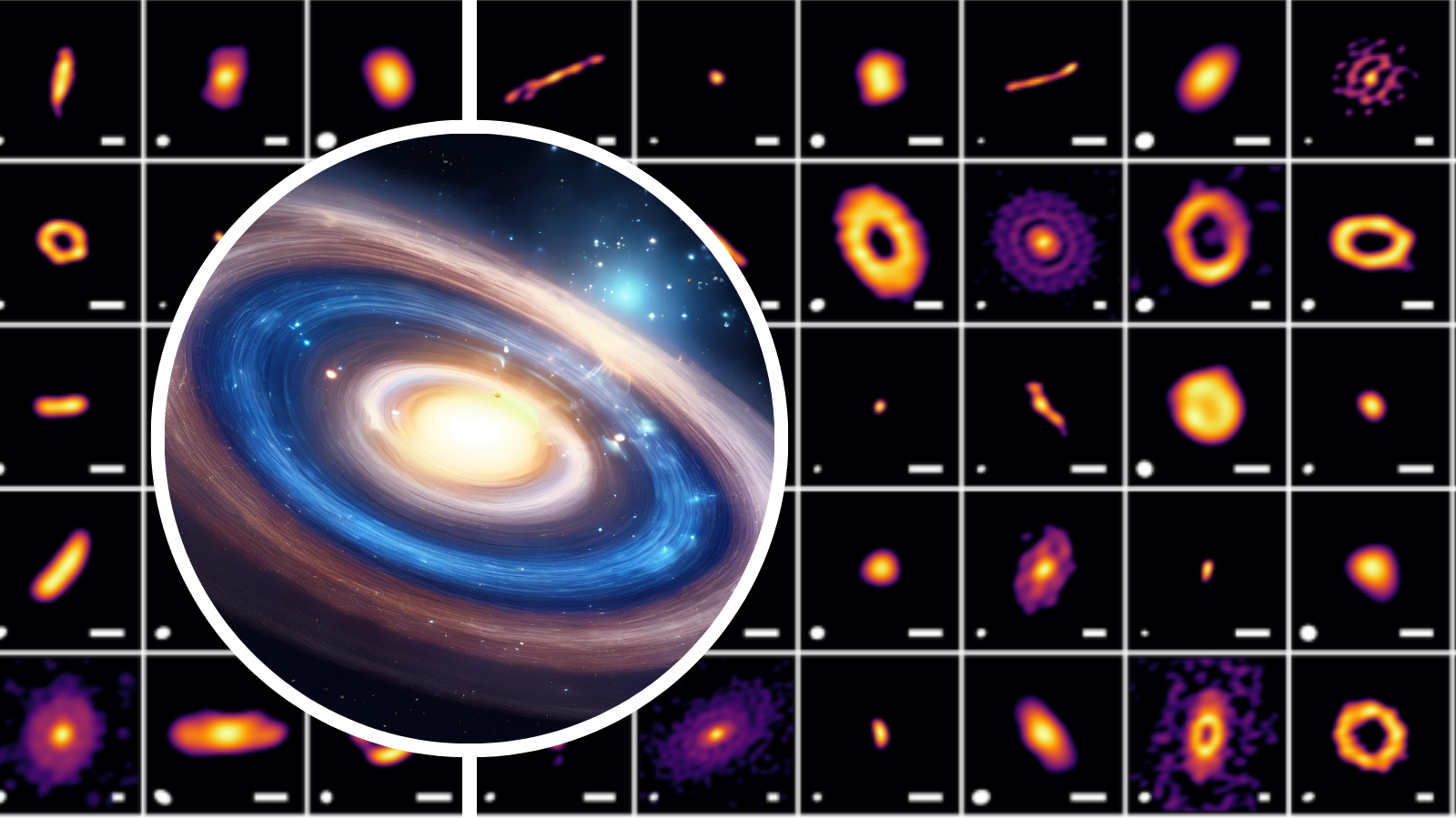
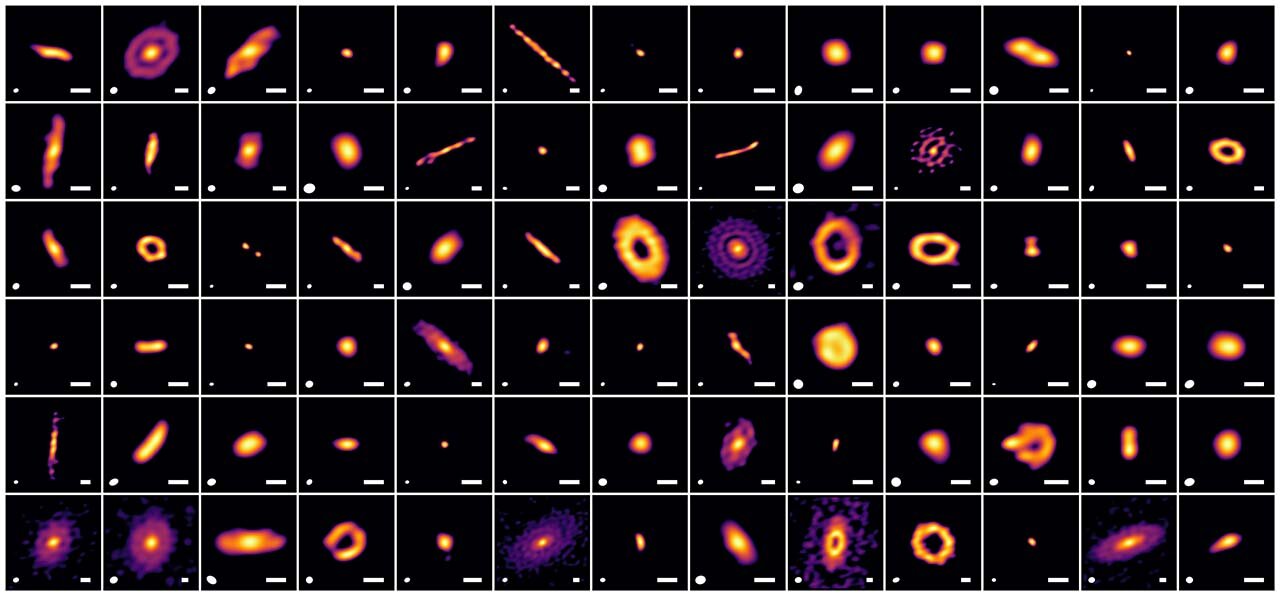
New super-resolution imaging of protoplanetary disks in the Ophiuchus region reveals that characteristic structures indicating planet formation appear within a few hundred thousand years after star birth, suggesting planets begin forming much earlier than previously thought. The study used advanced imaging techniques to analyze 78 disks, finding that planets grow alongside their young stars, with structures emerging in disks larger than 30 au during early star formation stages.

James Webb Telescope Finds Planets in Extreme Environments
science1 year ago

James Webb Telescope Finds Planets in Extreme Environments

Using the James Webb Space Telescope, astronomers discovered that Earth-like planets can form even in the galaxy's most radiation-intense environments, challenging previous assumptions about the effects of ultraviolet radiation on planet formation, with findings showing that the inner regions of protoplanetary disks remain shielded and capable of supporting habitable planets.

Chandra Maps Hazardous Zones for Planet Formation in Star Clusters
science1 year ago

Chandra Maps Hazardous Zones for Planet Formation in Star Clusters

NASA's Chandra X-ray Observatory and the retired Spitzer Space Telescope have identified 'danger zones' for planet formation around young stars in the Cygnus OB2 star cluster. These zones are characterized by high-energy ultraviolet and X-ray radiation from massive stars, which can rapidly dissipate protoplanetary disks, hindering planet formation. The study found that in densely packed regions with intense radiation, the presence of protoplanetary disks drops significantly, making these areas less conducive to planet formation.