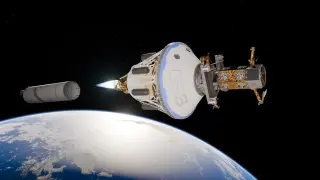
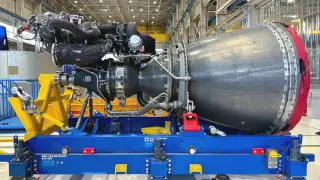
Blue Origin announced a new third stage and a more powerful first-stage engine for its New Glenn rocket, aiming to increase payload capacity and reduce manufacturing costs.
Blue Origin announced two major upgrades for its New Glenn rocket: the Northstar engine, which offers higher thrust at a fraction of the cost, and the GS3 third stage, designed for deep-space missions. The company aims to achieve a launch cadence of over 1,000 flights per year, though it faces delays from a recent pad explosion.
The U.S. Space Force is facing a critical launch shortage as SpaceX phases out its dominant Falcon 9 rocket in favor of Starship, which cannot accommodate many military satellites. With SpaceX accounting for 85% of U.S. launches in 2025, the transition leaves the Pentagon without reliable alternatives. Competing rockets like ULA’s Vulcan and Blue Origin’s New Glenn are currently grounded or delayed, while newer medium-lift vehicles remain years away from operational readiness. This dependency on a single private entity raises significant national security concerns.
German startup Isar Aerospace successfully launched its Spectrum rocket into orbit from Norway on September 5, 2026, becoming the first purely commercial European company to achieve this milestone. The success, achieved on the second attempt, has positioned Isar as a leader in Europe's emerging private launch sector, with a reported commercial pipeline exceeding 10 billion euros. While Isar focuses on scaling production to meet demand, other European and US firms are also advancing, including Stoke Space's new funding for larger rockets and The Exploration Company's push for heavy-lift capabilities. Meanwhile, the UK is investing heavily in new spaceport infrastructure to reduce reliance on foreign launch sites.
The European Space Agency has officially shelved planned upgrades for the Ariane 6 Block 3 variant. This decision comes as Europe faces a projected shortage of launch capacity by 2030, with current production levels insufficient to meet growing demand from satellite constellations and defense sectors.
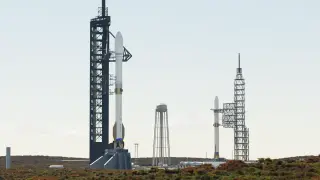
Blue Origin plans to add a second launch pad at Cape Canaveral to support its larger New Glenn 9x4 rocket, while simultaneously repairing the existing pad damaged by a May explosion. The company aims to resume flights with the current New Glenn 7x2 by year's end but has not provided a timeline for the new pad or the larger vehicle.
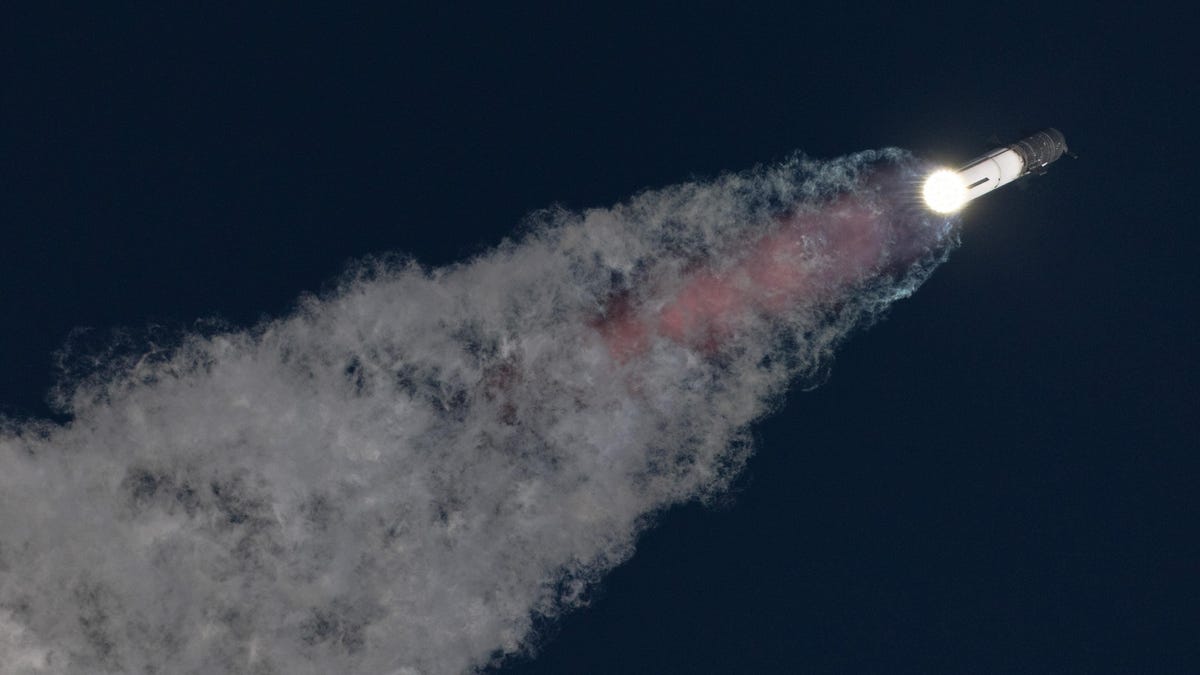
SpaceX's 13th Starship test flight on July 24, 2026, achieved a historic first by successfully deploying 20 next-generation Starlink satellites and achieving a soft splashdown for the upper stage. However, the Super Heavy booster failed to ignite all engines during re-entry, resulting in an explosive impact in the Gulf of Mexico. While the flight demonstrated significant progress for the Version 3 vehicle, the booster failure triggered a sharp decline in SpaceX's stock, which fell to a new low of $108.66 shortly after its IPO.
SpaceX is preparing for the third test flight of its experimental megarocket, Starship, aiming to achieve several challenging milestones including successful ascent and burn of both stages, opening and closing of Starship’s payload door, and the first-ever re-light of a Raptor engine in space. The company also plans a propellant transfer demonstration and a different trajectory with a splashdown in the Indian Ocean. The flight, if successful, will demonstrate significant advancements in rocket development and space exploration.
The development of the European Space Agency's Ariane 6 rocket is running years behind schedule and is unlikely to fly before mid-2024. In addition to the delays, there are concerns that the rocket will not meet its price targets, with projected costs per launch higher than initially predicted. ArianeGroup, the company responsible for manufacturing the rocket, is reportedly seeking a substantial increase in subsidies from the European Space Agency to support the operation of the Ariane 6. This could potentially eliminate any cost savings compared to its predecessor, the Ariane 5.
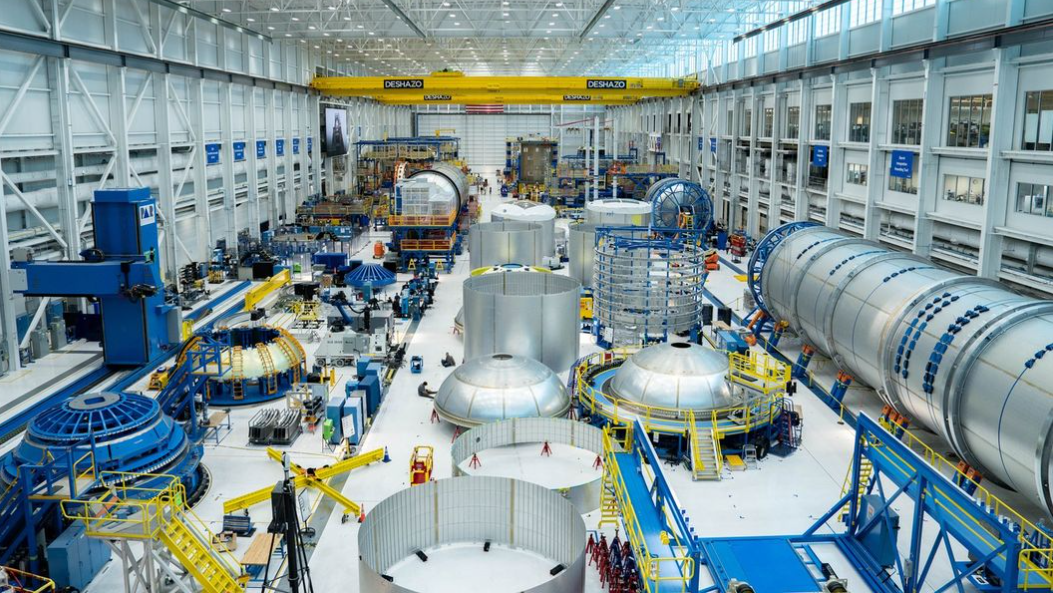
Blue Origin has provided a rare glimpse inside its factory at NASA's Kennedy Space Center, revealing hardware for its new orbital rocket, the New Glenn. The image shared on Instagram showcases rocket stage and interstage components and propellant tank domes, indicating progress towards a test launch. The two-stage rocket, standing at 322 feet tall, will have a reusable first stage and is expected to compete with SpaceX's Falcon 9 rocket. Blue Origin has a long-term lease for Launch Complex 36 in Florida and has been signed up by NASA for its fleet of commercial launchers, potentially being used for crewed lunar missions.
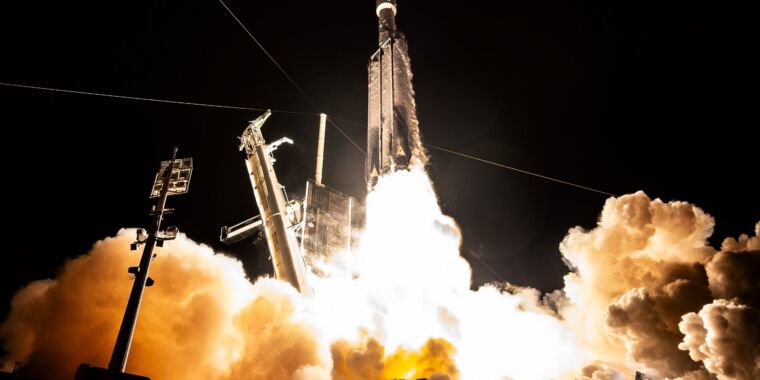
The Australian commercial space industry is facing challenges after the government cut a $1.2 billion Earth science program, leading to a loss of confidence and investment. Meanwhile, iRocket has signed an agreement with the Air Force Research Laboratory to develop rocket propulsion hardware, and Virgin Galactic expects limited revenues from its suborbital spaceplane flights. The development of Europe's Ariane 6 rocket lacks transparency, with the European Space Agency not planning to provide live video of its test-firing. Additionally, the timeline for Russia's "Amur" rocket has been pushed back to 2028-2030, and Sierra Space has won a contract to develop an upper stage engine. The Australian Space Agency has confirmed that an object found on a beach is part of an Indian rocket, and Aerojet Rocketdyne has been acquired by L3Harris. Lastly, SpaceX's Falcon Heavy successfully launched the heaviest commercial communications satellite ever built.
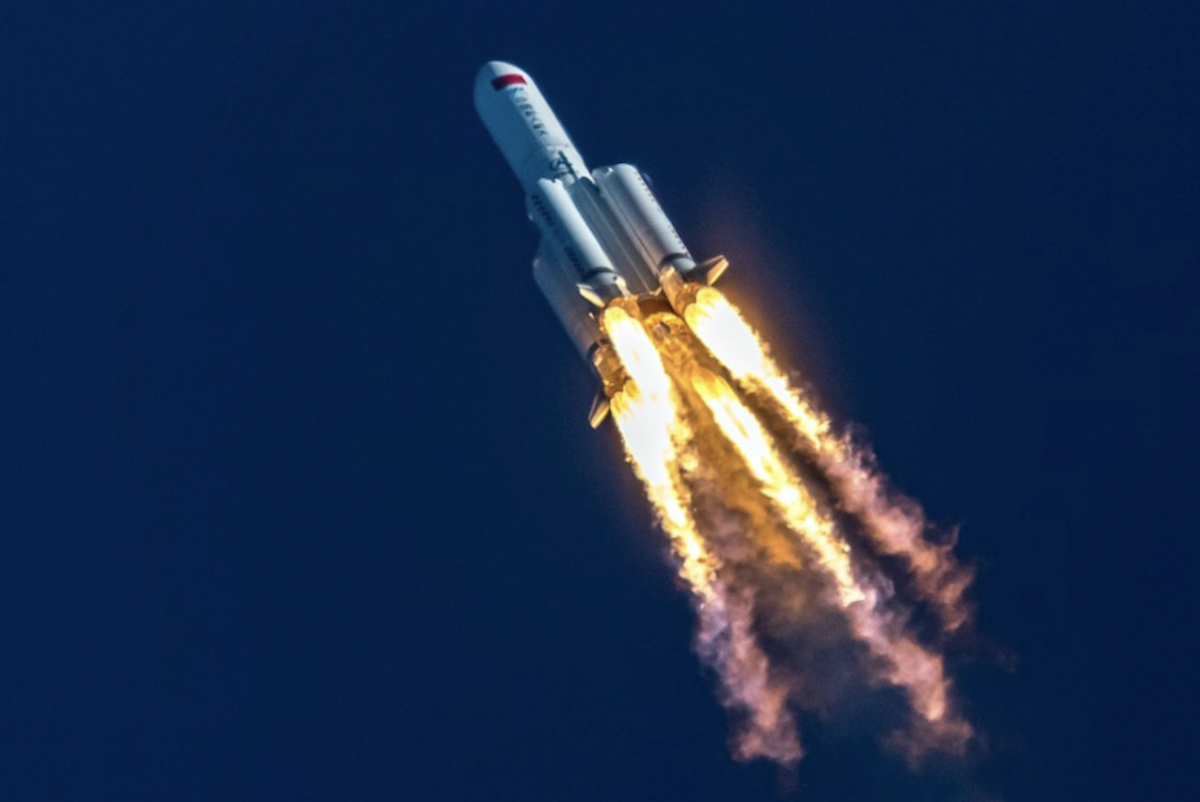
China has revised its plan for a manned moon landing in 2030, opting to use two Long March 10 carrier rockets instead of the previously planned super-heavy Long March 9. The new plan involves launching a moon surface lander and manned spacecraft separately, which will then dock with each other during moon orbit to complete the landing. The Long March 9 rocket's launch has been pushed back to 2035 as Chinese scientists focus on developing methane-powered engines. Chinese researchers are currently working on the Long March 10, a new generation of manned spacecraft, lunar lander, lunar landing spacesuit, and manned lunar rover.