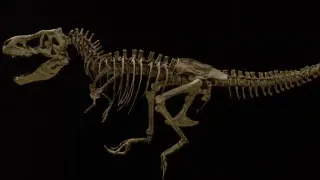
Rib of Scotty the T. rex reveals 66-million-year-old healing wound via neutron imaging
Neutron imaging at Oak Ridge National Laboratory uncovered a vast network of mineralized blood vessels in the healing rib of Scotty, the largest Tyrannosaurus rex. The 66‑million‑year‑old wound began forming new vessels as it healed, and the salty marsh environment helped preserve these soft tissues until Scotty died. Researchers will extend the work to more fossils using neutron and X‑ray imaging to compare healing patterns across species.