Tag

Solar Flares

All articles tagged with #solar flares

Triple Solar Flares Could Bring Northern Lights to Parts of the U.S.
science1 month ago

Triple Solar Flares Could Bring Northern Lights to Parts of the U.S.

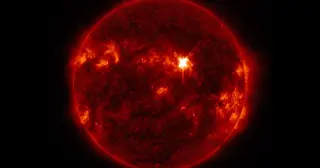
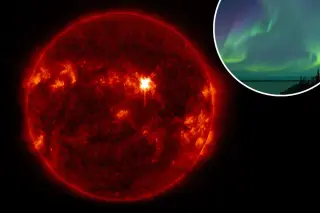
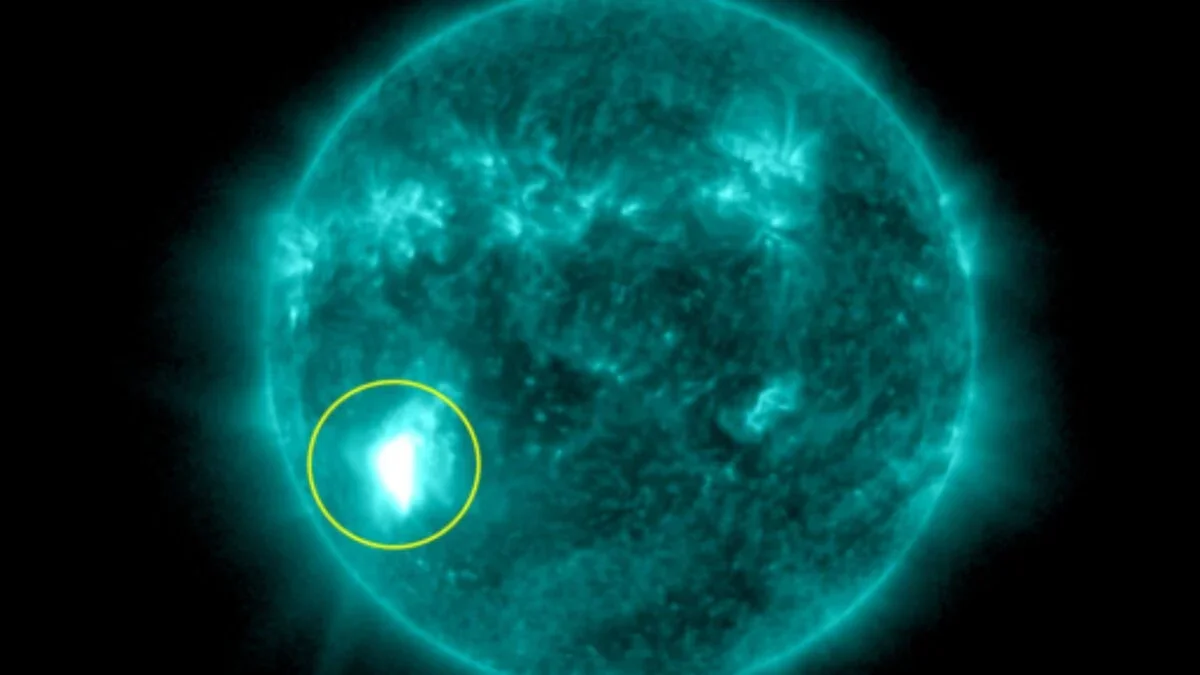
A trio of powerful solar flares from sunspot region 4455—M9.3, M7.9 and an X1—launched coronal mass ejections that could spark auroras as far south as Illinois and other U.S. states during June 4–5, 2026. NOAA has issued a G3 geomagnetic storm watch, warning of potential displays in dark skies away from city lights; exact timing may shift, so check real-time forecasts.

Sun unleashes triple solar flares, boosting chances for vivid northern lights
space1 month ago

Sun unleashes triple solar flares, boosting chances for vivid northern lights

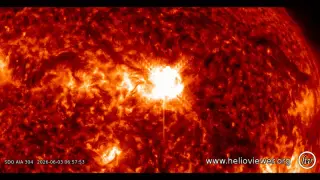
Three major solar flares erupted from sunspot region 4455 in under 24 hours—M9.3, M7.9 and an X1—that triggered radio blackouts on Earth and launched Earth-directed CMEs. With geomagnetic storm activity expected (G1–G3) in the coming days, forecasters say auroras could appear at lower latitudes if the CMEs hit as anticipated (potentially around June 4–6).

ISS gains sun-watching telescope as Russians complete 6-hour EVA
space-exploration1 month ago

ISS gains sun-watching telescope as Russians complete 6-hour EVA

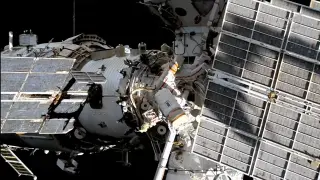
Two Russian cosmonauts spent about six hours outside the ISS installing the Solntse-Teragerts sun-observing telescope on the Zvezda module, retrieving a semiconductor film sample from Nauka, inspecting a Kurs antenna, and completing multiple tasks. The telescope is designed to observe strong solar flares and run through 2028, while Kud-Sverchkov’s total spacewalk time rises to 12h11m and Mikaev records his first EVA; the outing also marked Energia’s 80th anniversary for Roscosmos.

Twin X-class solar flares trigger radio blackouts on Earth, NASA says
science2 months ago

Twin X-class solar flares trigger radio blackouts on Earth, NASA says

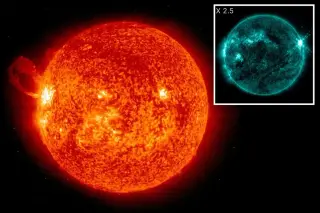
NASA reports two X-class solar flares within seven hours—X2.4 on April 23 and X2.5 on April 24—that knocked out radio signals on Earth’s dayside and likely accompanied by CMEs. While the sunspot’s position makes a direct Earth impact unlikely, forecasters say a glancing CME could bring geomagnetic activity and possibly auroras as paths are monitored.

Sun storms could jostle Earth’s faults, new study hints at quake link
science4 months ago

Sun storms could jostle Earth’s faults, new study hints at quake link

A new study suggests that solar flares may perturb Earth’s ionosphere, altering electrostatic forces in the crust and potentially nudging faults toward earthquakes. The authors model the crust and ionosphere as connected like a leaky battery; critics say the approach is oversimplified and real geology could dampen any effect. Validation is challenging, though the researchers cite a 2024 Japan quake as possible support, emphasizing that correlation does not equal causation.

Sun Unleashes Quartet of Flares, Foreshadowing a Wild Week for Space Weather
science5 months ago

Sun Unleashes Quartet of Flares, Foreshadowing a Wild Week for Space Weather

The Sun erupted four strong X-class flares from sunspot cluster RGN 4366, including an X8.1—the most powerful since October 2024—potentially boosting energetic particle events and coronal mass ejections. CMEs can illuminate auroras but also disrupt satellites, power grids, and communications. Forecasters say more “exciting activity” could be on the way as the Sun remains unusually active during its 11‑year cycle, even though overall activity is expected to wind down later this decade.

Sun Blasts Four X-Class Flares, Hinting at More Turbulent Space Weather
science5 months ago

Sun Blasts Four X-Class Flares, Hinting at More Turbulent Space Weather

Four X-class solar flares (X1.0, X8.1, X2.8, X1.6) erupted from sunspot group RGN 4366 on Feb 1–2, 2026, signaling lively space weather with potential energetic particle events and possible coronal mass ejections. Forecasters say more activity could follow as the active region evolves, with potential impacts on satellites, communications, and power grids if Earth-directed CMEs occur.

science5 months ago

Growing Sunspot 4366 Sparks Flares, CME Watch Continues

NOAA reports that sunspot group RGN 4366 has grown into a complex region capable of producing flares from M1 to X1, but no coronal mass ejections (CMEs) have been observed yet. The region remains the primary feature to watch during the week of 1–7 February 2026. Current NOAA space weather scales show minor radio blackout risks (R1) with HF radio degradation on the sunlit side.

Airbus Addresses Software and Solar Radiation Issues Affecting Flights
technology7 months ago

Airbus Addresses Software and Solar Radiation Issues Affecting Flights

Airbus recalled thousands of A320 aircraft due to potential data corruption caused by intense solar radiation, which could affect flight control systems, following an incident where a plane experienced a sudden altitude drop. The issue is linked to solar flares and sunspot activity, prompting software updates and raising concerns about space weather impacts on aviation safety.