Tag

Somatic Mutations

All articles tagged with #somatic mutations

Somatic Mutations in B Cells May Drive Autoimmune Thyroid Disease
science1 day ago

Somatic Mutations in B Cells May Drive Autoimmune Thyroid Disease

Ultra-accurate sequencing shows somatic mutations in immune cells, especially B cells, can disable immune brakes and drive thyroid autoimmune diseases (Hashimoto’s and Graves’). This polyclonal evolution suggests a new mechanism beyond inheritance and hints at precision therapies that target mutant cell clones rather than broad immune suppression.

science2 days ago

B cells harbor polyclonal immune-checkpoint mutations in autoimmune thyroid disease

Using whole-exome sequencing and NanoSeq, researchers detected numerous B-cell clones with loss-of-function mutations in HVEM (TNFRSF14) and PD-L1 (CD274) in inflamed autoimmune thyroid tissue. In highly inflamed samples there are tens to hundreds of independent mutant clones, often with multiple hits and occasional biallelic loss, localizing to self-reactive B cells and supporting a model in which somatic immune-regulatory mutations contribute to thyroid autoimmunity.

"Mitochondrial Haplotype and Mito-Nuclear Matching Influence Somatic Mutation and Selection in Aging"
science2 years ago

"Mitochondrial Haplotype and Mito-Nuclear Matching Influence Somatic Mutation and Selection in Aging"

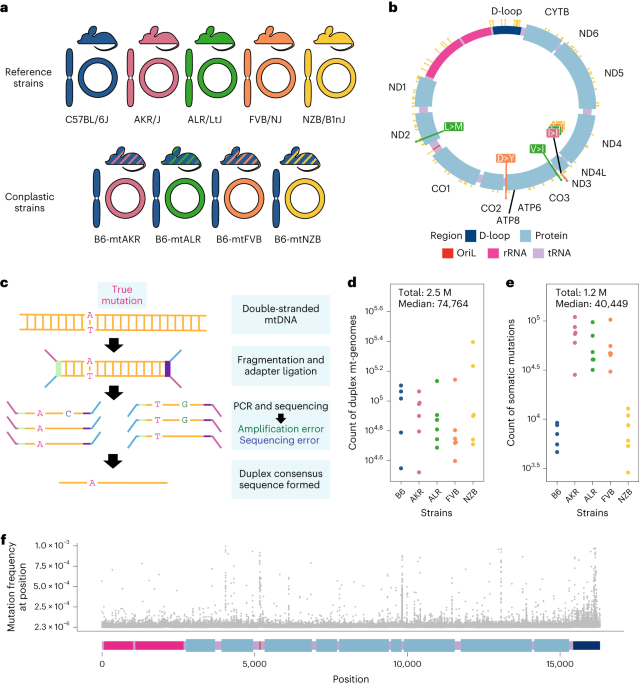
A study investigates the impact of mitochondrial ancestry and tissue type on the somatic evolution of the mitochondrial genome through age using a panel of mouse strains with identical nuclear genomes but differing mitochondrial haplotypes. Duplex sequencing was used to profile mitochondrial genomes at an unprecedented level of depth and accuracy, revealing mutational hotspots and signatures of selection shaping the mitochondrial genome through age. The study identified haplotype- and tissue-specific mutational hotspots, replication errors, and deletions as dominant sources of mitochondrial somatic mutations, shedding light on the dynamics of mitochondrial evolution and its implications for ageing and age-related phenotypes.