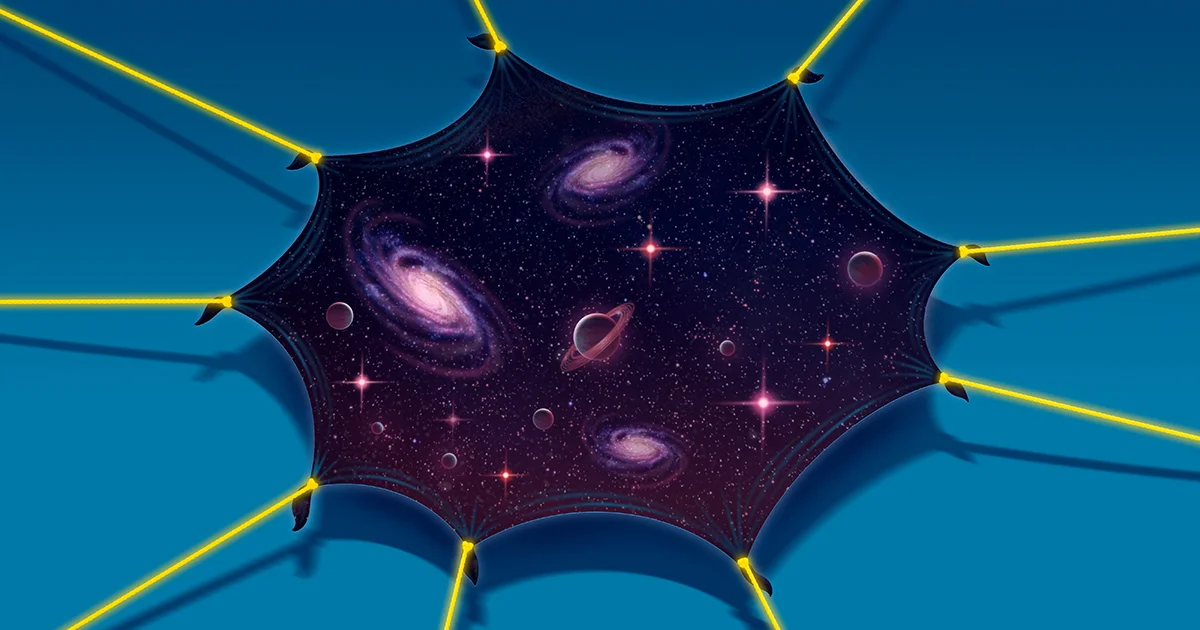
A new paper in Physical Review D proposes that an anomalous high-energy neutrino detected by KM3NeT in 2023 originated from a primordial black hole formed by cosmic strings within a hypothetical fifth dimension. This theory explains why no accompanying photons were detected, though experts remain divided on its plausibility.
Scientists are exploring the idea that dark energy and dark matter interact through a proposed “dark dimension” from string theory, which could explain a changing dark energy density over time and co-evolving dark-matter mass. DESI data motivate models where their coupling helps address the Hubble tension and could imply a new long-range dark force with observable effects, such as distinctive galactic tidal signatures or signals from gravitons in the dark dimension.
A bootstrap analysis shows that, under ultrasoft high-energy behavior and the assumption that Regge zeros are the only zeros, the 4- and 5-point scattering amplitudes for identical scalars are uniquely fixed to the string-theory form, implying string dynamics may emerge from fundamental consistency principles rather than being assumed a priori. Built on Lorentz invariance, crossing symmetry, positivity, and analyticity, the result supports string universality but depends on whether these inputs can be independently justified or if other assumptions yield the same outcome.
New observations hint that dark energy may not be constant and could interact with dark matter. Building on DESI results that dark energy evolves over time, theorists are testing models where the energy density of dark energy and the mass of dark matter change in tandem, potentially via a dark, micron-scale dimension suggested by string theory. In this picture, gravitons could leak into the dark dimension, producing dark gravitons that drive the coupling between the two dark components and possibly helping to resolve the Hubble tension. While intriguing and partially compatible with data, these ideas remain theoretical and require further observational tests.
Caltech and NYU researchers show that two basic high-energy scattering assumptions—ultrasoftness that tames infinities and minimal zeros—lead to the defining features of string theory, including its infinite tower of particles, without assuming strings from the start. While not experimental proof, the work demonstrates that string-like behavior can emerge from simple principles, reviving the bootstrap approach to quantum gravity.
Live Science entrevistates Nobel laureate David Gross about the quest to unite gravity with the other fundamental forces, the challenges of testing a Theory of Everything, and his sobering view that humanity may not survive long enough to witness it due to the ongoing nuclear-arms risk and the accelerating potential of AI-enabled weapons, calling for renewed diplomacy to reduce existential threats.
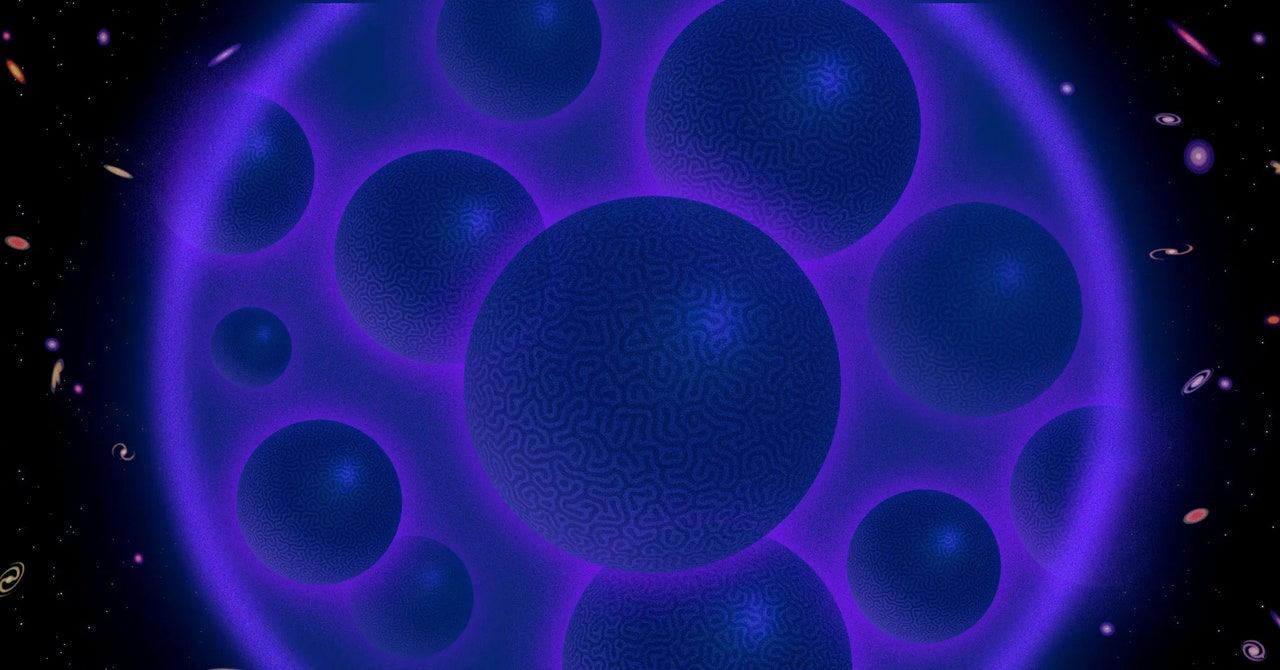
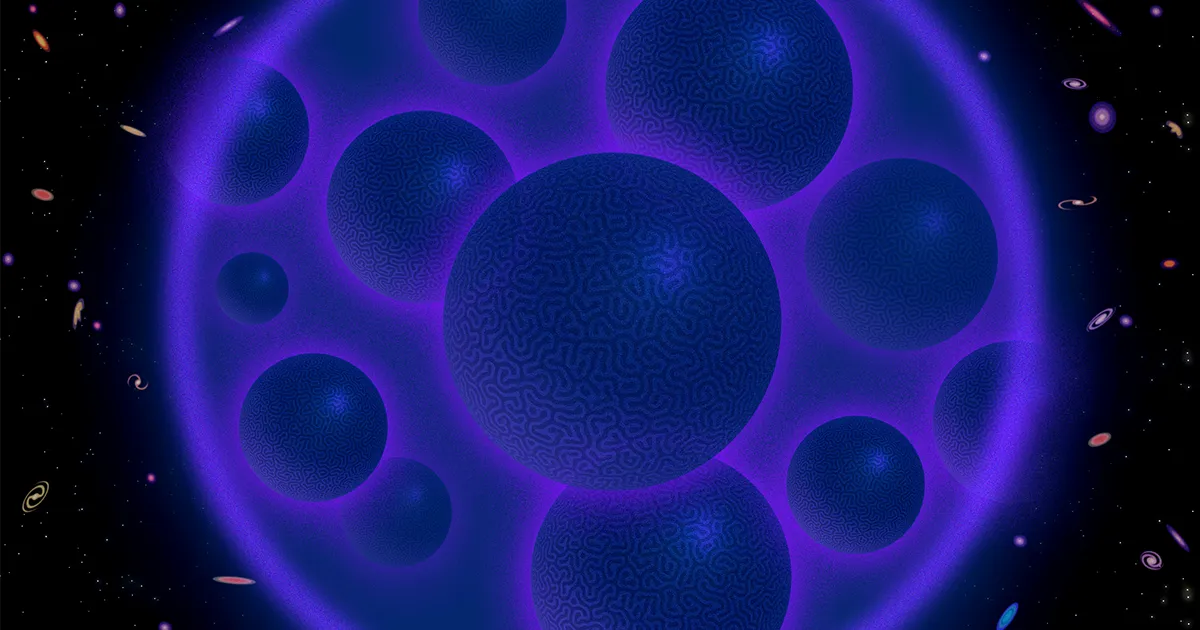
The piece argues that the 'reality' of a multiverse hinges on definition: while quantum mechanics’ many-worlds view and string theory’s landscape offer frameworks in which multiple universes could exist, there is no direct evidence for other universes. Indirect hints might come from how these theories predict physics at tiny scales or high-energy experiments, but proving a multiverse remains elusive.
The article surveys string theory’s status: critics call it untestable amid a vast landscape of possible configurations, but recent bootstrapping work shows the Veneziano amplitude can emerge as a unique outcome under certain high-energy assumptions, reviving the question of whether string theory is the sole correct description of quantum gravity. While mathematically intriguing, these results are debated and lack experimental confirmation, leaving the theory’s ultimate status unresolved.
Bruno Bento and Miguel Montero propose an explicit de Sitter solution in string theory by compactifying extra dimensions on a six-dimensional flat manifold and balancing a Casimir-like effect with flux, producing a small positive dark energy around 10^-15 in Planck units. While a significant step toward matching string theory to our universe and building on Eva Silverstein's ideas, the solution remains five-dimensional and dynamically unstable: the dark energy is expected to weaken over a Hubble time, and researchers still aim to obtain a fully four-dimensional model.
Scalar fields, fundamental in theoretical physics, represent the simplest type of field, providing a single value at each point in space and time, such as height above sea level. In contrast, vector fields include direction, essential for describing forces and motion. More complex phenomena, like spacetime curvature in Einstein's theory of relativity, require tensor fields. Scalar fields are crucial in both classical and quantum physics, but string theory's challenge lies in reconciling its extra scalar components with the observed tensor nature of spacetime.
Physicists are exploring the theoretical concept of cosmic strings, which are incredibly dense and slender structures that could potentially unlock the secrets of time travel. These strings, possibly originating from string theory or as relics from the early Universe, might create loops in space-time, acting as wormholes. Detecting cosmic strings is challenging due to their elusive nature, but they could be identified through gravitational lensing effects or microlensing in stars, offering a potential pathway to paradox-free time travel.
Scientists have proposed the dark dimension scenario, which suggests that dark matter could be explained by an as-yet-unseen dimension within the framework of string theory. This scenario offers a specific recipe for dark matter and proposes an intimate connection between dark matter and dark energy. While there is no evidence yet for the dark dimension, the scenario makes testable predictions for both cosmological observations and tabletop physics, providing opportunities for empirical scrutiny. If supported by upcoming tests, the dark dimension hypothesis has the potential to bring us closer to understanding dark matter, dark energy, and the weakness of gravity compared to other forces.
Physicists are exploring the concept of a "dark dimension" within the framework of string theory to explain the minuscule value of the cosmological constant and the potential emergence of lightweight, weakly interacting particles. This theory posits the existence of dark gravitons, which could serve as candidates for dark matter and have implications for the distribution of galaxies. While the idea is intriguing, some physicists remain skeptical, but upcoming experiments, including cosmological surveys and laboratory tests, may provide evidence to support or refute the dark dimension hypothesis and shed light on the nature of dark matter and the forces of gravity.
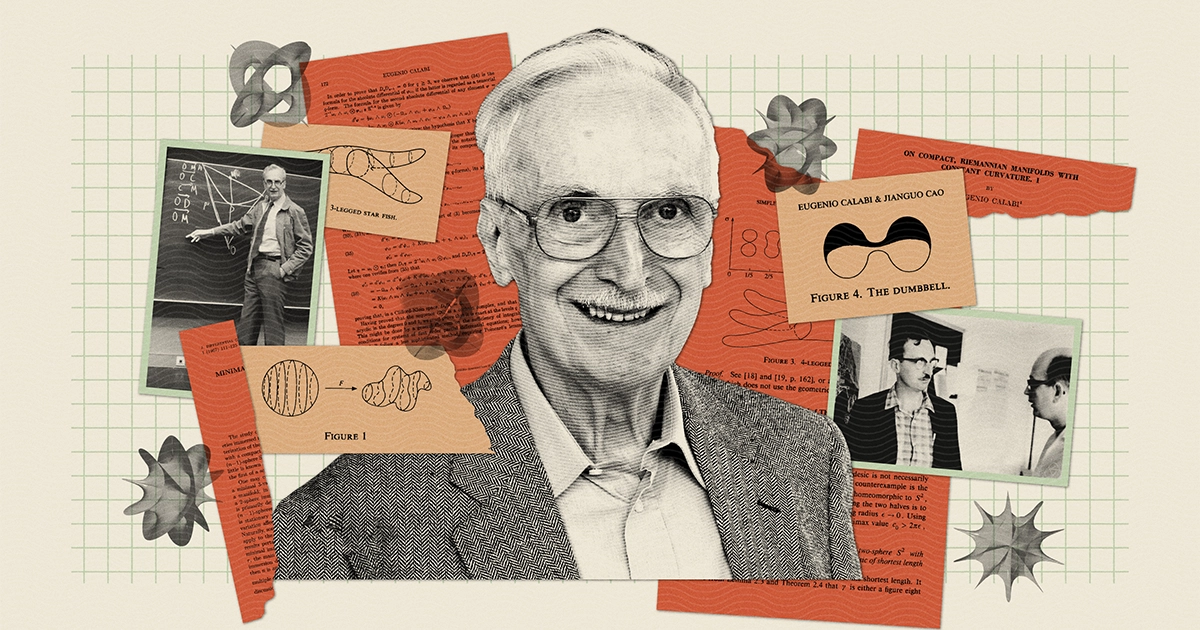
Eugenio Calabi, a renowned mathematician, made groundbreaking contributions to geometry, particularly in his 1953 conjecture about a special class of manifolds known as Kähler manifolds. His work on these manifolds, now called Calabi-Yau manifolds, became crucial in both mathematics and physics, particularly in the development of string theory. Calabi's conjecture, initially doubted by others, was eventually proven by mathematician Shing-Tung Yau, leading to the mathematical existence of Calabi-Yau manifolds. These manifolds, with their hidden dimensions, became a key component in string theory, offering a potential explanation for the fundamental particles and forces of nature. Calabi's passion for mathematics persisted throughout his life, and he continued to conduct research well into his 90s.
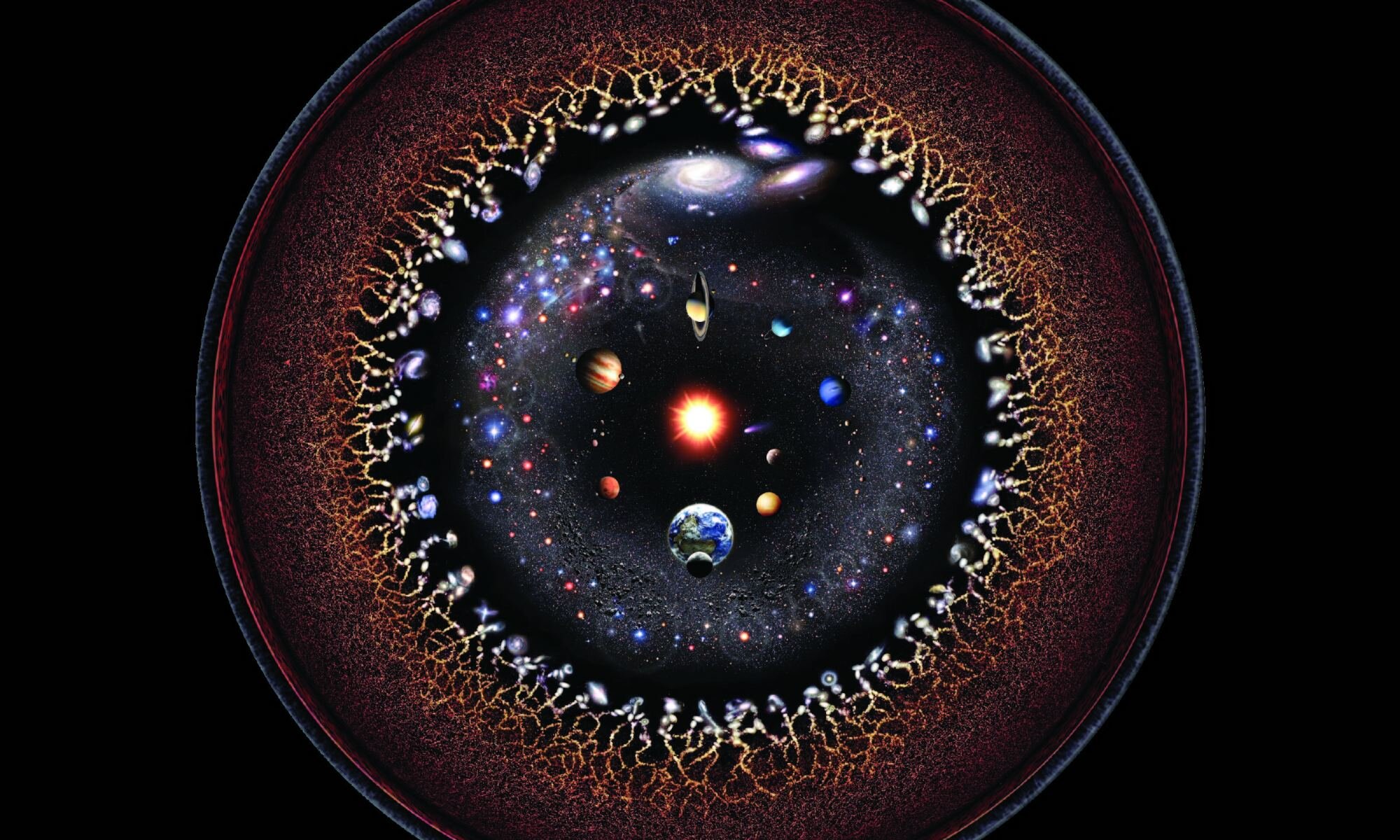
A new study challenges the prevailing belief that the universe is much larger than what we can observe. While most cosmologists think the observable universe is just a small part of an unimaginably vast creation, this study argues that the observable universe is mostly all there is. The authors propose a higher-dimensional structure within string theory that matches observations and avoids the theoretical "swampland." If confirmed, this would mean the universe is only a hundred or a thousand times larger than what we can observe, significantly smaller than the early inflation models.