Tag

Synchronization

All articles tagged with #synchronization

Ant Bursts Reveal Leaderless Synchronization in Colonies
science18 days ago

Ant Bursts Reveal Leaderless Synchronization in Colonies

Researchers have developed a mathematical model showing that ant colonies can rapidly synchronize bursts of activity without a designated leader once speed, density, and interaction range cross a critical threshold. Ants switch among active, inactive, and refractory states, and bursts arise when social contagion spreads much faster than the overall activity cycle. The work, which aligns with prior views of ants as neural-like networks, emphasizes two key ingredients: sensitivity to a single ant's activity and rapid propagation of that activity. While the model cannot predict exact timing, experiments are underway to validate it and to explore how close real colonies operate to this transition and what bursts mean for information transfer, movement, and energy use.


Microsoft tackles WSUS sync delays; mitigations rolled out for new installs
technology1 month ago

Microsoft tackles WSUS sync delays; mitigations rolled out for new installs

Microsoft says a known WSUS synchronization issue has delayed metadata downloads and blocked deployment of the latest Windows updates via WSUS or Configuration Manager since around July 13, 2026. A mitigation was deployed to restore sync times for new WSUS installations and rebuilds, while engineers continue work to remove affected metadata from existing servers and help customers recover previously impacted environments.

Fireflies Find Their Beat: Simple Rules Drive Synchronized Flashes
science5 months ago

Fireflies Find Their Beat: Simple Rules Drive Synchronized Flashes

Scientists studying Photinus carolinus in Congaree National Park show that a small group of male fireflies can synchronize their flashes via local interaction rules; using 3D tracking and LED experiments, they found that synchronization occurs most reliably in groups larger than ~15 and displays long-range correlations, with an integrate-and-fire model based on a phase-response curve reproducing the pattern—offering insights for circadian biology and coordinated technologies like drone swarms.

China Develops Advanced Converged Energy Beam Weapon
technology1 year ago

China Develops Advanced Converged Energy Beam Weapon

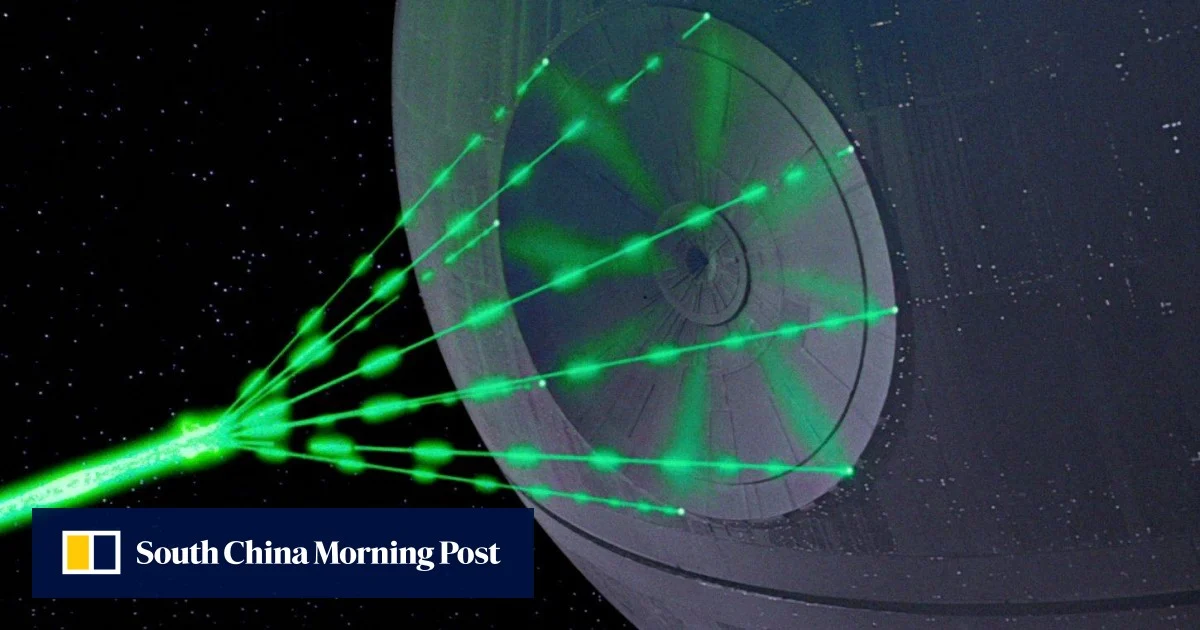
Chinese scientists have developed a high-power microwave weapon that combines electromagnetic waves with precise timing technology to create a powerful energy beam capable of targeting a single location. This system, which has undergone experimental trials, involves multiple microwave-transmitting vehicles that synchronize their emissions to merge into a single beam, similar to the concept of the Death Star in Star Wars. The technology requires extremely precise positioning and timing, achieved through optical fiber connections, and has demonstrated the ability to disrupt signals from American GPS and other satellites.

"DuckDuckGo Introduces End-to-End Encrypted Cross-Device Syncing for Privacy-Focused Browser"
technology2 years ago

"DuckDuckGo Introduces End-to-End Encrypted Cross-Device Syncing for Privacy-Focused Browser"

DuckDuckGo browser introduces a new end-to-end encrypted Sync & Backup feature, allowing users to securely synchronize their bookmarks, passwords, and Email Protection settings across multiple devices without needing to sign in. The feature is available on Windows, macOS, iOS, and Android, and employs local encryption to store sensitive data, with end-to-end encryption during syncing. Users can manage their synced devices and retrieve data using recovery codes. Additionally, a password requirement for synchronization is being rolled out to enhance security.

"Rare Discovery: 6 Planets in Perfect Synchronization Unveiled in Milky Way"
astronomy2 years ago

"Rare Discovery: 6 Planets in Perfect Synchronization Unveiled in Milky Way"

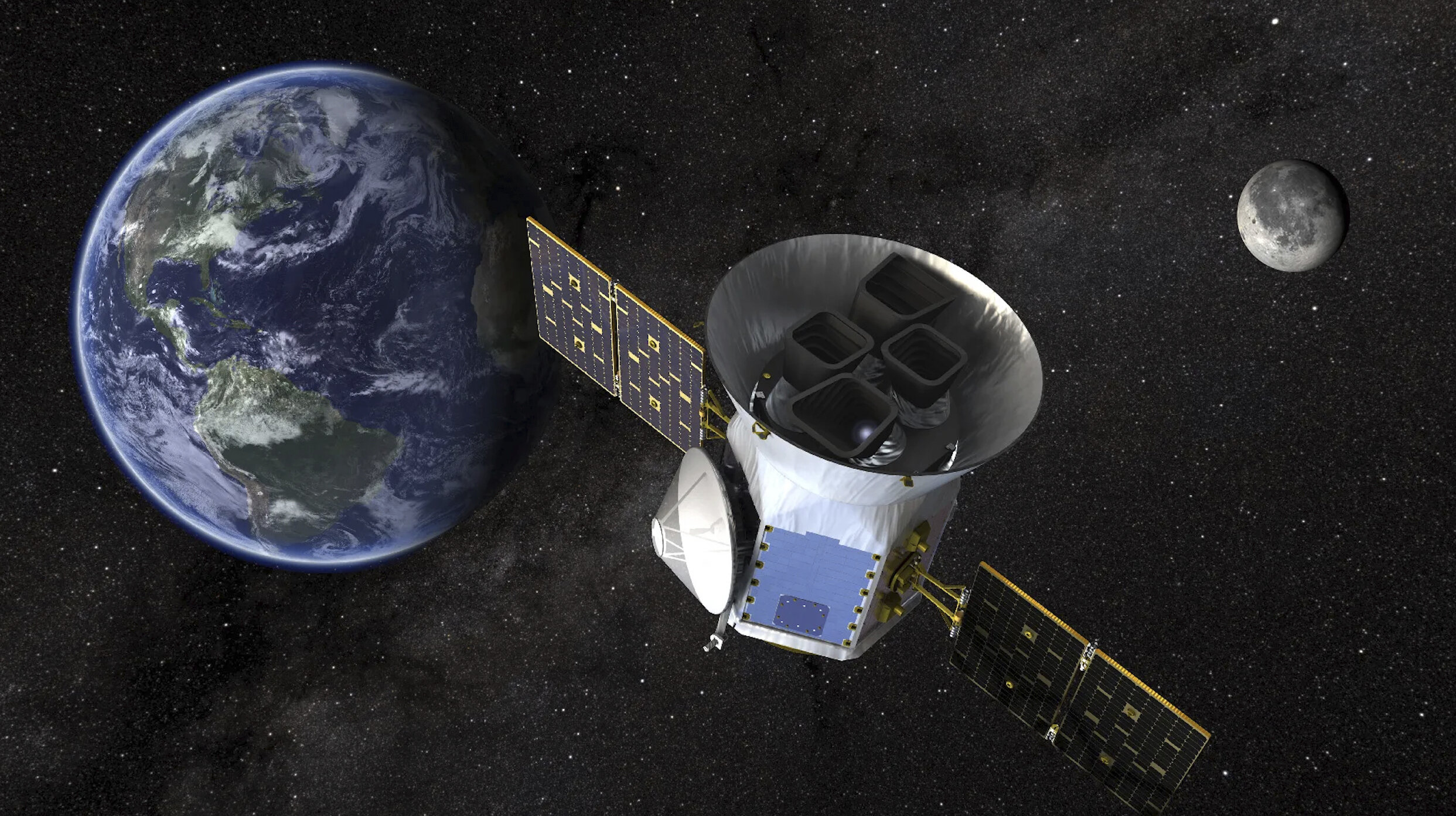
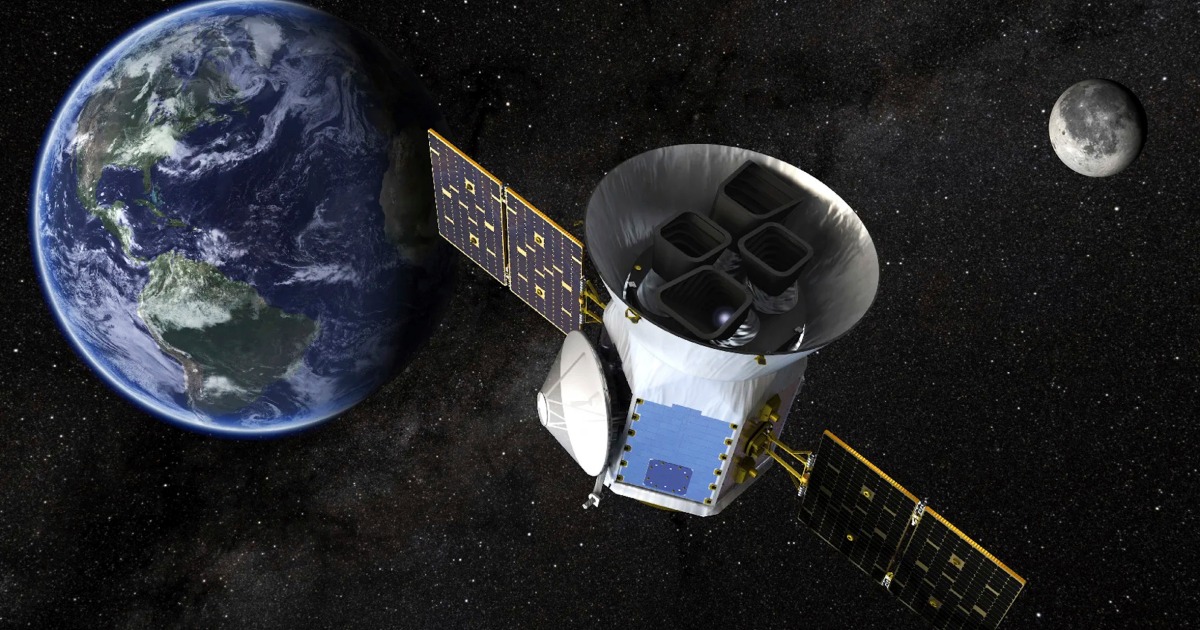
Astronomers have discovered a rare solar system 100 light-years away with six planets moving in perfect sync, providing insights into the origins of our own solar system. The planets are similar in size to Neptune and have orbits closer to their star than Mercury in our solar system. The discovery was made using NASA's Transiting Exoplanet Survey Satellite (TESS) and the European satellite CHaracterising ExOPlanet Satellite. Further study with the James Webb Space Telescope will help characterize the atmosphere of these synchronized planets.

"Rare Discovery: Perfectly Synchronized Six-Planet System Unveiled in Milky Way"
astronomy2 years ago

"Rare Discovery: Perfectly Synchronized Six-Planet System Unveiled in Milky Way"

Astronomers have discovered a rare solar system in the Milky Way with six planets that move in perfect synchrony, resembling a grand cosmic orchestra. The system, located 100 light-years away, provides insights into the formation of solar systems across the galaxy. The planets are not within the habitable zone and are larger than Earth, with densities similar to gas giants. Their orbits range from nine to 54 days, and the system exhibits a precise resonance pattern. This discovery offers a unique opportunity for comparison and further study of planetary systems.

"Astronomers Uncover Rarely Seen Perfectly Aligned Solar System in Milky Way"
science2 years ago

"Astronomers Uncover Rarely Seen Perfectly Aligned Solar System in Milky Way"

Astronomers have discovered a rare solar system in the Milky Way, 100 light-years away, where all six planets are perfectly synchronized in their orbits, resembling a grand cosmic orchestra. This finding provides insights into the formation of solar systems and may help researchers understand how our own solar system evolved. The planets in this system are not within the habitable zone, making the likelihood of life as we know it unlikely. The synchronized motion of the planets is known as resonance and is a rare phenomenon, with only about 1 in 100 solar systems retaining this synchrony.

"Milky Way Discovery: Perfectly Synchronized Six-Planet Solar System Unveiled"
astronomy2 years ago

"Milky Way Discovery: Perfectly Synchronized Six-Planet Solar System Unveiled"

Astronomers have discovered a unique solar system located 100 light-years away in the constellation Coma Berenices, consisting of six planets moving in perfect synchrony like a grand cosmic orchestra. This rare find can provide insights into the formation of solar systems in the Milky Way. The planets, which are two to three times the size of Earth, have densities similar to gas giants and are located closer to their star than Venus is to the sun. While none of the planets are within the habitable zone, their synchronized orbits offer a valuable comparison for studying other systems.

"Harmony in the Cosmos: A Perfectly Synced Solar System with Six Planets Discovered"
astronomy2 years ago

"Harmony in the Cosmos: A Perfectly Synced Solar System with Six Planets Discovered"

Astronomers have discovered a rare solar system with six planets in perfect synchrony, moving like a grand cosmic orchestra. Located 100 light-years away in the constellation Coma Berenices, this unique system provides insights into the formation of solar systems in the Milky Way. The planets, roughly two to three times the size of Earth, have densities similar to gas giants and are too hot to support life. The orbits of the planets exhibit precise resonance, with the innermost planet completing three orbits for every two by its closest neighbor. This discovery sheds light on the rarity of such synchronized systems and the factors that can disrupt their harmony.

The Changing Definition of Time: Earth's Leap Minute and the Future of Seconds
science-and-technology2 years ago

The Changing Definition of Time: Earth's Leap Minute and the Future of Seconds

A leading time scientist, Judah Levine, suggests introducing a leap minute to align the Earth's two official clocks, the Universal Time clock and the atomic clock, which currently require leap seconds to stay synchronized. Levine believes that allowing a slight deviation between the clocks could enable the addition of a leap minute every 50 years, providing a more manageable solution. However, industries relying on precise time, such as flight control and stock trading, may face challenges. Some tech companies have already developed their own methods to manage time variations, while a planned 100-year pause on the leap second in 2035 requires global agreement.

"Unlocking the Power of Internal Clocks: A Solution for Jet Lag and Aging"
health3 years ago

"Unlocking the Power of Internal Clocks: A Solution for Jet Lag and Aging"

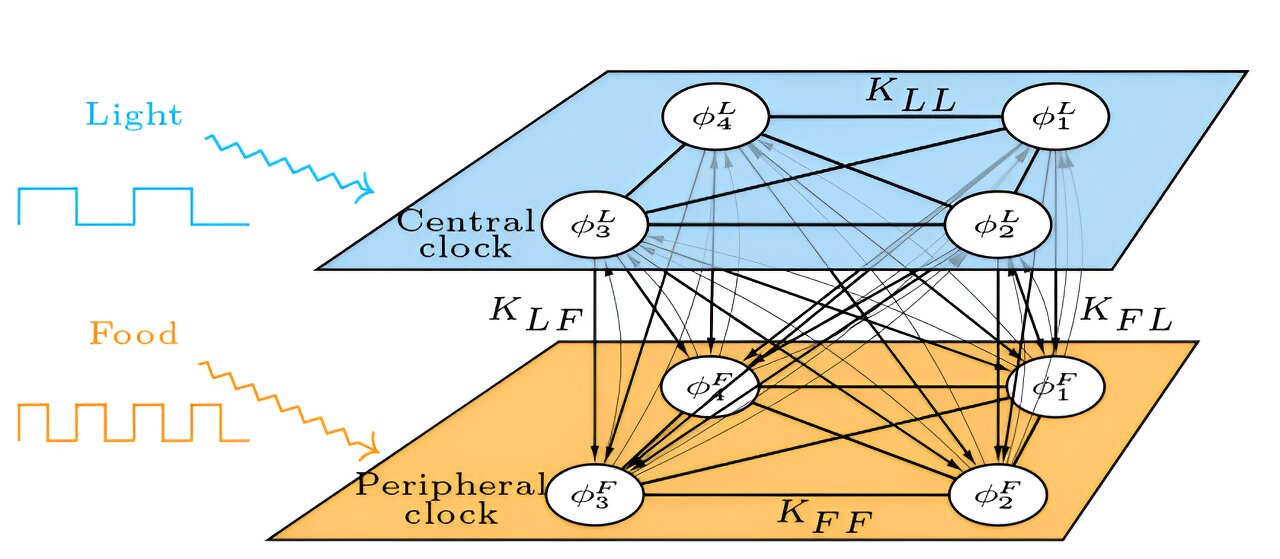
A team of scientists has developed a mathematical model to study the interactions between multiple internal clocks in the body, focusing on the effects of aging and disruptions like jet lag. The model revealed that desynchronization of internal clocks can occur due to conflicting time cues, such as nighttime eating or warm weather during a short photoperiod. The researchers found that aging weakens the signals between circadian clocks and reduces sensitivity to light, making the system more vulnerable to disruptions and slower to recover. They also discovered that having a larger meal in the early morning of a new time zone can help overcome jet lag, while constantly shifting meal schedules or eating at night can lead to misalignment between internal clocks. Further research aims to identify factors that result in more resilient internal clocks, potentially leading to recommendations for preventing jet lag and maintaining a healthy circadian system in old age.