Tag

Ultrasound

All articles tagged with #ultrasound

Ultrasound Tongue-Reading Turns Silent Talk Into Speech
technology5 days ago

Ultrasound Tongue-Reading Turns Silent Talk Into Speech

A prototype uses an under-the-chin ultrasound probe to read tongue movements and translate them into decoded speech, enabling private, sound-free communication. With about 50 hours of training data, it achieves roughly 15.6% error and can generalize across speakers with similar accents, though the current probe is bulky; future versions could resemble a wearable patch.

Low-Intensity Ultrasound Reprograms Immune Cells to Halt Joint Inflammation
science18 days ago

Low-Intensity Ultrasound Reprograms Immune Cells to Halt Joint Inflammation

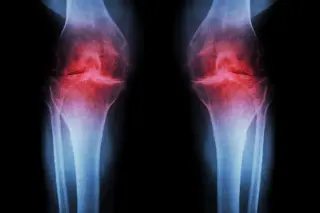
Researchers at the University of Alabama in Huntsville report that continuous low‑intensity ultrasound can shift macrophages from a pro‑inflammatory M1 state to a reparative M2‑like state, lowering inflammation and promoting tissue repair after joint injury. This non‑invasive approach could help prevent post‑traumatic osteoarthritis, with findings based on a fibronectin fragment injury model and transcriptomic analysis; however, the work is laboratory‑stage and requires animal validation before clinical use.

Midjourney ventures into medical imaging with spa-style water-body scans
technology28 days ago

Midjourney ventures into medical imaging with spa-style water-body scans

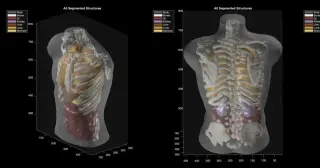
Midjourney, best known for AI art, announced Midjourney Medical, a spa-like venture in San Francisco that uses a water tank and 40 ultrasound modules to perform full-body scans and reconstruct MRI-like images; the project relies on Fullbody Ultrasound Computational Tomography, aims for 50,000 scanners by 2031 and up to a billion scans per month, with FDA approval planned as it expands to a spa by late 2027; Butterfly Network provided the hardware under a co-development deal, but the collaboration and regulatory, data privacy concerns remained under the radar in the initial announcement.

Midjourney Tries Spa-Style Full-Body Ultrasound to Rival MRI
technology28 days ago

Midjourney Tries Spa-Style Full-Body Ultrasound to Rival MRI

Midjourney is expanding from image generation into medical hardware with a spa-style full-body ultrasonic scanner called Midjourney Medical that can produce a high-resolution 3D body map in under 60 seconds; the project includes spa locations (first in San Francisco), a collaboration with Butterfly Network for ultrasound-on-chip tech, and plans to gain FDA approval with ambitions for widespread rollout by 2031 to reduce deaths and healthcare costs.

Butterfly Responds to Midjourney’s Full-Body Ultrasound Initiative
technology29 days ago

Butterfly Responds to Midjourney’s Full-Body Ultrasound Initiative

Butterfly Network commented on Midjourney Medical’s announcement of a full-body tomographic ultrasound scanner that will leverage 40 Ultrasound-on-Chip modules under a co-development deal, aiming for radiation-free, low-cost weekly whole-body imaging and personalized health insights; Butterfly sees potential commercial opportunities from the collaboration and plans to discuss it further during an upcoming TD Cowen webinar as part of its Butterfly Embedded program.

Midjourney Expands from AI Art to MRI-Style Full-Body Ultrasound Scans
technology29 days ago

Midjourney Expands from AI Art to MRI-Style Full-Body Ultrasound Scans

Midjourney unveiled The Midjourney Scanner, a water-based full-body ultrasound system built with Butterfly Network that can generate 3D body images in about 60 seconds to map body composition; plans include a San Francisco spa and a library of shareable scans, with medical uses needing FDA clearance and privacy/data-sharing policies to be announced as the project progresses.

The Pacemaker Patch: An External Ultrasound Approach to Pacing the Heart
technology1 month ago

The Pacemaker Patch: An External Ultrasound Approach to Pacing the Heart

Researchers envision a chest-mounted patch that uses high-frequency ultrasound to pace the heart, made possible by a gene-therapy step that makes heart cells produce a sound-sensitive protein; the system would pair with a pocket-sized data/power module and has shown responses in rats, pigs, and human heart cells. While intriguing as a potential alternative to implanted pacemakers, it remains experimental, with safety, regulatory, and practicality questions to resolve before clinical use.

MIT's Wearable Ultrasound Patch Paces the Heart Without Surgery
technology1 month ago

MIT's Wearable Ultrasound Patch Paces the Heart Without Surgery

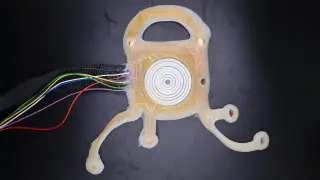
MIT researchers have created a chest-worn hydrogel patch that noninvasively paces the heart by enabling engineered heart cells to respond to ultrasound via a gene-therapy primer—a technique called sonogenetics. In tests on rats and pig hearts, the patch restored steady rhythms during daily activity, pointing toward a potential noninvasive alternative to implanted pacemakers and, with future closed‑loop sensing, a fully automated pacing system.

Wearable Ultrasound Patch Aims for Continuous Fetal Monitoring
technology1 month ago

Wearable Ultrasound Patch Aims for Continuous Fetal Monitoring

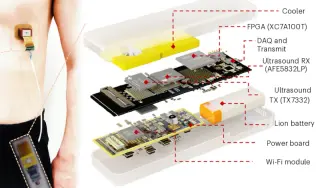
Scientists have developed UPatch, a wearable abdominal ultrasound patch that can continuously monitor a fetus, autonomously image the womb, measure biometric parameters, and flag issues like preeclampsia; in tests with 62 pregnancies and 52 women over 1–6 hours, it performed on par with standard ultrasound and could broaden access to prenatal imaging, though it relies on a bulky backend and may be limited by movement; the study is published in Nature Biotechnology.

Wearable ultrasound patch promises continuous fetal monitoring
technology1 month ago

Wearable ultrasound patch promises continuous fetal monitoring

Researchers have developed UPatch, a wearable ultrasound patch that can continuously image a fetus and track blood flow and heart rate, addressing the limitations of intermittent hospital scans. The device is currently a tethered, proof-of-concept and was tested against conventional ultrasound in 62 pregnant participants, with 52 pregnant women undergoing continuous monitoring. In one case of pre-eclampsia, UPatch helped reveal intrauterine growth restriction, prompting a cesarean delivery. The team envisions a wireless version for home use, with potential benefits for low-resource settings and earlier detection of complications.

Lab Ultrasound Strategy Ruptures Enveloped Viruses, Offering a New Antiviral Avenue
science2 months ago

Lab Ultrasound Strategy Ruptures Enveloped Viruses, Offering a New Antiviral Avenue

Lab experiments show ultrasound in the 3–20 MHz range can cause acoustic resonance to rupture the envelopes of enveloped viruses like SARS-CoV-2 and influenza A (H1N1), rendering them non-infectious in cell models while leaving host cells unharmed. It's a promising, non-invasive approach, but still early—not a treatment yet—with ongoing work to refine frequencies and test other viruses.

Salk to Lead $41M ARPA-H Initiative to Make Ultrasound-Controlled Therapies a Reality
science3 months ago

Salk to Lead $41M ARPA-H Initiative to Make Ultrasound-Controlled Therapies a Reality

Salk Institute researcher Sreekanth Chalasani will lead a multi-institution ARPA-H program, funded up to $41.3 million over about 5.5 years, to advance sonogenetics—the use of ultrasound to control engineered cells—into a clinical therapy by building a protein toolkit, a wearable ultrasound delivery system, and preclinical data across partner sites toward trials, with potential applications such as peripheral neuropathies.

In-Flight Illness on ISS Stumps NASA; Cause Still Unknown
science3 months ago

In-Flight Illness on ISS Stumps NASA; Cause Still Unknown

NASA says astronaut Mike Fincke suddenly fell ill aboard the International Space Station during dinner on Jan. 7, could not speak, and although doctors ruled out a heart attack or choking, the cause remains unknown after extensive testing. The 20-minute episode prompted NASA’s first medical evacuation and the early return of two crewmates, with ultrasound aiding the response. NASA is reviewing medical records from other astronauts for possible patterns while considering whether long exposure to weightlessness could be a factor.