Tag

University Of Birmingham

All articles tagged with #university of birmingham

Shakespeare Archive Row: Campaigners Demand Institute Stay in Stratford
culture5 days ago

Shakespeare Archive Row: Campaigners Demand Institute Stay in Stratford

The University of Birmingham has paused plans to move the Shakespeare Institute from Stratford-upon-Avon to its Edgbaston campus following intense backlash from actors, academics, and former students. The institute, housed at Mason Croft since 1995, holds a unique archive of 60,000 volumes, including annotated scripts, rehearsal notes, and personal papers from prominent figures like Samuel West and Dame Janet Suzman. While the university assures the collection will remain intact, critics argue the archive’s location in Shakespeare’s birthplace is essential to its cultural significance. A campaign led by Samuel West, supported by over 16,000 signatures, is pushing for the move to be reversed entirely rather than just delayed. An emergency meeting is scheduled to determine next steps, with concerns that relocation could disrupt access to materials owned by living theatre-makers.


Samuel West urges University of Birmingham to scrap Shakespeare Institute relocation
culture-and-education8 days ago

Samuel West urges University of Birmingham to scrap Shakespeare Institute relocation

Actor Samuel West has called for the complete cancellation of plans to move the Shakespeare Institute from Stratford-upon-Avon to Birmingham, following a temporary pause in the relocation by the University of Birmingham. West, who leads a petition with over 16,000 signatures, argues that the move weakens the cultural identity of the Midlands. While the university has suspended the transfer to Edgbaston, student groups warn that the uncertainty remains harmful and that the institute's location in Stratford is essential to its academic and theatrical significance.

Shakespeare Institute faces relocation to Birmingham, sparking cultural backlash and resignation threats

Shakespeare Institute faces relocation to Birmingham, sparking cultural backlash and resignation threats

The University of Birmingham has announced plans to relocate the Shakespeare Institute from its historic home in Stratford-upon-Avon to its Edgbaston campus by September 2027. The move, described by the university as an academic decision to ensure long-term sustainability, has triggered a fierce backlash. Director Michael Dobson has threatened to resign, while local MP Manuela Perteghella and prominent actors have condemned the decision as a cultural loss. A petition opposing the move has gathered over 12,000 signatures, with critics arguing the relocation will destroy the institute's unique connection to Shakespeare's birthplace and jeopardize its 60,000-volume library.

Shakespeare Institute Director Threatens Resignation Over Relocation to Birmingham
arts-and-culture10 days ago

Shakespeare Institute Director Threatens Resignation Over Relocation to Birmingham

Professor Michael Dobson, director of the Shakespeare Institute, has threatened to resign if the University of Birmingham proceeds with plans to relocate the postgraduate research center from Stratford-upon-Avon to its Edgbaston campus in September 2027. The move, announced after 75 years at the historic Mason Croft site, has sparked a petition with thousands of signatures and criticism from the Royal Shakespeare Company. While the university frames the relocation as an academic decision for long-term sustainability, Dobson argues it will damage the institute’s unique symbolic capital and likely cause a loss of students. The future of the Grade II listed Mason Croft building and its 60,000-book library remains under consultation, with no final decision made on the site's disposal.

Birmingham Physicist Uses 24,000 Atoms to Demonstrate Time Emerges from Entropy
science24 days ago

Birmingham Physicist Uses 24,000 Atoms to Demonstrate Time Emerges from Entropy

Professor Giovanni Barontini at the University of Birmingham has demonstrated that time can be measured internally within a quantum system without an external clock. By cooling approximately 24,000 rubidium atoms to near absolute zero and splitting them into 'bright' and 'dark' regions using lasers, Barontini showed that changes in entropy create an 'entropic time' that orders events. This experiment, published in Physical Review Research, provides the first controlled evidence that time may emerge from system dynamics rather than being a fundamental external feature, offering a potential bridge between quantum mechanics and general relativity.

Birmingham Physicist Demonstrates 'Entropic Time' in 24,000-Atom Quantum System
science27 days ago

Birmingham Physicist Demonstrates 'Entropic Time' in 24,000-Atom Quantum System

Professor Giovanni Barontini at the University of Birmingham has created a miniature universe using 24,000 ultracold atoms to test if time is a fundamental feature of reality. Published in Physical Review Research, the study shows that time can emerge from internal changes in entropy rather than an external clock. The experiment, which mimics Big Bang and Big Crunch cycles, provides the first controlled evidence that a quantum system can define its own temporal progression without relying on outside timekeeping.

NHS Trial Shows Urine Test Detects 92% of Bladder Cancers
health2 months ago

NHS Trial Shows Urine Test Detects 92% of Bladder Cancers

A new at-home urine test trialed by the NHS has demonstrated the ability to detect over 90% of bladder cancer cases, potentially reducing the need for invasive procedures. The study, involving nearly 1,000 patients across England and Scotland, found that the Galeas test identified 92% of cases, with a negative result indicating a 99% chance of no cancer. This non-invasive method aims to streamline diagnosis and reduce waiting times for urgent cystoscopies, which are currently performed over 300,000 times annually in the UK. While promising, experts emphasize that further research is needed before the test can replace existing diagnostic methods.

Meningitis tragedy sparks vaccine push after teen’s heat‑stroke misread
health8 months ago

Meningitis tragedy sparks vaccine push after teen’s heat‑stroke misread

Emily Alker, 18, died in 2017 from a rare strain of meningitis after friends initially thought heatstroke; her mother Beth Alker has since campaigned for greater disease awareness, booster vaccines for teenagers, and better education on meningitis to prevent others from facing the same sudden tragedy, noting Emily had been set to study law at the University of Birmingham.

Scientists Unveil the Shape of a Single Photon in Quantum Breakthrough
science-and-technology2 years ago

Scientists Unveil the Shape of a Single Photon in Quantum Breakthrough

Researchers at the University of Birmingham have developed a new quantum theory that defines the precise shape of a single photon for the first time, revealing its interactions with atoms and its environment. This breakthrough, published in Physical Review Letters, could revolutionize nanophotonic technologies, enhancing secure communication, pathogen detection, and molecular control in chemical reactions. The study provides a model for understanding photon behavior and energy exchange, paving the way for advancements in quantum computing and improved sensors.

Physicists Reveal Exact Shape of a Single Photon
science2 years ago

Physicists Reveal Exact Shape of a Single Photon

Researchers at the University of Birmingham have developed a model to define the precise shape of a single photon, revealing how photons are emitted and shaped by their environment. This breakthrough allows for a better understanding of light-matter interactions, opening new possibilities for nanophotonic technologies and applications in secure communication, pathogen detection, and molecular-level chemical control. The study, published in Physical Review Letters, provides a foundation for future advancements in quantum computing and energy technologies.

Unveiling the Shape of a Single Photon: A New Theory
science2 years ago

Unveiling the Shape of a Single Photon: A New Theory

Researchers at the University of Birmingham have developed a new theory that defines the precise shape of a single photon by exploring its interactions with matter at the quantum level. This breakthrough, published in Physical Review Letters, allows scientists to model these complex interactions and visualize photons, opening new research avenues in quantum physics and material science. The findings could lead to advancements in nanophotonic technologies, impacting secure communication, pathogen detection, and molecular-level chemical reactions.

Breakthrough Devices Offer Hope for Spinal Cord Injury Recovery
health-and-medicine2 years ago

Breakthrough Devices Offer Hope for Spinal Cord Injury Recovery

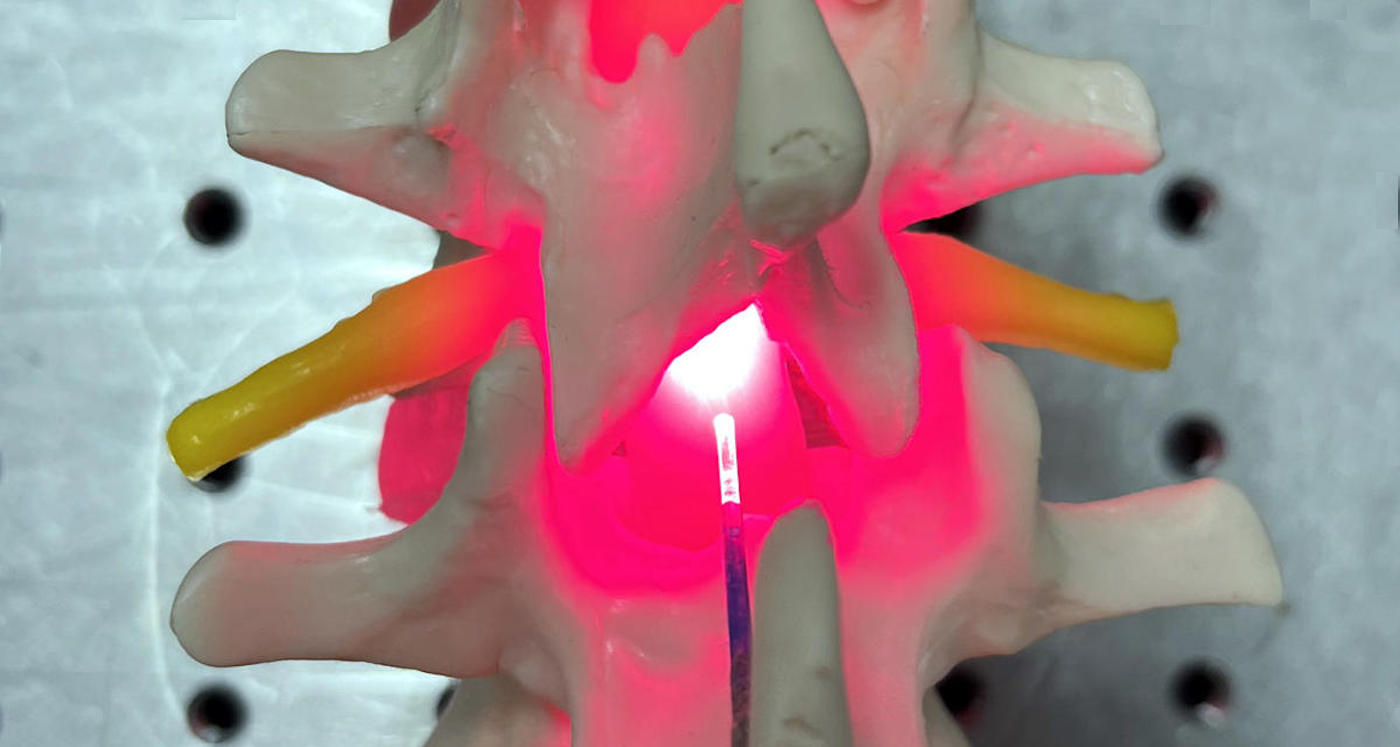
Scientists at the University of Birmingham have developed a novel implantable device that uses red and near-infrared light to treat spinal cord injuries. This method, which can be implemented during routine spinal surgeries, has shown significant improvements in nerve cell regeneration and functional recovery in preclinical models. The therapy, known as photobiomodulation, has demonstrated both neuro-protective and neuro-regenerative effects, marking a significant milestone in spinal cord injury treatment.

"At What Age Do Babies Develop Consciousness?"
neuroscience2 years ago

"At What Age Do Babies Develop Consciousness?"

Researchers propose a new method to determine when consciousness emerges in infants by identifying markers of consciousness in adults and tracking their appearance in babies' development. This approach aims to address the challenge of studying consciousness in non-verbal subjects like infants and could provide insights into the complex process of becoming conscious. The study suggests that consciousness may emerge early, from the last prenatal trimester, and recommends considering a broad range of developmental markers to pinpoint the onset of consciousness.

Revolutionary Treatment Reduces Postpartum Hemorrhage.
health3 years ago

Revolutionary Treatment Reduces Postpartum Hemorrhage.

A new solution called E-MOTIVE, which involves bundling together WHO-recommended treatments and objectively measuring blood loss using a simple, low-cost collection device called a ‘drape’, could reduce deaths from childbirth-related bleeding. Postpartum haemorrhage (PPH) is the leading cause of maternal mortality worldwide, affecting an estimated 14 million women each year and resulting in around 70,000 deaths. The E-MOTIVE package includes early and accurate detection of PPH using a blood-collection drape, followed by an immediate treatment bundle where indicated. In the trial, the E-MOTIVE intervention was supported with an implementation strategy consisting of specific training, PPH trolleys or carry cases, engagement of local champions, audits and feedback.