Tag

Einstein Probe

All articles tagged with #einstein probe

Einstein Probe Captures Record 10-Minute X-Ray Flash from Neutron Star Merger
astronomy1 month ago

Einstein Probe Captures Record 10-Minute X-Ray Flash from Neutron Star Merger

Astronomers identified a 10-minute X-ray burst from a distant galaxy as the result of two neutron stars colliding. Detected by the Einstein Probe in July 2025, the event, designated EP250704a, featured a brief gamma-ray flash followed by prolonged X-ray emission. Researchers suggest the merger created a magnetar, a highly magnetized neutron star, which powered the extended activity. This discovery reveals a previously hidden phase of neutron star mergers, offering new insights into the formation of heavy elements and the nature of compact object remnants.
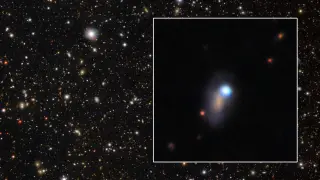
SN 2026gzf: A Faint X-ray Flash Reveals a Missing Link in Supernova Physics
astronomy3 months ago

SN 2026gzf: A Faint X-ray Flash Reveals a Missing Link in Supernova Physics

Astronomers captured the rare 'shock breakout' of supernova SN 2026gzf, a massive star that exploded without producing the expected gamma-ray burst or relativistic jets. Detected in March 2026 by China's Einstein Probe, the event offers the most detailed view yet of a broad-lined Type Ic supernova's early stages, suggesting massive stars can die through diverse pathways.

Einstein Probe spots enigmatic double X-ray burst with no gamma rays
science5 months ago

Einstein Probe spots enigmatic double X-ray burst with no gamma rays

China's Einstein Probe detected a mysterious X-ray transient EP240305a that produced two closely spaced X-ray flares about 200 seconds apart, with no corresponding gamma-ray emission. Multiwavelength follow-up showed the X-rays fading in days and radio fading over weeks, leaving scientists classifying the event as a gamma-ray-dark GRB-like transient or an extragalactic fast X-ray transient; the true origin remains uncertain, possibly due to jet orientation or gamma-ray obscuration.

China's Einstein Probe Unveils Mysterious Celestial Phenomena
science-and-technology2 years ago

China's Einstein Probe Unveils Mysterious Celestial Phenomena

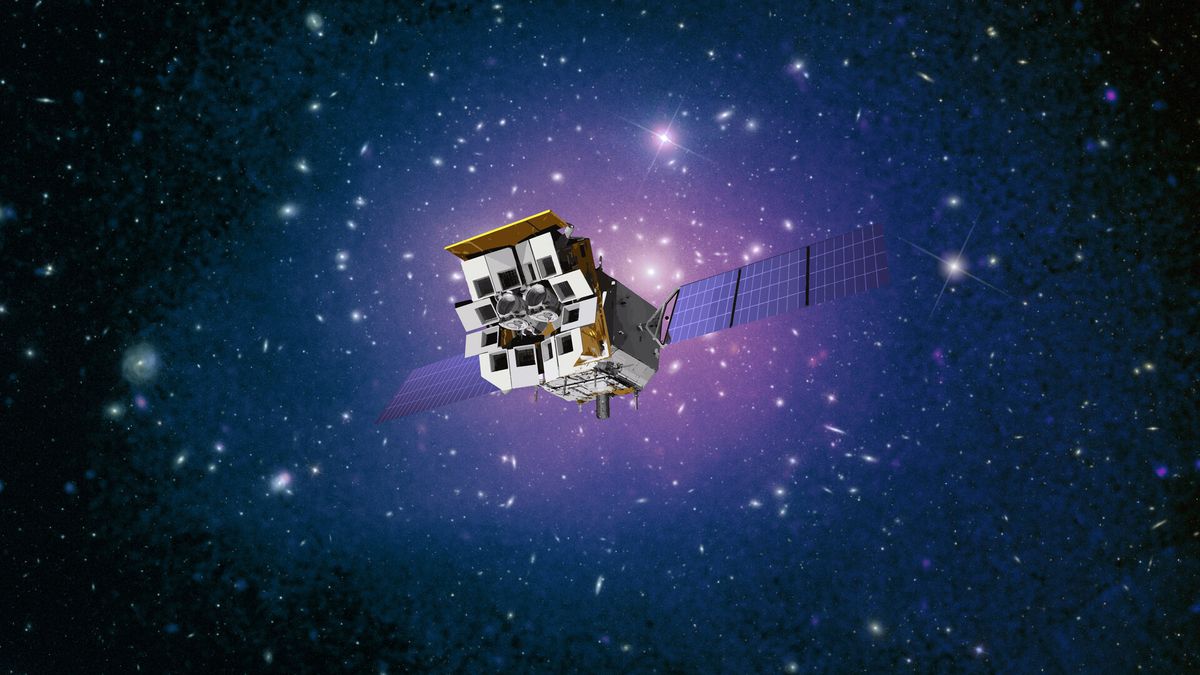
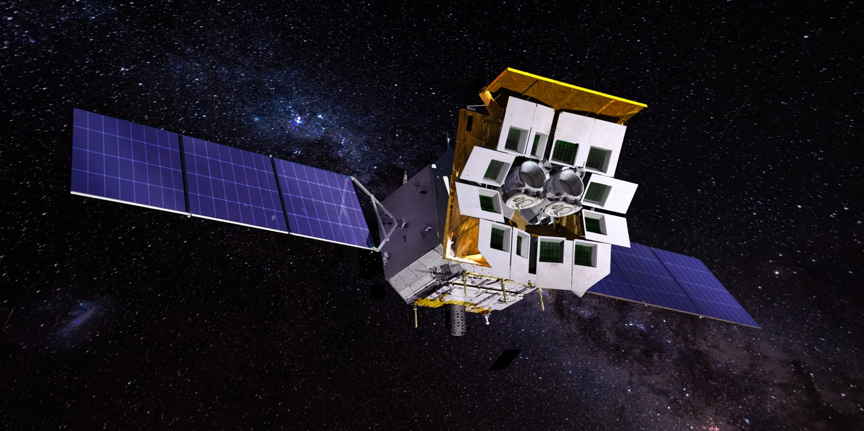
The Einstein Probe, a Chinese X-ray space telescope with lobster-eye optics, has made significant discoveries during its commissioning phase, including detecting around 60 strong transient celestial objects and nearly 500 stellar flares. It also observed a gamma-ray burst from the early universe, showcasing its sensitivity. The probe, now named "Tianguan," may have identified a new class of transients, potentially caused by a white dwarf disrupted by a black hole. The observatory is set to operate for three years, with a possible two-year extension.

"China's Lobster-Eye Einstein Probe: Unraveling Cosmic Mysteries"
space-science2 years ago

"China's Lobster-Eye Einstein Probe: Unraveling Cosmic Mysteries"

China has launched the Einstein Probe, a telescope with a "lobster eye" camera designed to study high-energy X-rays from black holes, neutron stars, and supernovas. The mission, in collaboration with the European Space Agency and the Max Planck Institute, aims to identify and study new sources of X-ray light to understand the universe's most powerful events. The probe's wide-field X-ray telescope, inspired by the lobster eye, allows it to observe a large portion of the sky at once, enabling the study of short-lived, violent cosmic events. It will also provide data to explain gravitational waves and pinpoint their origins.

"China's Lobster Eye Einstein Probe: Unveiling the Secrets of Black Holes and Neutron Stars"
space2 years ago

"China's Lobster Eye Einstein Probe: Unveiling the Secrets of Black Holes and Neutron Stars"

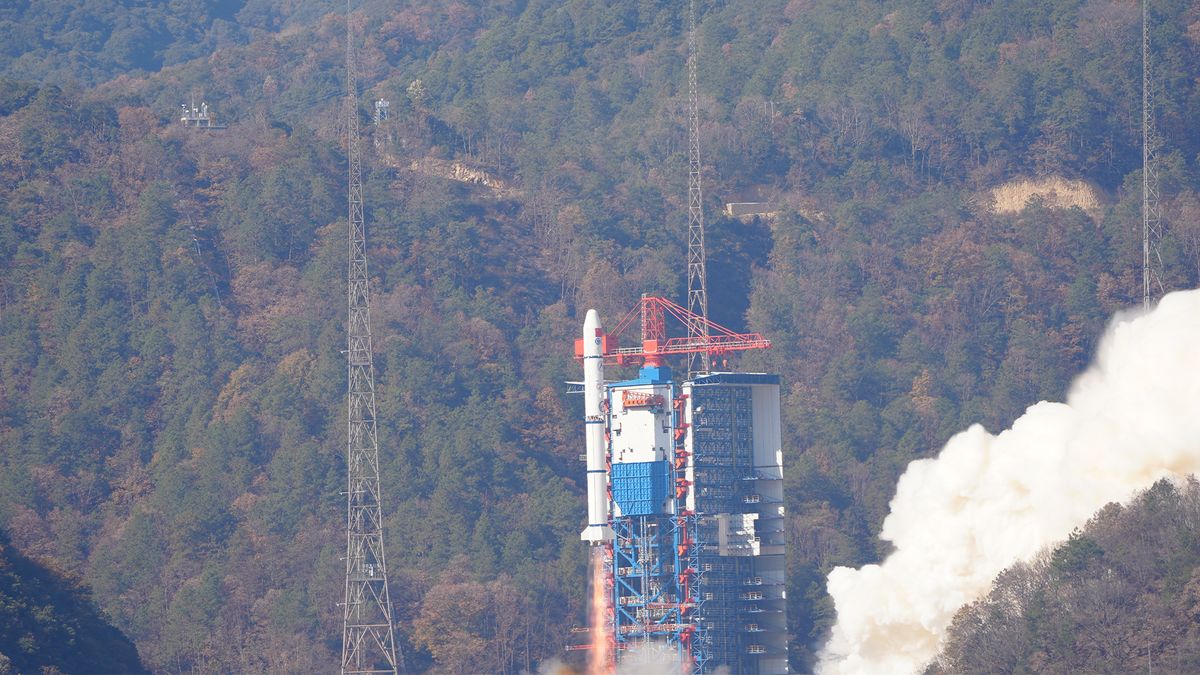
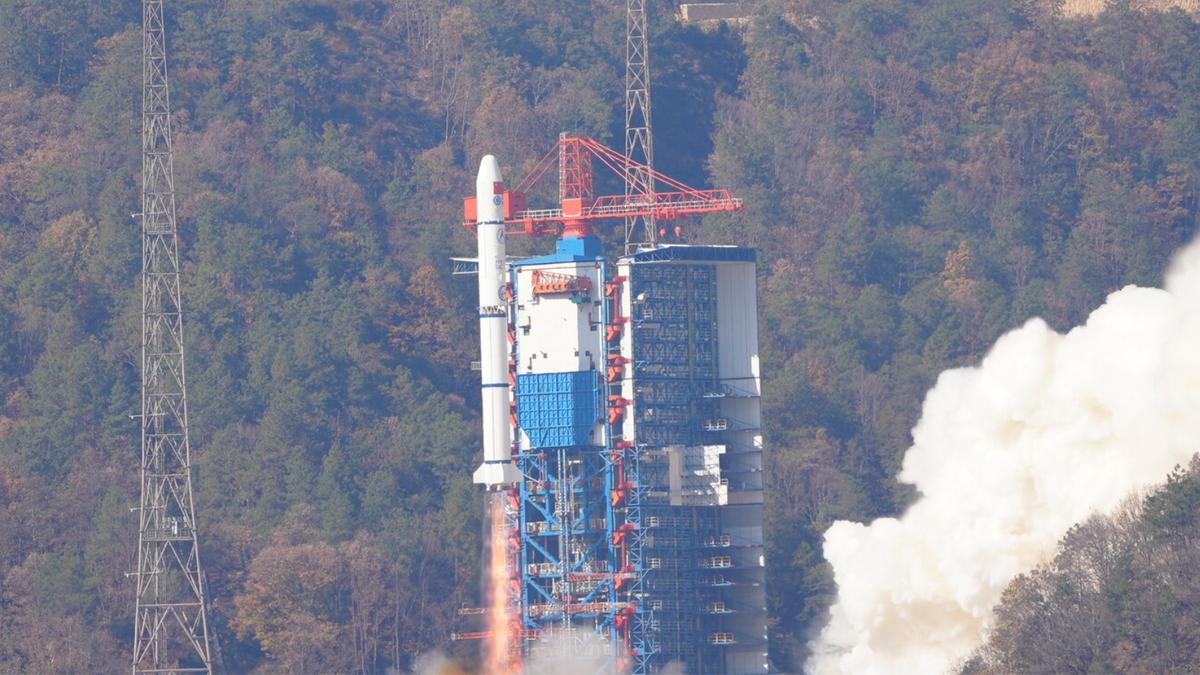
China successfully launched the Einstein Probe, a spacecraft designed to observe the X-ray sky and study high-energy light from powerful cosmic objects such as black holes, neutron star collisions, and supernovas. The spacecraft, equipped with a Wide-field X-ray Telescope and a Follow-up X-ray Telescope, will monitor the night sky over Earth for three years to gather data on X-ray sources and provide insights into the physics of violent cosmic events. The mission is a collaboration between China, the European Space Agency, and the Max Planck Institute for Extraterrestrial Physics.

"China Launches 'Einstein Probe' to Study X-ray Bursts in Space"
space-exploration2 years ago

"China Launches 'Einstein Probe' to Study X-ray Bursts in Space"

China has launched the Einstein probe, equipped with instruments to detect X-ray bursts from phenomena like black holes and neutron star collisions, in a collaborative effort with the European Space Agency and the Max Planck Institute for Extraterrestrial Physics. The probe's Wide-field X-ray Telescope (WXT) and Follow-up X-ray Telescope (FXT) will scan the sky for X-ray emissions, potentially shedding light on gravitational wave events and high-energy processes in space.

"China's Einstein Probe: Unveiling X-ray Universe Mysteries with Lobster Eye Technology"
space-science2 years ago

"China's Einstein Probe: Unveiling X-ray Universe Mysteries with Lobster Eye Technology"

China successfully launched the Einstein Probe (EP) to observe X-ray emissions from violent cosmic events using lobster eye-inspired optics, aiming to unveil mysteries of the X-ray universe. The spacecraft will spend at least three years observing phenomena such as tidal disruption events, supernovae, and high-energy electromagnetic counterparts to gravitational wave events. Equipped with a Wide-field X-ray Telescope (WXT) using innovative lobster eye optics, the EP will provide new insights into black hole interactions and rare phenomena. The mission also involves collaboration with the European Space Agency and aims to contribute to the emerging field of gravitational wave astronomy.

"Einstein's Telescope and Lobster-Eye Mission: Space-bound Innovations"
science-and-technology2 years ago

"Einstein's Telescope and Lobster-Eye Mission: Space-bound Innovations"

The Chinese Academy of Sciences is set to launch the Einstein Probe, an X-ray telescope named after Albert Einstein, next month. Built in collaboration with the European Space Agency (ESA) and the Max Planck Institute for Extraterrestrial Physics, the probe will use lobster-eye optics to observe 3,600 square degrees of the sky in a single shot. Over its three-year mission, the Einstein Probe aims to study black holes, gravitational waves, supernovas, and other cosmic phenomena, emitting alert signals to other telescopes to collect data on fleeting events.

Cutting-Edge 'Einstein' Telescope Launches with Lobster-Eye Technology
science-and-exploration2 years ago

Cutting-Edge 'Einstein' Telescope Launches with Lobster-Eye Technology

The Chinese Academy of Sciences (CAS) spacecraft Einstein Probe, in collaboration with the European Space Agency (ESA) and the Max Planck Institute for Extraterrestrial Physics (MPE), is set to launch in January 2024. Equipped with innovative X-ray instruments, the mission aims to survey the sky and detect powerful X-ray emissions from celestial objects such as neutron stars and black holes. The mission will contribute to advancing our understanding of high-energy physics and the origin of gravitational waves. The spacecraft's Wide-field X-ray Telescope (WXT) will observe large areas of the sky, while the Follow-up X-ray Telescope (FXT) will study interesting events in more detail. ESA's contribution includes developing the scientific instrumentation and providing ground stations for data download.