Tag

Enso

All articles tagged with #enso

Sky-based tweak could blunt El Niño before it begins
earth-science2 days ago

Sky-based tweak could blunt El Niño before it begins

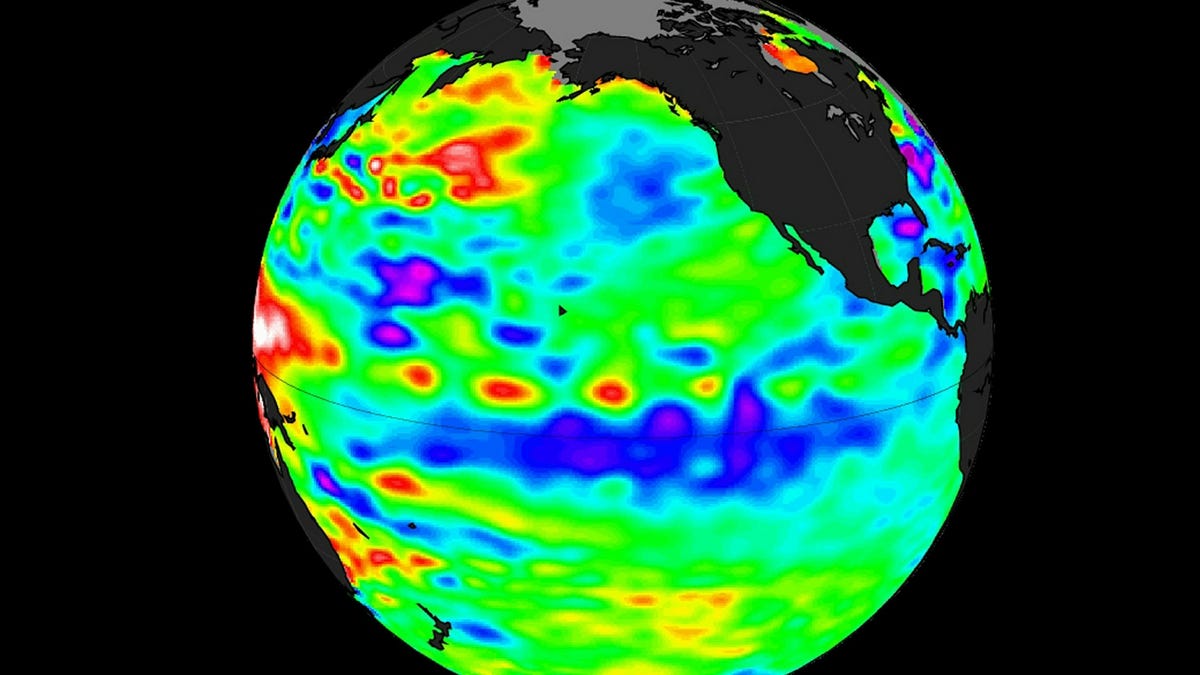
A Science Advances modeling study shows that targeted marine cloud brightening over the southeast tropical Pacific could weaken, or even neutralize, developing El Niño events. In simulations of the 1997–1998 and 2015–2016 super El Niños, applying the technique from June through February restored ENSO-neutral conditions, but researchers stress this is a proof-of-concept and not a-ready-for-field approach, noting uncertainties such as potentially faster La Niña onset and other unintended climate effects that require extensive follow-up before any real-world tests.

Geoengineering gamble: one method could dampen El Niño, another barely stirs the climate
science8 days ago

Geoengineering gamble: one method could dampen El Niño, another barely stirs the climate

A UCSB study finds two cooling geoengineering approaches have very different regional climate effects: marine cloud brightening in the eastern Pacific could dramatically reduce ENSO amplitude (about 61%), altering rainfall and upwelling, while stratospheric aerosol injection shows almost no measurable ENSO impact. The results emphasize that similar global cooling can come with very different regional consequences and underscore the need for careful evaluation of any geoengineering deployment and its ecological and agricultural risks.

NOAA: El Niño Emerges, Set to Strengthen Into Winter
weather1 month ago

NOAA: El Niño Emerges, Set to Strengthen Into Winter

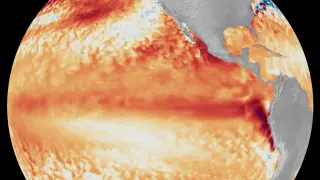
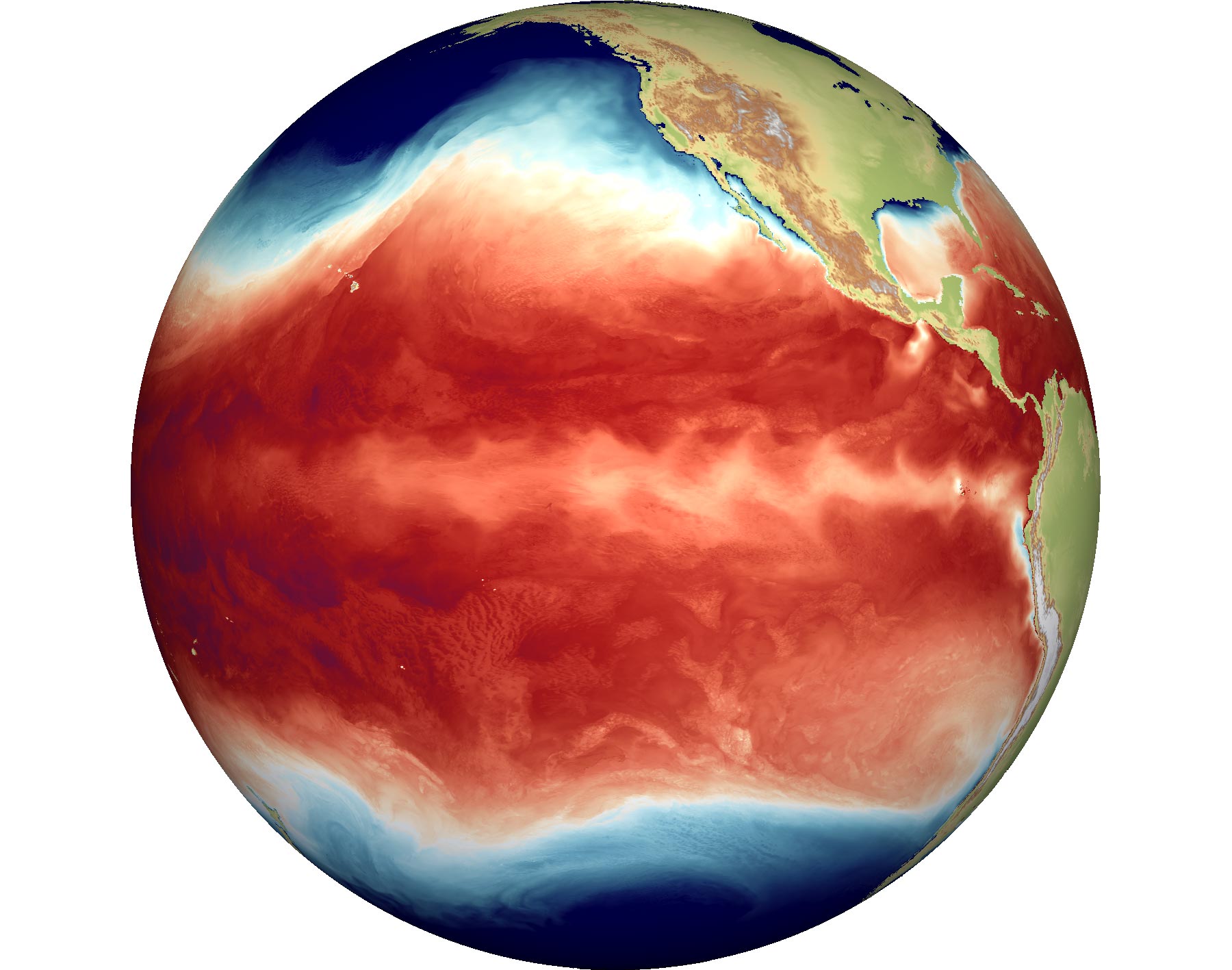
NOAA’s National Weather Service announced that El Niño has formed in the tropical Pacific and is likely to intensify to moderate or strong this fall, with a 63% chance that regional sea surface temperatures exceed 2.0°C—potentially a 'very strong' El Niño. The phenomenon alters the Walker Circulation and typically shifts the winter jet south, bringing warmer northern U.S. winters but drier conditions in parts of the Northwest and Ohio/Tennessee valleys, while the Southern U.S. can see stormier weather; West Coast high-tide flooding and ecological impacts can also occur. NOAA notes that ENSO forecasts now rely on both the ONI and the newer Relative Oceanic Nino Index (RONI), which better tracks changes in the Walker Circulation.

Earth’s hidden balance: a persistent east–west albedo symmetry revealed
science1 month ago

Earth’s hidden balance: a persistent east–west albedo symmetry revealed

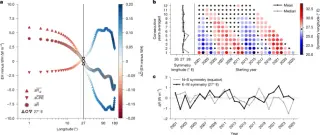
A 25-year CERES record reveals a unique and persistent east–west albedo symmetry around 27°E, where Eastern and Western Hemispheres reflect nearly identical solar radiation. The symmetry forms a triple balance: high-cloud reflection is stronger in the Eastern Hemisphere, low-cloud reflection dominates in the Western Hemisphere, and ice-free ocean fractions are nearly the same in both hemispheres, collectively maintaining similar reflectivity. Interannual variability of the symmetry tracks ENSO, implying a link to Walker circulation, while climate models (CMIP6) fail to reproduce this feature, highlighting gaps in cloud representation. The finding offers a new constraint for Earth system models and underscores the need for sustained radiation-budget observations amid climate change.

El Niño reshapes where tropical storms form this year
climate1 month ago

El Niño reshapes where tropical storms form this year

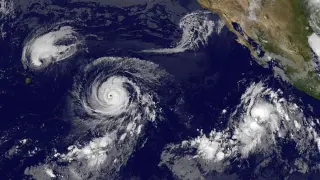
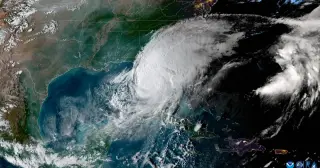
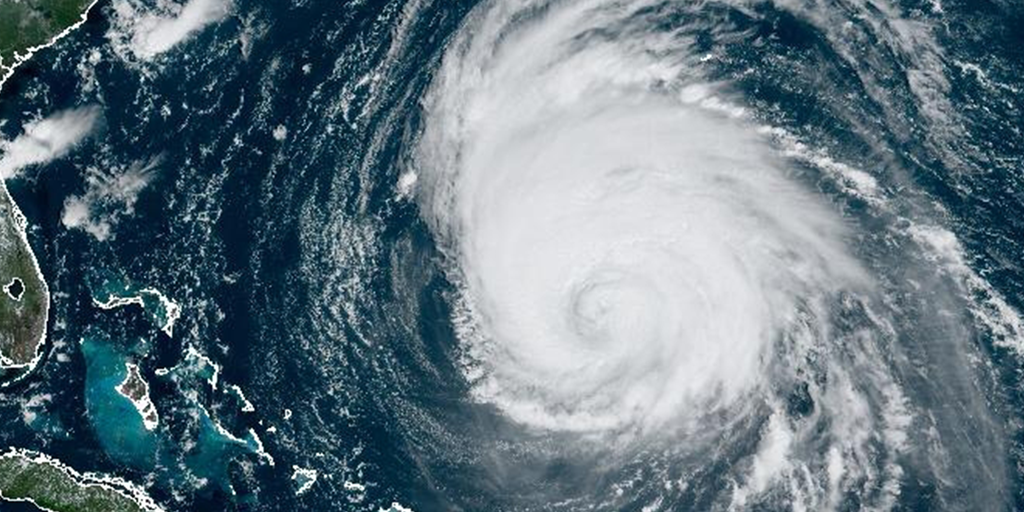
El Niño—the warm phase of the ENSO cycle—tends to suppress Atlantic hurricane activity while shifting tropical-storm formation toward the Pacific, potentially increasing near-Hawaii activity and moving typhoons eastward in the Northwest Pacific; NOAA projects a below-normal Atlantic season this year (about 55% chance), with regional variations in storm numbers and tracks driven by ENSO phases.

Super El Niño Could Make 2027 the Hottest Year Yet
science2 months ago

Super El Niño Could Make 2027 the Hottest Year Yet

Forecast models show a 'super' El Niño is increasingly likely by late 2026 into 2027, with central Pacific sea-surface temperatures possibly 2–4 C above average (extreme scenarios near 4 C). This would raise global temperatures and intensify heat waves, droughts, heavy rainfall and other extreme weather; 2026 is already on track to be among the warmest years, and 2027 could become the hottest on record. While confidence grows, the spring predictability barrier means some uncertainty remains, and the exact outcome will unfold in the coming weeks as monitoring continues.

El Niño May Return: Could Mean Hotter, More Extreme Summer Weather
planet-earth2 months ago

El Niño May Return: Could Mean Hotter, More Extreme Summer Weather

Forecasters with the World Meteorological Organization say El Niño could develop by May–July, potentially a strong event that would raise global temperatures and alter rainfall patterns worldwide. A rapid warming is expected through May–July, with elevated heat across southern North America, Central America, the Caribbean, Europe and Northern Africa, and broad impacts on agriculture, droughts, floods and weather extremes. The WMO notes high confidence in onset and intensification, while NOAA forecasts a possibility of a very strong El Niño later in the year.

Could a Super El Niño Rewrite This Winter’s Weather?
science3 months ago

Could a Super El Niño Rewrite This Winter’s Weather?

Forecasts suggest a rare, potentially strong “super El Niño” could form as ocean temperatures in the eastern Pacific warm, altering global weather for months. If it strengthens, it may suppress Atlantic hurricanes, bring warmer northern U.S. winters and wetter conditions to the South, with timing possibly starting as soon as June and peaking in fall/winter. However, forecasts face the spring predictability barrier and there’s no certainty yet that it will reach “super” strength.

Early 2026 Outlook: Atlantic Hurricane Season Expected to Be Slightly Below Average
weather3 months ago

Early 2026 Outlook: Atlantic Hurricane Season Expected to Be Slightly Below Average

Colorado State University’s April forecast predicts 13 named storms, six hurricanes, and two major hurricanes in the 2026 Atlantic season, a below-average tally driven by a likely later-arriving El Niño; the season runs June 1–Nov. 30 with about 75% of the long-term average, and there’s a 32% chance of a major hurricane making U.S. landfall and 35% for the Caribbean, with NOAA expected to release an additional outlook later.

"Preparing for La Niña: Impact on Hurricane Season and California Weather"
weather2 years ago

"Preparing for La Niña: Impact on Hurricane Season and California Weather"

La Niña is expected to form this year, with a 62% chance of developing during the upcoming summer months, potentially worsening the Atlantic hurricane season by weakening wind shear and increasing storm activity. While its impact on U.S. summer weather is minimal, La Niña typically brings cold and snow to the Northwest and dry conditions to the southern tier during winter, with warmer temperatures in the Southeast and mid-Atlantic. The recent strong El Niño is weakening and expected to transition to "ENSO-neutral" conditions, with the entire El Niño/La Niña cycle known to affect weather in the U.S. and around the world.

"2024 Hurricane Season: Forecasting Tropical Threats"
weather2 years ago

"2024 Hurricane Season: Forecasting Tropical Threats"

The 2024 hurricane season in the Atlantic basin is approaching, and forecasters are closely monitoring the El Niño-Southern Oscillation (ENSO) climate pattern to predict tropical cyclone activity. Early indications suggest a neutral or La Niña status for the upcoming season, potentially leading to more active hurricane activity. The National Hurricane Center plans to introduce changes, including experimental forecast cones and more frequent adjustments to watches and warnings. However, experts caution against preseason hype, emphasizing the unpredictability of hurricane activity and the limitations of long-term forecasts. The official list of names for the 2024 tropical cyclone season has been released, with retired names replaced by new ones.