Tag

Forests

All articles tagged with #forests

Heat Halts Tree Growth in Summer, Clouding Forests’ Climate Role
climate-change1 day ago

Heat Halts Tree Growth in Summer, Clouding Forests’ Climate Role

A multinational study using point dendrometers and 75 years of data finds that many oaks stop producing woody biomass by mid-summer even as photosynthesis continues, meaning forests may absorb less CO2 than climate models assume. Eastern oaks absorbed 36% of their carbon without growth, California oaks 26%, suggesting a decoupling of growth from photosynthesis under hot, dry conditions. The results could prompt revisions to how forests are represented in climate projections and call for broader testing across species and ecosystems.

Forests' carbon sink may be weaker than photosynthesis alone implies
environment28 days ago

Forests' carbon sink may be weaker than photosynthesis alone implies

A study across 137 sites in the US finds tree growth often stops before the growing season ends, meaning wood production—and long‑term carbon storage—can lag behind the apparent carbon uptake from photosynthesis. In eastern sites about 36% of yearly uptake occurs after growth has ceased, and about 26% in California. Dry, hot conditions sharply limit wood growth, suggesting models that link carbon uptake directly to photosynthesis may overestimate future forest carbon sequestration as climate change raises aridity. The researchers plan to test if this decoupling occurs in other species and regions.

Oak Trees Delay Spring Buds to Fend Off Caterpillar Outbreaks, Study Finds
good-earth2 months ago

Oak Trees Delay Spring Buds to Fend Off Caterpillar Outbreaks, Study Finds

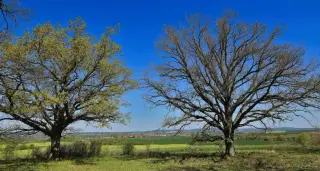
German researchers found oak trees delay leaf-out by about three days after heavy caterpillar outbreaks, tracked with Sentinel-1 radar data over five years across 60 forests (137,500 observations). The delay reduces caterpillar survival and tree damage by about 55%, is more energy-efficient than producing extra tannins, and is reversible—showing trees actively adapt to biotic threats in a warming world.

Van-Chased Storms Reveal Trees’ Ultraviolet Corona
science4 months ago

Van-Chased Storms Reveal Trees’ Ultraviolet Corona

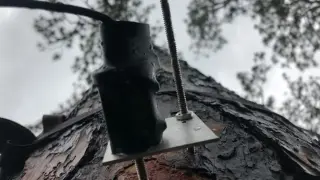
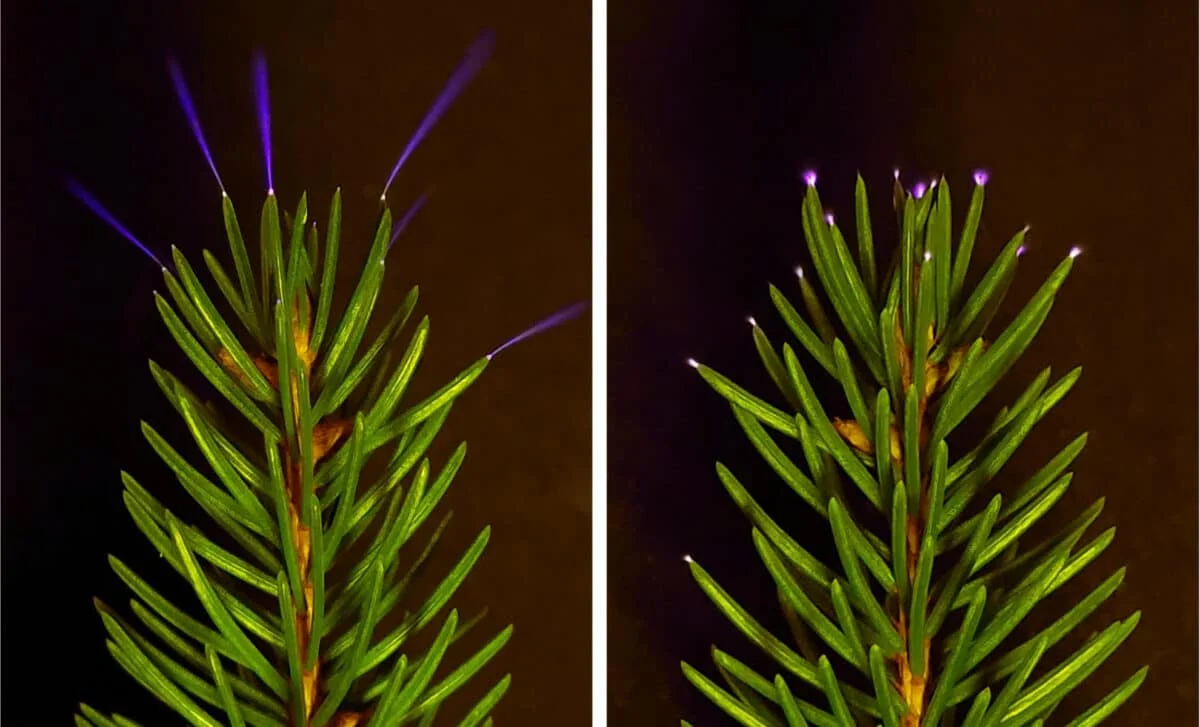
Researchers mounted a UV camera on a modified minivan to capture the ultraviolet corona emitted by trees during thunderstorms for the first time. The team observed 41 bursts in sweetgum and loblolly pine across the U.S. East Coast, with each burst emitting billions of photons at around 260 nanometers. This real but previously unobserved glow could influence forest health and atmospheric chemistry and may play a role in thunderstorm electrification, suggesting such coronae occur across forests worldwide.

Innovative Planting Methods Could Revive Germany's Dying Forests and Their CO2 Absorption
environment6 months ago

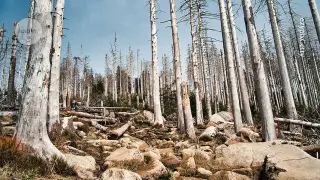
Innovative Planting Methods Could Revive Germany's Dying Forests and Their CO2 Absorption

Germany's forests are severely affected by climate change and bark beetle outbreaks, leading to reduced CO2 absorption. A new reforestation approach involving diverse species is being tested to enhance resilience and restore ecological balance, highlighting the importance of biodiversity in combating climate impacts.

Trump Administration Moves to Remove Roadless Forest Protections
environment1 year ago

Trump Administration Moves to Remove Roadless Forest Protections

U.S. Secretary of Agriculture Brooke Rollins announced the rescinding of the 2001 Roadless Rule, which restricts road construction and timber harvest on nearly 59 million acres of national forests. This move aims to improve forest management, reduce wildfire risks, and boost economic development in rural areas by allowing more local decision-making and responsible resource use.

Mapping the Massive Fungus: Nature's Giant Revealed
science1 year ago

Mapping the Massive Fungus: Nature's Giant Revealed

In Oregon's Blue Mountains, the Humongous Fungus, a massive Armillaria ostoyae colony, is possibly the largest and oldest living organism on Earth, covering up to 3.7 square miles and weighing as much as 27,000 metric tons. This subterranean fungus, known for its honey mushrooms, kills trees by colonizing their roots. Its vast size and age, potentially up to 8,600 years, make it a unique ecological phenomenon, though its exact dimensions and impact remain subjects of scientific study.

Antarctic Amber Discovery Sheds Light on Ancient Cretaceous Forests
science1 year ago

Antarctic Amber Discovery Sheds Light on Ancient Cretaceous Forests

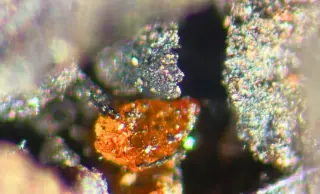
Scientists have discovered the first amber on the Antarctic continent, providing new insights into the Cretaceous period's forest ecosystems. The amber, found in a sediment core from Pine Island Bay, offers evidence of resin-producing trees in Antarctica 90 million years ago. This discovery helps reconstruct the ancient swampy, conifer-rich rainforests near the South Pole and suggests that all continents once had climates suitable for such forests. The amber contains micro-inclusions of tree bark and shows signs of pathological resin flow, indicating past environmental conditions.