Tag

Natural Language Processing

All articles tagged with #natural language processing

Byteification bridges gap between subword and byte-level AI models
technology1 month ago

Byteification bridges gap between subword and byte-level AI models

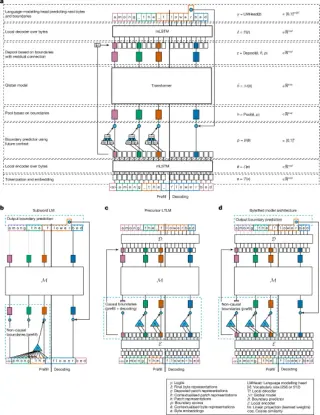
Researchers from the Allen Institute for AI (Ai2) have published a method called 'byteification' in Nature, which converts existing subword-based large language models (LLMs) into byte-level models with minimal additional training. This approach addresses the historical performance lag of byte-level models, which process text at the character level rather than as word fragments. By retrofitting models like Olmo, Qwen, and Llama, the new byteified versions achieve performance comparable to their subword counterparts while excelling in character-level reasoning tasks. The method requires less than 1% of a typical pre-training budget, offering a cost-effective path to developing models that handle scientific data, code, and diverse languages more accurately without the biases inherent in subword tokenization.

Anthropic’s Text Watermarking Sparks Debate Over AI’s View of Language
technology3 months ago

Anthropic’s Text Watermarking Sparks Debate Over AI’s View of Language

Anthropic has implemented invisible text watermarks in Claude to comply with the EU AI Act, a move that has drawn sharp criticism from media and academic figures who argue the method treats human writing as a series of interchangeable, low-stakes random choices. While Anthropic asserts the technique does not impact output quality, critics contend it reveals a fundamental disregard for the nuance and intentionality inherent in human authorship.

AI analysis of child speech predicts mental health risks six years ahead
science-and-health3 months ago

AI analysis of child speech predicts mental health risks six years ahead

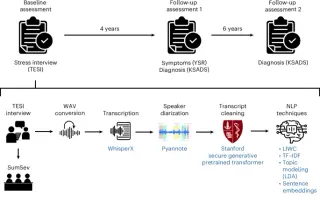
A study published in Nature Mental Health demonstrates that automated analysis of youth speech can predict future mental health outcomes with greater accuracy than traditional human-rated risk factors. Researchers applied natural language processing techniques to stress interviews with 204 children aged 9 to 13, finding that linguistic style and semantic themes, rather than explicit emotional content, were the strongest predictors of internalizing psychopathology up to six years later. The study highlights narratives of physical violence and social exclusion as key risk markers, while structured routines and healthcare access served as protective factors. This approach offers a scalable framework for identifying objective risk markers in early life, potentially improving early intervention strategies for developmental psychopathology.

Compact language models push medicine toward scalable AI
technology4 months ago

Compact language models push medicine toward scalable AI

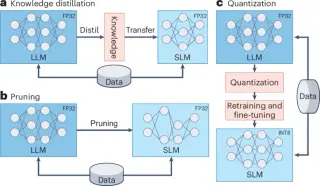
Small language models (SLMs) offer a scalable, practical alternative to large language models for medical tasks, enabling broader real-world deployment across diverse clinical settings, but they trade off some accuracy and robustness and require careful evaluation, domain adaptation, and governance to address safety and integration challenges.

ChatGPT's New Search Feature Challenges Google's Dominance
technology2 years ago

ChatGPT's New Search Feature Challenges Google's Dominance

ChatGPT Search, a new feature from OpenAI, is being touted as a potential replacement for Google Search due to its ability to understand conversational queries and provide detailed, conversational responses with citations. Unlike traditional search engines, ChatGPT can generate comprehensive answers and itineraries, making it easier for users to find specific information without sifting through multiple links. While Google still holds advantages in areas like shopping and maps, ChatGPT's ease of use for everyday queries is highlighted as a significant benefit.

"Unveiling the Evolution of Artificial Intelligence: From Definitions to Global Conversations"
technology2 years ago

"Unveiling the Evolution of Artificial Intelligence: From Definitions to Global Conversations"

Artificial intelligence (AI) encompasses technologies that exhibit human-like intelligence, with machine learning being the most widely used approach today. Generative AI, such as ChatGPT, uses deep learning and neural networks to produce outputs based on user input, revolutionizing tasks like language processing and image generation. While AI has made significant strides, there is debate about its potential to achieve artificial general intelligence (AGI). AI technologies are already prevalent in various applications, from recommendation algorithms to fraud detection, and are increasingly integrated into chatbots and digital assistants, although challenges and risks remain in their widespread deployment.

"AI Models Communicate and Learn Skills Independently"
artificial-intelligence2 years ago

"AI Models Communicate and Learn Skills Independently"

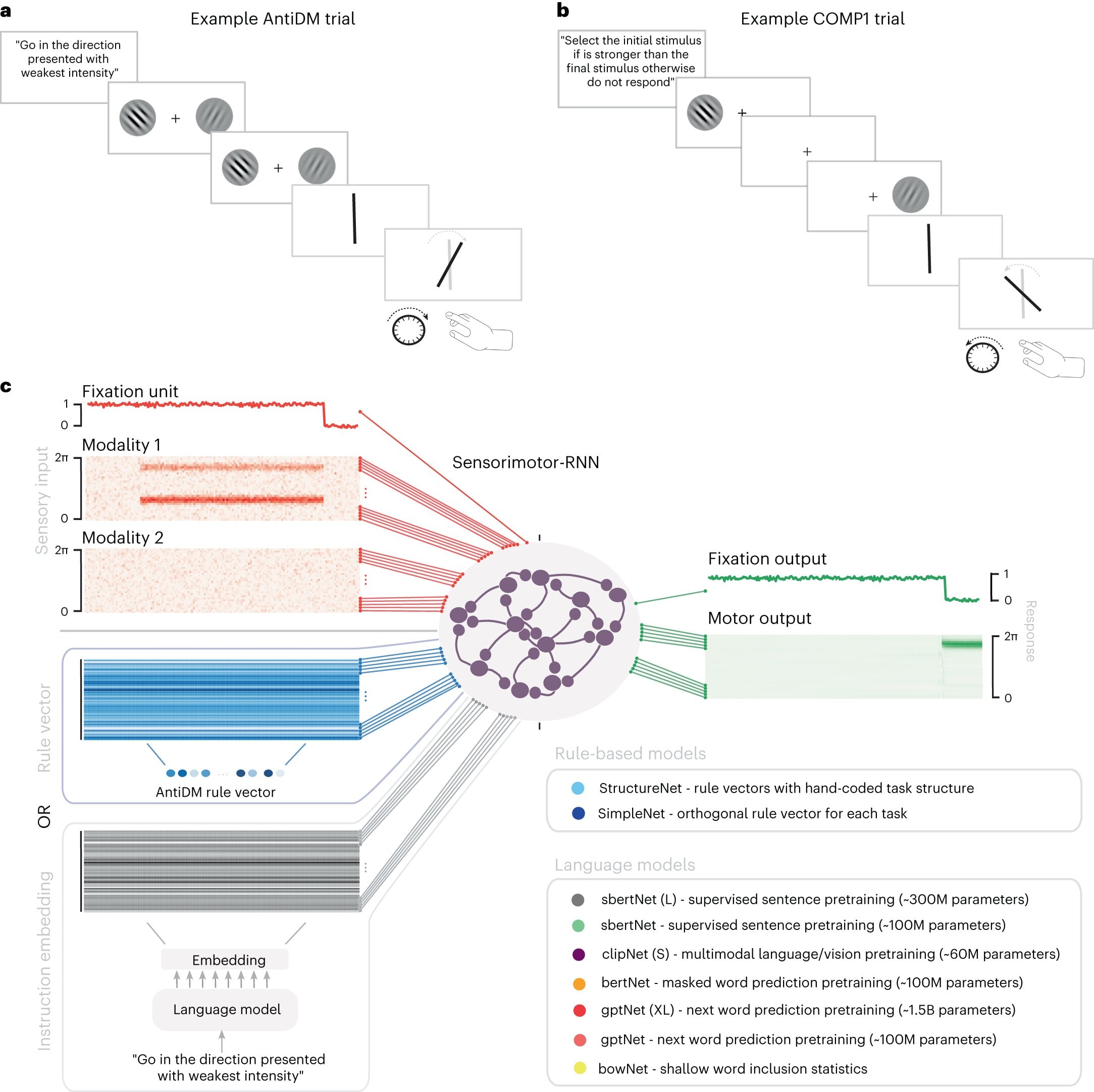
Scientists have developed AI models capable of learning and communicating with each other using natural language processing, allowing them to pass on skills and perform tasks based solely on written instructions. The AI network, consisting of a language model and a sensorimotor-recurrent neural network, demonstrated the ability to understand and carry out tasks from linguistic instructions and then communicate these tasks to a "sister" AI, which successfully performed them as well. This breakthrough in AI communication and learning could have implications for the development of humanoid robots and our understanding of human brain function.

"Conversing AIs: The Dialogue Between Two Artificial Intelligences"
artificial-intelligence2 years ago

"Conversing AIs: The Dialogue Between Two Artificial Intelligences"

Researchers at the University of Geneva have developed an artificial neural network capable of learning and describing tasks to another AI using verbal instructions, a unique human ability that distinguishes us from other species. The network, based on the S-Bert model, was trained to understand and produce language, and then to perform tasks based on written instructions. This breakthrough has promising implications for robotics, as it opens new possibilities for machines to communicate and understand each other, potentially leading to the development of humanoid robots capable of linguistic interaction and task replication.

"Link Between Slowed Speech and Cognitive Decline Uncovered by Scientists"
health-and-science2 years ago

"Link Between Slowed Speech and Cognitive Decline Uncovered by Scientists"

A recent study from the University of Toronto suggests that the speed of speech, rather than the difficulty in finding words, is a more accurate indicator of brain health in older adults. The research found that the pace of everyday speech was closely linked to age-related decline in cognitive abilities, highlighting a broader decline than just difficulty in word retrieval. While the study's findings are promising, future research could incorporate verbal fluency tasks and subjective experiences of word-finding difficulties to better quantify and detect early cognitive decline. Additionally, advancements in natural language processing technologies could allow for automatic detection of language changes, such as slowed speech rate, as a subtle marker of cognitive health.

"Smaug-72B: The Reigning Champion of Open-Source AI"
technology2 years ago

"Smaug-72B: The Reigning Champion of Open-Source AI"

Abacus AI has released Smaug-72B, a new open-source language model that outperforms GPT-3.5 and Mistral Medium, marking a significant milestone in the field of natural language processing. With an average score of over 80 on the Hugging Face Open LLM leaderboard, Smaug-72B showcases the potential of open-source AI to rival Big Tech's capabilities. This release, along with Qwen's recent advancements, signals a new era of AI innovation and democratization, challenging the dominance of big tech companies and opening new possibilities for everyone.

"AI Identifies Risky Alcohol Use in Patients Pre-Surgery"
health-and-medicine2 years ago

"AI Identifies Risky Alcohol Use in Patients Pre-Surgery"

A new analysis suggests that artificial intelligence could help identify patients at risk of dangerous alcohol use before surgery by analyzing contextual clues in their medical records. Using a natural language processing model, researchers found that the AI could identify three times as many at-risk patients compared to diagnostic codes alone. This could potentially assist clinicians in providing intervention or postoperative support for patients with risky alcohol use, ultimately improving surgical outcomes.

"Empowering Creators: Building Custom GPTs with ChatGPT and OpenAI"
technology2 years ago

"Empowering Creators: Building Custom GPTs with ChatGPT and OpenAI"

OpenAI's ChatGPT now allows users to create custom GPTs tailored to their specific needs, such as language learning or creative writing, by following a few simple steps on the ChatGPT website. Users can customize the conversational style, provide foundational documents or data, and enable extra capabilities like web browsing or code interpretation. A ChatGPT Plus subscription is required to access this feature, and users can continuously refine and update their custom GPTs as needed.

OpenAI Acknowledges ChatGPT's Laziness and Promises a Solution
technology3 years ago

OpenAI Acknowledges ChatGPT's Laziness and Promises a Solution

OpenAI has confirmed that its language model, ChatGPT, has been giving lackluster responses and behaving "lazier" than usual. Users have reported instances of ChatGPT not being as helpful as before, and OpenAI is investigating the issue. While the specific cause of the underperformance has not been disclosed, it may be related to a November 11th upgrade. This is not the first time users have complained about ChatGPT's decline in performance, with previous reports being denied by OpenAI. Some users speculate that OpenAI may be limiting bandwidth per user, resulting in abbreviated answers.