Tag

Organic Chemistry

All articles tagged with #organic chemistry

Chemists synthesize bowl-shaped nanocarbon with aromatic cyclopentadienide ring
science6 days ago

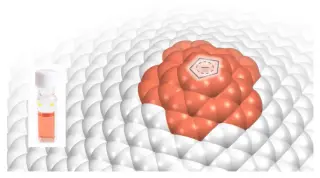
Chemists synthesize bowl-shaped nanocarbon with aromatic cyclopentadienide ring

Researchers at Sun Yat-Sen University and Kyoto University have synthesized pentabenzocorannulenide (PBC−), a bowl-shaped nanocarbon featuring an anionic, aromatic cyclopentadienide ring. This structure, created via nucleophilic dealkylation, exhibits unique bonding and electronic properties distinct from other geodesic polyarenes, enabling reversible functionalization and metal complexation.

Curiosity Finds Earth-Like Organic Molecules in Ancient Martian Clay
science2 months ago

Curiosity Finds Earth-Like Organic Molecules in Ancient Martian Clay

A multinational team led by the University of Florida and NASA’s Jet Propulsion Laboratory confirmed the presence of seven complex organic molecules in clay samples drilled by the Curiosity rover in Mars’s Gale Crater. These molecules, including benzothiophene, are similar to those found in ancient meteorites that likely seeded life on Earth. The discovery demonstrates that Mars can preserve such compounds for billions of years despite its lack of a magnetic field, suggesting the planet once had conditions conducive to the formation of life’s building blocks. The finding, which took over two decades to achieve due to instrument development and technical hurdles, does not prove life existed on Mars but indicates that the necessary chemical precursors were present and preserved.

New Study Claims Inductive Effect in Chemistry Textbooks Was Misdescribed for a Century
science2 months ago

New Study Claims Inductive Effect in Chemistry Textbooks Was Misdescribed for a Century

Researchers from Cardiff University and the University of Newcastle argue that the inductive effect, a core concept in organic chemistry, has been incorrectly described in textbooks for nearly 100 years. Their new study suggests the effect does not travel through multiple bonds as traditionally taught but is limited to a single bond in neutral molecules. This finding, based on modern computational data, has already prompted two A-level exam boards to review their curriculum, aiming to correct foundational misunderstandings that impact advanced scientific research.

science2 months ago

Palladium catalysis unlocks precise ketone homologation via decarboxylative rearrangement

Jing Gong, Qian Wang, and Jieping Zhu from EPFL have published a new method for ketone homologation in Nature. The approach uses palladium(II)/palladium(IV) catalysis to convert beta-hydroxy carboxylic acids into ketones. Unlike older electrochemical methods that suffer from side reactions and loss of stereochemical data, this new pathway is concerted. It allows for precise control over stereochemistry, retaining the configuration of the migrating carbon while inverting the alpha-stereocenter. The method avoids hazardous diazo reagents and demonstrates high selectivity for unsymmetrical ketones. The authors validated the technique by using it as a key step in the total synthesis of (+)-rupestine D.

Chicago chemists unlock rare pyrroles via one-pot isoxazole conversion
science2 months ago

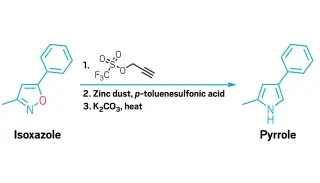
Chicago chemists unlock rare pyrroles via one-pot isoxazole conversion

University of Chicago researchers have developed a new skeletal editing method that converts isoxazole molecules into pyrroles through an oxygen-to-carbon swap. Published in Nature, this three-step, single-vessel reaction offers a simpler alternative to traditional multi-step syntheses, expanding access to complex substitution patterns that were previously difficult or expensive to produce.

"Potential for Life in Venus' Sulfuric Acid Clouds Revealed by Surprising Amino Acid Stability"
space-science2 years ago

"Potential for Life in Venus' Sulfuric Acid Clouds Revealed by Surprising Amino Acid Stability"

Recent studies suggest that complex organic chemistry could thrive in sulfuric acid, challenging the assumption that water-rich environments are necessary for life. Research has shown that nucleic acid bases and amino acids can remain stable in concentrated sulfuric acid, similar to the conditions found in the Venusian clouds. While the study was conducted in a laboratory setting and not in the actual Venusian environment, upcoming missions to Venus may provide valuable data to further explore the potential for organic chemistry and possibly extraterrestrial life in such conditions.

"Uncovering Mars' Ancient Life Triggers: The Role of Formaldehyde and Organic Materials"
science-and-space2 years ago

"Uncovering Mars' Ancient Life Triggers: The Role of Formaldehyde and Organic Materials"

Researchers from Tohoku University propose that organic materials on Mars might have originated from atmospheric formaldehyde, suggesting the planet’s early atmosphere could support the formation of life-essential biomolecules. New findings indicate Mars’ ancient atmosphere, rich in formaldehyde, could have supported the creation of organic materials essential for life, shedding light on the planet’s potential for past habitability. Scientists simulated the potential atmospheric composition of early Mars and found that it could have provided a continuous supply of formaldehyde, potentially leading to the creation of various organic compounds, broadening our understanding of the planet’s ancient capacity to sustain life.

"Extraterrestrial Clues: Asteroid Pieces Unveil Secrets of Life's Origin on Earth"
science2 years ago

"Extraterrestrial Clues: Asteroid Pieces Unveil Secrets of Life's Origin on Earth"

NASA's OSIRIS-REx mission has brought back samples from the asteroid Bennu, providing insights into the molecular building blocks of the solar system and potentially the origin of life. The samples contain intriguing molecules, including carbon-based organics, and ongoing analysis aims to uncover amino acids, lipids, sugars, and genetic code bases. Bennu, a potentially dangerous asteroid with a 1-in-2,700 chance of impacting Earth in 2182, offers a unique opportunity to study prebiotic chemistry and better understand the search for life on other celestial bodies.

Unveiling the Secrets of a Mysterious Blue Molecule for Enhanced Light Energy Utilization
science3 years ago

Unveiling the Secrets of a Mysterious Blue Molecule for Enhanced Light Energy Utilization

Scientists from IOCB Prague have unraveled the unique behavior of azulene, a fundamental aromatic molecule known for its distinct blue hue. By violating Kasha's rule, azulene behaves differently from other molecules in terms of emitting light upon transitioning to excited states. The researchers used the concept of (anti)aromaticity to explain this behavior, showing that azulene falls quickly from the first excited state without emitting light, but behaves like a satisfied aromatic substance in the second step, emitting light for a longer duration. This understanding could lead to advances in organic chemistry and the efficient capture of light energy. The researchers also demonstrated that the properties of azulene can be transferred to other aromatic molecules.

Scientists Develop Groundbreaking Unnatural Amino Acids, Defying Natural Composition
science3 years ago

Scientists Develop Groundbreaking Unnatural Amino Acids, Defying Natural Composition

Researchers at the University of Pennsylvania have developed amino acids that are unlike any found in nature, opening up possibilities for novel protein therapies and new branches of chemistry. By combining an engineered tryptophan enzyme with an organic light-reactive catalyst, the team created several amino acids never seen before. This breakthrough could have wide-ranging implications in various scientific fields, from medicine to therapeutic applications. The discovery is just the first step towards understanding these chemical reactions and their potential uses. The study was published in Science on July 27, 2023.

Advancements in Unnatural Amino Acid Creation and Eco-Friendly Biomanufacturing
science-and-technology3 years ago

Advancements in Unnatural Amino Acid Creation and Eco-Friendly Biomanufacturing

Scientists have discovered a new method to create "unnatural" amino acids, which could have applications in protein-based therapies and expand the field of organic chemistry. The process involves bioengineering enzymes to create an unnatural configuration of an amino acid, offering chemists greater control over the resulting molecule's orientation. By combining a light-sensitive molecular catalyst with a PLP enzyme, the reaction achieves unprecedented results. The research team used computer simulations to understand the reaction's mechanism and aims to further explore its potential applications in creating new chemical tools and medicines.

James Webb Telescope Uncovers Life's Essential Carbon Compounds in Distant Star System
astronomy3 years ago

James Webb Telescope Uncovers Life's Essential Carbon Compounds in Distant Star System

The James Webb Space Telescope (JWST) has detected the molecule methyl cation (CH3+) in a protoplanetary disk located in the Orion Nebula, about 1,350 light-years from Earth. This discovery is significant as methyl cation plays a crucial role in the complex carbon chemistry required for life. The observations were made possible by the JWST's advanced capabilities in resolving smaller details and identifying specific molecules. The findings suggest that ultraviolet radiation, which is typically destructive to carbon-based molecules, may actually be instrumental in kick-starting organic chemistry and the formation of more complex carbon molecules in early planet formation. This is another remarkable discovery by the JWST, which has previously detected ancient organic molecules, the coldest ice molecules, and evidence of frozen water in a near-Earth comet.

Innovative Synthesis Method for Cannabis Compound Shows Potential in Cancer Treatment.
science-and-technology3 years ago

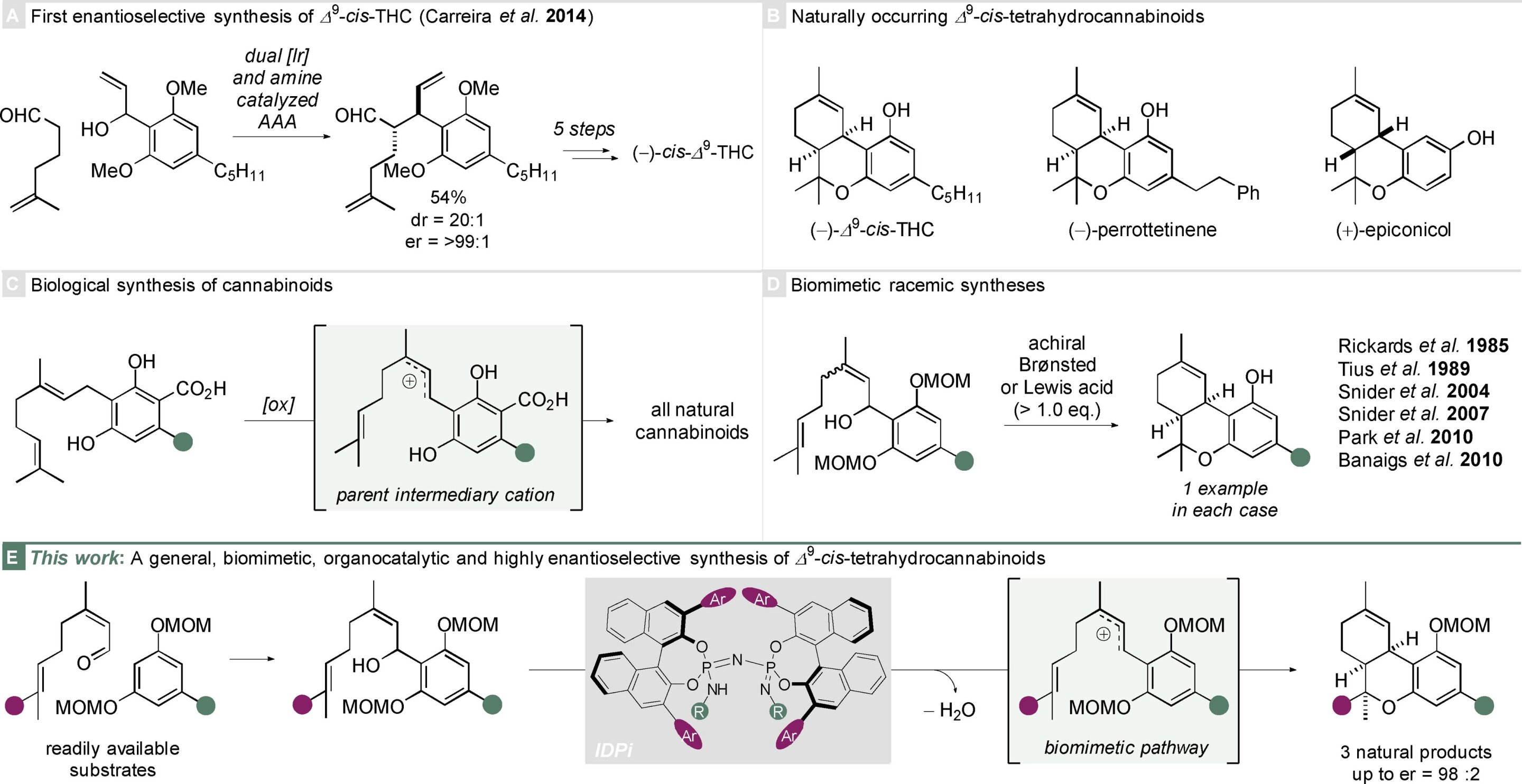
Innovative Synthesis Method for Cannabis Compound Shows Potential in Cancer Treatment.

Researchers at Leipzig University have developed a new, simple, and inexpensive method for synthesizing cis-tetrahydrocannabinol (cis-THC), a natural substance found in the cannabis plant that produces the characteristic psychoactive effect and has many potential applications, including in the pharmaceutical industry. The new method allows for the production of cis-tetrahydrocannabinoids and testing them for their biological activity, which was not possible before. The substance can be synthesized with high overall yields and excellent optical purities using the new method, and it requires very small amounts of catalyst, which is highly attractive from an environmental perspective in terms of saving energy and resources and minimizing by-products.