Tag

Magnetars

All articles tagged with #magnetars

Seven Cosmic Curiosities That Challenge Our Understanding of Space
space18 days ago

Seven Cosmic Curiosities That Challenge Our Understanding of Space

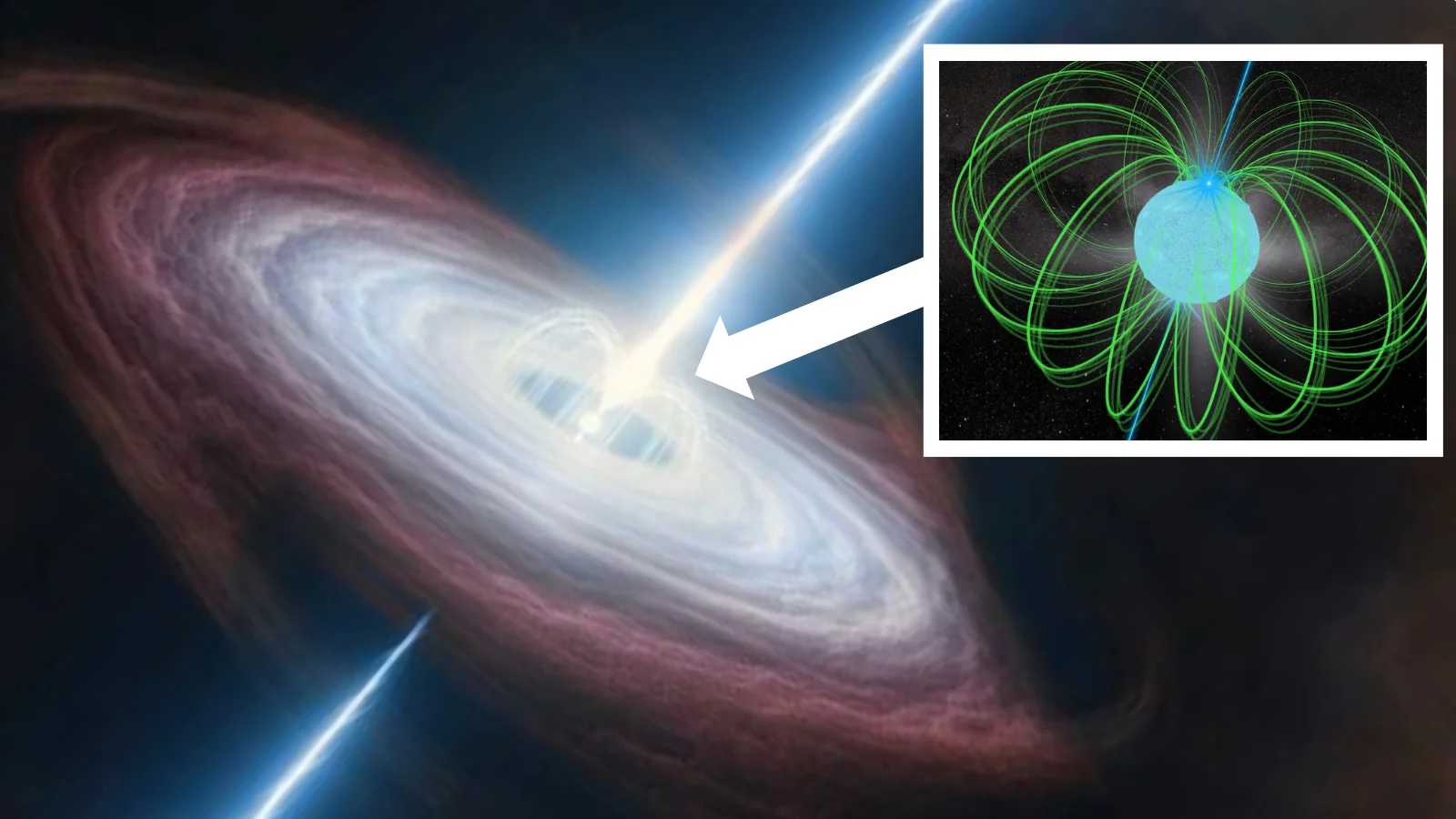
Seven enigmatic cosmic objects—magnetars with extreme magnetic fields, the mysterious Odd Radio Circles, rogue planets drifting through interstellar space, the Boomerang Nebula’s record-low temperature, bright quasars at galactic centers, a brown dwarf potentially hosting its first moon, and blazars with jets aimed toward Earth—illustrate how the universe continually defies simple explanations and invites new discoveries.
Ultra-high-energy cosmic rays defy easy explanations
science1 month ago

Ultra-high-energy cosmic rays defy easy explanations

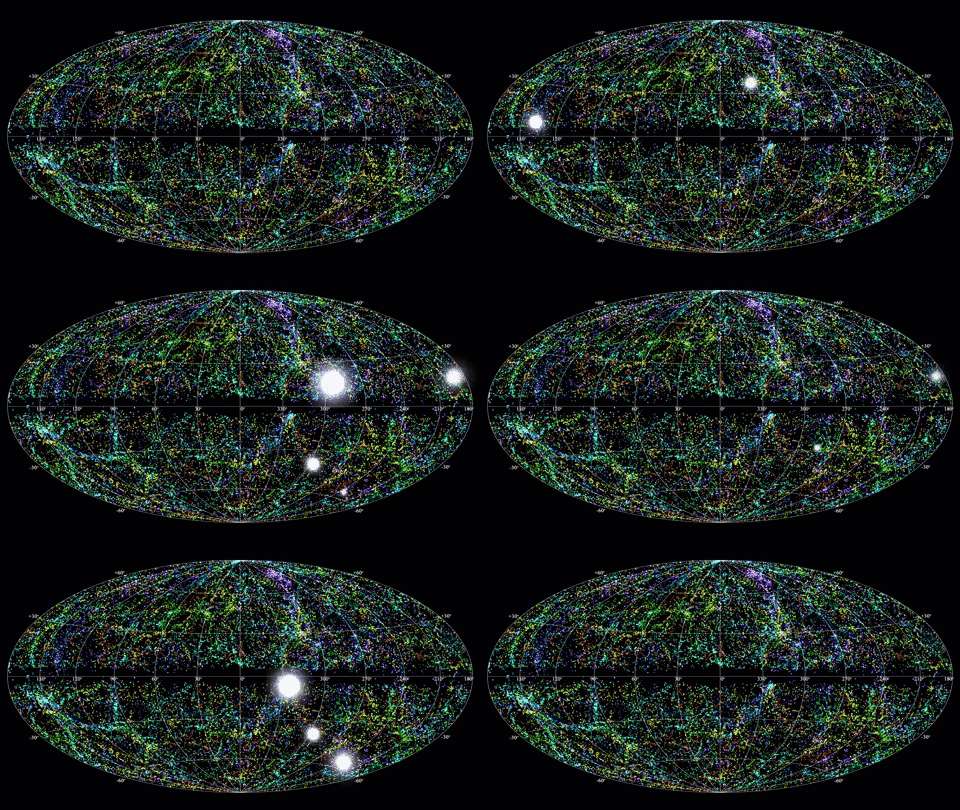
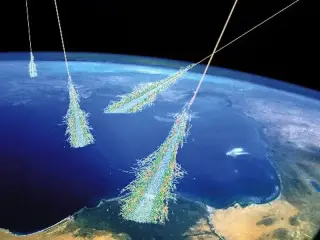
The Oh-My-God particle, a subatomic nucleus detected in 1991 with energy around 3.2×10^20 eV, remains one of the most extreme cosmic rays ever observed. Since then, at least a dozen–plus similar events have been recorded, confirming ultra-high-energy cosmic rays are real but exceedingly rare: detectors like the Pierre Auger Observatory see roughly one such event per square kilometer per century, while the sources remain unknown. The leading possibilities are extragalactic, with candidates including magnetars and the supermassive black holes at centers of active galaxies, but no definitive origin has been identified.

Warped spacetime powers flickering light in newborn magnetars
space5 months ago

Warped spacetime powers flickering light in newborn magnetars

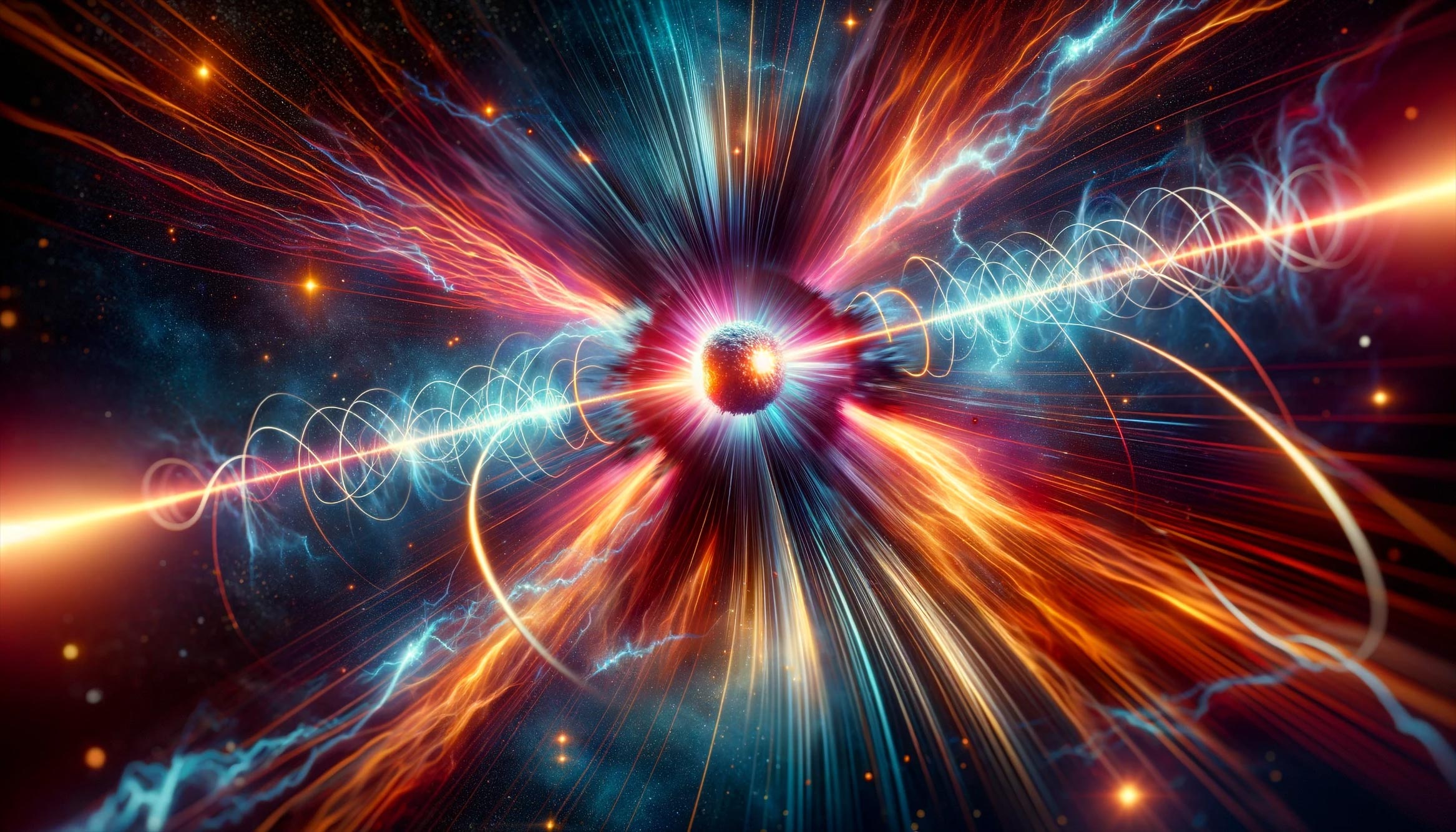
Astrophysicists propose a magnetar+Lense-Thirring model to explain the zigzag, chirped light curves of Type I superluminous supernovae, like SN 2024afav. A newborn magnetar’s rapid spin twists spacetime; a misaligned, shrinking accretion disk precesses and intermittently blocks or redirects radiation, producing regular brightness bumps and a shrinking period. The model fits the observed data, yields a 4.2-millisecond spin and strong magnetic field, and could unify explanations for several such supernovae; future Rubin Observatory discoveries will test it.

Magnetar birth confirmed inside colossal supernova
astronomy5 months ago

Magnetar birth confirmed inside colossal supernova

Astronomers have confirmed the births of a magnetar—a highly magnetized, rapidly spinning neutron star—within a rapidly bright supernova, SN 2024afav. Analysis of the 200‑day light curve revealed four chirps caused by a wobbling accretion disk around the newborn magnetar, with general relativity’s frame‑dragging explaining the timing. The magnetar spins about 238 times per second and possesses a magnetic field hundreds of trillions of times stronger than Earth's, providing definitive evidence for the magnetar–superluminous supernova connection.

Unraveling the Cosmic Mystery: Magnetars and Plasma Bubbles Behind Fast Radio Bursts
science1 year ago

Unraveling the Cosmic Mystery: Magnetars and Plasma Bubbles Behind Fast Radio Bursts

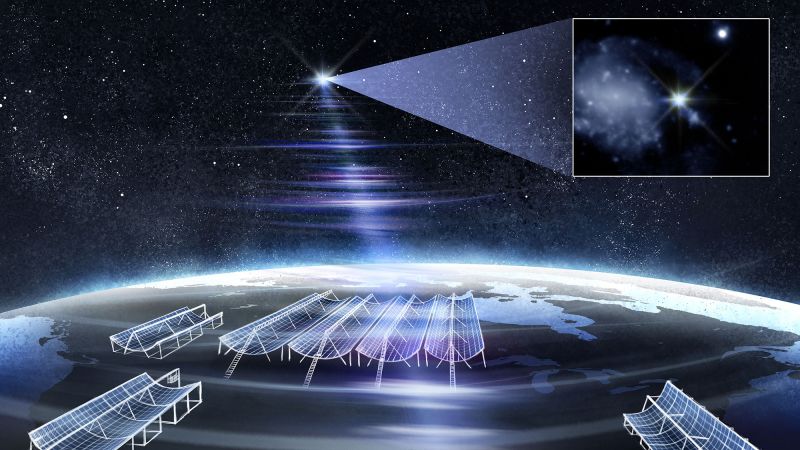
Researchers have linked fast radio bursts (FRBs) to magnetars, highly magnetized neutron stars, which are more frequently found in massive, metal-rich galaxies. This suggests that these galaxies provide the ideal conditions for magnetar formation, often resulting from the merger of massive stars. The study, utilizing the Deep Synoptic Array-110, has localized 70 FRBs, offering insights into the environments conducive to FRB occurrences and magnetar formation.

Astronomers Link Fast Radio Bursts to Massive Star-Forming Galaxies
science1 year ago

Astronomers Link Fast Radio Bursts to Massive Star-Forming Galaxies

Astronomers have linked fast radio bursts (FRBs) to massive, star-forming galaxies, suggesting they originate from magnetars—highly magnetic neutron stars formed from stellar mergers. This discovery, led by Kritti Sharma at Caltech, indicates that metal-rich environments in these galaxies may facilitate the formation of magnetars, which are potential sources of FRBs. The study, published in Nature, also explores the possibility that magnetars result from the fusion of two stars, offering insights into their formation and the enigmatic nature of FRBs.

Mysterious Radio Bursts Traced to Massive Galaxies
science1 year ago

Mysterious Radio Bursts Traced to Massive Galaxies

Astronomers have linked fast radio bursts (FRBs) to massive, star-forming galaxies, suggesting they originate from magnetars—highly magnetic neutron stars formed from stellar mergers. This discovery, led by Kritti Sharma at Caltech, indicates that metal-rich environments in these galaxies may facilitate the formation of magnetars, which are believed to be the source of FRBs. The study, published in Nature, also explores the possibility that magnetars result from the fusion of two stars, offering insights into their formation and the enigmatic nature of FRBs.

Massive Galaxies Emit Mysterious Repeating Radio Bursts
science1 year ago

Massive Galaxies Emit Mysterious Repeating Radio Bursts

Scientists have discovered that fast radio bursts (FRBs), mysterious and intense energy signals, are more likely to originate from massive, star-forming galaxies rather than low-mass ones. This finding supports the theory that FRBs are linked to magnetars, highly magnetized dead stars, which may form when two stars merge and explode in a supernova. The research, conducted using the Deep Synoptic Array-110, has localized 70 FRBs, providing new insights into their origins and the nature of magnetars. A new array, DSA-2000, is expected to enhance these findings when operational in 2028.

Fast Radio Bursts Traced to Massive Galaxies, Unraveling Cosmic Mystery
science1 year ago

Fast Radio Bursts Traced to Massive Galaxies, Unraveling Cosmic Mystery

Caltech-led researchers have discovered that fast radio bursts (FRBs) are more likely to occur in massive, metal-rich star-forming galaxies, suggesting that magnetars, which are believed to trigger FRBs, often form from the merger of two stars in such environments. This finding, published in Nature, enhances understanding of magnetar formation and FRB origins, with the Deep Synoptic Array-110 playing a key role in localizing FRBs to their host galaxies.

Fast Radio Bursts Traced to Massive Star-Forming Galaxies
science1 year ago

Fast Radio Bursts Traced to Massive Star-Forming Galaxies

A new study led by astronomer Kritti Sharma suggests that fast radio bursts (FRBs) are more likely to originate from large galaxies with young star populations, challenging previous assumptions. The research strengthens the theory that magnetars, a type of neutron star, are key progenitors of FRBs, possibly formed through binary star mergers rather than core-collapse supernovae. This finding narrows down the environmental conditions conducive to FRB generation, advancing our understanding of these mysterious cosmic signals.

"Unleashing the Strongest Magnetic Force in the Universe: A Breakthrough in Nuclear Matter Imprinting"
science2 years ago

"Unleashing the Strongest Magnetic Force in the Universe: A Breakthrough in Nuclear Matter Imprinting"

Scientists at the US Department of Energy's Brookhaven National Laboratory have created the strongest magnetic field ever observed on Earth by inducing off-centre collisions of heavy atomic nuclei in a particle accelerator. This breakthrough allows for the study of the electrical conductivity of quark-gluon plasma, providing new insights into the fundamental building blocks of matter. The magnetic field generated in these collisions is so powerful that it surpasses even that of neutron stars, making it possibly the strongest in the universe. This discovery opens up new avenues for understanding the deep inner workings of atoms and the universe as a whole.

"Unleashing the Strongest Magnetic Force in the Universe"
science-and-technology2 years ago

"Unleashing the Strongest Magnetic Force in the Universe"

Scientists at the US Department of Energy's Brookhaven National Laboratory have created the strongest magnetic field ever observed on Earth by inducing off-centre collisions of heavy atomic nuclei in a particle accelerator. This breakthrough allows for the study of the electrical conductivity of quark-gluon plasma, shedding light on the fundamental building blocks of matter and the universe. The magnetic field generated during these collisions is so powerful that it surpasses even that of neutron stars, providing new insights into the inner workings of atoms and the behavior of fundamental particles like quarks and gluons.

"Unleashing the Strongest Magnetic Force in Nuclear Matter"
science2 years ago

"Unleashing the Strongest Magnetic Force in Nuclear Matter"

Scientists at the US Department of Energy's Brookhaven National Laboratory have created the strongest magnetic field ever observed on Earth by inducing off-centre collisions of heavy atomic nuclei in a particle accelerator. This breakthrough allows for the study of the electrical conductivity of quark-gluon plasma, shedding light on the fundamental building blocks of matter and the universe. The magnetic field generated in these collisions is so powerful that it surpasses even that of neutron stars, making it a significant discovery in the field of particle physics.

"Unleashing a Magnetic Monster: Scientists Smash Atom into Atom"
science2 years ago

"Unleashing a Magnetic Monster: Scientists Smash Atom into Atom"

Scientists at the Brookhaven National Laboratory used the Relativistic Heavy Ion Collider to create and measure an incredibly strong magnetic field within quark-gluon plasma resulting from off-center heavy nuclei collisions, which was found to be 10,000 times stronger than a magnetar. This breakthrough could help physicists understand the universe moments after the Big Bang and explore the properties of quark-gluon plasma, shedding light on the ultimate puzzle of how matter came to dominate the universe.