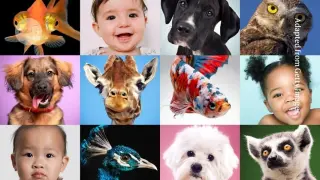
Large, cross-lab projects in infant- and animal-cognition are being used to tackle the psychology reproducibility crisis, with initiatives like ManyBabies, ManyDogs, and ManyBirds increasing statistical power and diversity, though results have been mixed and sometimes contradict earlier findings.
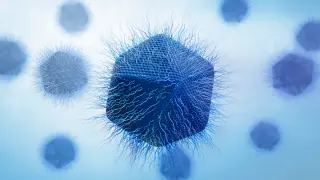
Researchers from Tokyo University of Science identified furtivovirus, a new giant virus from Japan that destroys the host cell’s nucleus and then replicates in the remaining nucleoplasm—a unique strategy that sits between known replication modes. The virus may form its own family, Manesviridae, and its evolutionary implications could shed light on how giant viruses evolved and how the cell nucleus originated in complex life.
A new analysis challenges the long-standing claim that brains of children with ADHD mature more slowly than those of their peers. By reexamining the data with more robust methods, researchers conclude that the landmark finding was likely a mirage caused by artifacts or biases in the data, suggesting ADHD brain maturation may proceed on a timeline similar to neurotypical development.
The article argues public trust in science is eroding as researchers repeatedly publish overconfident results shaped by tweaking—manipulating research design or data to fit desired outcomes—leading to replication failures and rising retractions. It frames fraud, honest error, and a murky middle, cites cases like Diederik Stapel, and contends that even small shortcuts distort findings and public confidence. It calls for clearer definitions, stronger transparency, and better communication of uncertainties to restore credibility.
A Europe-backed NanoBubbles project is funding nanoscientists to replicate a 2012 study that carbon quantum dots can sense copper ions inside living cells, the first large-scale replication effort in the physical sciences aimed at the reproducibility crisis; initial attempts failed to reproduce the reported fluorescence change, illustrating how small impurities, incomplete protocols, and cross-lab variation can affect results, as the ERC-backed effort seeks self-correction in science.
Researchers report thousands of circular, non-coding RNA structures, dubbed obelisks, found across human saliva and gut microbiomes. They behave like replicators but do not resemble viruses, plasmids, or other known genetic elements, lacking protein-coding capacity and a protective shell. Their replication mechanism remains unknown, and they defy existing biological classifications, suggesting a possible new life-like class within the microbiome. There is no evidence of harm to humans yet, but their ubiquity hints at ecological or evolutionary significance and a need for new taxonomic frameworks.
OpenAI reportedly scales PostgreSQL to serve hundreds of millions of users by using a single write master with many read replicas, while offloading some write-heavy workloads to Azure Cosmos DB to relieve the primary. The approach favors a simpler, single-primary architecture but carries trade-offs such as potential single-point-of-failure risk, MVCC write amplification, and challenges around schema changes and cross‑shard operations. Commenters debate replication lag, WAL shipping, cost of large cloud instances, and when to shard or migrate workloads to non‑Postgres systems. Overall, the piece argues that with the right hardware and careful design, PostgreSQL can scale far beyond what many assume, though it isn’t a universal recipe and comes with notable complexity.
A University of Pittsburgh–led team replicated four claimed topological effects in nanoscale quantum devices and found that dramatic “smoking gun” signals could arise from ordinary, mundane factors. The study advocates broader data sharing, more exhaustive exploration of experimental parameter space, and transparent reporting to prevent premature claims and strengthen peer review in condensed-matter quantum research.
A study claiming the creation of a room-temperature superconducting material has been retracted by scientific journal Nature after Chinese researchers raised doubts about its validity. The paper, published earlier this year, gained widespread attention but was found to have manipulated data. The retraction raises questions about the initial claims and the scientific rigor behind them. Room-temperature superconductors are highly sought after for their potential applications in various fields.
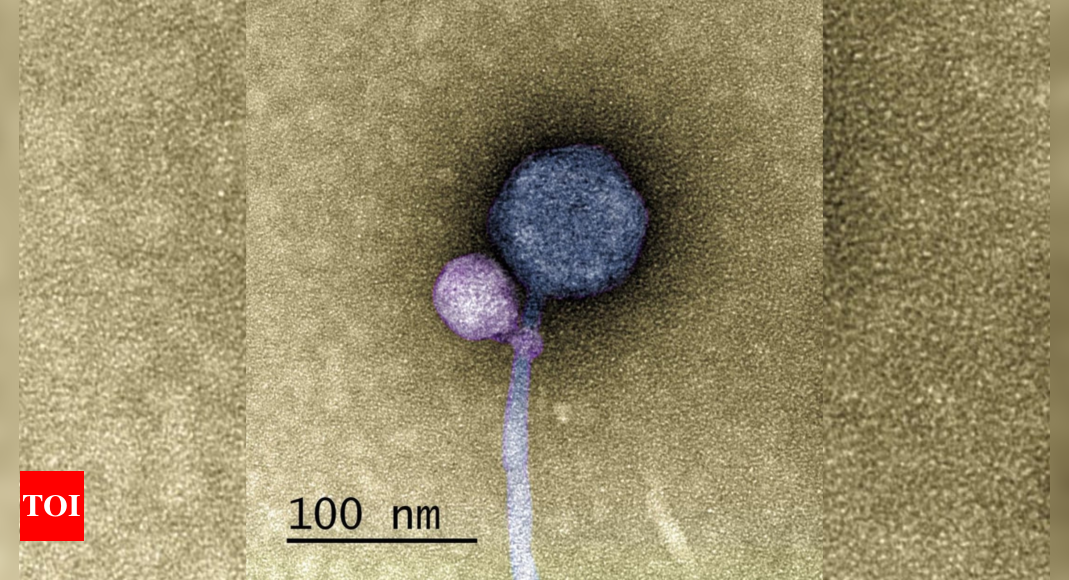
Scientists have made a groundbreaking discovery by observing two bacteriophage viruses, one being a satellite virus, attaching to each other. This is the first time such an event has been observed, as satellite viruses typically depend on helper viruses for replication. The attachment occurred at the 'neck' of the helper virus, where its outer shell connects to its tail. The discovery was made using an electron microscope, and the findings were published in the Journal of the International Society for Microbial Ecology.
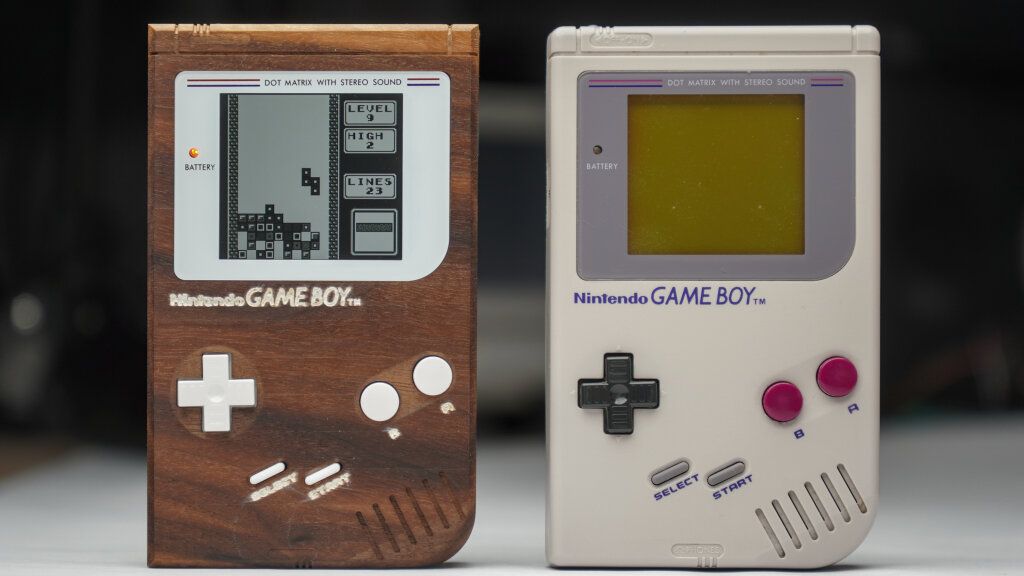
A beginner in CNC woodworking successfully replicated an original Game Boy case using walnut wood, utilizing nine different tools to reproduce the details of the injection-molded plastic case. The top and bottom shells were milled from both sides, requiring registration tricks and fixturing techniques. The front face lettering was milled out and filled with white spray paint, creating a beautiful contrast with the dark wood. While some challenges arose due to wood's limitations compared to plastic, the final result is a stunning and unique wooden Game Boy.
Researchers have developed a method called enhanced electric fluorescent in situ hybridization (EEL FISH) to detect the expression levels of hundreds of genes in tissue. However, conveying all the pertinent details of this complex technique in the methods section of a research article can be challenging. To overcome this limitation, step-by-step protocols can be provided to make the procedure easier to follow and implement. Platforms such as Protocols.io and OpenWetWare.org offer a forum for questions and comments, allowing for post-publication updates and long-term support. Communicating common pitfalls, documenting key steps with pictures or videos, and defining "obvious" steps can also enhance the accessibility and transparency of methods, making them more useful for replication and scientific research.
A new study in mice has found that the Omicron BA.5 variant of SARS-CoV-2 is more virulent and replicates faster than its predecessors. The study, published in Science Advances, used genetically modified mice to compare different subvariants of Omicron and found that BA.5 caused more severe illness and death, likely due to its ability to rapidly replicate early during infection. This study provides a valuable animal model for studying the new Omicron variants and understanding their behavior, as previous animal models did not exhibit illness with other variants. The findings suggest that targeting cytokines with drugs could potentially lessen symptoms and provide a treatment option.
Several research teams have disputed the findings of three high-profile studies that claimed tumors are filled with microbes, stating that they were unable to replicate the results and suggesting that the microbes were either mirages or the result of contamination. The authors of the original studies defended their data and pointed to more recent studies that support their conclusions. This controversy highlights the challenges of deciphering the true nature of tumor microbes and the growing pains of a promising field. While the debate continues, experts agree that microbes play a role in cancer, but the field is still searching for accurate tools and standards.
Scientists have determined that LK-99, a compound of copper, lead, phosphorus, and oxygen, is not a superconductor as previously claimed. The material's properties, including levitation and drops in electrical resistivity, were found to be the result of impurities, particularly copper sulfide. Replication efforts by various research teams have failed to observe room-temperature superconductivity in LK-99. The conclusion highlights the importance of careful analysis and the need for pure samples in studying material properties.