Tag

Space Security

All articles tagged with #space security

Merz Warns Russia Escalating in Space and Europe as German Support for Ukraine Falls
politics2 days ago

Merz Warns Russia Escalating in Space and Europe as German Support for Ukraine Falls

German Chancellor Friedrich Merz warned the Bundestag that Russia is escalating its conflict beyond Ukraine into European territory and space, defending a 30% increase in defense spending and €11.6bn in aid for Kyiv in 2027. This stance comes amid declining public support for Ukraine, with polls showing only 46% of Germans favoring military aid, down from 59% last year. Merz cited intelligence reports that Russia may launch a nuclear-armed satellite into orbit as soon as next month, a move NATO Secretary General Mark Rutte said the alliance would defend against. While Merz expressed cautious optimism about peace talks following a recent 40-nation summit in Berlin, he emphasized that Europe must set clear boundaries for Moscow, which he accused of pursuing goals extending far beyond the seizure of Ukraine.


NATO pledges space defense as German intelligence warns of imminent Russian nuclear satellite launch
geopolitics3 days ago

NATO pledges space defense as German intelligence warns of imminent Russian nuclear satellite launch

NATO Secretary General Mark Rutte affirmed that the alliance’s defense mandate includes space, responding to German intelligence reports that Russia may launch a nuclear-armed satellite named Sputnik-S within 60 days. While Moscow denies the claims as propaganda, Western officials warn that such a move would violate the 1967 Outer Space Treaty and could disable global satellite networks via electromagnetic pulse effects.

Russian Satellite Closes to Within 500 Meters of U.S.-Owned ICEYE-X36 in Unprecedented Orbital Maneuver
space-security1 month ago

Russian Satellite Closes to Within 500 Meters of U.S.-Owned ICEYE-X36 in Unprecedented Orbital Maneuver

Russian military satellite Kosmos 2612 performed a close approach to the U.S.-owned commercial satellite ICEYE-X36, closing the distance to approximately 500 meters. Analysts describe the maneuver as rare and potentially indicative of hostile intent, though Russia has not confirmed its purpose. The incident raises concerns about the security of space assets supporting Ukrainian military operations.

Russian Satellite Closes to 1.5 km from U.S.-Owned Radar Asset Supporting Ukraine
world1 month ago

Russian Satellite Closes to 1.5 km from U.S.-Owned Radar Asset Supporting Ukraine

Russian satellite Cosmos 2612 has maneuvered to within 1.5 kilometers of the U.S.-registered ICEYE-X36 radar satellite, a distance analysts describe as unusually close and potentially hostile. The approach follows a series of fuel-intensive orbital adjustments that aligned the two spacecraft in the same plane. While the Defense Department has not commented, experts warn that such proximity raises the risk of a counterspace weapon deployment or collision, particularly given the target satellite’s role in providing intelligence to Ukraine.

Beijing’s Space Surge: Reusable Rockets, Military Risks, and US Vulnerabilities
geopolitics-and-defense1 month ago

Beijing’s Space Surge: Reusable Rockets, Military Risks, and US Vulnerabilities

China has achieved its first land-based rocket booster recovery, signaling a major leap in reusable launch technology. While the US still leads in launch volume, Beijing’s rapid expansion of commercial and military space capabilities is eroding American dominance. Analysts warn that US over-reliance on SpaceX and satellite infrastructure creates critical vulnerabilities in a potential conflict, urging Washington to diversify its space architecture and strengthen allied cooperation.

Slotkin Demands Trump Confront Xi Over Satellite Data in Deadly Jordan Strike
politics2 months ago

Slotkin Demands Trump Confront Xi Over Satellite Data in Deadly Jordan Strike

Sen. Elissa Slotkin has urged President Trump to confront Chinese President Xi Jinping regarding satellite imagery that allegedly aided an Iranian attack on a U.S. base in Jordan. The July strike killed three American service members, and new reporting suggests Chinese entities provided high-resolution images of the target. While Trump dismissed the issue as standard espionage, Slotkin warned that such support for adversaries could face severe consequences if it continues.

US Confirms On-Orbit Space Weapons, Igniting Global Arms Race Fears
politics-society2 months ago

US Confirms On-Orbit Space Weapons, Igniting Global Arms Race Fears

US Air Force Secretary Troy Meink confirmed the deployment of 'on-orbit space control weapons,' marking the first official US admission of such capabilities. While details remain classified, the move validates long-standing accusations by China and Russia and risks destabilizing international norms regarding the militarization of space.

policy5 months ago

Report Flags Lunar Mass Drivers as Dual-Use First-Strike Threat

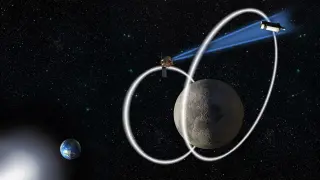
A new American Foreign Policy Council report warns that deploying cargo catapults on the Moon—mass drivers—could be a dual-use technology enabling rapid, potentially undetectable first strikes. It outlines three dangers: direct ground impact from fired payloads, satellite destruction via tight-cone projectiles, and the ability to launch warheads exceeding current reentry limits with low heat signatures, raising concerns about a space-enabled arms race as nations seek a lunar foothold.

Russia Demonstrates Ultra-Precise Satellite Rendezvous in Low Earth Orbit
space6 months ago

Russia Demonstrates Ultra-Precise Satellite Rendezvous in Low Earth Orbit

Two Russian satellites COSMOS 2581 and 2583 performed an unprecedented 10-foot close approach in low Earth orbit on April 28, 2026, as part of a coordinated trio with COSMOS 2582 and a subsatellite Object F; tracked by COMSPOC and LeoLabs, the highly controlled rendezvous and proximity operations signal advanced space maneuvering with potential military or strategic implications and highlight growing space awareness capabilities.

Cislunar chokepoint: the Moon's orbit could become the next strategic space frontier
space7 months ago

Cislunar chokepoint: the Moon's orbit could become the next strategic space frontier

Experts warn that the space between Earth and the Moon—cislunar space—could become a strategic chokepoint similar to the Strait of Hormuz, as the US Space Force creates an office to study the region’s military/strategic value and NASA advances Artemis. Analysts say lunar resources, orbital infrastructure, and key transit corridors could drive a multi-trillion-dollar space economy, making disruptions in cislunar access potentially disruptive to lunar data centers, communications, and manufacturing—and to the broader global economy.

US General Warns Russia Seeks Nuclear Space Weapon to Paralyze Global Satellite Grid
defense7 months ago

US General Warns Russia Seeks Nuclear Space Weapon to Paralyze Global Satellite Grid

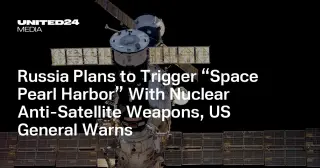
US Space Forces Commander General Steven Whiting warns Russia plans to place a nuclear warhead in low Earth orbit to trigger a 'space Pearl Harbor,' potentially destroying up to 10,000 satellites (about 80% of the global network) and disrupting GPS, satellite internet, and military communications; the US intends to boost space-defense funding to about $71 billion annually and urges allies to increase spending to deter such a space-based attack.

ISW: Moscow preps rolling mobilization as Kyiv presses southern gains
world9 months ago

ISW: Moscow preps rolling mobilization as Kyiv presses southern gains

ISW’s February 23 update flags Moscow's use of Defender of the Fatherland Day to frame and enable limited rolling involuntary mobilization, with Putin and Medvedev pushing a responsibility narrative and Kremlin safeguards to blunt domestic backlash, including tighter internet controls and limited social protections if mobilization expands. On the battlefield, Ukraine continues to liberate southern areas with movements near Kupyansk, Oleksandrivka, and Verbove, though ISW notes contested Russian gains and a fluid front line. Russia aims to bolster intelligence and disrupt satellite communications, while Belarus increases military cooperation and drone activity. Ukrainian strikes hit oil infrastructure in Russia (Tatarstan) and Belgorod, and the war remains marked by heavy attrition and shifting control across Donetsk and Zaporizhzhia directions. ISW will continue monitoring frontline changes and refine its terrain maps as new evidence emerges.