Tag

Antarctic Ice

All articles tagged with #antarctic ice

Antarctic Ice Enables Breakthrough Detector for Ultra-High-Energy Particles
science18 hours ago

Antarctic Ice Enables Breakthrough Detector for Ultra-High-Energy Particles

NASA's PUEO long-duration balloon mission over Antarctica used the ice as a giant detector to search for ultra-high-energy neutrinos and cosmic-ray air showers, achieving higher sensitivity via an interferometric phased-array trigger, expanded antenna channels within a constrained payload, and a new low-frequency instrument; the 23-day flight has ended and data analysis continues, with potential future lunar detector concepts.
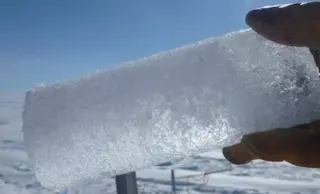

Antarctic ice captures stardust from ancient supernovas, revealing our solar system’s past
space8 days ago

Antarctic ice captures stardust from ancient supernovas, revealing our solar system’s past

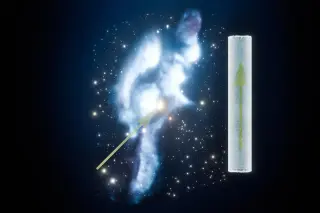
Scientists analyzed 40,000–80,000-year-old Antarctic ice and found iron-60, a radioactive byproduct of ancient supernovas, embedded in stardust likely carried through the Local Interstellar Cloud before reaching Earth. The results suggest interstellar dust from stellar explosions can penetrate the solar system, linking our solar neighborhood’s history to past supernovae and offering clues about how interstellar material interacts with our planet.

Earth Plows Through Ancient Supernova Debris Preserved in Antarctic Ice
space-science10 days ago

Earth Plows Through Ancient Supernova Debris Preserved in Antarctic Ice

A new study detects iron-60 in Antarctic ice aged 40,000–80,000 years, tying Earth’s passage through the Local Interstellar Cloud to debris from a past supernova. Using accelerator mass spectrometry on hundreds of kilograms of ice and corroborating isotopes, researchers show the cloud around the Solar System contains material from an ancient stellar explosion, with the iron-60 signal varying over tens of thousands of years and supporting the idea that our cosmic neighborhood records such events.

Ice Records the Solar System’s 80,000-Year Interstellar Journey
science14 days ago

Ice Records the Solar System’s 80,000-Year Interstellar Journey

Researchers analyzed 40,000–80,000-year-old Antarctic ice for the rare radioactive isotope iron-60 and found lower-than-expected levels, suggesting the Solar System has moved through interstellar cloud complexes (including the Local Interstellar Cloud) over the past 80,000 years. Using accelerator mass spectrometry to count iron-60 in ice samples, the study links variations in interstellar dust flux to the structure of nearby clouds, offering a new way to trace our solar neighborhood’s history—though the precise cloud origins and the amount of iron-60 remain subjects of debate.

science28 days ago

Antarctic Ice Detects 13 Cosmic-Ray Radio Pulses, Validating Askaryan Radiation

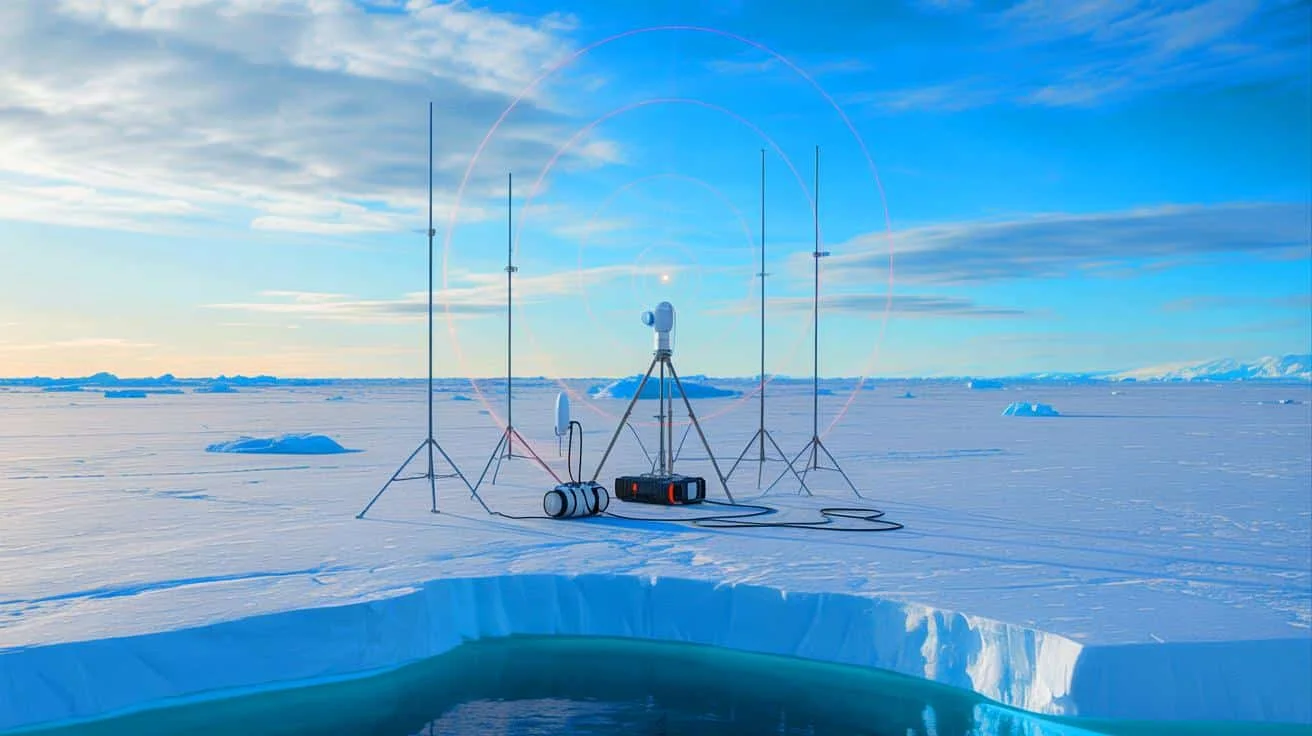
Researchers buried antennas in Antarctic ice and identified 13 radio pulses from cosmic-ray cascades. New simulations applied to the 2019 data show the signals match the predicted Askaryan radiation in arrival direction, frequency, waveform and polarization at 5.1 sigma, confirming the model and distinguishing them from neutrinos. A full multi-year data release from all five ARA stations is expected soon, with up to seven candidate neutrino events.

"Historical Plagues' Impact on Earth's Atmosphere"
science-and-environment2 years ago

"Historical Plagues' Impact on Earth's Atmosphere"

Scientists studying Antarctic ice cores have found a connection between past levels of atmospheric carbon dioxide and global pandemics over the past 2,000 years. The Law Dome and West Antarctic Ice Sheet (WAIS) Divide ice cores show discrepancies in their measurements of CO2 levels, with the Law Dome core indicating a rapid decrease around 1610 CE, possibly due to human population decline and reforestation. However, a new study suggests a more gradual decline in CO2 levels, supporting the idea of large-scale land use changes following the New World-Old World contact. This research sheds light on the potential impact of historical pandemics on Earth's atmosphere and climate.

Ancient Volcanic Glass Shards Discovered 3000 Miles from Antarctica
earth-science2 years ago

Ancient Volcanic Glass Shards Discovered 3000 Miles from Antarctica

Glass shards from an ancient volcanic eruption in New Zealand's Taupō volcano have been discovered buried beneath 280 meters of Antarctic ice, approximately 3,000 miles away. The shards, along with a seventh shard from an earlier eruption, provide a unique "double fingerprint" of the Taupō volcano as the source. The findings help confirm the timing of the explosive event, which occurred around 230 CE. The discovery validates previous age estimates of tree logs buried by the eruption and offers insights into the volcano's potential global effects on the atmosphere and climate.

"Exploring Europa's Secrets: Nano Subs to Dive Under Antarctic Ice in 2026"
space-exploration2 years ago

"Exploring Europa's Secrets: Nano Subs to Dive Under Antarctic Ice in 2026"

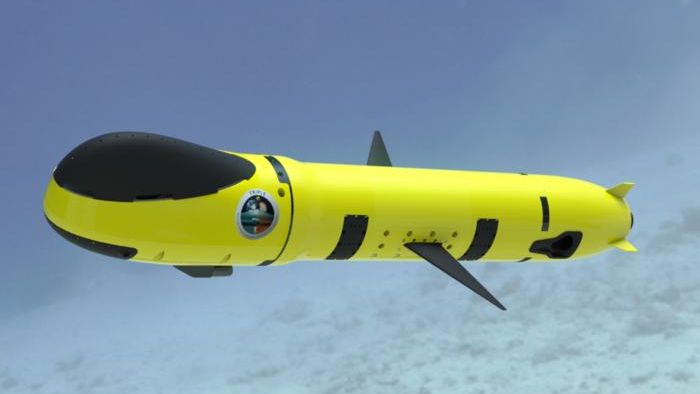
The TRIPLE-nanoAUV 2 project aims to develop miniature submarines that can melt their way through ice and explore the subglacial lakes beneath the Antarctic ice shelf, serving as a test for future exploration of icy moons like Europa and Enceladus. The nano-AUVs will be small enough to fit inside an ice-melting probe and will be supported by an underwater docking station for data transmission and battery charging. The project, coordinated by the Center for Marine Environmental Sciences, plans to conduct field tests in Antarctica in 2026. The ultimate goal is to use similar technology to study the oceans beneath the icy surfaces of Jupiter's moon Europa and Saturn's moon Enceladus.

Tracking the Swift Ice Movement beneath Halley Station: UK's Polar Base Keeps Close Watch
environment2 years ago

Tracking the Swift Ice Movement beneath Halley Station: UK's Polar Base Keeps Close Watch

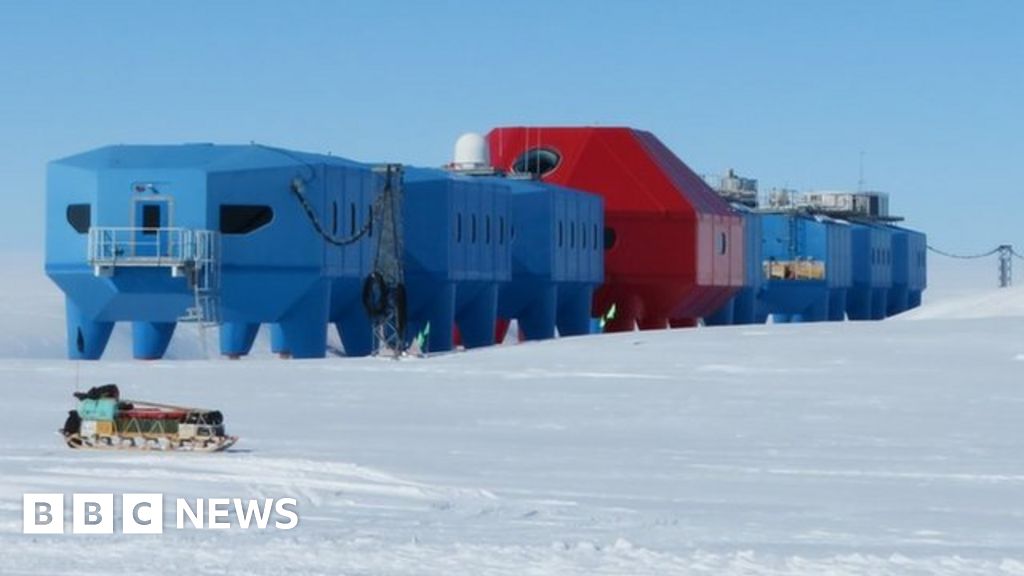
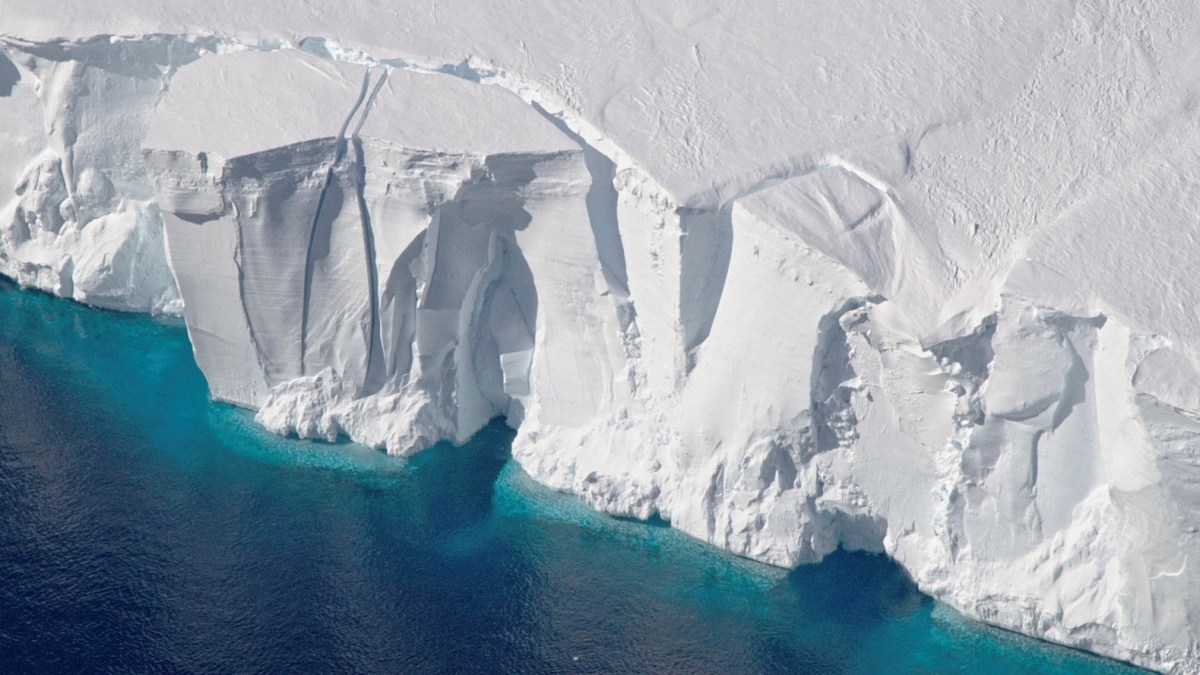
Scientists are closely monitoring the rapid movement of a large section of floating Antarctic ice that hosts the UK's Halley research station. The Brunt Ice Shelf, on which the station sits, has experienced an abrupt acceleration in recent months after calving giant icebergs. While there is currently no immediate concern for the base, British Antarctic Survey officials emphasize the need for greater stability before extended operations can resume. The ice shelf's acceleration is not attributed to climate change, and daily monitoring is being conducted to anticipate any unexpected behavior. The hope is that the shelf will eventually re-establish stability by finding a thicker section to anchor on the seafloor.

"Peregrine: An Antarctic Aerial Drone Utilizing SDR and Raspberry Pi for Subglacial Exploration"
technology2 years ago

"Peregrine: An Antarctic Aerial Drone Utilizing SDR and Raspberry Pi for Subglacial Exploration"

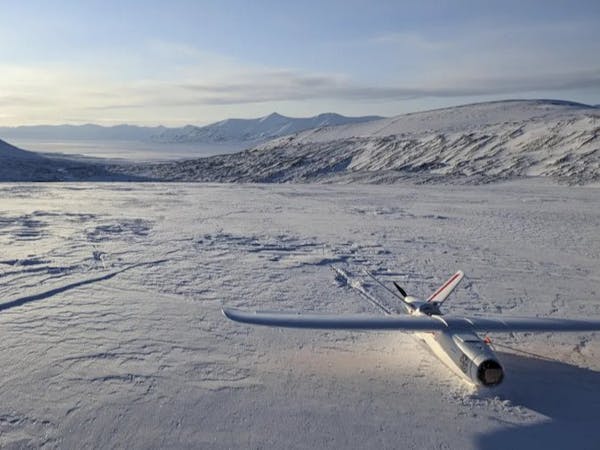
Researchers from the Stanford Radio Glaciology lab have developed a modified UAV called Peregrine, equipped with a miniaturized ice-penetrating radar system based on a software-defined radio (SDR) and a Raspberry Pi. The lightweight and cost-effective drone aims to provide valuable data on the health of Antarctic ice by gathering information about depth, fractures, fissures, and melt flow beneath the surface. The Peregrine drone, along with future larger designs, could be deployed from existing research stations to monitor the entire coastal region of Antarctica, offering a more efficient and affordable alternative to crewed airborne systems.

Melting Antarctic ice could cause drastic climate impact through slowing ocean current.
climate-change3 years ago

Melting Antarctic ice could cause drastic climate impact through slowing ocean current.

The Southern Ocean overturning circulation, a major global deep ocean current, has slowed down by approximately 30% since the 1990s as a result of melting Antarctic ice, which could have critical consequences for Earth’s climate patterns and sea levels, new research suggests. The slowdown could increase sea levels, alter weather patterns, and deprive marine ecosystems of vital nutrients. The overturning circulation plays a key role in influencing the Earth’s climate, including rainfall and warming patterns, and determines how much heat and carbon dioxide the oceans store.

Antarctic Ice Melt Threatens Oceans for Centuries
environment3 years ago

Antarctic Ice Melt Threatens Oceans for Centuries

Rapidly melting Antarctic ice could cause a decline of up to 40% in deep ocean water flows by 2050, which could have disastrous effects on global climate, the marine food chain, and even the stability of ice shelves. The “overturning circulation” of the oceans, which helps deliver heat, carbon, oxygen, and vital nutrients around the globe, could be threatened by the decline. The study warns that the effects of the decline could last “for centuries to come” and that the world urgently needs to reduce greenhouse gas emissions to avoid disaster scenarios.