Tag

Reproduction

All articles tagged with #reproduction

Serial mouse cloning hits a hard biological limit after 58 generations
science13 days ago

Serial mouse cloning hits a hard biological limit after 58 generations

A 20-year mouse cloning study from the University of Yamanashi shows that repeating cloning builds up genome-level damage, reduces fertility, and cannot sustain a mammal line beyond 58 generations—the last generation died soon after birth—despite producing over 1,200 clones from a single donor, indicating current nuclear-transfer cloning methods have a hard biological limit.

Cosmic parenthood in doubt as space-like microgravity halves sperm navigation
science13 days ago

Cosmic parenthood in doubt as space-like microgravity halves sperm navigation

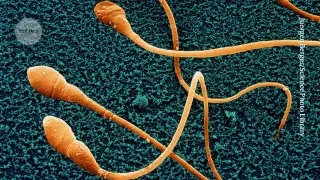
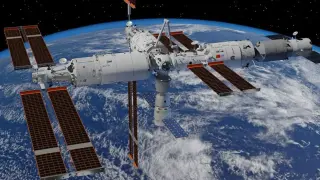
New microgravity experiments using a tiny obstacle course showed human and mouse sperm navigated about 50% less effectively in space-like conditions, resulting in roughly a 30% drop in fertilization. While some sperm still reach the egg and may form higher-quality embryos, embryo development in weightlessness could pose major challenges, suggesting space reproduction may be possible only for the fittest sperm and with careful embryo protection as NASA pursues Moon and Mars settlements.

Space Sperm Need Gravity to Find Their Way
science14 days ago

Space Sperm Need Gravity to Find Their Way

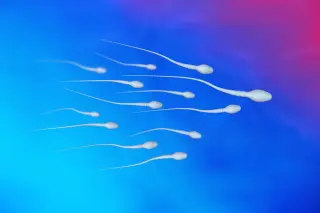
Adelaide University researchers tested human, mouse, and pig sperm in a device simulating microgravity, finding that sperm struggled to navigate a maze mimicking the female reproductive tract and showing about a 30% reduction in successful navigation under zero gravity, underscoring gravity as a key factor in early reproductive success during space conditions.

Space reproduction hurdles: microgravity slows sperm and embryo development
space-exploration14 days ago

Space reproduction hurdles: microgravity slows sperm and embryo development

A University of Adelaide study used a 3D clinostat to simulate microgravity and found that sperm from humans, mice, and pigs had about 30% fewer chances to reach eggs in microgravity, while embryos formed under these conditions initially appeared stronger but degraded with longer exposure. The results suggest mammalian reproduction in space could be highly challenging for long-term space settlements, though future work could explore partial gravity (Moon/Mars) and potential IVF advances on Earth.

Microgravity May Block Reproduction, Complicating Space Colonization
space15 days ago

Microgravity May Block Reproduction, Complicating Space Colonization

A study using a clinostat to simulate microgravity found that sperm navigation, fertilization, and embryo development are impaired in mammals (humans, mice, and pigs) under near-zero gravity, with fertilization dropping by about 30% in mice and 15% in pigs and embryos showing developmental delays. Progesterone helped sperm navigate but required unusually high concentrations, and safety concerns remain. These findings highlight gravity’s deep role in reproductive biology and suggest that long-term space settlements face significant fertility challenges, underscoring the need for further research before space colonization can be considered viable.

Sperm Lose Direction in Microgravity, Raising Spaceflight Reproduction Concerns
science15 days ago

Sperm Lose Direction in Microgravity, Raising Spaceflight Reproduction Concerns

Researchers used a 3D clinostat to simulate microgravity and tested human, pig, and mouse sperm in a channel resembling the female reproductive tract; they found a significant drop in the number of sperm reaching the egg under microgravity, not due to motor changes but impaired direction sensing; fertilization dropped about 30% after four hours of exposure, with longer exposure causing delays and fewer embryos; progesterone could still guide sperm, indicating chemotaxis remains important; the findings, published in Communications Biology, imply spaceflight could affect reproductive outcomes in humans and livestock, highlighting the need for further research.

Sperm Lose Direction in Microgravity, Prompting Space Reproduction Research
space16 days ago

Sperm Lose Direction in Microgravity, Prompting Space Reproduction Research

Australian researchers used a clinostat to simulate microgravity and found human, mouse, and pig sperm become disoriented, with about a 40% drop in those reaching a simulated egg; microgravity also affected early embryo development in animals, though healthy embryos could form, and progesterone helped guide sperm. The findings underscore the importance of understanding reproduction in space for future Moon/Mars settlements and ongoing space biology programs, while noting radiation and ethical considerations remain challenges.

Cloning's mutational cliff: line ends after 58 generations
science17 days ago

Cloning's mutational cliff: line ends after 58 generations

A Japanese team conducted a serial cloning study starting from one female mouse, re-cloning for 57 generations and producing over 1,200 offspring. By generation 58, accumulated genetic mutations and loss of the X chromosome caused the re-cloned mice to die shortly after birth, effectively ending the line. Crossbreeding later-generation clones with normal mice showed initially normal litter sizes but reduced fertility in later-generation lines, with partial recovery in descendants. The results support Muller's ratchet and reinforce the idea that sexual reproduction is essential for long-term mammalian survival, limiting the practical viability of endless cloning.

Clone-ception Hits a Wall: Infinite Cloning Isn’t Feasible
biology17 days ago

Clone-ception Hits a Wall: Infinite Cloning Isn’t Feasible

Japanese researchers studying serial cloning in mice with the epigenetic modifier trichostatin A found that while many late-generation clones were healthy at birth, the lineage eventually hit a hard limit: by the 58th generation the clones survived for only a day. TSA boosted cloning success (about 5.4% at generation 51) compared with 1.6% without it, and over 1,200 clones were produced from a single donor. Each generation accumulated mutations (roughly 70 SNVs and 1.5 structural variants), and in some cases placental abnormalities were corrected in later offspring through sexual reproduction, suggesting that sexual reproduction helps purge deleterious mutations and that indefinite cloning remains biologically unfeasible for now.

Choosing Not to Reproduce May Extend Lifespans Across Mammals, New Study Finds
lifestyle27 days ago

Choosing Not to Reproduce May Extend Lifespans Across Mammals, New Study Finds

A mega-analysis of 117 mammal species shows that restricting reproduction—via contraception or sterilization—can extend life expectancy by about 10%, with male lifespans increasing when testosterone is reduced through castration (vasectomy effects vary), and females living longer when reproduction is blocked. The results point to energetic and hormonal costs of reproduction as a trade-off with survival, though effects vary by species and context, and human implications remain uncertain.

Dinosaur Egg Inside Egg Reveals Bird-Like Reproduction in Titanosaurs
science1 month ago

Dinosaur Egg Inside Egg Reveals Bird-Like Reproduction in Titanosaurs

CT scans of 11 Late Cretaceous titanosaur eggs from India’s Lameta Formation uncovered a second inner shell inside one egg — an ovum-in-ovo structure previously known only in birds. The dual shells and microstructure indicate sequential egg development within the oviduct, suggesting titanosaurs had segmented oviducts and avian-like reproductive biology, a rare insight since the other eggs showed normal, single-shell architecture.

Space Reproduction Faces Serious Biological Hurdles
science1 month ago

Space Reproduction Faces Serious Biological Hurdles

A new paper argues that long-duration spaceflight could impair fertility, gamete quality, and embryonic development due to space radiation and microgravity, with potential epigenetic and heritable risks for offspring; experts call for a formal reproductive health framework and ethical guidelines for space research, even though reproduction in space is not currently advocated.

Space reproduction policy must catch up with exploration, experts urge
health2 months ago

Space reproduction policy must catch up with exploration, experts urge

An international study warns that the space environment—microgravity, cosmic radiation, and circadian disruption—poses risks to fertility and pregnancy, highlighting a lack of standardized policies for reproductive health in space as commercial and governmental missions expand. Researchers call for urgent international collaboration to establish ethical guidelines and protective standards for astronauts, noting that assisted reproductive technologies could assist future research but have not enabled human pregnancy in space.