Tag

Ophthalmology

All articles tagged with #ophthalmology

Cataracts May Manifest in Middle Age Through Subtle Visual Changes
health24 days ago

Cataracts May Manifest in Middle Age Through Subtle Visual Changes

The Washington Post reports that cataracts, often associated with advanced age, can begin developing in individuals in their 40s and 50s. The article outlines five specific early indicators, including the appearance of halos around headlights and a noticeable reduction in color vibrancy. These symptoms suggest that lens opacity may be progressing before significant vision loss occurs, highlighting the importance of early detection for middle-aged adults.
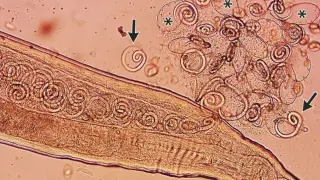
South Korean Farmer’s Eye Infestation Reveals Rare Reproductive Stage of Parasitic Worms
health28 days ago

South Korean Farmer’s Eye Infestation Reveals Rare Reproductive Stage of Parasitic Worms

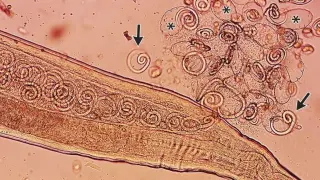
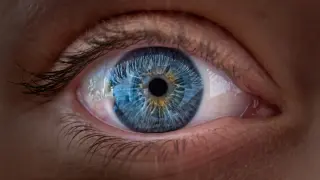
A 71-year-old South Korean farmer suffered from persistent eye irritation for two months before doctors discovered 11 live parasitic worms in his eyes. The worms, identified as Thelazia callipaeda, were found to be mating and pregnant, with some females already releasing larvae. Medical teams successfully removed all parasites using fine forceps, and the patient recovered fully without recurrence. The case highlights the importance of considering parasitic infections in patients with persistent ocular symptoms.

Rice-sized ENCELTO implant halts progression of rare MacTel eye disease
health29 days ago

Rice-sized ENCELTO implant halts progression of rare MacTel eye disease

A tiny, rice-sized implant called ENCELTO has become the first approved treatment for macular telangiectasia (MacTel), a rare condition that destroys central vision. Tested at Mass Eye and Ear in Boston, the device generates proteins to protect the macula. While it cannot restore lost sight, clinical trials show it significantly slows or stops the progression of the disease, offering hope to patients who previously had no therapeutic options.

Rice-sized implant offers first treatment for MacTel, halting vision loss
health29 days ago

Rice-sized implant offers first treatment for MacTel, halting vision loss

A tiny, rice-sized implant called ENCELTO has become the first approved treatment for macular telangiectasia (MacTel), a rare eye disease that destroys central vision. Tested in Boston and approved by the FDA last year, the device generates proteins to protect the macula. While it cannot restore lost sight, clinical trials show it significantly slows or stops the progression of the condition, offering hope to patients who previously had no therapeutic options.

Menopausal Hormonal Shifts Drive Dry Eye Epidemic, Prompting Call for Routine Screening
health1 month ago

Menopausal Hormonal Shifts Drive Dry Eye Epidemic, Prompting Call for Routine Screening

Dry eye syndrome affects up to 80% of menopausal women due to hormonal drops that destabilize the tear film. Recent research urges clinicians to include dry eye in standard menopause checklists, as symptoms often worsen post-menopause. While intentional blinking and supplements offer relief, experts emphasize that the condition is chronic and requires long-term management, with treatment ranging from preservative-free drops to in-office procedures.

Surgeons remove world's first canine tooth from upper eye socket
health1 month ago

Surgeons remove world's first canine tooth from upper eye socket

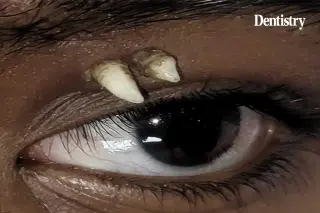
A 16-year-old boy in India became the first patient in medical history to have a fully formed canine tooth surgically removed from his upper eye socket. The case, published in June 2026, describes a rare developmental anomaly where the tooth grew directly from the orbital bone rather than the jaw. While ectopic teeth are rare, this specific location is unprecedented, distinguishing it from common cases found in sinuses or nasal cavities.

Researchers Uncover Hidden Lymphatic Drainage Pathway in the Back of the Eye
science1 month ago

Researchers Uncover Hidden Lymphatic Drainage Pathway in the Back of the Eye

A team from the University of British Columbia and the University of Toronto has identified a previously unknown drainage route in the back of the eye, named the posterior ocular lymphatic outflow (POLO) pathway. This system transports fluid and metabolic waste from the retina into the body’s lymphatic network. The discovery challenges a century-old belief that the eye lacked lymphatic drainage and offers new potential targets for treating blindness-causing conditions like glaucoma and macular degeneration.

Ophthalmologist warns seven everyday habits may accelerate vision loss
health1 month ago

Ophthalmologist warns seven everyday habits may accelerate vision loss

Dr. Douglas Lazzaro, an ophthalmology professor at NYU Langone Health, identified seven common daily habits that may silently damage eye health. These include failing to wear sunglasses, reading in dim light, poor diet, dehydration, inadequate sleep, rubbing the eyes, and delaying routine eye exams. Lazzaro noted that cataracts are appearing five to 10 years earlier than three decades ago, potentially linked to ultraviolet exposure. He emphasized that glaucoma, often called the 'silent thief of sight,' requires annual screening for early detection. Other risks include keratoconus from eye rubbing and vascular issues linked to sleep apnea. Lazzaro advised that while genetics and aging drive many eye diseases, modifying these lifestyle factors can help slow progression and protect vision.

Retinal Damage May Begin Below Prediabetes Thresholds
health1 month ago

Retinal Damage May Begin Below Prediabetes Thresholds

Analysis of over 32,000 UK Biobank participants suggests retinal neurodegeneration begins at A1c levels below current prediabetes thresholds. Researchers identified a turning point for ganglion cell-inner plexiform layer thinning at an A1c of 5.4, and for total macular thickness at 5.3, both lower than the 5.7 prediabetes cutoff. This implies neuronal loss may occur before standard diagnostic criteria are met, potentially necessitating a reevaluation of diabetes diagnosis thresholds.

Indian teen becomes first known patient with tooth growing in upper eye socket
health2 months ago

Indian teen becomes first known patient with tooth growing in upper eye socket

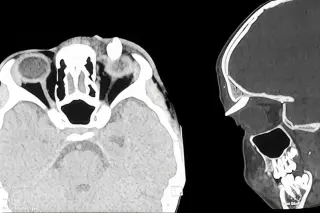
A 16-year-old boy in India has become the first documented patient to have a mature canine tooth growing in the superior orbit, or upper eye socket. The condition, known as an ectopic tooth, was identified after the teen experienced painless swelling on his left eyelid for several months. Doctors initially suspected a teratoma but confirmed via CT scan that the protrusions were part of a fully formed tooth. The tooth was surgically removed, and imaging showed no other ectopic teeth. While ectopic teeth are rare, they have previously been found in nasal cavities and sinuses; this is the first recorded instance in the upper eye socket.

Retinal Thinning Predicts Atrial Fibrillation Risk Years Before Diagnosis
health2 months ago

Retinal Thinning Predicts Atrial Fibrillation Risk Years Before Diagnosis

A large-scale study reveals that thinning in a specific retinal nerve layer is linked to a 27% higher risk of developing atrial fibrillation (AFib) years before clinical diagnosis. Researchers analyzed eye scans from over 90,000 individuals, finding that structural changes in the macular ganglion cell-inner plexiform layer (mGCIPL) can serve as an early warning signal for this common heart rhythm disorder. While not a replacement for electrocardiograms (ECGs), routine eye exams may offer a non-invasive method to identify at-risk individuals, potentially enabling earlier intervention to prevent strokes and heart failure.

Retinal Scans May Reveal Atrial Fibrillation Years Before Symptoms
health2 months ago

Retinal Scans May Reveal Atrial Fibrillation Years Before Symptoms

A study led by University College London and Moorfields Eye Hospital found that retinal imaging can detect structural changes linked to atrial fibrillation up to four years before clinical diagnosis. Analyzing over 90,000 patients, researchers observed thinner macular ganglion cell layers in those who later developed the heart rhythm disorder. This non-invasive method could serve as a complementary screening tool to identify high-risk individuals before they suffer strokes or heart attacks.