Tag

Physiology

All articles tagged with #physiology

Headward fluid shifts in microgravity push NASA to treat astronauts’ meals as mission-critical
space3 days ago

Headward fluid shifts in microgravity push NASA to treat astronauts’ meals as mission-critical

In microgravity, fluids shift toward the head, causing facial puffiness, nasal congestion, and a dulled sense of smell and taste. This fluid shift contributes to reduced appetite and muscle/bone loss, prompting NASA to monitor daily nutrition as a core part of crew health. Despite several hours of exercise, long-duration countermeasures do not fully prevent multisystem deconditioning, a concern that grows with planned Artemis missions and potential Mars voyages, leaving open the need for improved food, countermeasures, or new therapies.

Paralympian to Orbit: A New Benchmark in Space Medicine
space25 days ago

Paralympian to Orbit: A New Benchmark in Space Medicine

Former Paralympic sprinter and amputee John McFall may become the first disabled person to live and work in orbit, with UK funding via Vast for Haven-1 or a private ISS mission. The mission would use his body and prosthetic socket as a medical instrument to study fluid shifts, spinal loading, heat transfer, and prosthetic fit in microgravity, creating the first real datapoints in space medicine for an already limb-different body. While a two-week flight won’t yield broad statistics, it would establish a baseline for inclusive, physiology-informed spaceflight research and could influence future prosthetic design on Earth.

Abdominal Pulses as a Brain-Cleaning Mechanism
science2 months ago

Abdominal Pulses as a Brain-Cleaning Mechanism

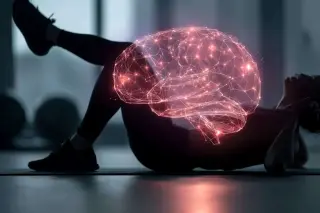
A Penn State study shows abdominal contractions create a hydraulic-like pump that pushes blood up the spine, nudging the brain inside the skull and driving cerebrospinal fluid flow to wash away neural waste. Observed in awake mice using two-photon microscopy and micro-CT, the brain moves with micro-contractions and returns to baseline when pressure is released, suggesting everyday movement—not just exercise—helps maintain brain health by enhancing waste clearance.

The Secret to Squirrels' Thirst-Free Hibernation
science1 year ago

The Secret to Squirrels' Thirst-Free Hibernation

Researchers at Yale University have discovered how thirteen-lined ground squirrels manage to suppress thirst during their long hibernation periods. The squirrels maintain ion levels in their blood and use hormones as antidiuretics to conserve water. Despite being offered water during brief awakenings, the squirrels show no desire to drink, indicating a brain mechanism that prevents thirst signals from being processed. Understanding this mechanism could have implications for human space travel and medical procedures.

Why Women Feel Colder Than Men
health-and-science2 years ago

Why Women Feel Colder Than Men

Research on whether women feel colder than men is mixed, with recent studies suggesting that temperature perception and regulation depend more on individual physical traits like body fat and surface area rather than sex. While women may have slightly higher core temperatures and colder extremities due to hormonal differences, both sexes generally perceive and respond to temperature changes similarly.

"Moderate Acetaminophen Use Linked to Heart Function Changes"
medical-science-news2 years ago

"Moderate Acetaminophen Use Linked to Heart Function Changes"

A new study conducted in mice suggests that regular use of acetaminophen at moderate doses, considered safe at 500 mg/day, can alter proteins in the heart tissue, potentially leading to heart issues as a result of oxidative stress or toxin buildup. The research, presented at the American Physiology Summit, found that acetaminophen caused significant changes in the levels of proteins associated with various biochemical pathways in the heart. While the study was conducted in mice and may not directly apply to humans, researchers recommend limiting acetaminophen use to a few days at a stretch and discussing concerns about high-dose use with a healthcare provider.

"The Science Behind Nipple Hardening in Cold Weather"
health-and-wellness2 years ago

"The Science Behind Nipple Hardening in Cold Weather"

Exposure to cold temperatures triggers the sympathetic nervous system, causing specialized nerve cells to contract muscles and erect nipples, a process that helps retain heat. This response, also responsible for goose bumps, is a remnant of our evolutionary past when body hair insulation was crucial. Nipples can also become erect due to sexual arousal, hormonal changes, and emotional responses. While usually a normal bodily reaction, persistent or extreme nipple erections unrelated to temperature or excitement may indicate a health issue.

"Body Temperature's Surprising Role in Depression: New Research Findings"
health-research2 years ago

"Body Temperature's Surprising Role in Depression: New Research Findings"

A study published in Scientific Reports has revealed a significant link between depression and higher body temperatures, shedding light on the potential for regulating body temperature as a novel approach to alleviate depressive symptoms. The research, based on data from the TemPredict Study and utilizing the Oura Ring wearable device, found that individuals with more severe depressive symptoms exhibited consistently higher body temperatures, impacting thermoregulation across wakefulness and sleep. While the study does not establish causation, it opens avenues for further exploration of temperature-based interventions for depression and the underlying biological mechanisms of this association.

"The Benefits of Increasing Your Tears: Why and How to Cry More"
health-and-wellness2 years ago

"The Benefits of Increasing Your Tears: Why and How to Cry More"

Crying can have positive effects when done in a supportive environment, as it signals a need for help and can release endorphins and stress. While the evolutionary purpose of crying remains a mystery, it is believed to trigger empathy and compassion in others. Physiological benefits include pain relief and emotional release. Techniques to induce crying include creating a sad playlist, watching emotional videos, somatic self-care, and journaling about personal sadness.