Semaglutide Extends Mouse Lifespan by 12% and Outperforms Calorie Restriction
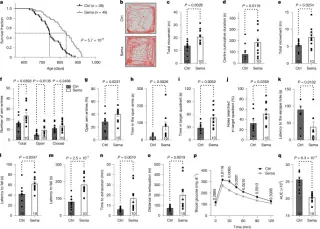
A new study in Nature shows that administering semaglutide to 20-month-old female mice extends their median lifespan by approximately 12%, from 742 to 834 days. The drug, known commercially as Wegovy and Ozempic, acts as a 'calorie restriction mimetic' by suppressing appetite and reducing food intake by 24%. Beyond weight loss, treatment improved physiological function, including spatial memory, motor coordination, and glucose control. Researchers found that semaglutide attenuated key hallmarks of aging, such as inflammation, cellular senescence, and genomic instability, while modulating conserved genetic regulators like sirtuins and insulin-IGF1 signaling. Notably, in a direct comparison, semaglutide produced more favorable outcomes in exploratory drive and memory than matched calorie restriction, suggesting benefits beyond simple caloric reduction. While the results are promising, they are limited to female mice, and human applications for anti-aging remain speculative pending long-term clinical trials.