Tag

Solar System Formation

All articles tagged with #solar system formation

JWST finds Neptune’s Nereid may be the solar system’s oldest moon survivor
space4 days ago

JWST finds Neptune’s Nereid may be the solar system’s oldest moon survivor

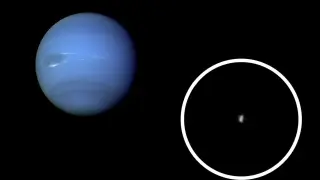
New James Webb Space Telescope analysis suggests Neptune’s third-largest moon, Nereid, is likely the last remaining remnant from Neptune’s original moon system rather to a captured Kuiper Belt object, with a water-ice-rich spectrum and an unusual orbit that imply Triton’s capture disrupted Neptune’s moons and that Nereid could offer a rare window into how moons around ice giants form.

Nereid: Neptune’s lone survivor of an ancient moon-wide chaos
science-space6 days ago

Nereid: Neptune’s lone survivor of an ancient moon-wide chaos

JWST data suggest Neptune’s moon Nereid may be the only intact remnant of Neptune’s primordial moon system, surviving the disruptive arrival of Triton over 4 billion years ago. Its surface composition is more like regular satellites than Kuiper Belt objects, challenging the idea that it was captured. Computer simulations indicate a roughly 25% chance that some moons could survive the Triton encounter, and further JWST observations or a future Neptune mission could confirm this scenario.

Interstellar Comet 3I/ATLAS Highlights Solar System Uniqueness
science1 month ago

Interstellar Comet 3I/ATLAS Highlights Solar System Uniqueness

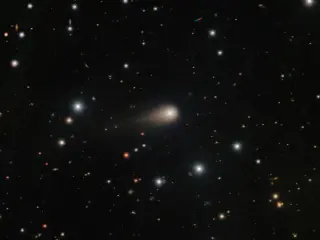
ALMA and JWST observations of interstellar comet 3I/ATLAS reveal a striking excess of heavy water, indicating it formed in a much colder environment and likely experienced limited thermal processing. This enrichment suggests its origin differs markedly from our solar system’s history, underscoring that our solar system may be unusual and pointing to rich future discoveries of interstellar material with upcoming telescopes.

Ancient Stardust Points to Wolf-Rayet Winds Shaping Our Solar System
astronomy2 months ago

Ancient Stardust Points to Wolf-Rayet Winds Shaping Our Solar System

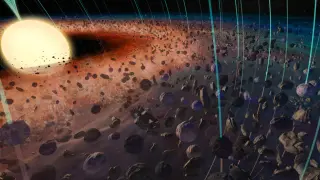
Presolar grains in meteorites—older than the Sun—are helping scientists test how our solar system formed. Evidence of aluminum-26 without iron-60 argues against a simple nearby supernova trigger and favors a scenario where winds from a Wolf-Rayet star delivered aluminum-26 into the nascent solar nebula; researchers are using nanoprobe analysis of meteorite grains to confirm this, though the origin story remains under debate.

Reevaluating the Nature of Uranus and Neptune: Are They Really 'Ice Giants'?
science7 months ago

Reevaluating the Nature of Uranus and Neptune: Are They Really 'Ice Giants'?

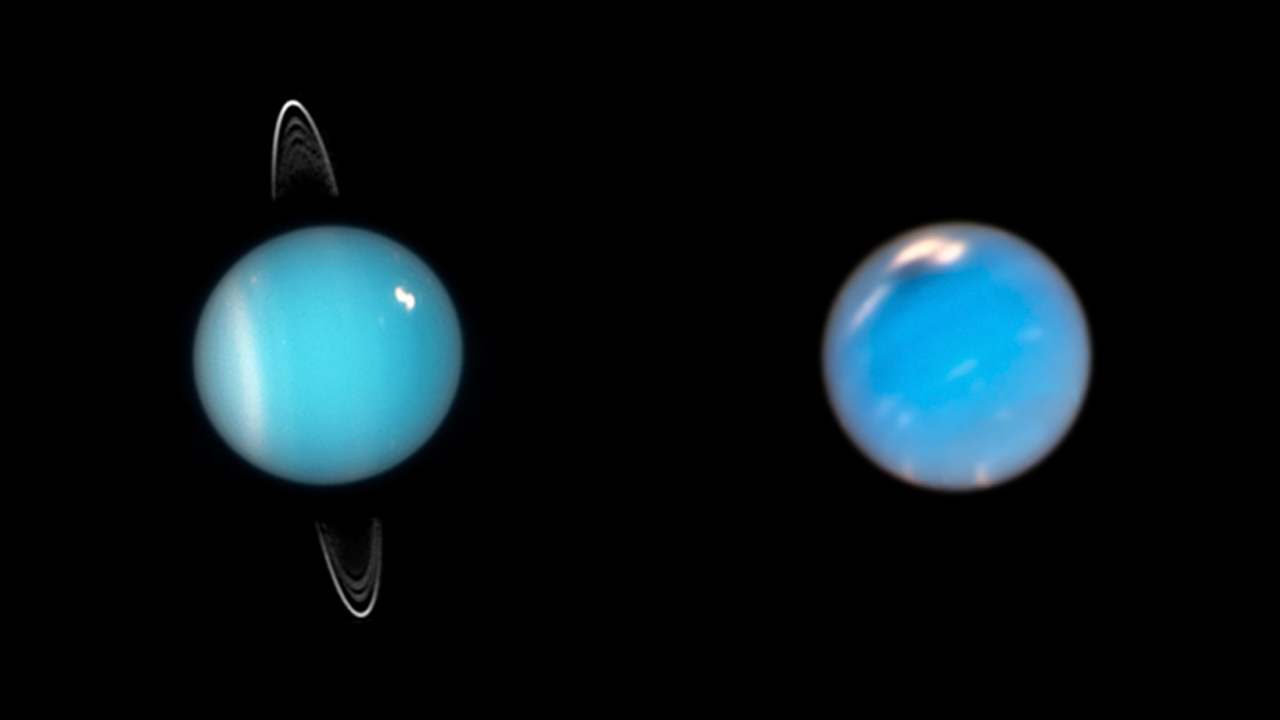
New research suggests that Uranus and Neptune may not be 'ice giants' as previously thought, but could instead be 'rocky giants' with interiors dominated by rock rather than ice, due to limited data and a wide range of possible interior compositions. This challenges existing models of solar system formation and highlights the need for dedicated missions to better understand these planets.

Scientists Explore the Mysteries of Interstellar Object 3I/Atlas and Its Possible Alien Origins
science8 months ago

Scientists Explore the Mysteries of Interstellar Object 3I/Atlas and Its Possible Alien Origins

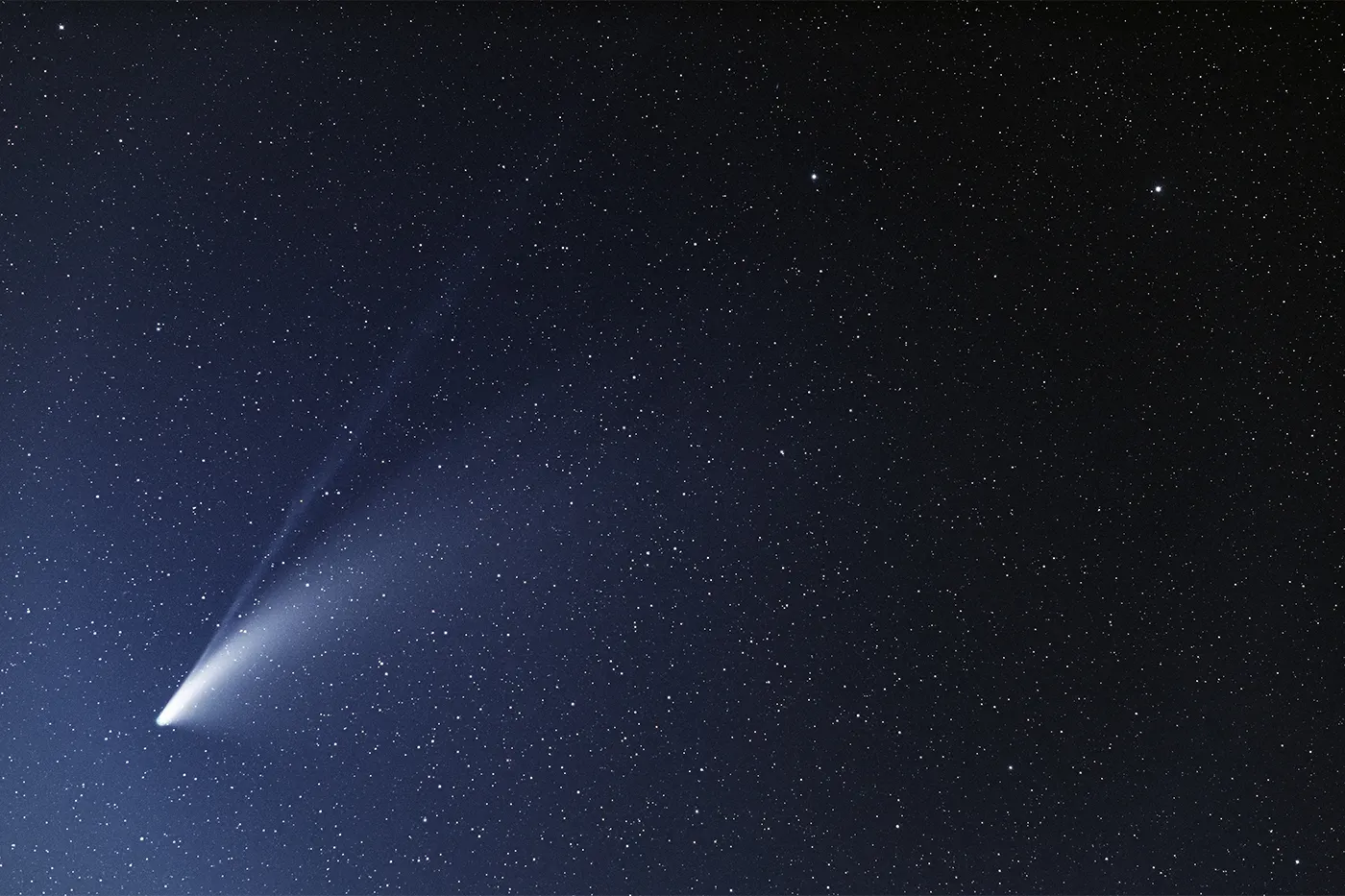
An astrophysicist explains that the interstellar object 3I/Atlas, initially thought to be alien, is a comet with unique properties such as emitting its own light and having a high carbon dioxide ice ratio, providing insights into other solar systems and their formation, with future observations expected to reveal more about its origins and composition.

How the Moon's Impact May Have Enabled Earth's Life
science10 months ago

How the Moon's Impact May Have Enabled Earth's Life

Research suggests that the impact that created the Moon also delivered significant carbonaceous material to Earth, contributing to its habitability. Simulations indicate that Theia, the impactor, likely contained a high proportion of volatile-rich carbonaceous chondrites, which may have played a crucial role in Earth's development as a life-supporting planet. The study highlights the importance of giant planet migrations, especially Jupiter's, in shaping the distribution of materials in the early Solar System and influencing Earth's composition.

Uncovering Clues to Solar System Formation in Hiroshima's Nuclear Fallout
science2 years ago

Uncovering Clues to Solar System Formation in Hiroshima's Nuclear Fallout

Scientists have analyzed fallout debris from the 1945 atomic bomb blast in Hiroshima and discovered glassy spheres formed by condensation within the nuclear fireball. The chemical and isotopic composition of these "Hiroshima glasses" bears similarities to primitive meteorites, suggesting they may provide insights into the early Solar System's formation. The study's simulations revealed how different types of glass condensed from the blast's extreme heat, offering a potential window into the chemical reactions during condensation in the early Solar System.

astronomy2 years ago

"Orion Nebula's Monthly Destruction and Replenishment of Oceans of Water Tracked by JWST"

Scientists studying data from the JWST have discovered that a planetary disk in the Orion Nebula, d203-506, is destroying and replenishing an amount of water equivalent to all of Earth’s oceans in about a month. This process sheds light on the water cycle in the infant Solar System and suggests that Earth's water likely went through a similar process before making its way to the planetesimals and icy bodies that helped form the worlds of the Solar System. The findings provide valuable insights into planet-formation processes and the interplay between young stars and their protoplanetary disks.

Unveiling Clues from 4.5 Billion-Year-Old Asteroid Bennu
space-science2 years ago

Unveiling Clues from 4.5 Billion-Year-Old Asteroid Bennu

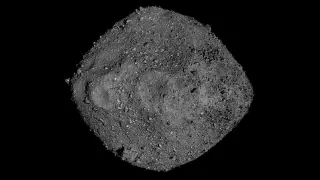
A sample of asteroid dust, collected by NASA's OSIRIS-REx mission from asteroid Bennu, has arrived at the Natural History Museum in London. Scientists hope to study the untouched material to gain insights into the formation of the solar system and the origins of Earth. The sample, just 100 milligrams, will be analyzed using various techniques to understand the asteroid's composition, formation, and history. Bennu is considered a time capsule from the early solar system and has the potential to provide clues about the building blocks of life on Earth.