Tag

South Pole

All articles tagged with #south pole

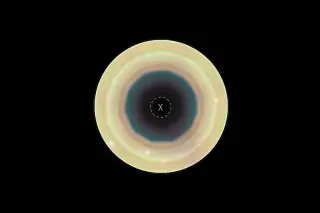
Saturn’s South Pole Reveals a Rare Ten-Sided Storm
science1 month ago

Saturn’s South Pole Reveals a Rare Ten-Sided Storm

Astronomers using the Hubble Space Telescope have spotted a rare 10-sided decagonal storm encircling Saturn’s south pole, a newly formed atmospheric pattern not seen before in the planet’s southern hemisphere. The feature appears distinct from the famous northern hexagon and seems to be developing, with traces dating back to observations starting in 2023. Researchers plan further study with Hubble, the James Webb Space Telescope, and computer models to understand how it formed, how long it will last, and how it compares to Saturn’s north-pole pattern.
Saturn's south pole reveals a colossal decagonal cloud pattern
space1 month ago

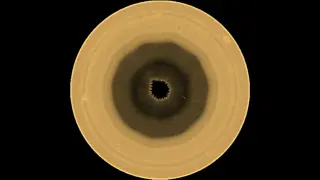
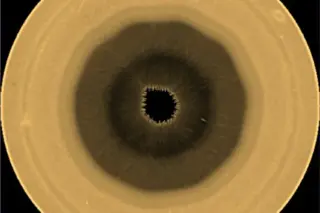
Saturn's south pole reveals a colossal decagonal cloud pattern

Astronomers using the Hubble Space Telescope have detected a giant ten‑sided cloud pattern circling Saturn's south pole—a rare decagonal feature about 167,820 kilometers across that likely formed from a meandering atmospheric jet and waves. Its rotation takes about 800 days, and scientists are studying its evolution and 3D structure to understand how it compares with Saturn's long‑standing north‑polar hexagon.

Artemis II’s Glover: equatorial Moon landings first, pole can wait
space-exploration2 months ago

Artemis II’s Glover: equatorial Moon landings first, pole can wait

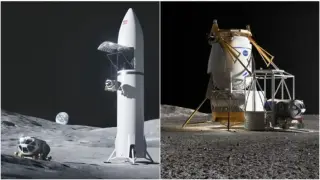
Artemis II pilot Victor Glover argues NASA should prioritize an equatorial Moon landing rather than rushing a south-pole target, citing safer daylight windows and easier emergency aborts. The idea aligns with updated Artemis IV plans that favor a more direct translunar path (potentially via SpaceX’s Starship) and reduce reliance on NRHO, aiming to accelerate lunar access while keeping pole landings as a longer-term objective.

Moon's South Pole Ice: A Frozen Resource for Future Space Missions
space3 months ago

Moon's South Pole Ice: A Frozen Resource for Future Space Missions

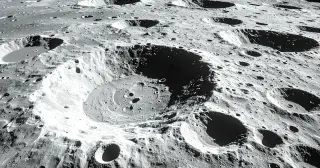
New NASA-backed evidence confirms water ice in permanently shadowed craters near the Moon’s south pole, where cold traps keep volatiles frozen. If extractable, this ice could supply drinking water, oxygen for breathing, and hydrogen fuel for future missions, reducing Earth-launched mass and enabling in-situ resource utilization, though accessing and processing the material presents significant technical and preservation challenges.

Sterile Neutrino Search Yields No Results
science1 year ago

Sterile Neutrino Search Yields No Results

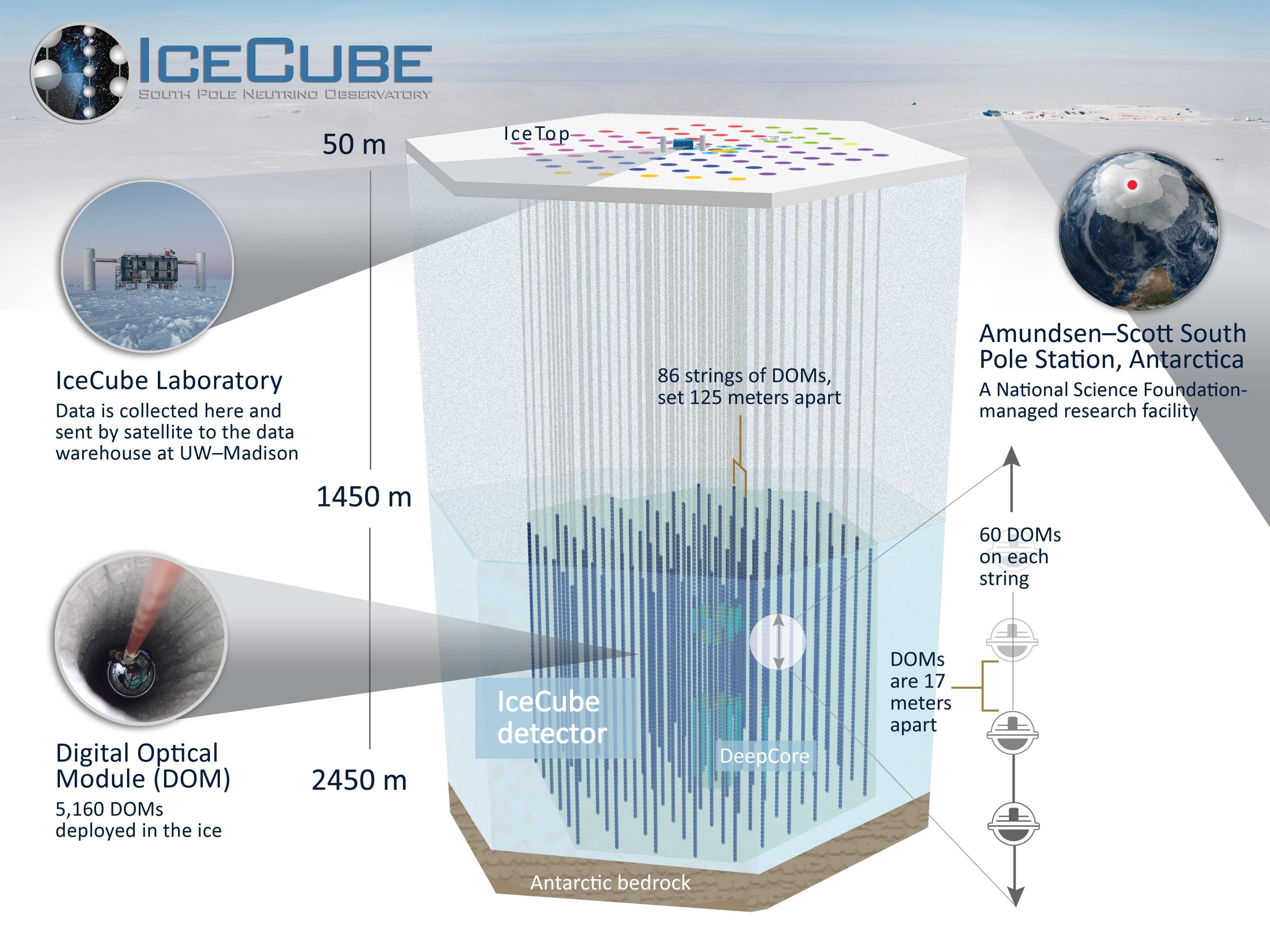
The IceCube Collaboration has conducted a comprehensive search for sterile neutrinos using 10.7 years of data from their detector at the South Pole, but found no evidence of their existence. This result, published in Physical Review Letters, further lowers the probability of sterile neutrinos existing, consistent with the standard three-neutrino model. The study involved improved data modeling and analysis, contributing to the ongoing investigation into neutrino physics.

"Antarctic Neutrino Experiment: Unveiling Quantum Gravity's Secrets"
physics2 years ago

"Antarctic Neutrino Experiment: Unveiling Quantum Gravity's Secrets"

Scientists at the South Pole are using thousands of sensors to study neutrinos from outer space in order to determine if quantum gravity exists. The IceCube Neutrino Observatory, operated by the University of Wisconsin-Madison, is playing a key role in this research. The study aims to detect subtle changes in neutrino properties over large distances, which could provide evidence of quantum gravity. While the initial study focused on neutrinos from Earth's atmosphere, future research will involve studying neutrinos from deep space to further explore this fundamental question in physics.

"The Moon's Shrinking: Implications for NASA Missions"
science-and-technology2 years ago

"The Moon's Shrinking: Implications for NASA Missions"

Research shows that the moon is shrinking, with the south polar region experiencing the effects of this phenomenon, potentially impacting lunar missions. Moonquakes and faults in this area could pose challenges for future manned missions, despite the potential for frozen water in the craters that could aid future missions. While the shrinking moon may not have an immediate impact on Earth, it could affect long-term plans for human presence on the moon, although the slow pace of the shrinkage means it is unlikely to be noticeable in our lifetime.

"Mechanic Leaves Colorado for $80K Job in South Pole at -60 Degrees"
human-interest2 years ago

"Mechanic Leaves Colorado for $80K Job in South Pole at -60 Degrees"

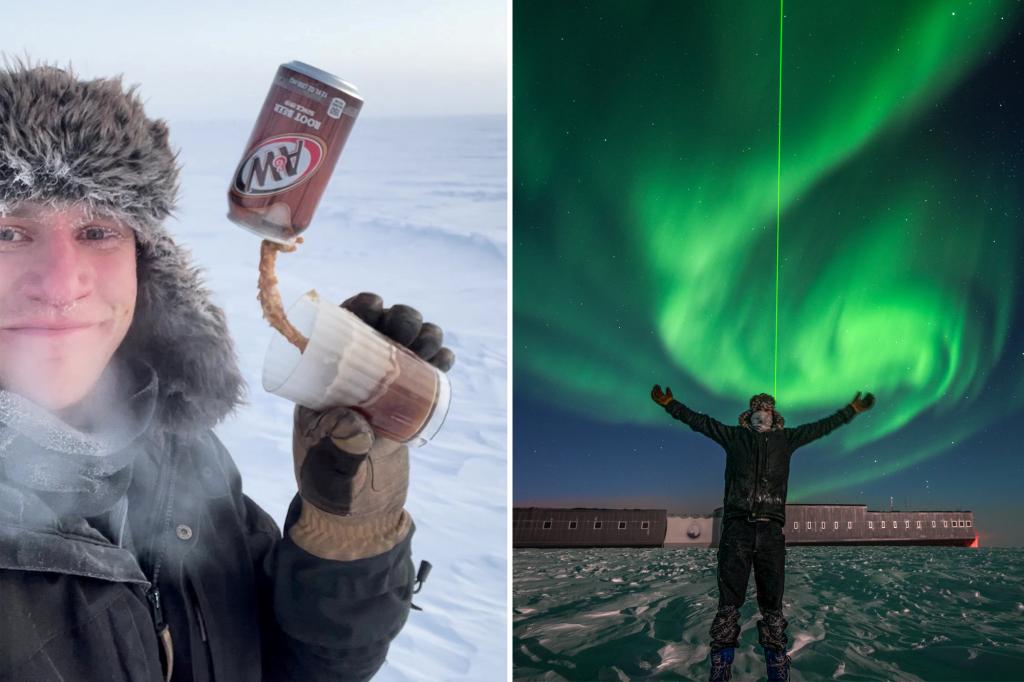
Colorado car mechanic Jeff Capps left his job for an $80,000-a-year position at the US government-owned Amundsen-Scott South Pole research station in Antarctica, where temperatures often reach negative 60 and half of the year is in total darkness. Despite the extreme conditions and isolation, Capps enjoys the close-knit community at the station, legendary parties, and the opportunity to witness the Southern Lights. He and his partner, who also works at the station, have used their six months of downtime to travel the world and plan to return to work in Antarctica next year.

"Putin's Unprecedented Ballistic Missile Test Challenges Global Security"
defense2 years ago

"Putin's Unprecedented Ballistic Missile Test Challenges Global Security"

Russian President Vladimir Putin plans to test the world's largest ballistic missile, known as Satan 2, by launching it over the South Pole. Weighing 208 tonnes and traveling at 15,880 miles per hour, the missile is set to be put on combat duty next month. However, the tests for Putin's fifth-generation missile are running behind schedule, with only one confirmed successful test so far. The initial Sarmat regiment, including a command post and multiple silo launchers, will begin operational duties in December.

"Optimal Moon Base Found: Abundant Sunlight, Water, and Power Await"
space-exploration3 years ago

"Optimal Moon Base Found: Abundant Sunlight, Water, and Power Await"

Researchers have identified a spot on the south pole of the moon, specifically the Henson crater, as an ideal location for a human base due to its access to plenty of water and permanent sunlight. The spot's availability of sunlight is crucial for using solar panels as a power source. The researchers considered factors such as water ice distribution, slope angles, and communication links with Earth. While more ground truth measurements are needed, the Henson crater is currently deemed the best spot for the first lunar base, with potential for expansion to other areas in the future.

space3 years ago

"ISRO Logo Imprints Reveal 'Lumpy' Lunar Soil, No Clear National Emblem"

The Chandrayaan-3 rover Pragyan has been unable to leave a clear imprint of the Indian national emblem and ISRO logo on the lunar soil, indicating that the soil in the south pole region is lumpy and not dusty. This new understanding of the lunar soil's properties could be crucial for future missions targeting the south pole region, which holds the potential for discovering water and establishing lunar habitation. The Indian Space Research Organisation (ISRO) has not received any signals from the Chandrayaan-3 lander and rover since their landing, but there is still hope that they may wake up during the 14-day lunar day period.

"NASA Reveals Stunning Details of Moon's South Pole in Unprecedented Image"
space3 years ago

"NASA Reveals Stunning Details of Moon's South Pole in Unprecedented Image"

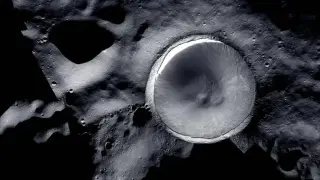
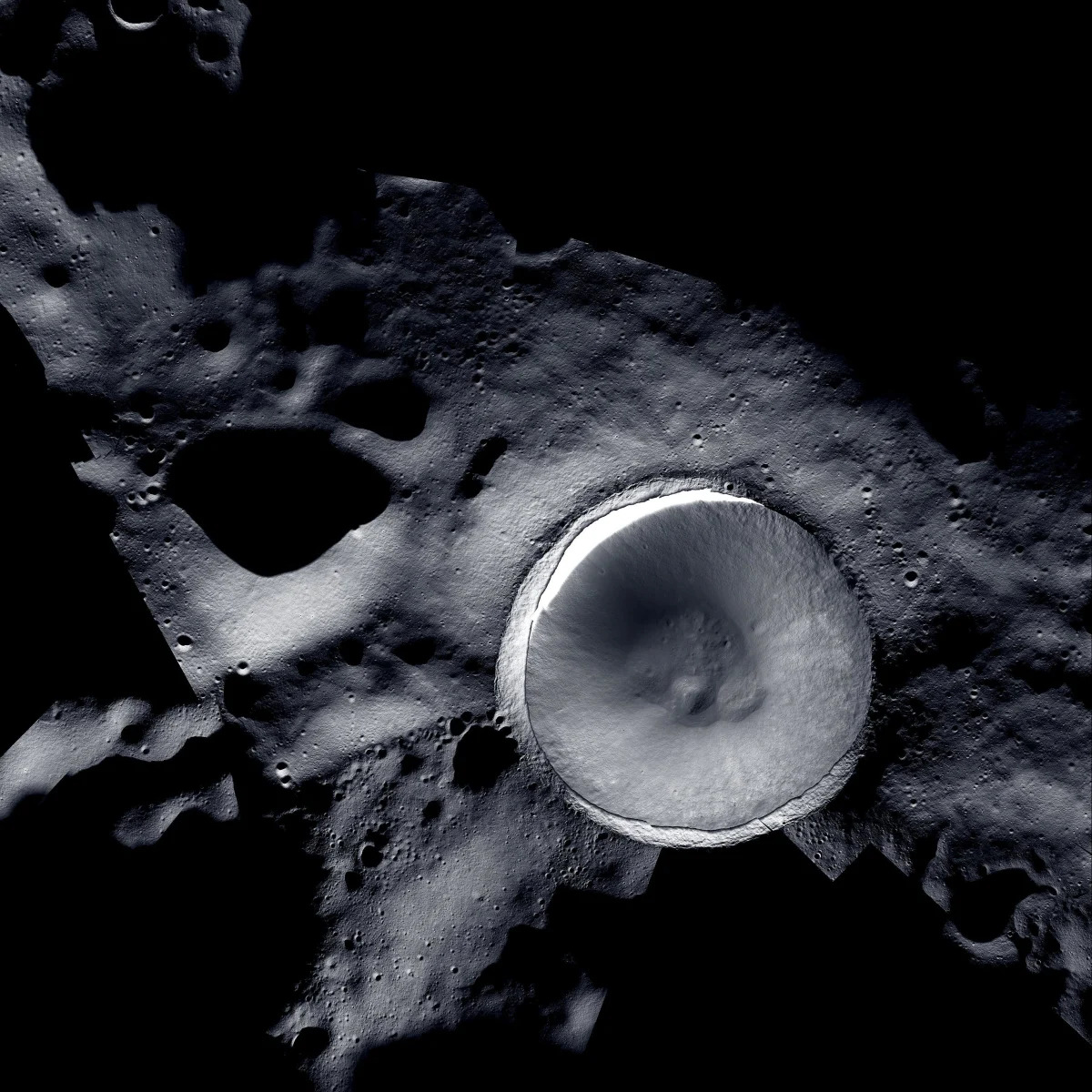
NASA has released a mosaic image of the moon's south pole region, showcasing "unprecedented detail" thanks to two lunar orbiting cameras. The Lunar Reconnaissance Orbiter Camera captures detailed images of the moon's surface but has limited ability to photograph shadowed areas. The ShadowCam, on the other hand, is 200 times more light-sensitive and can operate successfully in low-light conditions, revealing features and terrain details that wouldn't otherwise be visible. By combining the images from both cameras, scientists now have a comprehensive visual map of the moon's terrain, allowing for more thorough exploration and research, including the search for ice and establishing a long-term U.S. presence on the moon.

"NASA's Unprecedented Moon Mosaic Reveals Haunting Crater at South Pole"
space3 years ago

"NASA's Unprecedented Moon Mosaic Reveals Haunting Crater at South Pole"

NASA has released a mosaic image of the moon's south pole region, showcasing "unprecedented detail" thanks to two lunar orbiting cameras. The Lunar Reconnaissance Orbiter Camera captures detailed images of the moon's surface but has limited ability to photograph shadowed areas. The ShadowCam, on the other hand, is 200 times more light-sensitive and can operate successfully in low-light conditions, revealing features and terrain details that wouldn't otherwise be visible. By combining the images from both cameras, scientists now have a comprehensive visual map of the moon's terrain, including its permanently shadowed areas, which will aid in future exploration and research efforts, such as the Artemis missions.