Tag

Space Propulsion

All articles tagged with #space propulsion

MIT's ASCENT fuel could fuse chemical and electric propulsion in space
technology1 month ago

MIT's ASCENT fuel could fuse chemical and electric propulsion in space

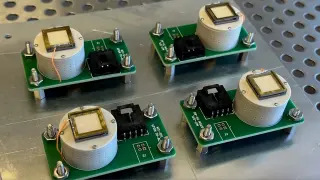
MIT researchers propose ASCENT, a greener, non-toxic propellant that could power both chemical and electrospray propulsion in a single cubesat package; ground tests show comparable thrust to dedicated thrusters, and NASA-backed Green Propulsion Dual Mode will test the system in space no earlier than November to demonstrate dual‑mode capability for smaller, cheaper satellites.

Solar sails edge closer to interstellar travel, study finds
space-exploration1 month ago

Solar sails edge closer to interstellar travel, study finds

A Space.com piece explains how solar sails—ultra-thin membranes propelled by photon pressure—have progressed from lab tests (e.g., Ikaros, Lightsail 2) toward near-term heliophysics missions (like Solar Cruiser) and ambitious concepts (Svarog) that could push spacecraft to the edge of the solar system within 10–20 years. By sun-diving closer to the Sun, sails could gain immense speed, potentially reaching 5–50 AU per year depending on how close the dive, while major hurdles—heat resistance, large deployable booms, and power/communications—remain. Breakthrough Starshot’s laser-pushed approach remains on hold, so practical solar-sail missions are likely to come first for solar-storm monitoring and solar-polar studies before any interstellar-scale voyages.

Lithium-Powered Thruster Sets US Record, Advancing Crewed Mars Missions
technology1 month ago

Lithium-Powered Thruster Sets US Record, Advancing Crewed Mars Missions

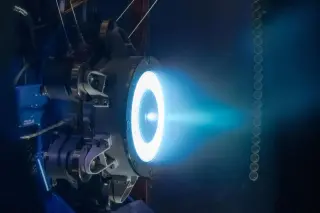
NASA’s next‑gen electric propulsion thruster using lithium metal vapor set a US power record at 120 kilowatts, signaling major progress toward fuel‑efficient, long‑duration missions to Mars. While such systems could drastically cut propellant needs and enable faster transit, a crewed Mars mission would still demand multi‑megawatt power and thousands of hours of operation to manage cruise and surface phases, underscoring both promise and engineering challenges for future deep‑space travel.

Swiss Students Test 20,000-Detonation-Per-Second Rotating Rocket Engine
future-of-space1 month ago

Swiss Students Test 20,000-Detonation-Per-Second Rotating Rocket Engine

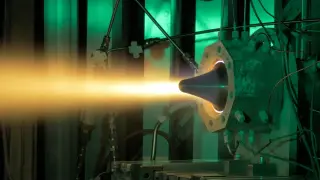
A team of ETH Zurich students from the ARIS Pegasus project tested a rotating detonation rocket engine powered by propane and liquid oxygen, achieving stable detonation waves at up to 20,000 per second in a nighttime test at Dübendorf Air Base. The milestone underscores growing international interest in rotating detonation propulsion, which could improve fuel efficiency and payload capacity for future space missions, though it demands advanced materials and ultra-fast fuel injection. The project highlights collaborative, iterative student research and places Switzerland among a small group pursuing RDRE demonstrations.

NASA tests lithium-metal electric thruster, hits 120 kW power in breakthrough propulsion demo
technology2 months ago

NASA tests lithium-metal electric thruster, hits 120 kW power in breakthrough propulsion demo

NASA’s Jet Propulsion Laboratory demonstrated a lithium-metal vapor electric thruster and set a 120 kW power record, marking a major step toward high‑power, fuel‑efficient propulsion for future crewed Mars missions. While the tech promises substantial propellant savings, a real Mars mission would require multi‑megawatt power and thousands of hours of operation to enable transit, landing, and return; scaling the system remains the key challenge.

Laser-Propelled Metajets Could Shorten Alpha Centauri Trip to 20 Years
space2 months ago

Laser-Propelled Metajets Could Shorten Alpha Centauri Trip to 20 Years

Texas A&M researchers demonstrated micron-scale metajets that use metasurfaces to move in three dimensions when illuminated by laser light, enabling 3D maneuverability that could, in theory, scale to propel larger craft. While the approach could cut a trip to Alpha Centauri to about 20 years, feasibility remains uncertain as tests to date occurred in fluid environments and microgravity space tests are planned to validate practicality and scaling.

Astrobotic’s Chakram RDRE Delivers 4,000+ Lbf Thrust in NASA Hot-Fire Demo
space-and-spaceflight2 months ago

Astrobotic’s Chakram RDRE Delivers 4,000+ Lbf Thrust in NASA Hot-Fire Demo

Astrobotic tested its Chakram rotating detonation rocket engine at NASA’s Marshall Space Flight Center, firing two prototypes to more than 4,000 pounds of thrust per engine for a combined 470 seconds of burn time across eight hot-fire tests, with no damage observed. The RDRE uses detonation shockwaves in a circular channel to boost efficiency and has potential for lunar landers and deep-space propulsion, supported by NASA SBIR awards and a Space Act Agreement; similar RDRE work is underway by Venus Aerospace and NASA.

Water-Fueled Rockets Spark Mars Refueling Network Vision
technology4 months ago

Water-Fueled Rockets Spark Mars Refueling Network Vision

A startup led by former SpaceX engineer Halen Mattison aims to turn water into rocket fuel via electrolysis to produce hydrogen and oxygen for chemical propulsion, and into plasma for electrical propulsion. The plan envisions a Mars-based refueling network and includes a 1,100-pound satellite test on a SpaceX Falcon 9 in October 2026, with the potential to dramatically reduce mission costs and enable longer, deeper-space journeys.

L3Harris Sells 60% Space Propulsion Stake to AE Industrial for $845M
business6 months ago

L3Harris Sells 60% Space Propulsion Stake to AE Industrial for $845M

L3Harris is selling a 60% stake in its space propulsion business to AE Industrial Partners for $845 million to shift focus towards defense, while reorganizing into three segments to better align with future warfare needs; the deal also aims to accelerate propulsion tech development, including nuclear propulsion for Mars exploration, with the transaction expected to close in late 2026.

L3Harris Nears Sale of Space Propulsion Stake to AE Industrial for $845M
business6 months ago

L3Harris Nears Sale of Space Propulsion Stake to AE Industrial for $845M

L3Harris Technologies plans to sell a 60% stake in its space propulsion business to AE Industrial Partners for $845 million, while retaining a 40% stake and the RS-25 engine program. The deal aims to refocus L3Harris on core defense priorities, and AE Industrial intends to revive the Rocketdyne brand and collaborate on future propulsion technologies, including nuclear propulsion for deep-space exploration.

Ex-NASA Scientist Allegedly Breaks Physics to Defy Gravity
science6 months ago

Ex-NASA Scientist Allegedly Breaks Physics to Defy Gravity

A former NASA scientist claims to have developed a new propulsion system that can move without expelling mass, potentially defying gravity, using electrostatic asymmetry. While intriguing, these claims are unverified and face skepticism due to their challenge to established physics principles, requiring rigorous independent testing before acceptance.

NASA's Lunar Gateway Advances with Successful Electric Engine Tests
space-exploration6 months ago

NASA's Lunar Gateway Advances with Successful Electric Engine Tests

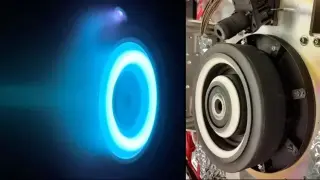
NASA has successfully tested powerful new electric engines for the Lunar Gateway, a space station orbiting the Moon that will serve as a staging point for lunar and future deep space missions. These efficient electric thrusters will enable longer, more cost-effective trips by using electricity instead of fuel, marking a significant advancement in space propulsion technology and preparing for future Mars exploration.

Astronaut Pam Melroy Joins Venus Aerospace After Rocket Engine Breakthrough
technology9 months ago

Astronaut Pam Melroy Joins Venus Aerospace After Rocket Engine Breakthrough

Pam Melroy, a former NASA astronaut and spaceflight expert, has joined Venus Aerospace's board as the company advances its revolutionary rotating detonation rocket engine (RDRE), which offers a 15% efficiency increase and could transform space travel and defense applications, including high-speed global travel and lunar/Mars landers.