Researchers have demonstrated that a 35,000-year-old ivory artifact from Germany was likely a tool for making rope, highlighting how perishable fiber technologies shaped prehistoric life despite leaving few physical traces.
New dating and image-analysis of Bacon Hole cave in south Wales confirm that its red markings are ancient abstract art dating to about 17,000 years ago, making them the oldest rock art in the British Isles; previously dismissed as mineral staining and graffiti, uranium–thorium dating and enhanced imagery reveal human-like symbolic lines and dots, likely created by Upper Paleolithic hunter–gatherers, with surrounding mineral deposits supporting the minimum age.
Archaeologists at Marathousa 1 in southern Greece unearthed two wooden tools dating to about 430,000 years ago, including an 81 cm alder digging stick—the oldest handheld wooden tool known—suggesting Homo heidelbergensis or early Neanderthals used wood alongside stone tools in a glacial lakeshore habitat and expanding our view of early technology.
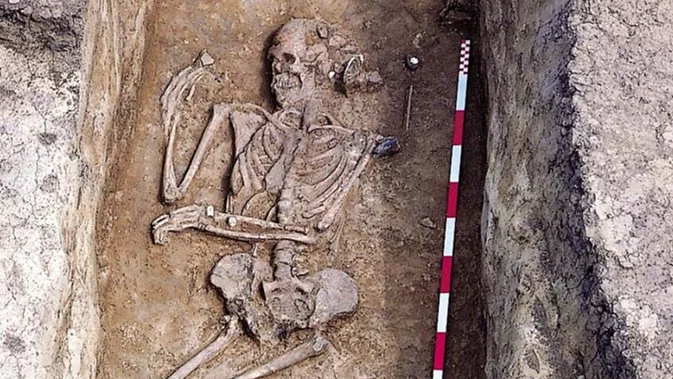
A study of 125 skeletons from two Neolithic cemeteries in eastern Hungary (circa 5300–4650 BCE, about 7,000 years ago) shows that men and women generally had distinct burial patterns, but some individuals were buried in ways that did not align with their biological sex. Female burials were often on the left with shell bead belts, and male burials on the right with polished stone tools, yet an older female’s toes indicated a kneeling pattern more like the men’s. The researchers say these exceptions reveal that gender roles were flexible and shaped by multiple factors in this Stone Age society.
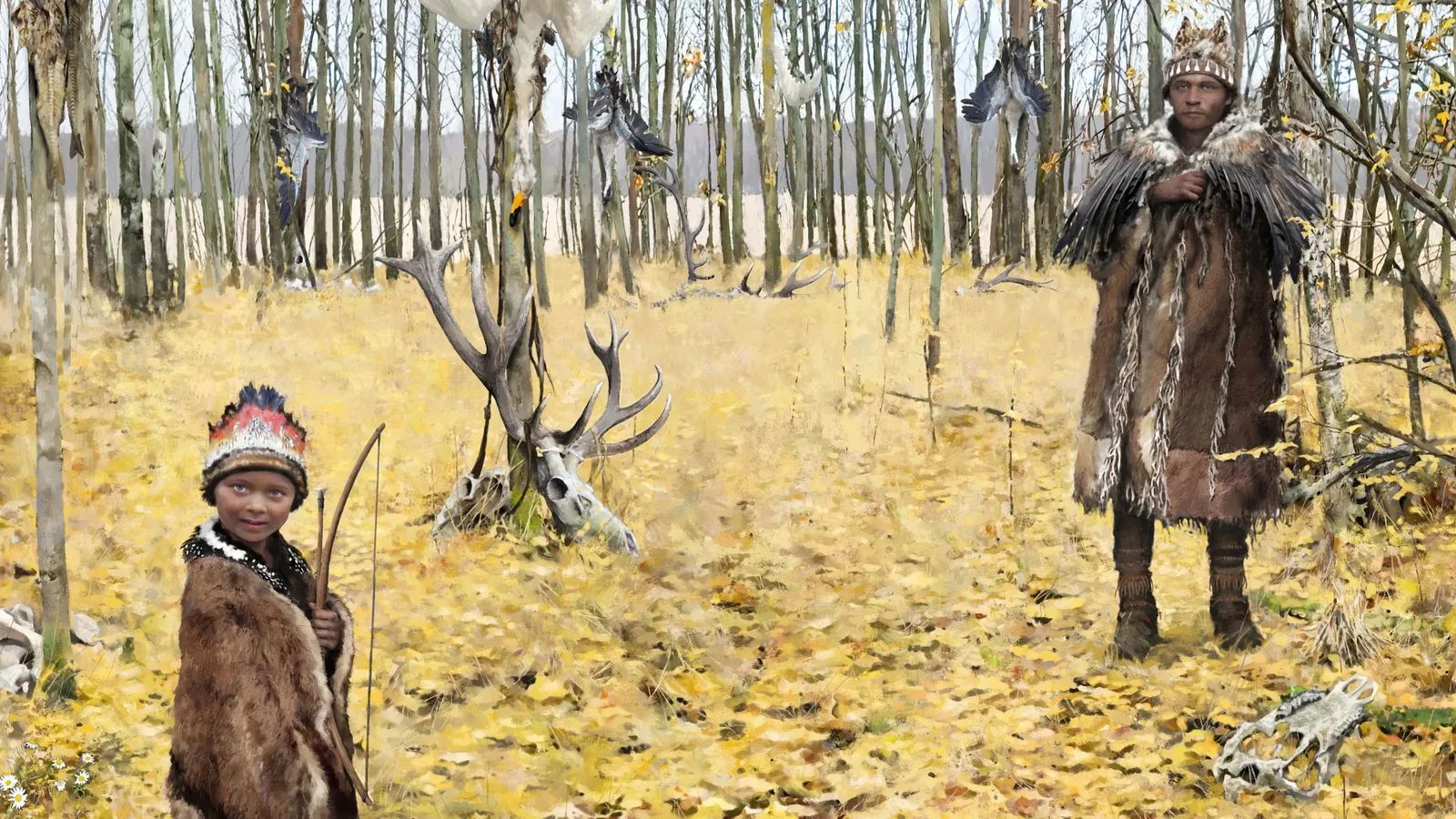
A newly developed soil-analysis technique examined 139 samples from Skateholm graves in southern Sweden (5200–4800 BCE) and uncovered perishable grave goods, including a boy buried with a woodpecker‑feather headdress and others with feathered footwear and fur garments, indicating that early hunter‑gatherers used organic materials in burial attire and suggesting widespread decorative use of feathers in Mesolithic Sweden.
Archaeologists studying 40,000-year-old engravings and artifacts from a Swabian Jura cave in Germany report 22 recurring symbols that may constitute the oldest form of writing, with patterns reminiscent of proto-cuneiform. The team suggests these glyphs could reflect complex symbolic thought—potentially including calendrical tracking—indicating that Stone Age hunter-gatherers may have conveyed information in a structured way well before known writing systems, potentially pushing back the origins of writing by about 30,000 years, though the exact meanings remain uncertain.
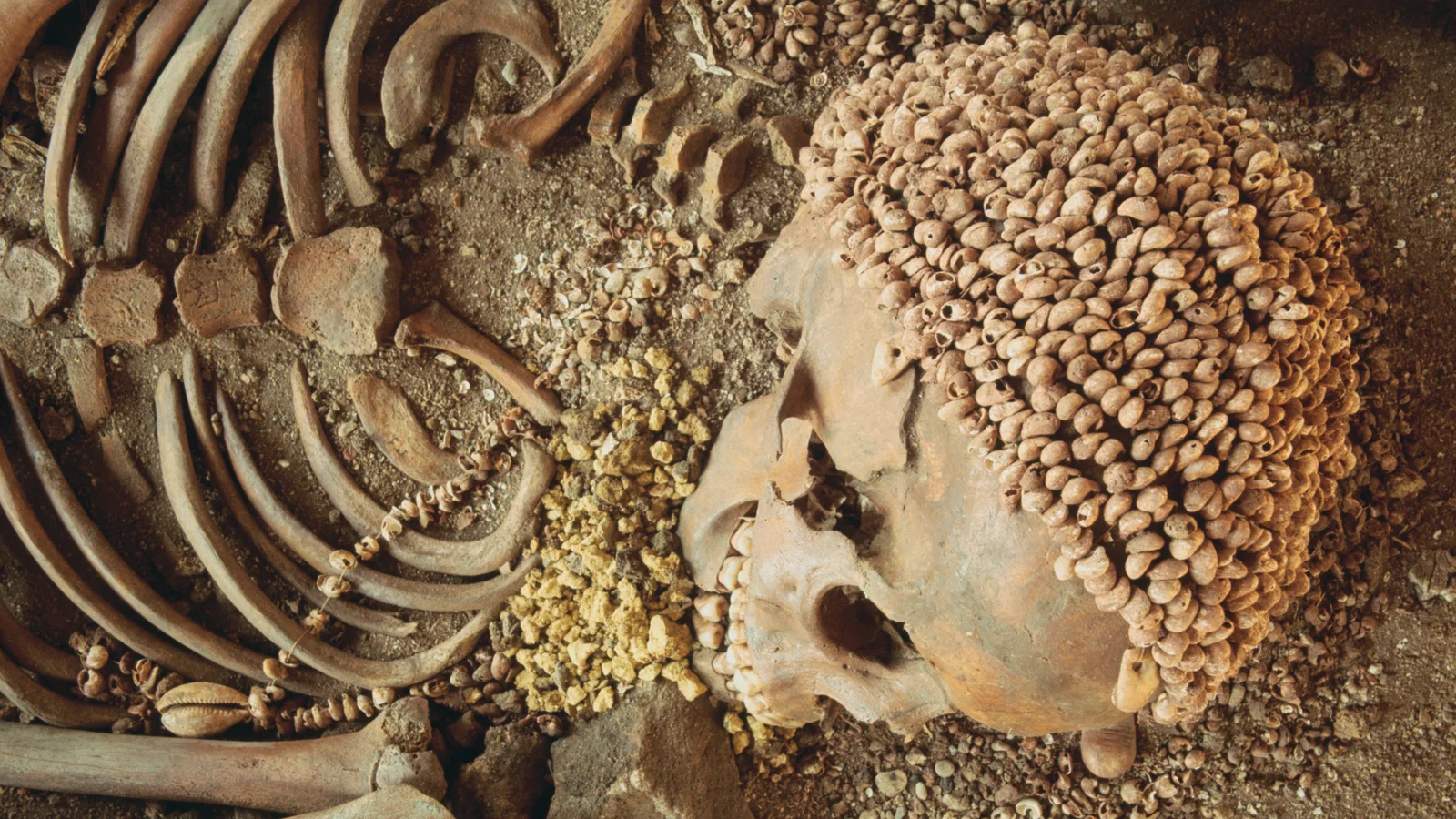
A Paleolithic teen buried in the Arene Candide cave in Liguria, Italy, has been identified as Il Principe. Microscopic and 3D analyses show massive shoulder and facial trauma at death, consistent with a bear attack (likely brown or cave bear), with bone healing indicating the teen survived the mauling for up to three days. The well-preserved grave goods—a shell headdress, shells and teeth, and a flint blade—mark a formal burial, and the individual lived about 28,000 years ago at age 14–17. This find sheds light on dangerous encounters with megafauna and ritual treatment of exceptional burials in Late Paleolithic hunter‑gatherer communities.
Scientists discovered the earliest known cremation in Africa, dating back 9,500 years in Malawi, involving a large-scale pyre ritual for a likely middle-aged woman, challenging previous notions about hunter-gatherer mortuary practices and indicating complex social behaviors.
Archaeologists have discovered a 8,500-year-old Stone Age coastal settlement off Denmark's coast, submerged due to rising sea levels after the last ice age. The site, part of a European Union-funded project, offers insights into ancient coastal life and how early societies adapted to changing landscapes, with well-preserved artifacts like tools and animal bones found underwater. This research helps understand past climate impacts and sea level changes, relevant to current climate change concerns.
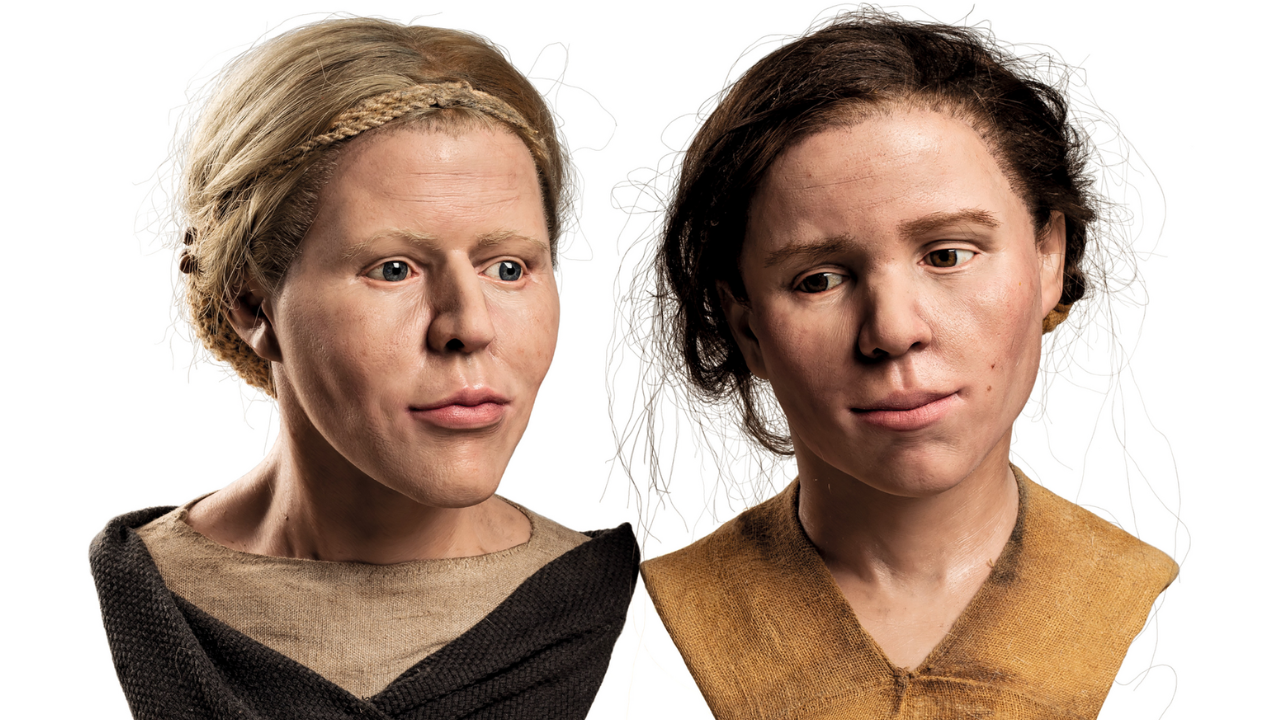
Researchers have created hyperrealistic 3D reconstructions of two Stone Age sisters who lived over 6,000 years ago in the Czech Republic, based on analysis of their remains found in a prehistoric chert mine. The sisters, who worked in heavy labor, lived to their 30s or 40s despite injuries and poor childhood nutrition, and were buried with a dog and a mysterious newborn. The study offers insights into the social and physical hardships of early mining communities, highlighting exploitation and resilience.
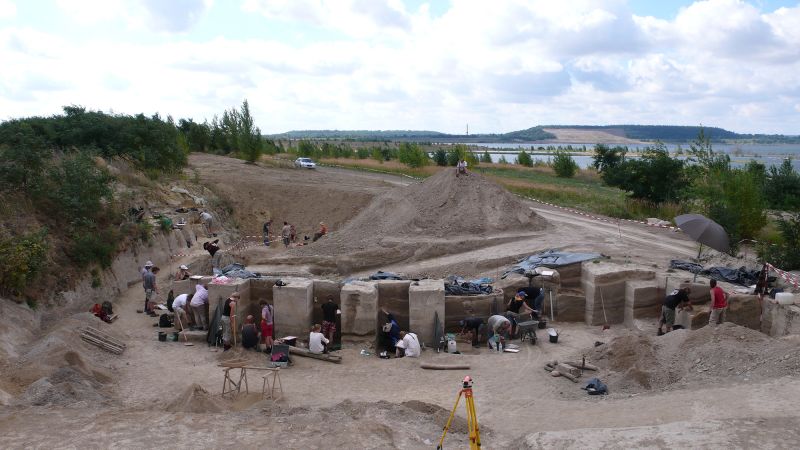
Archaeologists discovered evidence of Neanderthals in Germany around 125,000 years ago systematically processing animal bones to extract fat, indicating advanced planning, organization, and nutritional understanding, challenging stereotypes of Neanderthals as primitive.
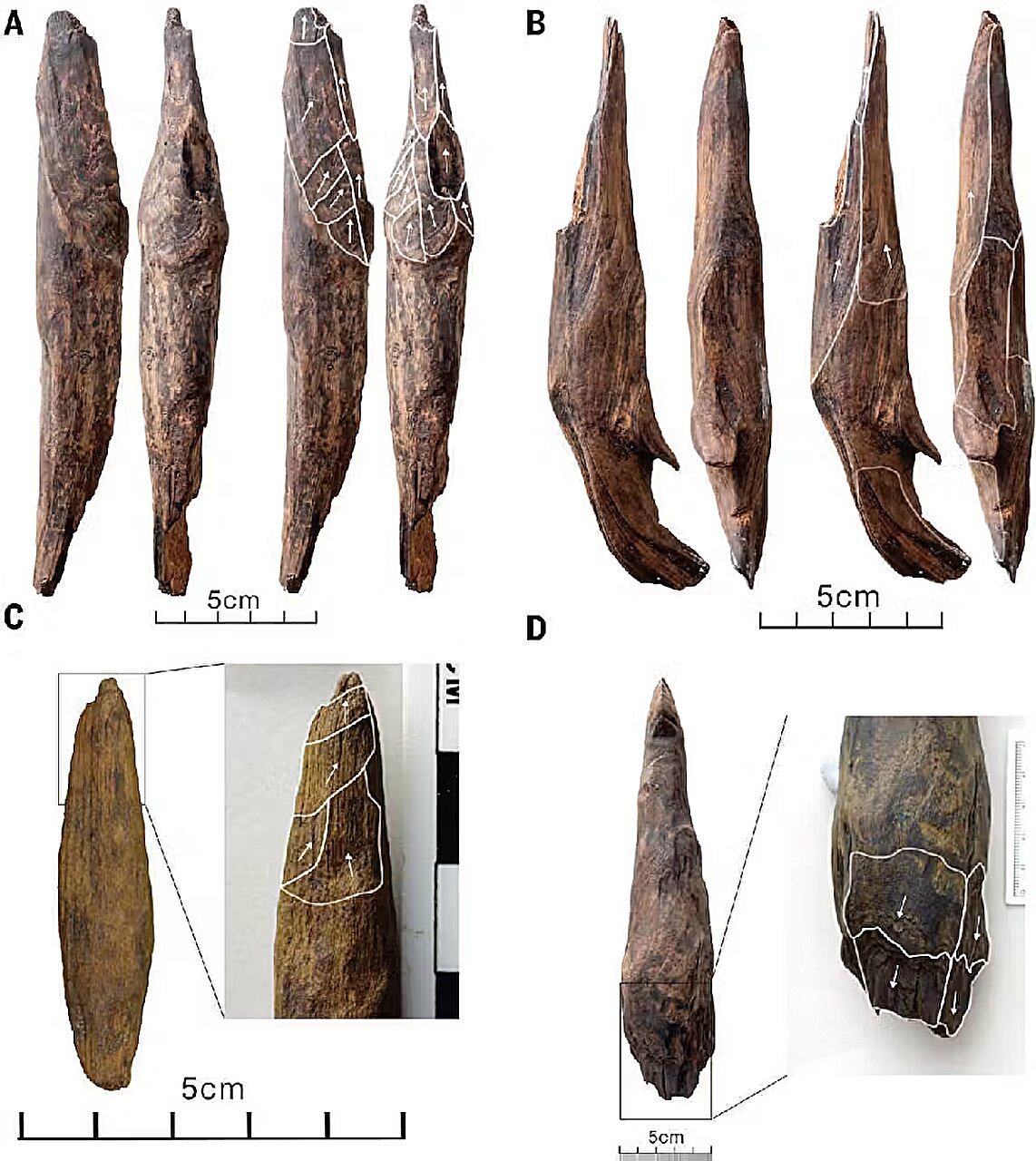
Ancient wooden tools dating back around 300,000 years were discovered in Gantangqing, China, revealing that early humans there were sophisticated woodworkers who relied heavily on plant resources and lived in a lush, lakeside environment, challenging previous assumptions about Paleolithic cultures that mainly emphasized stone tools.
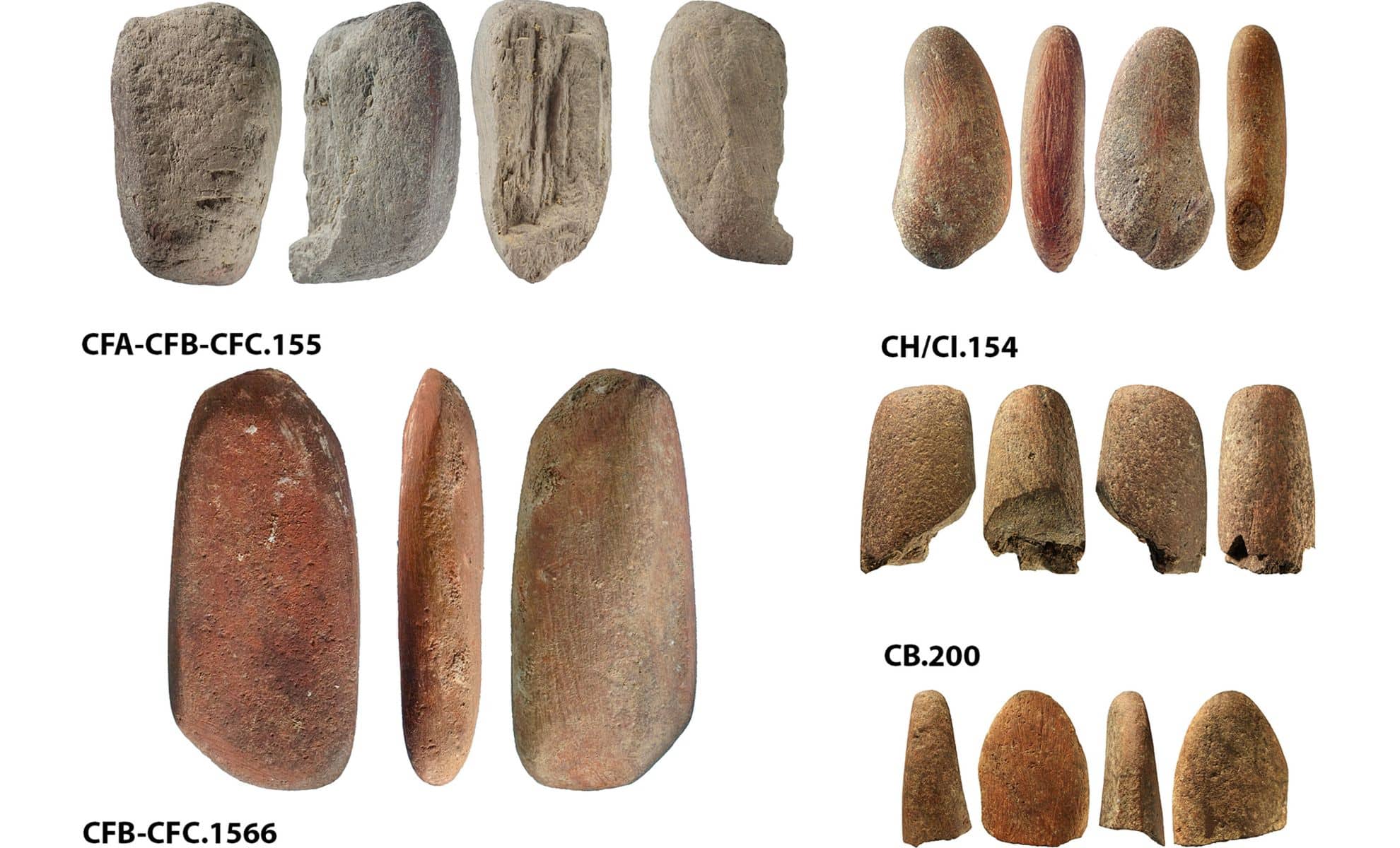
A study reveals that early modern humans at Blombos Cave used ochre not only for symbolic purposes but also as specialized tools in stone toolmaking, indicating advanced technological skills and complex behaviors much earlier than previously thought.
Researchers and artists have created a detailed facial reconstruction of the 'Margaux woman,' a Stone Age hunter-gatherer from Belgium who lived around 10,500 years ago, revealing insights into her appearance, including likely blue or light eyes and a medium-toned skin, based on skeletal remains and ancient DNA. The project highlights the diversity and complexity of skin pigmentation in post-ice age Western Europe.
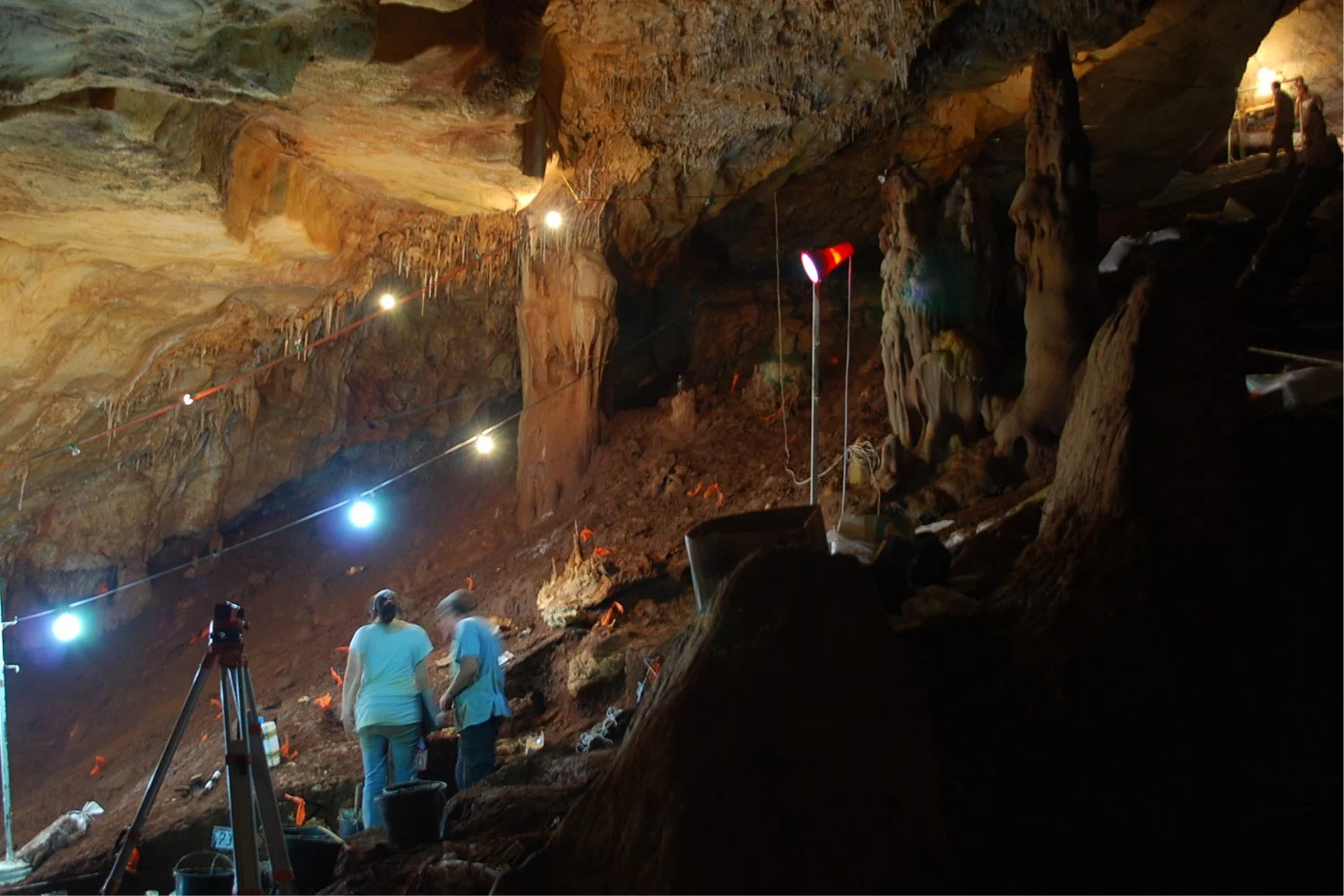
Researchers have discovered a potential 35,000-year-old Stone Age ritual site in Manot Cave, northern Israel, suggesting communal rituals took place around a carved boulder resembling a tortoise or turtle. The site, located in a separate chamber from living quarters, features mineral deposits and evidence of fire use, indicating that ancient humans, possibly related to the first modern Europeans, conducted rituals there. This finding adds a cultural dimension to the cave's history, previously known for a 55,000-year-old cranium linked to early human migration.