Meta is likely rebranding its Horizon+ subscription to 'Meta VR+' and adding 3D films to the service. Dataminers found evidence in the latest HorizonOS update, suggesting a shift from games to media to support the upcoming VR Glasses.
A BuzzFeed compilation of Reddit user comments identifies 22 technologies and trends that were heavily marketed as the future but have since faded or failed to gain mainstream traction. Key examples include 3D TVs, which suffered from limited content and user discomfort; the metaverse, which lost momentum after speculative property purchases; and Google Glass, which was outpaced by smartphones. Other notable failures include graphene batteries, solar roadways, and cloud gaming services, many of which have shut down. While some concepts like 3D printing remain relevant, they did not achieve the explosive growth predicted a decade ago. The list also highlights the decline of Bitcoin as a currency and the stagnation of nonstandard domain names, reflecting a broader shift away from early 2010s tech optimism.
A small study from the University of Trento found that one month of virtual reality (VR) training combined with meditation can teach non-lucid dreamers to achieve lucid dreaming. Participants who experienced dream-like scenarios in VR and performed reality checks reported lucid dreams four times more often than those using traditional methods alone.
A new study from the University of Limerick demonstrates that human participants in a virtual reality office setting replicate the gender pay gap when compensating AI agents. Despite identical performance, female-presenting bots received approximately 10% less pay than male-presenting counterparts. The research highlights that unconscious biases persist even when interacting with artificial intelligence, suggesting that current AI design choices may inadvertently reinforce existing societal inequalities.
A University of Limerick study found that humans pay female-presenting AI agents 10% less than male-presenting ones for identical work in a virtual reality office, despite using the same underlying technology. The research, involving 189 participants, shows that traditional gender biases are being replicated in human-AI interactions, even when participants claim gender does not matter. This finding is significant as AI agents are rapidly entering mainstream corporate use, with 79% of companies reporting their use this year.
A University of Limerick study reveals that humans pay female-presenting AI agents 10% less than male-presenting ones for identical work, replicating traditional gender pay gaps in virtual office settings.
A new study involving 189 participants in a virtual reality office found that people paid female-presenting AI agents 10.25% less than male-presenting ones for identical work. Despite using the same underlying technology, the male agent, named Johan, received higher monetary rewards and was perceived as more human-like than the female agent, Johanna. Researchers from the University of Limerick and the University of Zurich concluded that traditional workplace gender biases are being replicated in human-AI interactions, even when participants claimed gender did not matter to them.
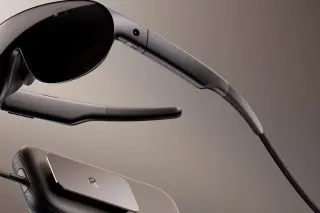
Meta’s new VR Glasses, priced at $1,299, offer a hybrid experience that combines the immersion of VR with the peripheral vision of AR. Weighing just 100 grams, the device features a 5K micro-OLED display and uses hand and eye tracking instead of controllers. While it lacks the full field of view of traditional headsets, it allows users to see their real surroundings, potentially making VR more accessible for mainstream consumers.
Meta confirmed that its upcoming VR Glasses will support active gameplay through a new cinching strap accessory. The device, priced at $1,299 and launching in Spring 2027, uses a glasses form factor that requires this add-on to prevent slipping during movement. While the base unit relies on hand and eye tracking, the strap ensures stability for intense VR experiences.
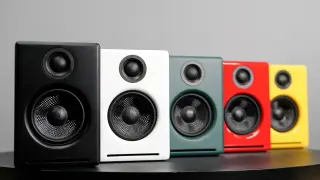
Gear Patrol highlights a wave of new consumer tech releases, including Beats' modular 360 headphones, Meta's lightweight VR glasses, and premium audio components from Audioengine and Fiio.
Meta unveiled VR Glasses at Connect 2026, a 100g wearable with a 5K micro-OLED display and hand/eye tracking, priced at $1,299.99 for Spring 2027. Reviewers note it rivals Quest 3 performance but lacks field of view, potentially disrupting the headset market.
Meta has officially launched the VR Glasses, a lightweight virtual reality device priced at $1,299.99 for spring 2027. Weighing just 100g, the glasses feature a 5K micro-OLED display and connect via cable to a 300g external compute puck. The device aims to offer immersive VR without the bulk of traditional headsets, competing with Apple’s Vision Pro while maintaining compatibility with the existing Quest software library.
Meta has officially announced the VR Glasses, a lightweight virtual reality device priced at $1,300, set to ship in Spring 2027. The device features a 100-gram visor with dual 2.4K micro-OLED displays and an open-periphery design, connected via fiber optic cable to a 300-gram external compute puck. Powered by Qualcomm’s new Snapdragon Reality Elite chipset, the system offers 12GB of RAM, 128GB of storage, and full compatibility with the Quest 3 operating system. While controllers are not included by default, users can purchase Touch Plus controllers or pair existing Quest controllers. The device supports hand and eye tracking, Dolby Vision HDR, and a new 'Hologram' avatar feature for video calls. Meta markets the glasses as a portable cinema, workspace, and game console, emphasizing a less cumbersome experience than traditional headsets.
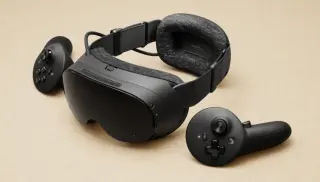
Valve released SteamOS 0.3.0 for the Steam Frame, improving charging speed, controller tracking, and system stability. The update fixes audio bugs and optimizes motion smoothing, though the headset remains limited by battery life and game compatibility. Scalpers are exploiting the waitlist system, while reviews highlight the device as a power-user tool rather than a mainstream replacement for Meta Quest 3.