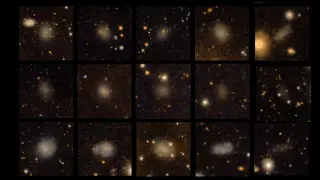
Astronomers have identified 50 faint 'ghost' dwarf galaxies orbiting three distant host galaxies, helping resolve discrepancies in satellite galaxy counts and dark matter distribution models.
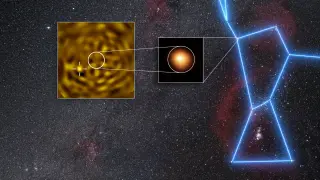
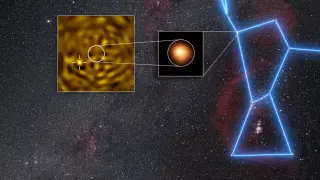
Astronomers have secured the clearest evidence yet that Betelgeuse has a stellar companion, while new ALMA images reveal long-lived hotspots on the star’s surface. The companion, Betelgeuse B, is more massive than previously predicted, and the surface anomalies may influence the star’s eventual supernova.
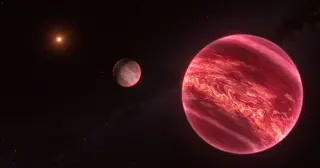
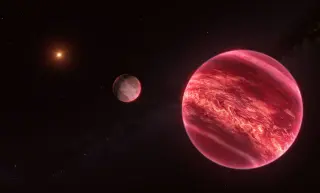
An international team using the ESO Very Large Telescope detected a moonlike body orbiting the brown dwarf CD-35 2722 B about 73 light-years away, with a roughly 170-day orbit and a mass of at least 0.9 Jupiter—about 2.5% of the brown dwarf’s mass. Described as an exosatellite rather than a moon, this is the first satellite evidence around a brown dwarf found via the Doppler method, though its exact classification remains under discussion. The discovery challenges traditional moon definitions and could influence theories of planet formation and tidal heating, with future telescopes potentially revealing smaller exomoons.
Astronomers using the European Southern Observatory's Very Large Telescope with the SPHERE instrument released the clearest image yet of Betelgeuse B, a possible companion star, suggesting Betelgeuse is a binary system. Betelgeuse B is estimated to have 2–3 times the Sun’s mass. Follow‑up observations over a full orbit are needed to confirm the companion's path and to assess any influence on Betelgeuse’s future supernova.
Astronomers using the Very Large Telescope’s SPHERE instrument in Chile captured the strongest direct evidence yet that Betelgeuse has a faint stellar companion, Betelgeuse B, making Betelgeuse a binary system. The image suggests Betelgeuse B is about two to three times the Sun’s mass—more massive (and brighter) than earlier predictions—though researchers will need to observe Betelgeuse B again in about a year to confirm it's gravitationally bound and to understand how its presence could influence Betelgeuse A’s future evolution.
Astronomers using the Very Large Telescope report evidence for a moon-sized object orbiting a brown dwarf in the CD-35 2722 system, an exosatellite that defies simple labeling as either moon or planet; detected via radial-velocity wobble rather than transit, this may mark the first exomoon, with confirmation likely from future observations with the ELT.
Two independent teams using the European Southern Observatory’s Very Large Telescope and NASA’s James Webb Space Telescope independently detected a faint gas giant orbiting the young star Beta Pictoris—the dimmest exoplanet imaged from Earth—roughly 63 light-years away. The planet, slightly larger than Jupiter, completes a 91-year orbit in a system about 20 million years old, offering a rare glimpse into early planetary formation as astronomers dug through archival data and confirmed the discovery across two observations.
Astronomers using ESO's Very Large Telescope and NASA's James Webb Space Telescope independently detected a faint, Jupiter-sized planet orbiting the young star Beta Pictoris, making it the dimmest exoplanet directly imaged from Earth. The planet, slightly larger than Jupiter, completes an orbit every 91 years around a system about 20 million years old, offering a rare glimpse into planetary formation as the system stabilizes after its birth.
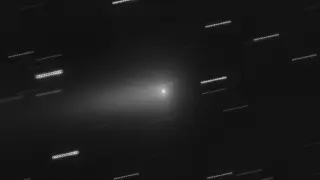
New isotope measurements from JWST and the VLT corroborate that interstellar comet 3I/ATLAS formed billions of years ago far from its parent star, likely in the outer regions of a protoplanetary disk (akin to a Kuiper belt) and was later ejected into interstellar space. Its carbon-12 to carbon-13 and nitrogen-14 to nitrogen-15 ratios differ markedly from solar-system comets, suggesting a birth environment and chemistry unlike our own. The findings were published in Nature Astronomy.
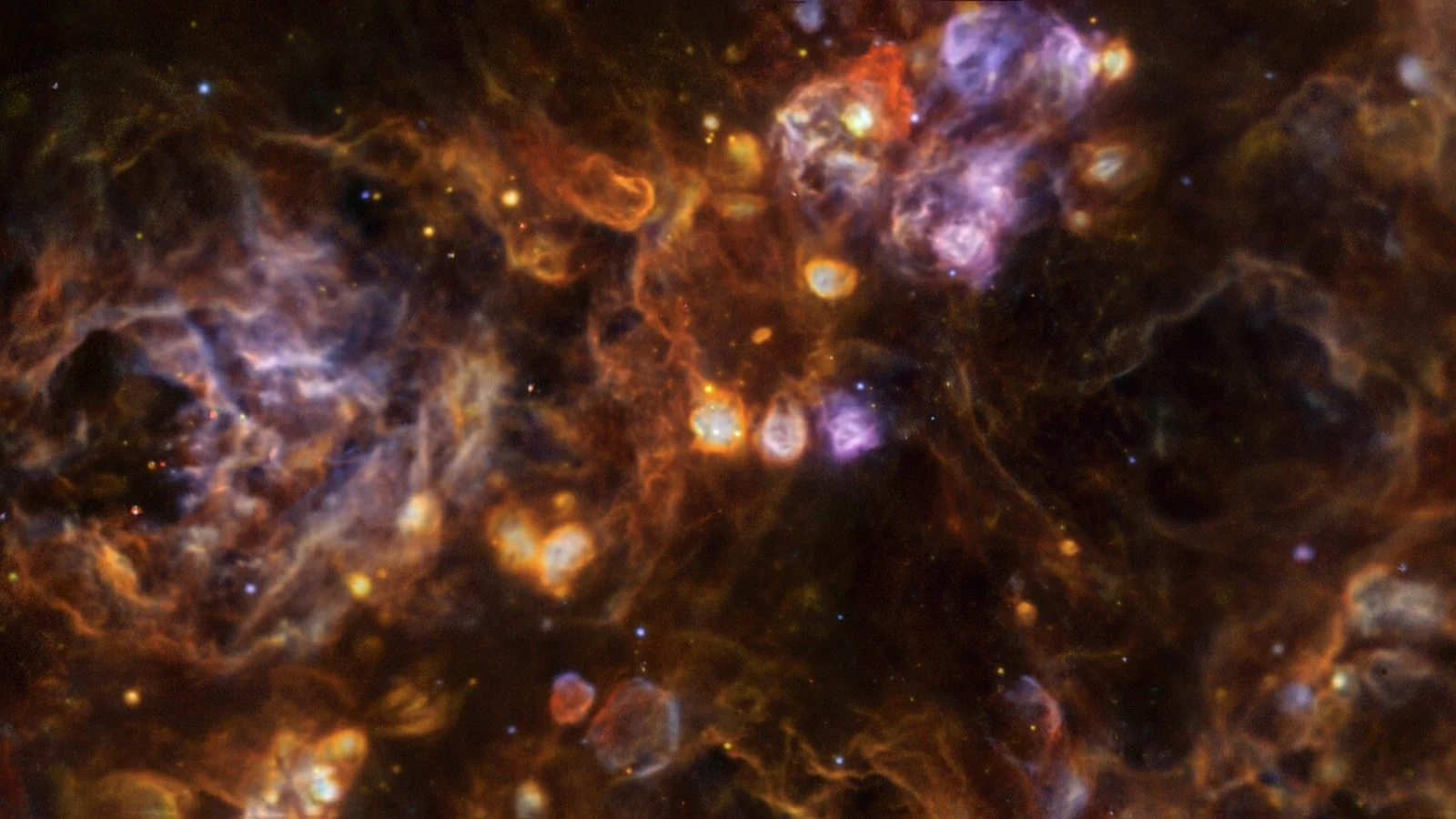
ESO’s Very Large Telescope captured a vibrant portrait of the Triangulum Galaxy (Messier 33) with the MUSE instrument, separating light into blue (oxygen), green (hydrogen) and red (sulfur) to reveal interstellar gas clouds around young stars and highlight star-forming regions (H II regions) in the galaxy.
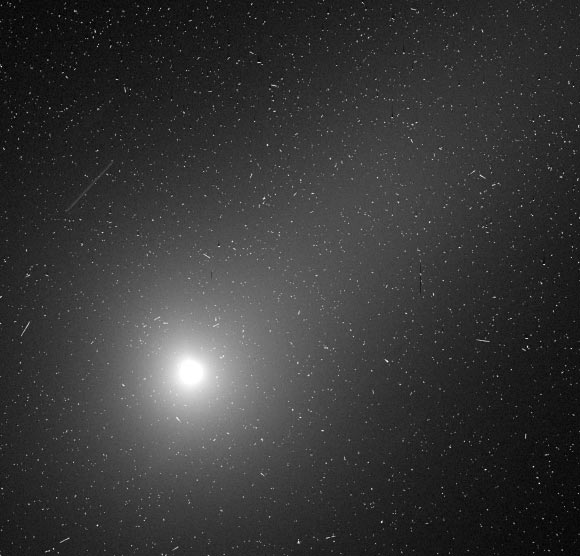
Astronomers using the VLT captured detailed spectra of interstellar comet 3I/ATLAS, detecting atomic nickel and cyanogen gas, revealing its dust-rich composition and unique physical processes, which provide insights into material from other star systems.
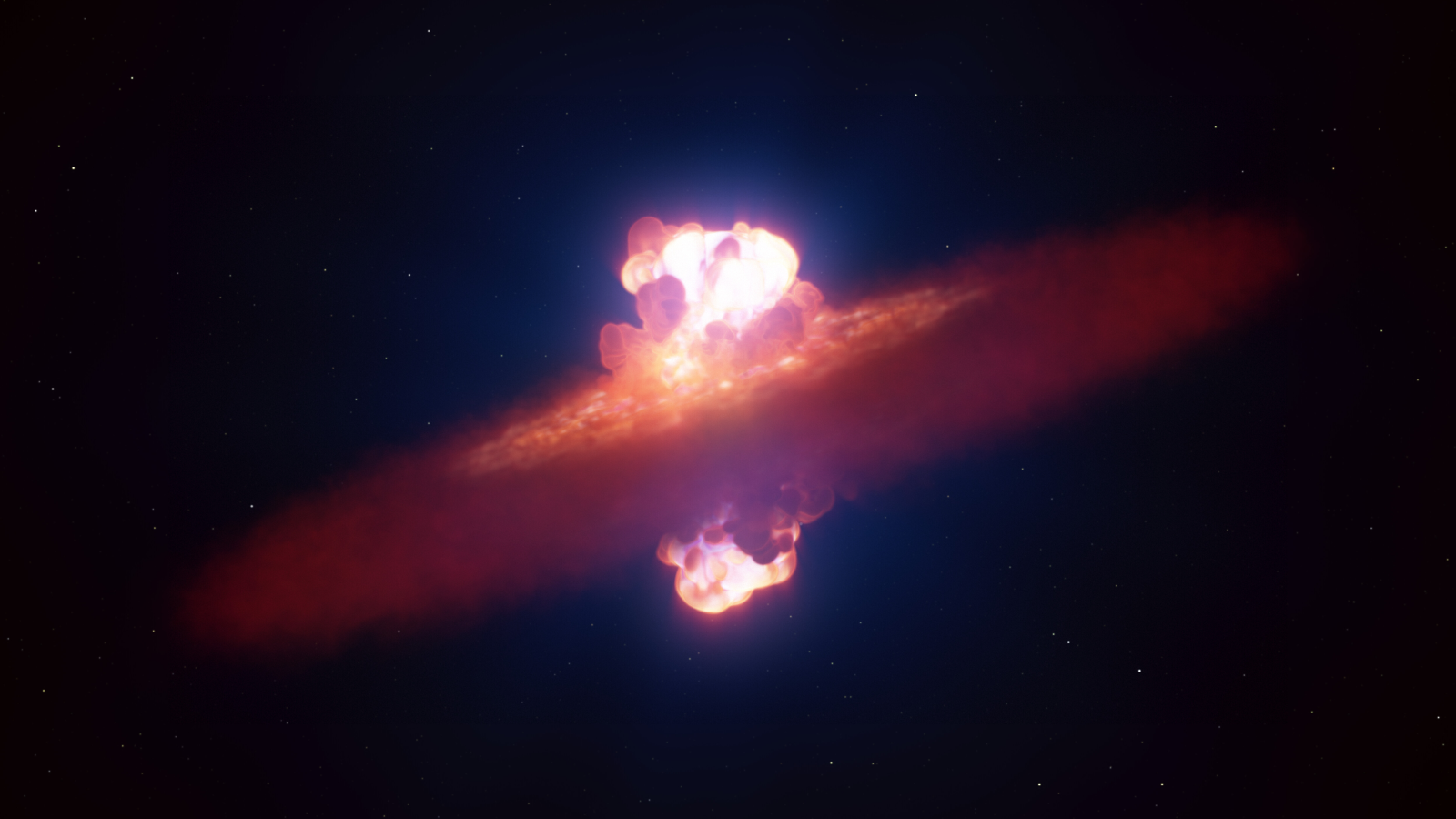
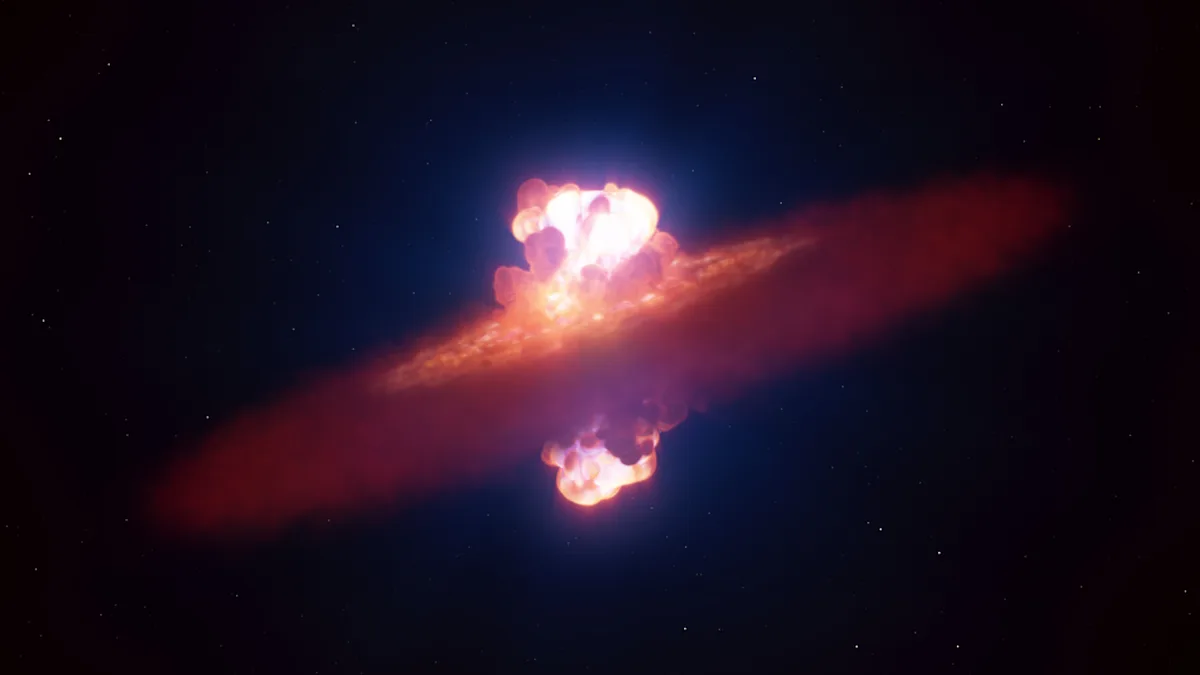
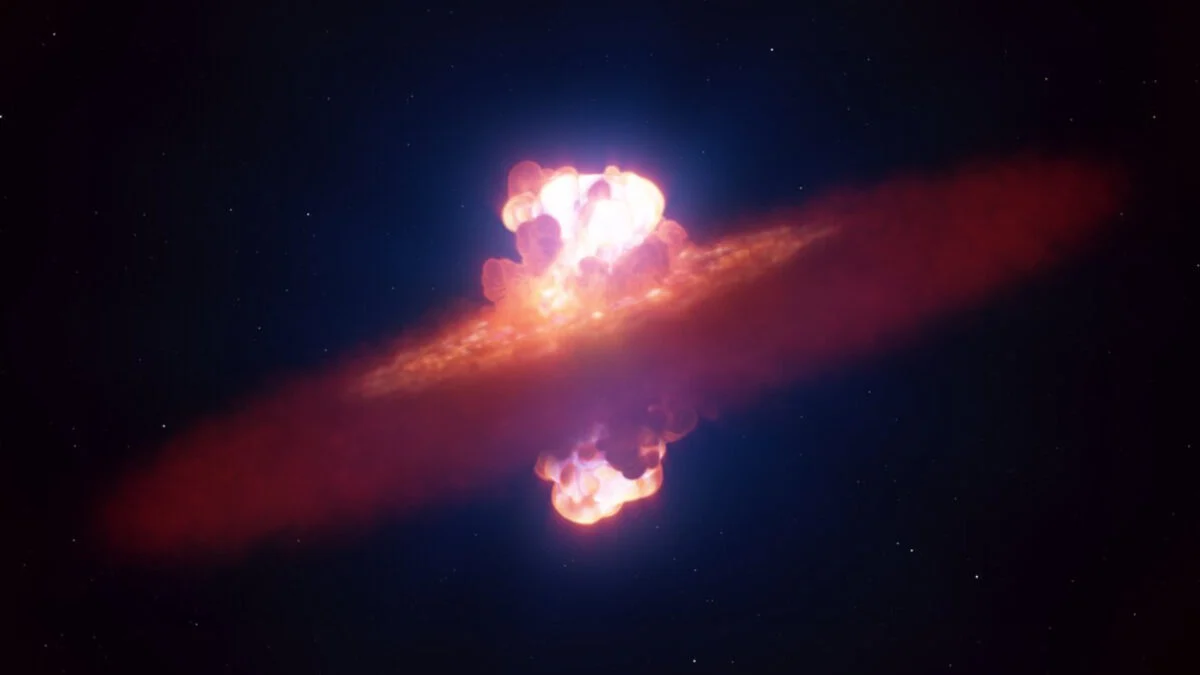
Scientists captured the first detailed shape of a supernova explosion, SN 2024ggi, revealing it was not perfectly spherical but stretched along one axis, challenging previous models of stellar death. Using the VLT and spectropolarimetry, they observed the initial shock wave's directional nature, providing new insights into how massive stars explode and die.
Scientists captured the first detailed image of a supernova's initial shape, revealing it was not perfectly spherical but stretched along one axis, challenging previous models of stellar explosions. The observation was made using the Very Large Telescope shortly after the explosion of SN 2024ggi in galaxy NGC 3621, providing new insights into the mechanics of star death.
Astronomers captured the earliest image of a supernova, SN 2024ggi, just 26 hours after explosion using ESO's VLT, revealing its olive-shaped geometry and providing new insights into the explosion mechanics of massive stars.
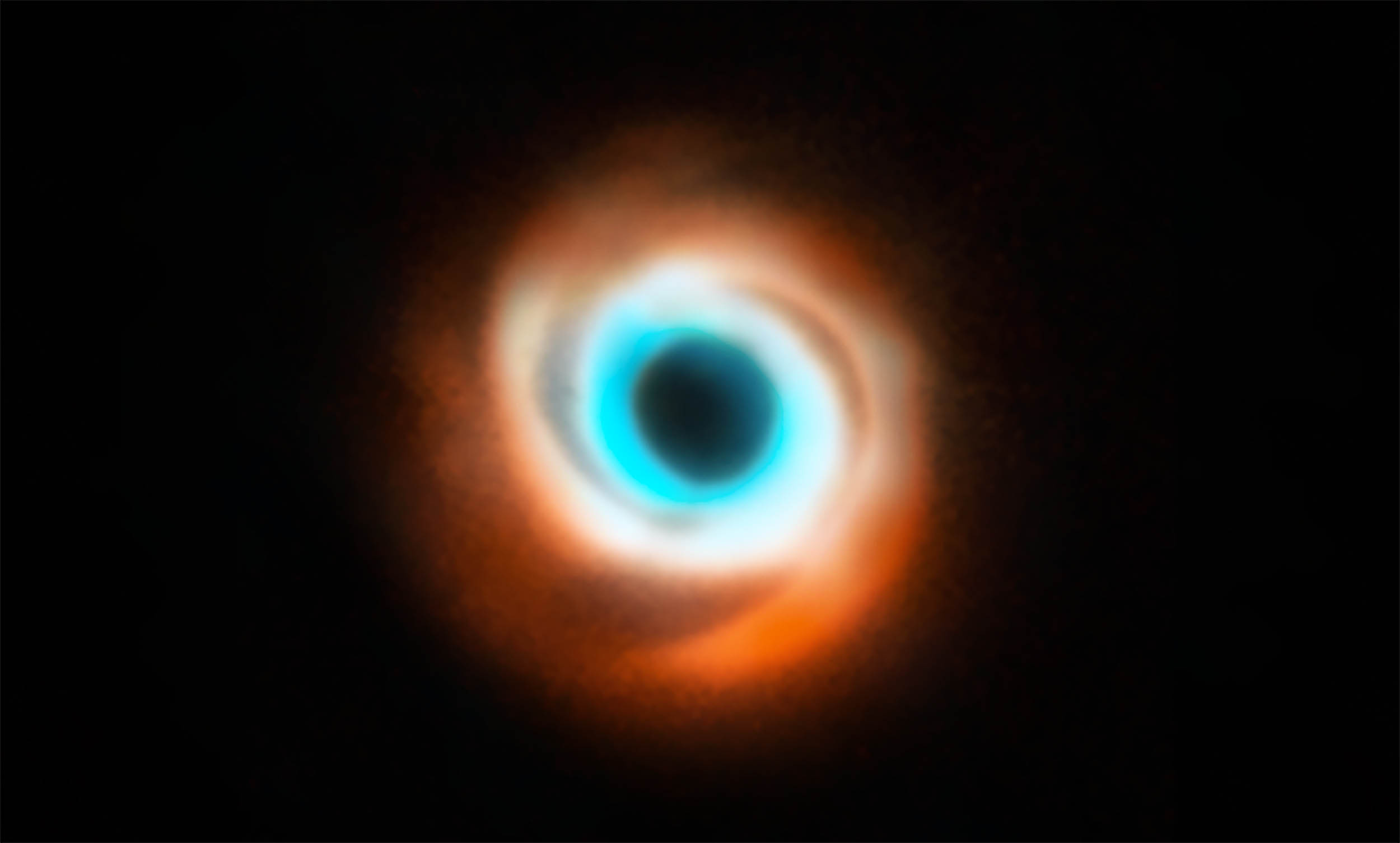
Astronomers using the European Southern Observatory’s VLT have captured the first direct images of a newborn planet around the star HD 135344B, revealing a planet still gathering mass and sculpting its dust disk, providing a rare glimpse into early planet formation.