Tag

Spacecraft

All articles tagged with #spacecraft

Palm-Sized AI Chip Gives Spacecraft Autonomous Brainpower
technology9 days ago

Palm-Sized AI Chip Gives Spacecraft Autonomous Brainpower

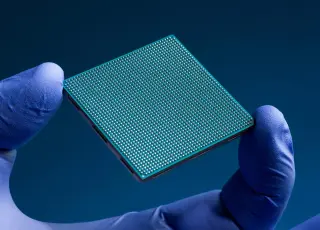
NASA and JPL are developing a radiation-hardened, palm-sized system-on-a-chip that could deliver hundreds of times more computing power than current spaceflight CPUs, enabling onboard AI, real-time data analysis, and autonomous decision-making for future missions. Early tests under radiation, thermal, and shock conditions are promising, with Microchip Technology as a partner and potential Earth applications.

Psyche's Mars moment: a crescent, not a solar eclipse
space12 days ago

Psyche's Mars moment: a crescent, not a solar eclipse

NASA's asteroid-hunting Psyche spacecraft captured a striking crescent image of Mars as it nears a May 15 flyby; the 'crescent' is sunlight reflecting off Mars' day side with atmospheric/dust effects, not an eclipse. The maneuver will also serve as a gravity assist and instrument calibration on Psyche's path to the asteroid 16 Psyche in 2029.

Venus Surface Relics: Study Suggests At Least Seven Probes Could Survive
space14 days ago

Venus Surface Relics: Study Suggests At Least Seven Probes Could Survive

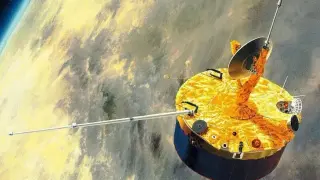
A Geoarchaeology study of 15 Venus missions (1965–1985) suggests at least seven probes may have endured Venus’ extreme surface conditions to become long‑lasting space artifacts. NASA’s GEER lab tests indicate titanium and aluminum parts could survive the harsh environment, while seals would fail and sulfuric acid clouds would deform others. The Pioneer Venus Day Probe is highlighted as a prime candidate for future imaging, with upcoming missions DAVINCI and VERITAS planned for 2030–2031.

HTV-X1 freighter departs the ISS after four-month stay
space-exploration2 months ago

HTV-X1 freighter departs the ISS after four-month stay

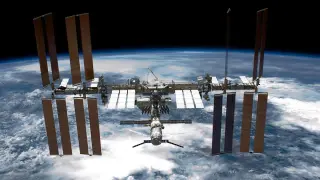
Japan’s HTV-X1 cargo spacecraft was released from the International Space Station by the Canadarm2 at 12 p.m. EST on March 6, 2026, ending a four‑month stay and remaining in orbit as a platform for JAXA experiments before disposing of trash during reentry. HTV-X1 is the first of its kind and successor to the HTV, which launched in October 2025 with about 9,000 pounds of supplies; the ISS docks also host Russia’s Progress, Northrop Grumman’s Cygnus, and SpaceX’s Dragon freighters.

Solar Oberth Maneuver Could Put a Spacecraft on Track to Intercept Interstellar Comet 3I/ATLAS
astronomy3 months ago

Solar Oberth Maneuver Could Put a Spacecraft on Track to Intercept Interstellar Comet 3I/ATLAS

Space.com reports a team proposes using a solar Oberth maneuver near 3.2 solar radii to launch a ~500 kg spacecraft in 2035, aided by a Jupiter gravity assist and heavy boosters, to perform a high-speed flyby of interstellar comet 3I/ATLAS by around 2085 at about 732 AU from the Sun. The interceptor would be heat-shielded and not intended to enter orbit, making it a close-proximity encounter rather than a rendezvous. While the concept is theoretically feasible and could push the boundaries of solar-system exploration, researchers note more practical, near-term approaches (like ESA’s Comet Interceptor) could target interstellar objects sooner.

Mach-25 Return: Varda W-1 Lands After Pharma-Driven Space Mission
space3 months ago

Mach-25 Return: Varda W-1 Lands After Pharma-Driven Space Mission

A commercial Varda Space Industries W-1 capsule reentered Earth's atmosphere at Mach 25 and landed at the Utah Test and Training Range after a mission to produce ritonavir crystals for pharmaceutical processing, a first for a commercial spacecraft under FAA Part 450 licensing; the mission included capsule separation from its satellite and onboard footage of the dramatic reentry.

NASA to re-establish contact with silent MAVEN Mars orbiter after solar interference
space4 months ago

NASA to re-establish contact with silent MAVEN Mars orbiter after solar interference

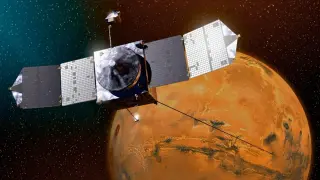
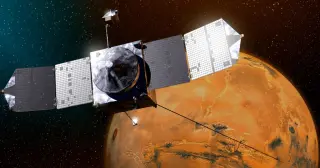
NASA will attempt to re-contact MAVEN after a month of radio silence caused by the sun’s conjunction between Earth and Mars. MAVEN, launched in 2013 to study Mars’ upper atmosphere and to relay data for rovers, went silent after Dec. 6 as it emerged from behind Mars; the solar conjunction ended Jan. 16 and NASA’s Deep Space Network is attempting to resume communications. Recovery remains uncertain, though MAVEN has enough fuel to stay in orbit until about 2030 and the outcome would impact Mars science and related missions such as Mars Sample Return.

NASA's ESCAPADE Probes to Delay Mars Mission by a Year
space-exploration4 months ago

NASA's ESCAPADE Probes to Delay Mars Mission by a Year

NASA's twin ESCAPADE probes were launched into a loiter orbit near Earth's Lagrange point 2 to analyze solar wind interactions with Mars' atmosphere. They will use Earth's gravity for a slingshot to Mars in late 2026, with a planned orbit insertion in 2027. The extra year in space adds some wear but is deemed manageable, serving as a template for future Mars missions and colonization efforts.

NASA Mars Orbiter Possibly Out of Commission
space4 months ago

NASA Mars Orbiter Possibly Out of Commission

NASA's MAVEN spacecraft orbiting Mars has been unresponsive since December 6, with recent data suggesting it was spinning unexpectedly, and efforts to re-establish contact are ongoing, but prospects seem uncertain as the spacecraft has been operational for over a decade studying Mars' atmosphere.

NASA's Mars and Interstellar Missions Face Communication Blackouts During Solar Conjunction
science4 months ago

NASA's Mars and Interstellar Missions Face Communication Blackouts During Solar Conjunction

NASA's MAVEN spacecraft orbiting Mars has been unresponsive since December 6, with efforts to re-establish contact ongoing. The spacecraft, which has been studying Mars' atmosphere for over a decade, appears to have experienced an unexpected spin, and communication attempts are delayed until mid-January due to planetary alignment. The mission's status remains uncertain, raising concerns about its future.

NASA's MAVEN Mission Faces Communication Challenges Amid Mars Operations
space5 months ago

NASA's MAVEN Mission Faces Communication Challenges Amid Mars Operations

NASA's MAVEN orbiter has lost contact and is tumbling, with its exact location unknown, as the agency prepares for a solar conjunction period during which communication with Mars missions will be impossible until January 16, 2026. Despite attempts using the Curiosity rover's Mastcam, MAVEN was not detected, and the cause of the issue remains unclear, though it may involve guidance or control system problems. NASA plans to resume contact efforts after the conjunction.

NASA's Artemis II Crew Prepares for Moon Mission with Countdown Rehearsals
science5 months ago

NASA's Artemis II Crew Prepares for Moon Mission with Countdown Rehearsals

NASA is preparing for the Artemis 2 mission, which aims to send four astronauts around the Moon and back, potentially as early as February 2024, marking the first human lunar journey since Apollo 17. The crew has completed a dress rehearsal, and final preparations are underway despite some delays caused by technical issues. The mission will not land on the Moon but will set the stage for future lunar exploration.