Tag

Very Large Telescope

All articles tagged with #very large telescope

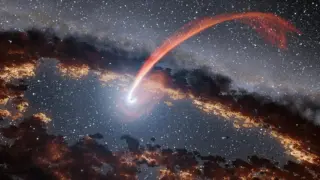
Black Holes Regurgitate Their Meals: Real-Time Gas Expulsions Revealed
space-and-spaceflight29 days ago

Black Holes Regurgitate Their Meals: Real-Time Gas Expulsions Revealed

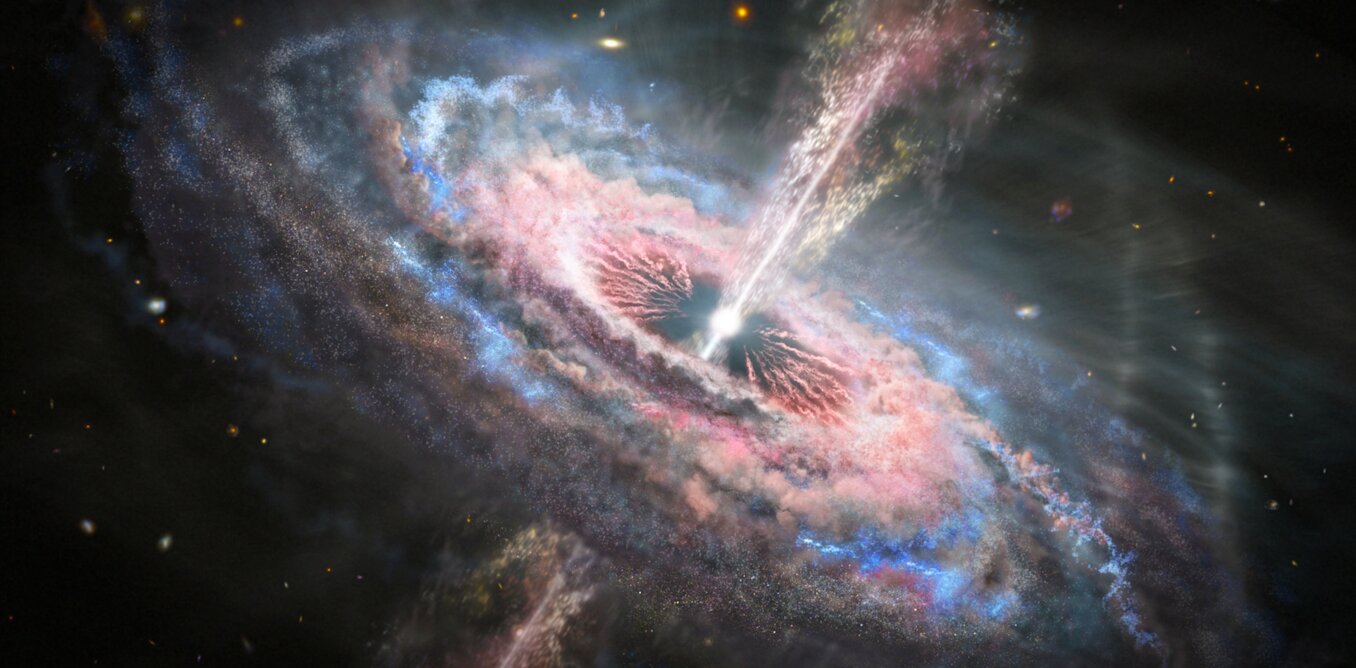
Astronomers studying a 2023 tidal disruption event around the supermassive black hole Swift J1727.8-1613 found that a substantial fraction of the star’s material is expelled back into space after being drawn in, suggesting black holes can regurgitate matter and that the outflow could rival the amount swallowed, challenging the idea that these cosmic behemoths simply gobble everything.
44 Nysa Revealed: the first triple‑lobed belt asteroid with a moon
space1 month ago

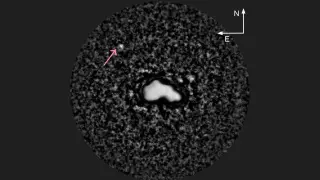
44 Nysa Revealed: the first triple‑lobed belt asteroid with a moon

Astronomers using the Large Binocular Telescope and the Very Large Telescope have imaged 44 Nysa, the first known triple‑lobed asteroid in the main belt between Mars and Jupiter, which also hosts a ~1 km moon, S/2026 (44) 1. The unusual shape likely results from a contact-trinary configuration or a past collision, and tracking the moon’s orbit will help determine Nysa’s mass and density and shed light on the inner solar system’s formation 4.5 billion years ago.

Betelgeuse's Secret Twin Emerges: Betelgeuse B Unveiled as a Companion
astronomy1 month ago

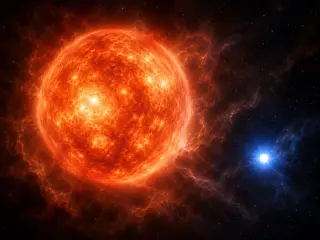
Betelgeuse's Secret Twin Emerges: Betelgeuse B Unveiled as a Companion

A sharp image from ESO's Very Large Telescope reveals a faint companion near Betelgeuse, named Betelgeuse B: a young, hot star about 2.6–3.1 solar masses orbiting the red supergiant at roughly the Saturn–Sun distance. The finding, supported by two independent image-processing methods and strong statistical significance, suggests Betelgeuse is a binary/multiple system; although orbital motion still needs to be observed to confirm binding, the result has important implications for how massive stars form and how their winds and mass loss operate.

Ancient interstellar traveler: 3I/ATLAS likely formed around an ancient star
science1 month ago

Ancient interstellar traveler: 3I/ATLAS likely formed around an ancient star

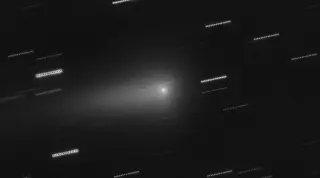
Scientists using the VLT measured carbon and nitrogen isotopic ratios in cyanide around interstellar comet 3I/ATLAS and conclude it formed in the outer regions of an old, low-metallicity star system—likely much older than the Sun—making it one of the Galaxy’s oldest known objects; future observations with the ELT will study more interstellar visitors.

Bond-Style Desert Lair Now a Hub for World-Class Astronomy
science2 months ago

Bond-Style Desert Lair Now a Hub for World-Class Astronomy

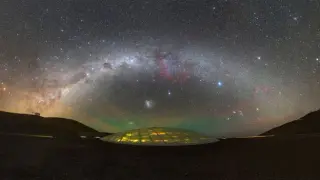
In Chile’s Atacama Desert, the Residencia is a desert-blending, climate-controlled lodging for astronomers near ESO’s Paranal Observatory and the VLT. It’s famously film-friendly (a Quantum of Solace finale was shot there) but functions as a serious research hub with strict light-pollution controls, high-altitude living (no alcohol), and a cycle of night/day shifts as engineers work on the ELT nearby.

Artificial stars rise over Chile as VLT lasers power adaptive optics
astronomy6 months ago

Artificial stars rise over Chile as VLT lasers power adaptive optics

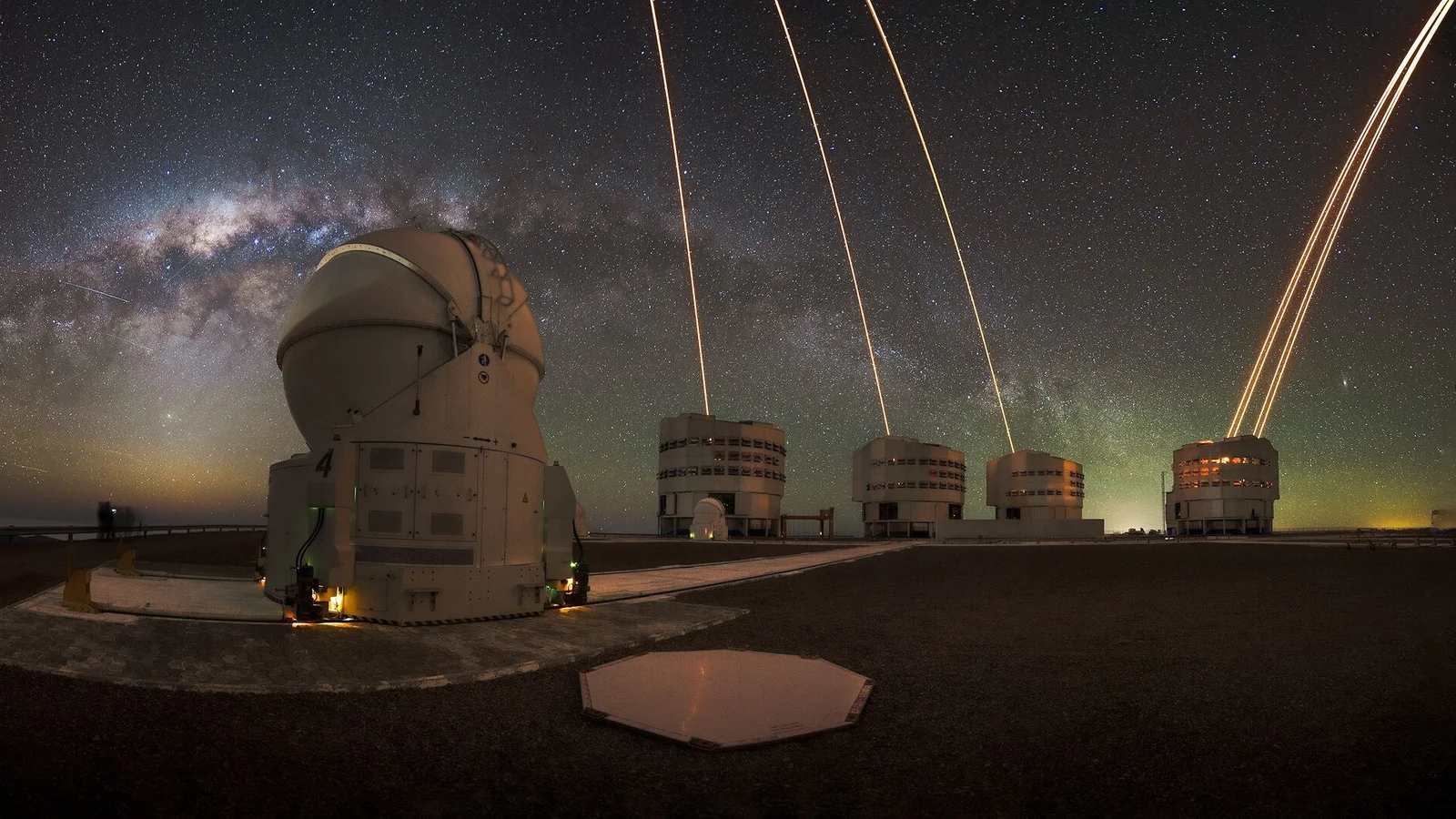
Space.com highlights a European Southern Observatory photo showing the Milky Way over Chile’s Paranal Observatory while four Unit Telescopes of the Very Large Telescope fire lasers high in the atmosphere to create artificial guide stars. These glow-displays let adaptive optics systems correct for Earth’s atmospheric blur in real time, sharpening observations. The UTs Antu, Kueyen, Yepun and Melipal work together (Melipal’s laser use dates to 2016; the other three were added in December 2025 to support VLTI and GRAVITY+), showcasing the VLT’s capability to peer deeper into the universe as lasers illuminate the sky above Chile.

First-Ever Close-Up of Dying Star Beyond Our Galaxy Captured
science1 year ago

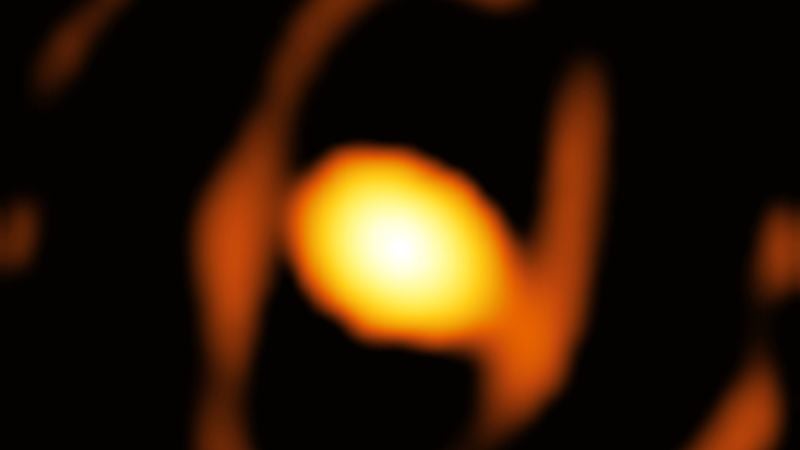
First-Ever Close-Up of Dying Star Beyond Our Galaxy Captured

Astronomers have captured the first close-up image of the red supergiant star WOH G64, located 160,000 light-years away in the Large Magellanic Cloud, as it nears the end of its life. Using the Very Large Telescope Interferometer, researchers observed the star shedding gas and dust, forming an egg-shaped cocoon, a precursor to a supernova explosion. This discovery offers a rare glimpse into the life cycle of massive stars, with WOH G64 being one of the largest known, potentially visible to the naked eye if it explodes.

5 Captivating Galaxy Images Reveal Cosmic Evolution
science1 year ago

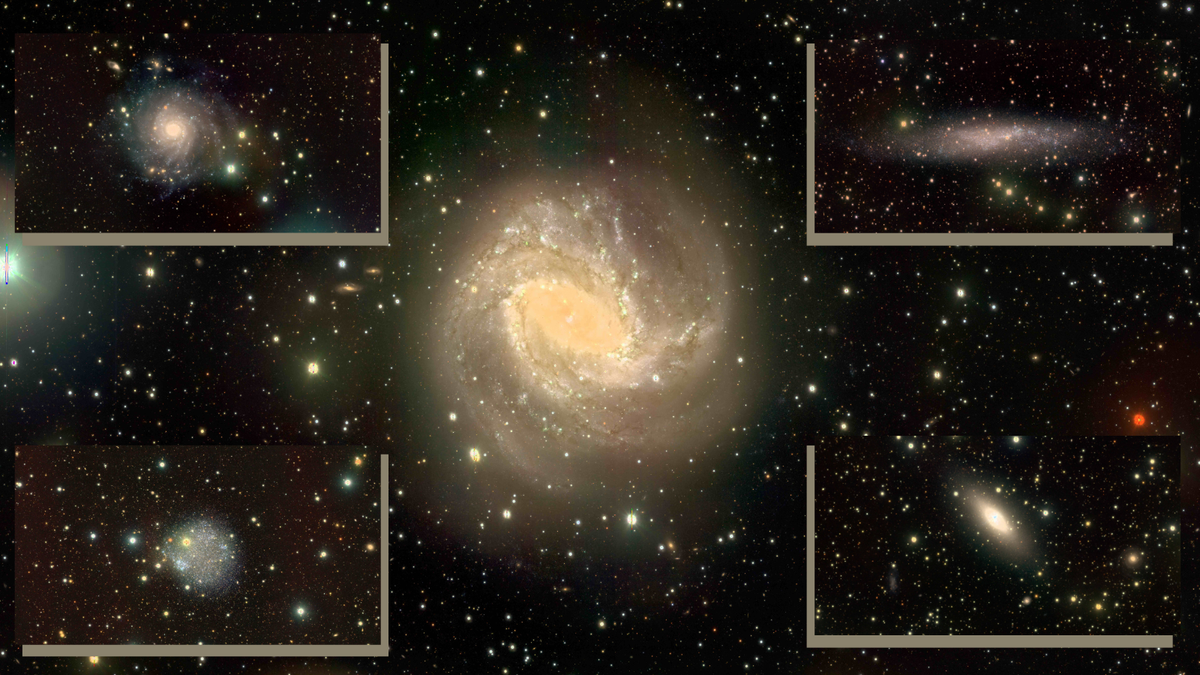
5 Captivating Galaxy Images Reveal Cosmic Evolution

Astronomers using the Very Large Telescope in Chile have captured detailed images of five local galaxies, revealing their structures and star distributions. These observations, part of the VST-SMASH project, aim to enhance understanding of cosmic evolution and galaxy formation. The images, which include galaxies like IC 5332 and the Southern Pinwheel, are also being studied alongside data from the Euclid space telescope. The project highlights the VLT's capability in observing galaxies with low surface brightness and contributes to the study of galactic interactions and cosmic structure formation.

"Unveiling Planet Formation: Stunning Images and Groundbreaking Survey Capture Birth of Worlds"
astronomy2 years ago

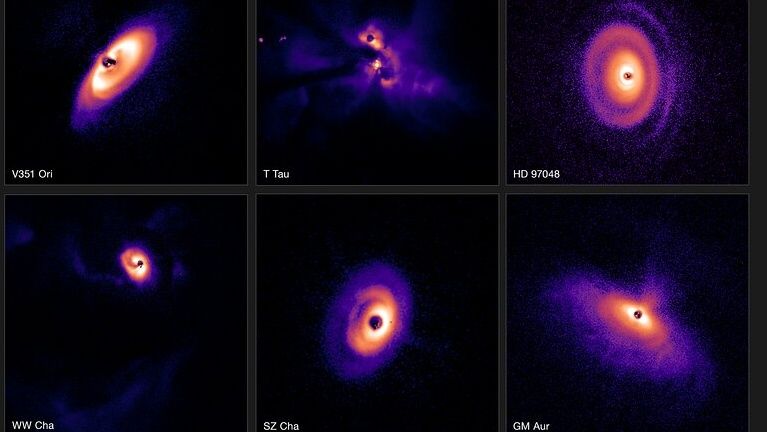
"Unveiling Planet Formation: Stunning Images and Groundbreaking Survey Capture Birth of Worlds"

The Very Large Telescope in Chile has captured stunning images revealing unique insights into planet formation around young stars, showcasing emerging planet systems that resemble miniature galaxies rather than debris disks. These images, one of the largest collections of its kind, frame over 80 young stars and their planet-forming disks in three major star-forming regions of the Milky Way galaxy. The observations present a shift in the field of study, offering astronomers a unique opportunity to study how planets are born and revealing a wide variety of planet-forming disks with significant differences based on their respective star-forming regions. The researchers hope to obtain more detailed images with the new Extremely Large Telescope in the future.

"Revealing the Weird and Wonderful Ways Planets Form in Galactic Nurseries"
astronomy2 years ago

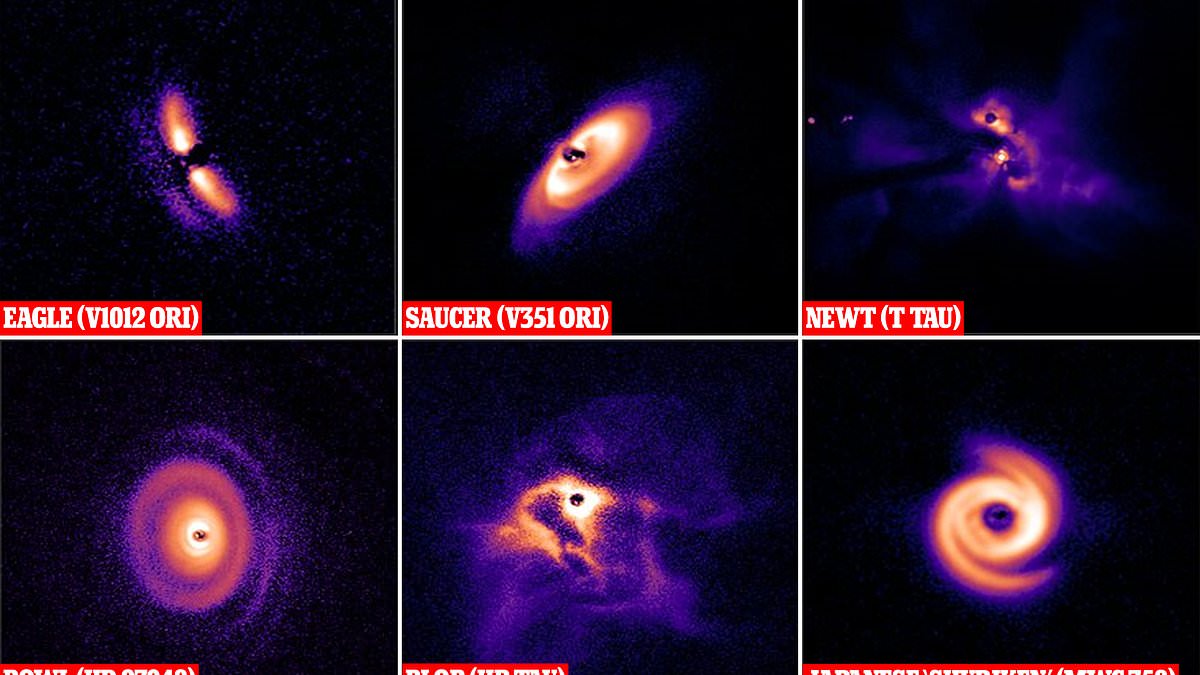
"Revealing the Weird and Wonderful Ways Planets Form in Galactic Nurseries"

Stunning new images released by the European Southern Observatory's Very Large Telescope reveal the incredible variety of planet-forming discs surrounding young stars in the Milky Way, with swirling rings of gas and dust resembling bizarre objects like an eagle spreading its wings or a Japanese 'shuriken' throwing weapon. These planet-forming or 'protoplanetary' discs, located hundreds of light-years away, represent one of the largest surveys of their kind and show extraordinary diversity, with some appearing as perfect circles and others as asymmetrical blobs. The images, captured in infrared light, provide fascinating insights into star systems and suggest the possibility of massive planets embedded within the discs, potentially causing them to warp and become misaligned.

"Unveiling the Universe's Most Voracious and Dazzling Black Hole"
astronomy2 years ago

"Unveiling the Universe's Most Voracious and Dazzling Black Hole"

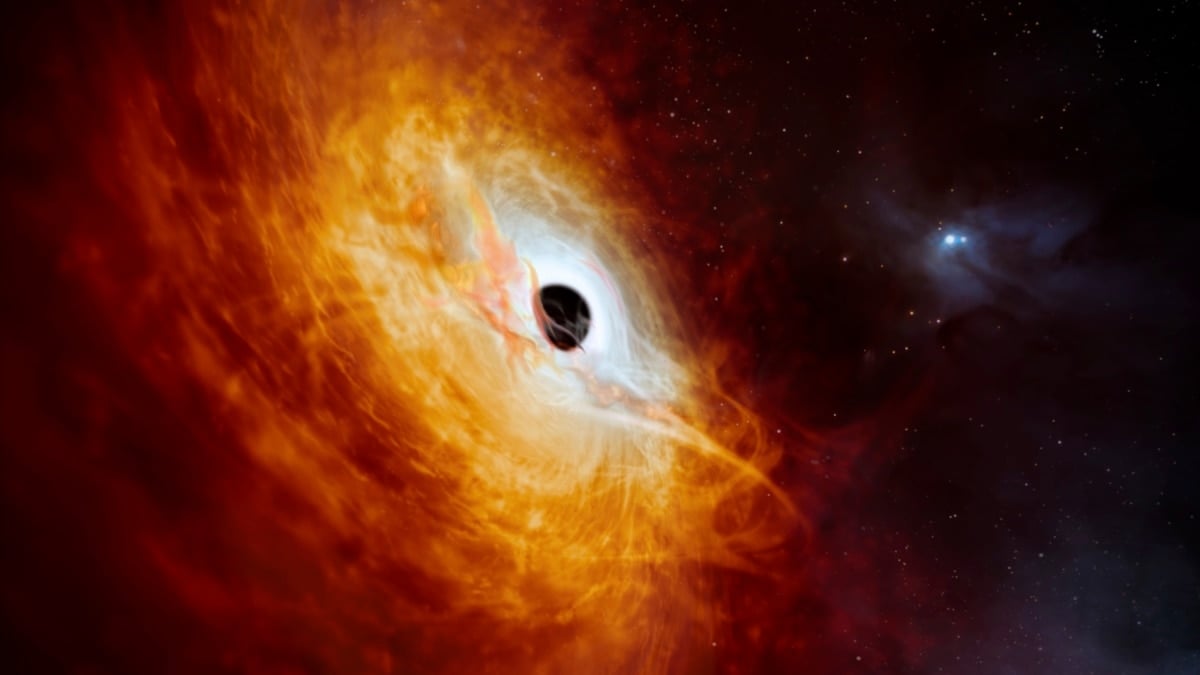
The European Southern Observatory's Very Large Telescope has discovered the brightest and fastest-growing quasar, challenging current understanding of galaxy formation in the early universe. The quasar, J0529-4351, has a black hole equivalent to 17 billion suns and is growing rapidly, raising questions about how it could have reached such size in less than two billion years after the Big Bang. This discovery prompts a reevaluation of early universe models and will be further studied using advanced instruments like Gravity+ and the Extremely Large Telescope.

"Unveiling the Brightest Object in the Universe: A 500 Trillion Times Brighter Than the Sun"
astronomy2 years ago

"Unveiling the Brightest Object in the Universe: A 500 Trillion Times Brighter Than the Sun"

Astronomers have possibly discovered the brightest object ever observed in the universe, a distant quasar estimated to be at least 500 trillion times brighter than the sun. The quasar, identified by Australian researchers using the Very Large Telescope and Siding Spring Observatory, is powered by a supermassive black hole more than 17 billion times larger than our sun and is located about 12 billion light years away. The finding, reported in Nature Astronomy, could provide important insights into the early universe and the growth of supermassive black holes.

"Stunning Photo Captured by Very Large Telescope Reveals Milky Way's Star-Studded Core"
astronomy2 years ago

"Stunning Photo Captured by Very Large Telescope Reveals Milky Way's Star-Studded Core"

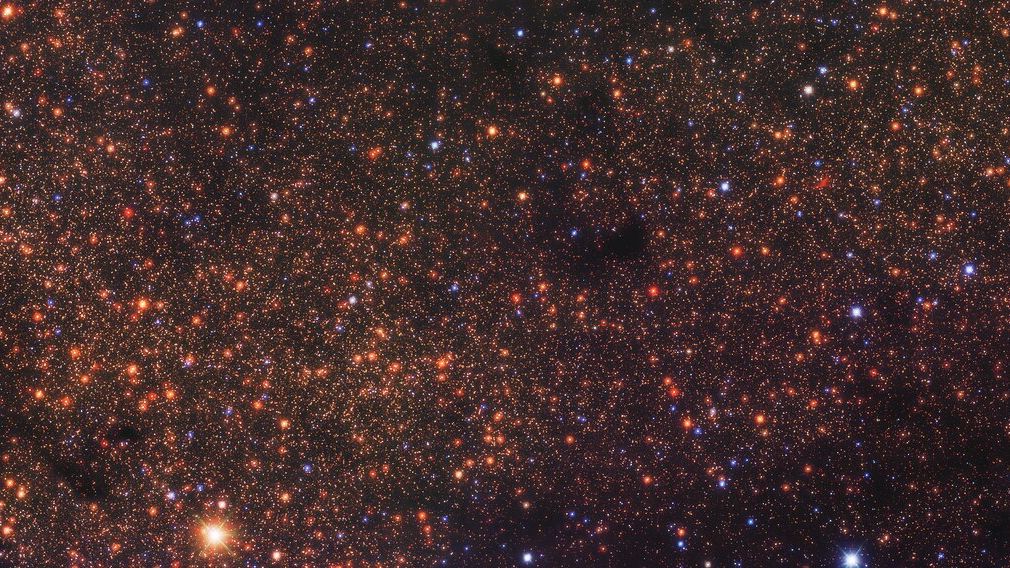
The European Southern Observatory's Very Large Telescope captured an infrared image of Sagittarius C, a star-forming region at the center of the Milky Way, revealing a densely packed population of stars. This region, located near the galactic center, is believed to be a prolific stellar nursery, with evidence suggesting the presence of many more young stars than currently observed. The VLT data indicates that Sagittarius C is rich in young stars, making it a promising candidate for hosting newly formed stars and providing astronomers with new regions to search for obscured young stars.

"Stunning Photo Captured by Very Large Telescope Reveals Milky Way's Star-Studded Core"
astronomy2 years ago

"Stunning Photo Captured by Very Large Telescope Reveals Milky Way's Star-Studded Core"

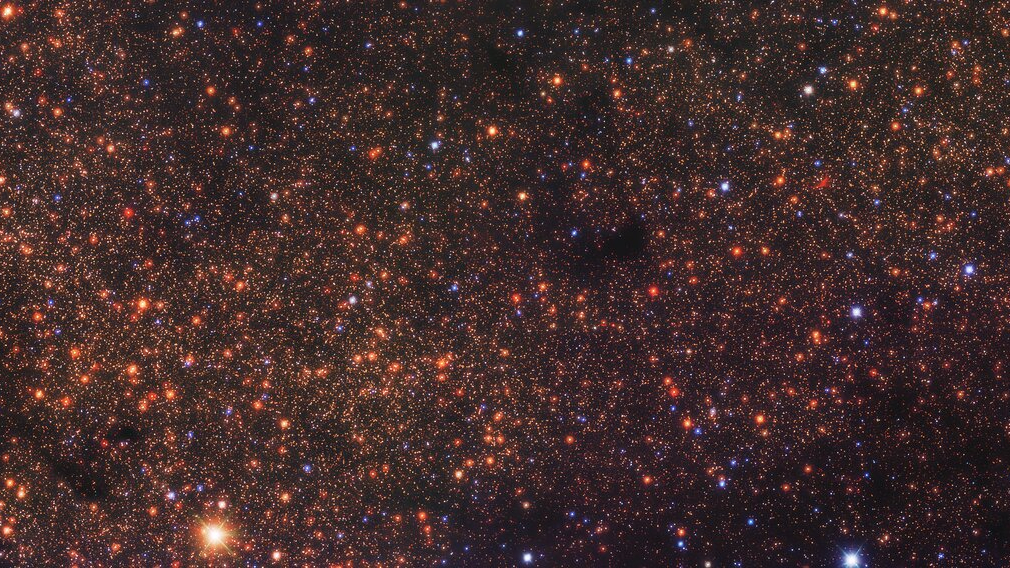
The European Southern Observatory's Very Large Telescope has captured a stunning infrared image of the star-forming region Sagittarius C at the center of the Milky Way, revealing thousands of distant stars. This region, located near the galaxy's central supermassive black hole, is believed to be a prolific stellar nursery, with evidence suggesting the presence of many more young stars than currently observed. Using the HAWK-I infrared camera, astronomers were able to peer through clouds of dust and gas to uncover the densely packed star population of Sagittarius C, making it a promising candidate for hosting newly formed stars.