Tag

Metformin

All articles tagged with #metformin

Metformin and cancer: no broad benefit, only niche signals
health6 days ago

Metformin and cancer: no broad benefit, only niche signals

A review of recent evidence shows metformin does not provide broad cancer prevention or survival benefits. Large trials (MAST in low‑risk prostate cancer; STAMPEDE) and meta-analyses report no overall improvement in progression-free or overall survival, though some small studies hint at preventive effects in select high‑risk precancerous conditions. Observational links are likely biased, and metformin may even blunt exercise‑related longevity gains. The takeaway: metformin is not a universal cancer solution; any benefit is likely limited to poorly defined, narrow contexts that require rigorous, targeted trials.

Healthy lifestyle outpaces metformin in long-term multimorbidity prevention
health25 days ago

Healthy lifestyle outpaces metformin in long-term multimorbidity prevention

New analysis of the Diabetes Prevention Program (DPP) and its 21-year follow-up (DPPOS) found that a lifestyle intervention—low-fat, low-calorie diet plus at least 150 minutes of weekly activity—was more effective at reducing multimorbidity over two decades than metformin, which performed no better than placebo; among Medicare participants, 82% in the lifestyle group developed multiple chronic conditions versus 85% on metformin and 87% on placebo.

Metformin May Boost Lifespan for Older Women, Study Suggests
science1 month ago

Metformin May Boost Lifespan for Older Women, Study Suggests

A long-term, observational study of 438 postmenopausal women with type 2 diabetes found that those who started metformin had about a 30% lower risk of dying before age 90 compared with those starting a sulfonylurea. The researchers caution that the design cannot prove causation, with no placebo group and limited generalizability to men or younger people, but the roughly 14–15 years of follow-up adds evidence to metformin’s potential anti-aging effects and the geroscience hypothesis, warranting randomized trials.

Metformin’s Hidden Target: The Gut Takes Center Stage
science1 month ago

Metformin’s Hidden Target: The Gut Takes Center Stage

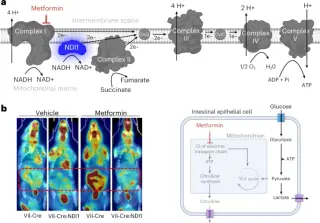
New Northwestern University research in mice shows metformin mainly acts in the intestine, lowering blood sugar by reducing mitochondrial activity in gut cells and prompting them to burn more glucose, challenging the idea that the liver is the primary target. Published in Nature Metabolism, the study links berberine to a similar gut pathway and uses engineered mice to show that blocking mitochondrial complex I in the gut is central to metformin’s effect, with implications for gut-targeted diabetes therapies.

Gut-Targeted Complex I Blockade Reveals Metformin’s Glucose-Lowering Mechanism
science2 months ago

Gut-Targeted Complex I Blockade Reveals Metformin’s Glucose-Lowering Mechanism

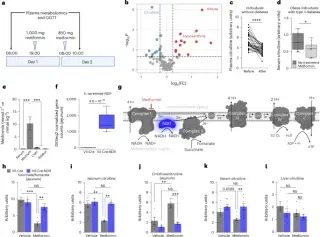
A Nature Metabolism study shows metformin lowers glucose by acutely inhibiting mitochondrial complex I specifically in intestinal epithelium, reducing citrulline production and boosting GDF15, thereby reprogramming the gut into a glucose sink that takes up glucose and converts it to lactate; phenformin and berberine act via the same intestine-specific Complex I mechanism, and the effect depends on short-term bolus exposure rather than chronic dosing.

Diabetes drug metformin hints at long-term HIV control after stopping therapy
science2 months ago

Diabetes drug metformin hints at long-term HIV control after stopping therapy

New immunology research links specific immune-cell patterns and two genes (DDIT4 and ZNF254) to longer ART-free control of HIV; metformin can activate one of these mechanisms to keep HIV dormant, delaying or potentially preventing rebound after treatment interruption. Analyses of ART-interruption trials showed higher levels of stem cell–memory CD8+ T cells and certain natural killer cells associated with slower rebound. This supports a block-and-lock strategy using metformin or similar drugs, with preclinical and clinical testing planned by the HOPE Collaboratory to pursue HIV silencing while reducing inflammation.

Metformin Reimagined: A 100-Year-Old Drug Tackles Hyperemesis Gravidarum
health2 months ago

Metformin Reimagined: A 100-Year-Old Drug Tackles Hyperemesis Gravidarum

A health feature follows researchers and patients exploring metformin, a diabetes drug, as a potential preventive treatment for hyperemesis gravidarum (HG) by modulating the nausea-related hormone GDF15. Early observational data suggest taking metformin before conception may significantly reduce HG risk, with clinical trials in the works. The drug’s affordability, safety history, and broad off-label use—ranging from fertility in PCOS to obesity and potential antiaging effects—have spurred widespread interest, though more rigorous research is needed. The piece also shares the lived experience of HG and a patient hopeful that metformin could improve future pregnancies.

New Brain Mechanism Reveals How Metformin Lowers Blood Sugar
science2 months ago

New Brain Mechanism Reveals How Metformin Lowers Blood Sugar

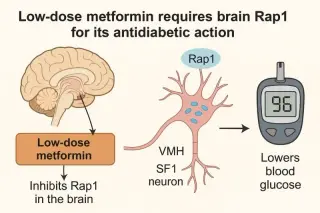
Scientists discovered that metformin lowers blood sugar not only via the liver and gut but also by acting in the brain. In mice, metformin inhibits Rap1 in the ventromedial hypothalamus, activating SF1 neurons and reducing glucose; surprisingly small brain doses produced effects, and removing Rap1 from VMH abolished metformin’s action, illustrating a distinct brain pathway that could enable lower-dose, brain-targeted diabetes therapies in the future.

Metformin's Brain Pathway Unveiled, Paving Way for Next-Gen Diabetes Treatments
science3 months ago

Metformin's Brain Pathway Unveiled, Paving Way for Next-Gen Diabetes Treatments

New research shows metformin can act in the brain, reaching the ventromedial hypothalamus and inhibiting Rap1 signaling in SF1 neurons to help regulate glucose in mice, a mechanism distinct from its liver and gut effects. When Rap1 was removed, metformin no longer helped diabetes-like symptoms, suggesting a brain pathway. This could lead to brain-targeted diabetes therapies and broaden metformin’s uses, though human studies are needed and side effects like GI distress and kidney risk remain concerns; the drug is also linked to aging benefits.

Old Diabetes Drug Metformin Shows Brain-Led Control of Metabolism
health3 months ago

Old Diabetes Drug Metformin Shows Brain-Led Control of Metabolism

New preclinical work links metformin’s metabolic effects to the brain, showing it acts in the hypothalamus via the Rap1 pathway to enhance central insulin signaling and reduce liver glucose production in mice. This brain-first mechanism could reshape diabetes and obesity therapies, informing drug combinations and trial endpoints, but human validation is needed and questions remain about dosing, blood–brain barrier crossing, and interactions with AMPK.

Budget-Friendly Metformin Cuts Insulin Dose in Type 1 Diabetes, Trial Shows
health4 months ago

Budget-Friendly Metformin Cuts Insulin Dose in Type 1 Diabetes, Trial Shows

A 26-week randomized trial (INTIMET) in 40 adults with long-standing type 1 diabetes found metformin did not improve insulin resistance or glucose control, but reduced total daily insulin requirements by about 12% compared with placebo, suggesting metformin may ease the insulin burden rather than reverse insulin resistance; researchers are exploring whether gut microbiome interactions explain the effect.

Metformin May Extend Longevity for Older Women, Study Finds
science4 months ago

Metformin May Extend Longevity for Older Women, Study Finds

A study of 438 postmenopausal women with type 2 diabetes suggests that starting metformin is associated with about a 30% lower risk of dying before age 90 compared with sulfonylurea therapy, hinting at metformin's potential aging‑related benefits. However, the findings are observational (not randomized), with no placebo group and a modest sample size; the long follow‑up of 14–15 years strengthens the signal but cannot prove causality, and randomized trials are needed to confirm longevity effects.