The 2020 collapse of the Arecibo Observatory’s 1,000-foot dish after main cables failed marked the end of 57 years of discoveries; the NSF elected not to rebuild and redirected the site to a STEM education center (Arecibo C3), preserving the heritage while repurposing the valley for education.
Scientists used the MIT Lincoln Laboratory radar to emit signals that bounce off orbital debris, with reflections received by the Lovell Telescope at Jodrell Bank as part of the Long Baseline Multistatic Radar (LBMR) project. This real-time method measures how far debris is and how quickly it’s moving using a single antenna, and aims to expand to multi-telescope, three‑dimensional tracking, helping monitor the growing risk from space junk in both low Earth orbit and geostationary orbit as satellite traffic rises.
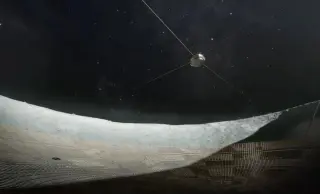
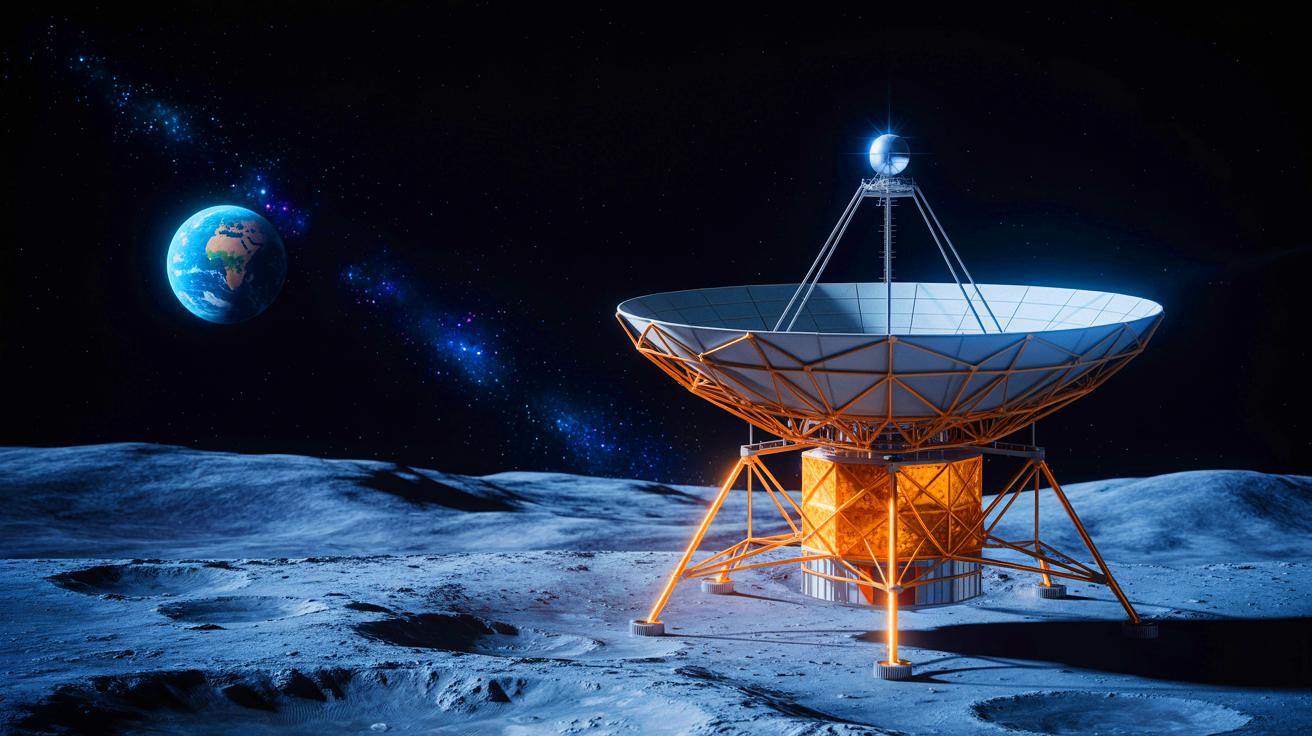
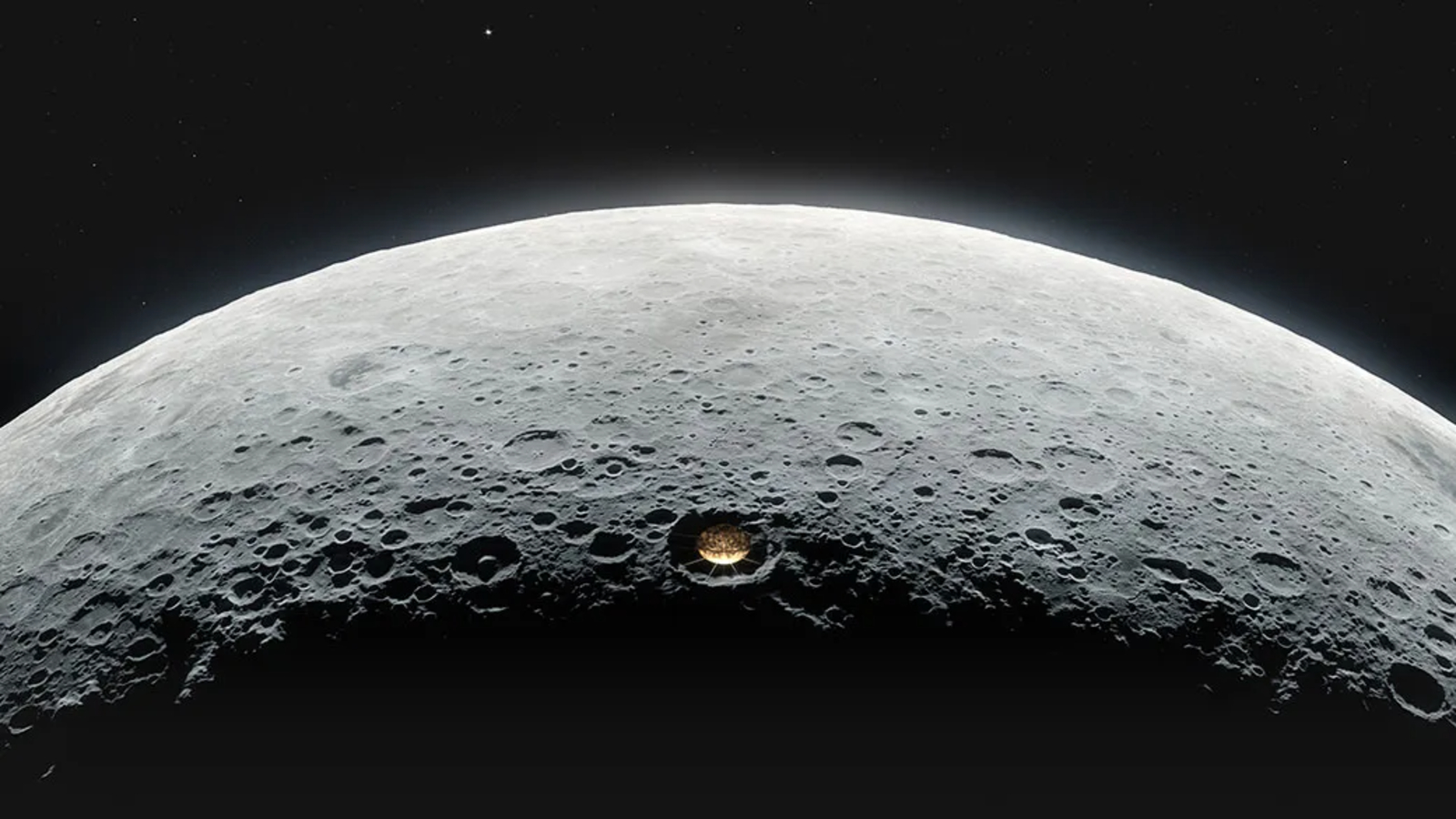
NASA is evaluating the Lunar Crater Radio Telescope (LCRT) on the Moon’s far side to escape Earth’s radio noise, building a ~350-meter-wide wire-mesh dish inside a natural crater with the goal of expanding to a 1-kilometer filled-aperture, robot-built telescope in the 2030s at a cost over $2 billion. Prototypes are under development at JPL, and Phase I–III funding is advancing toward a full mission. The far side’s radio-quiet environment would shield the instrument from Earth satellites (e.g., Starlink) and atmosphere, enabling observations of ultra-long wavelengths (>10 meters) that probe the universe’s dark ages and test cosmology—complementing, not replacing, Earth-based facilities.
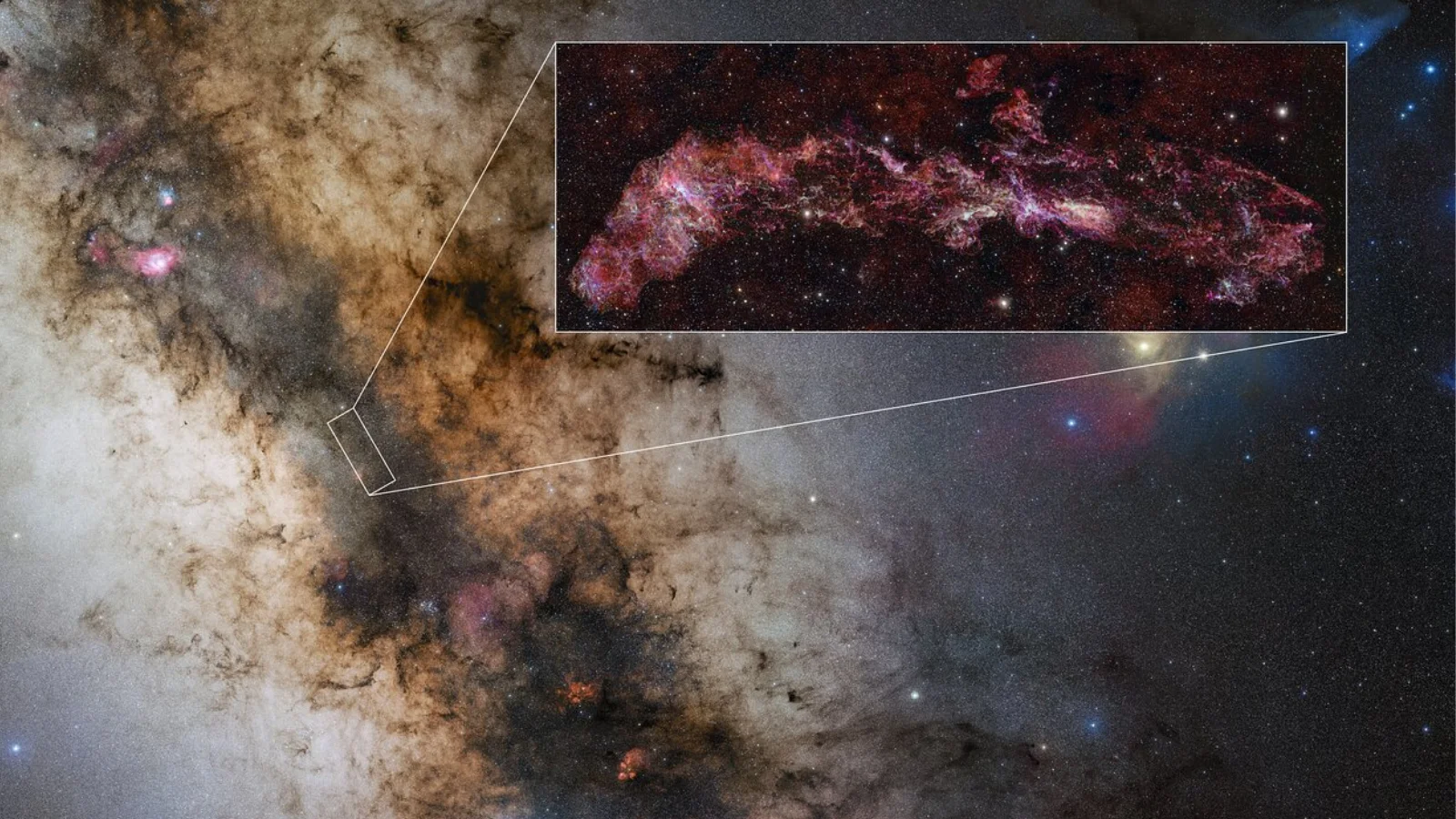
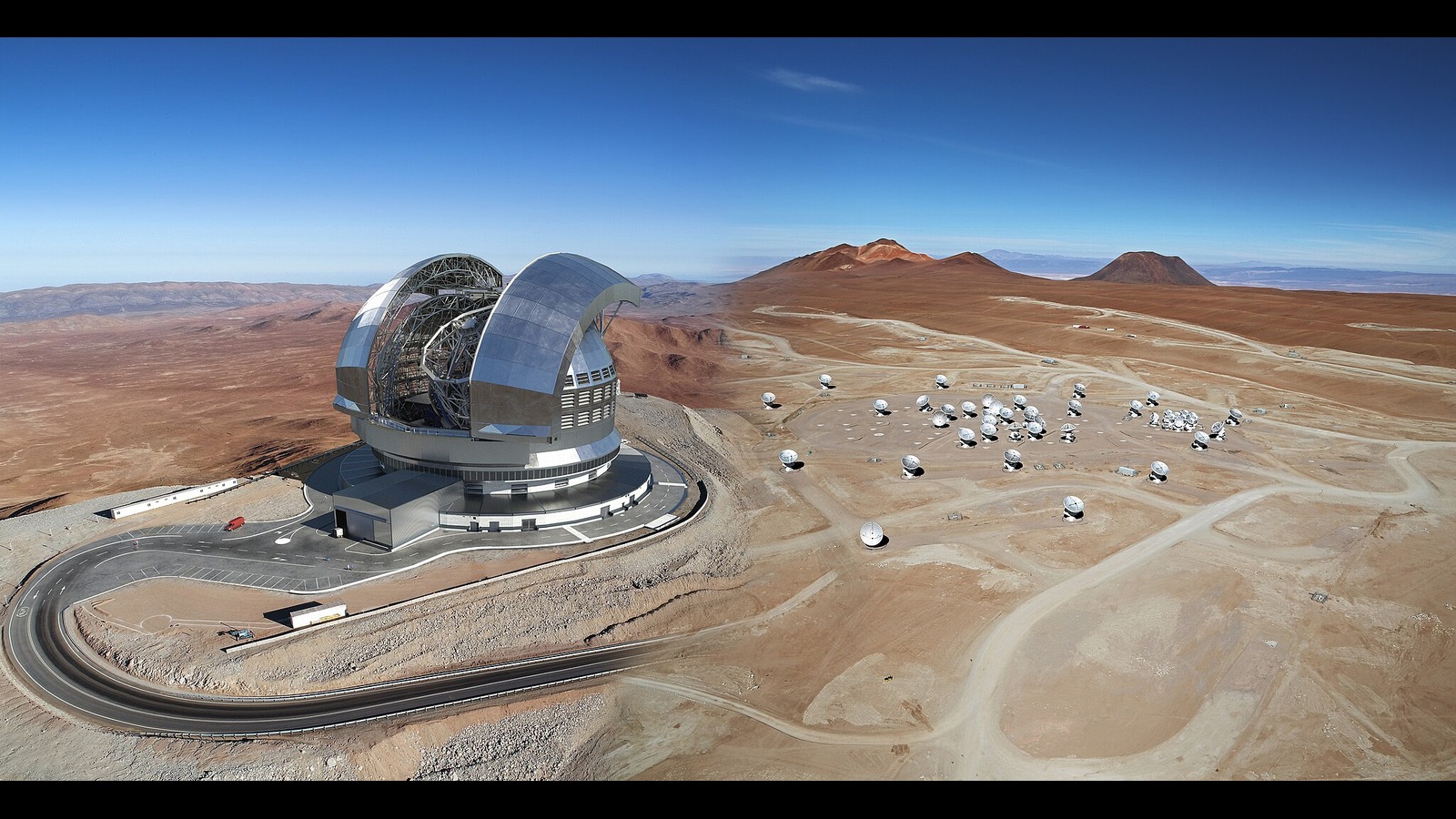
Using the Atacama Large Millimeter/submillimeter Array (ALMA), astronomers mapped the Milky Way’s 650-light-year-wide Central Molecular Zone in unprecedented detail, revealing a complex network of dense, cold gas and molecules around Sagittarius A* to help explain how stars form in our galaxy’s extreme core.
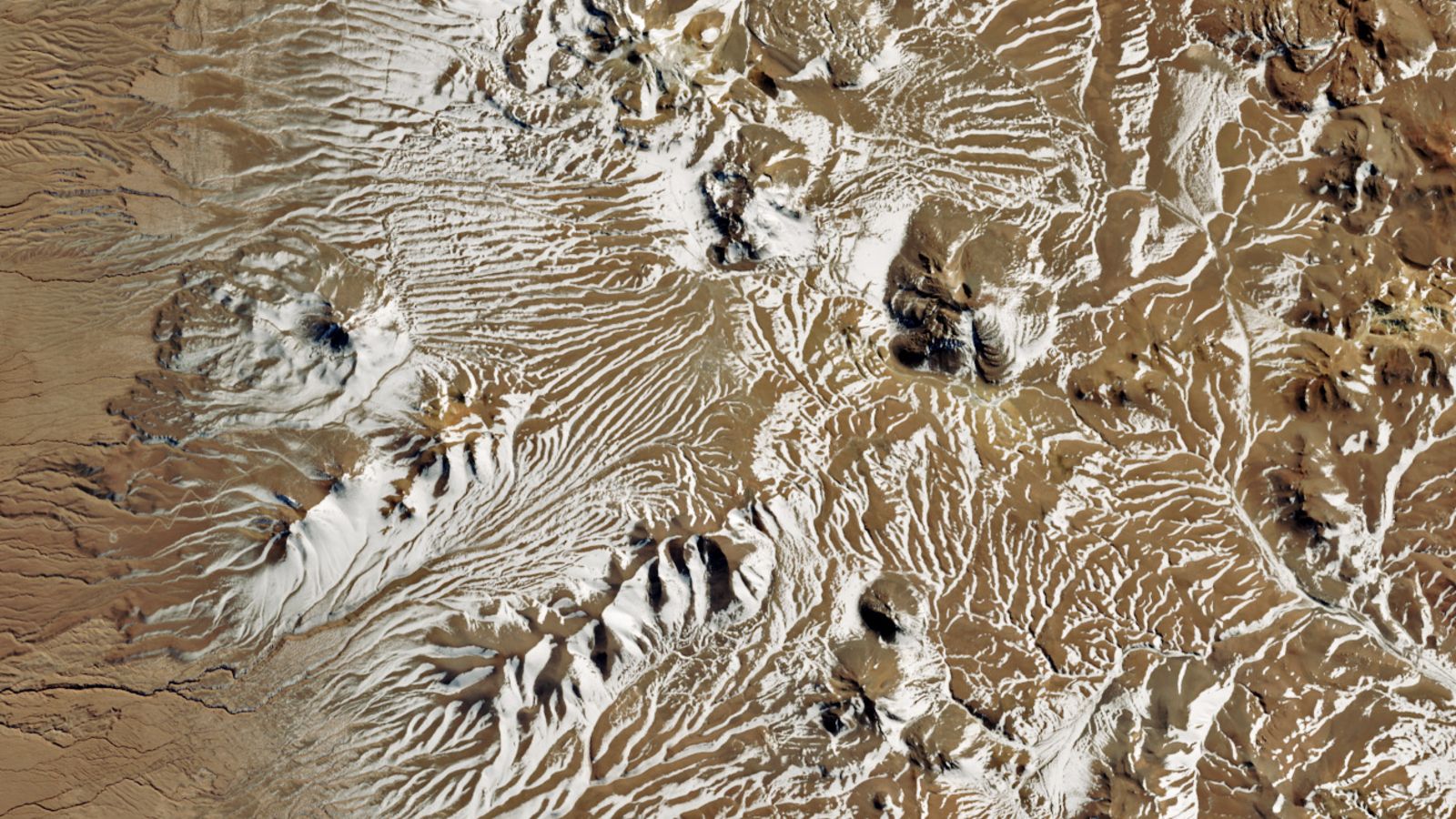
A rare snowstorm in July temporarily covered parts of the extremely dry Atacama Desert in Chile, affecting the ALMA radio telescope and highlighting potential impacts of climate change on hyperarid regions.
The MeerKAT radio telescope in South Africa is preparing for a second observation window as 3I/ATLAS approaches its closest point to Earth on December 19, with the potential to detect signals that could indicate extraterrestrial intelligence, raising profound scientific and societal questions.
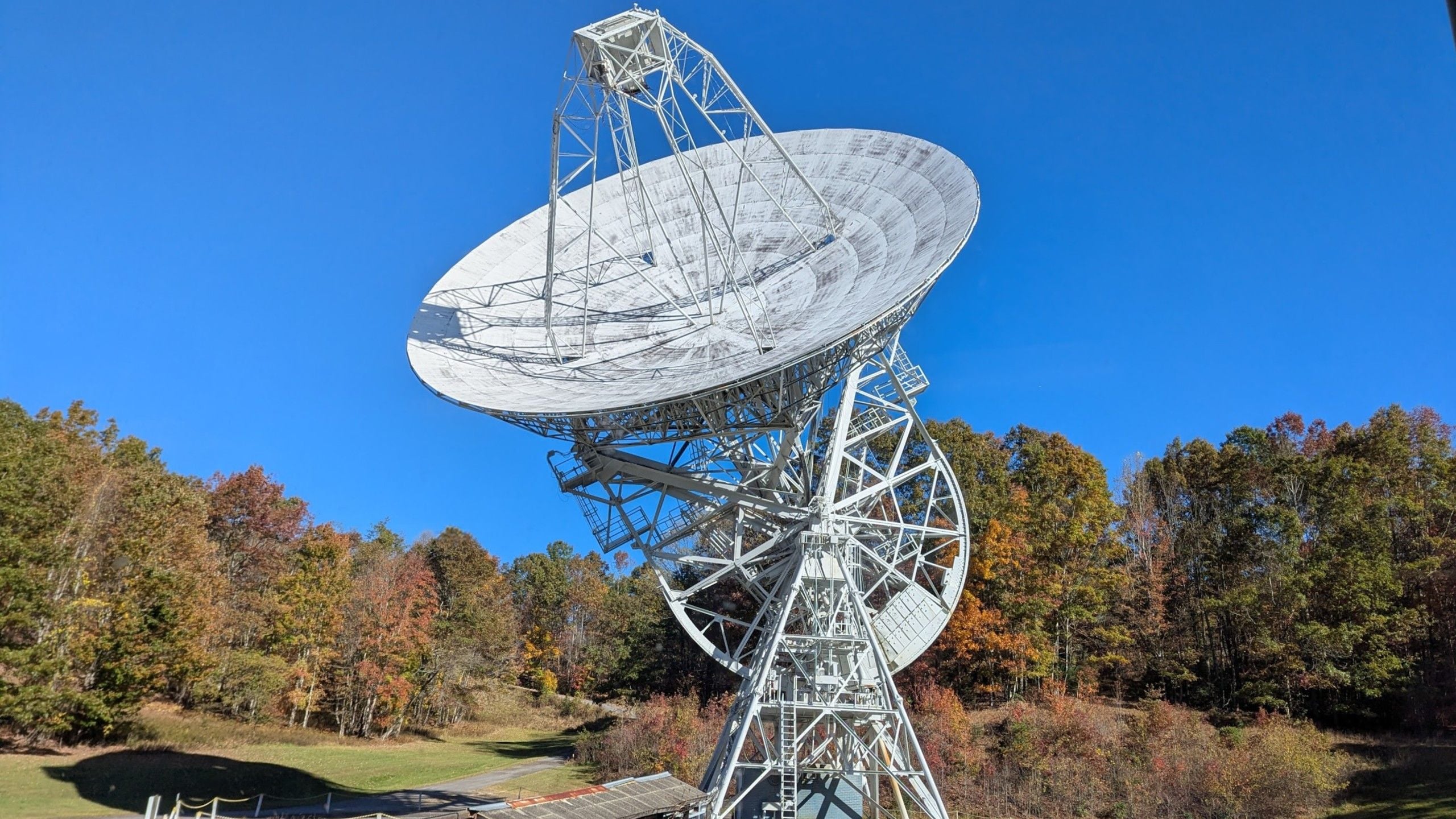
A historic 26-meter radio telescope in North Carolina, originally built for NASA's space tracking in 1962 and later used for military and intelligence purposes, is now for sale. The Pisgah Astronomical Research Institute (PARI) owns the site, which continues to support space research and education, and is seeking partners to help preserve its mission while exploring new uses, including private sector collaborations.
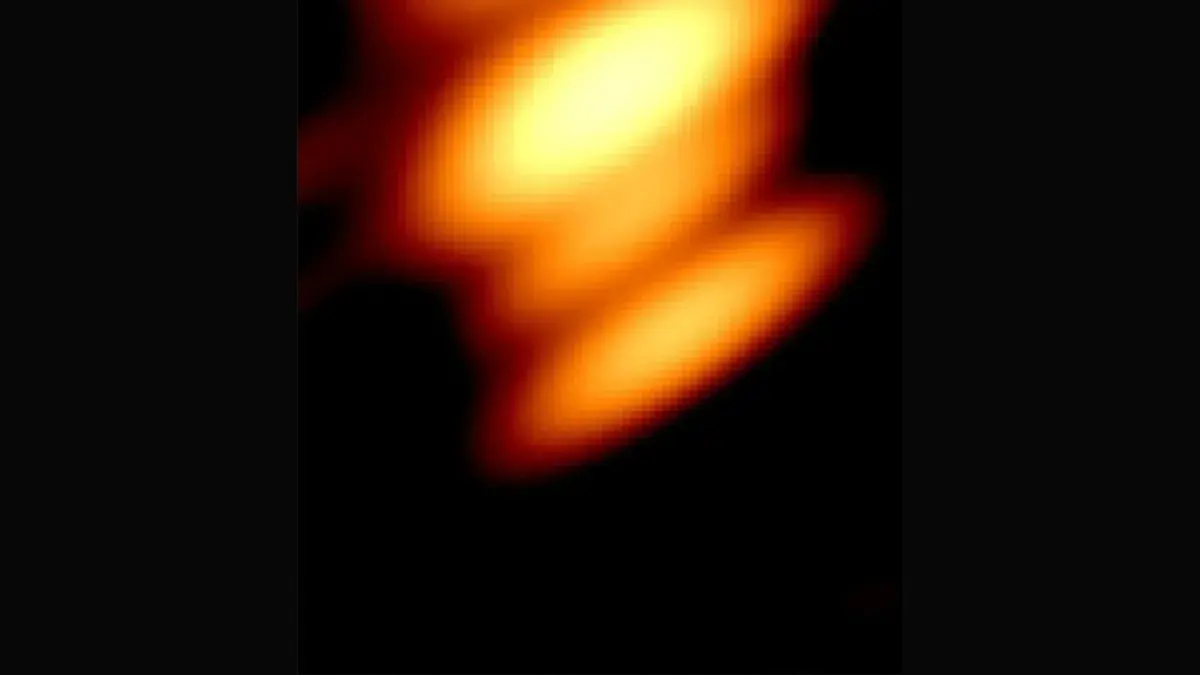
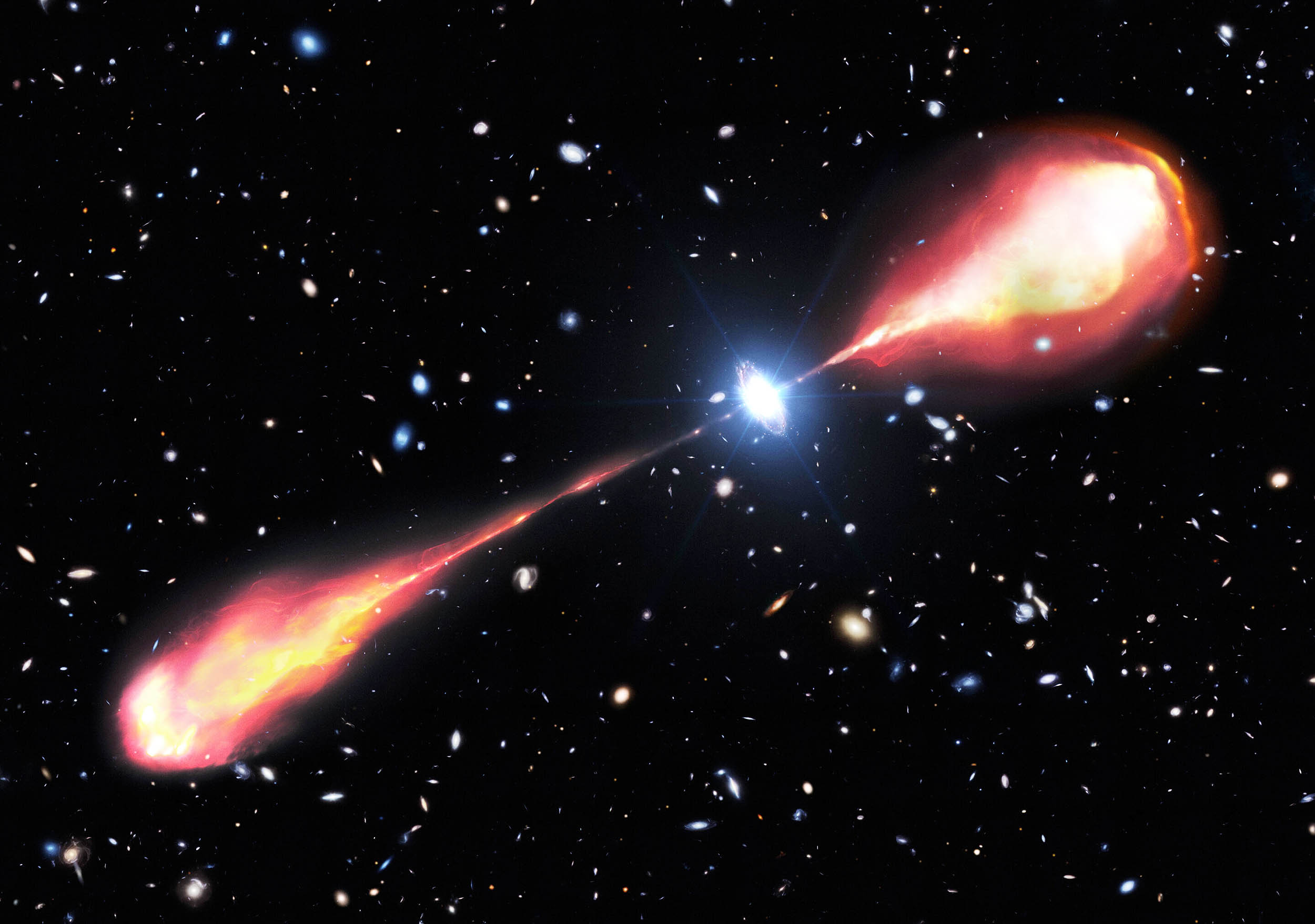
Scientists have captured the first radio image of two black holes orbiting each other in the quasar OJ 287, confirming the existence of black hole pairs and providing new insights into their behavior using advanced space-based radio imaging technology.
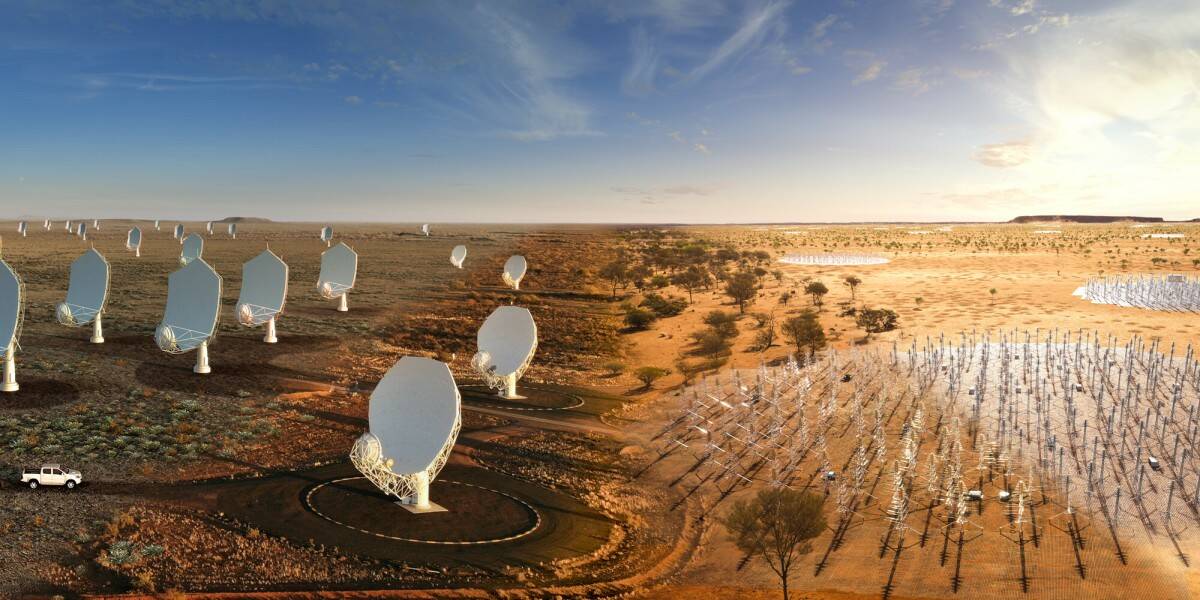
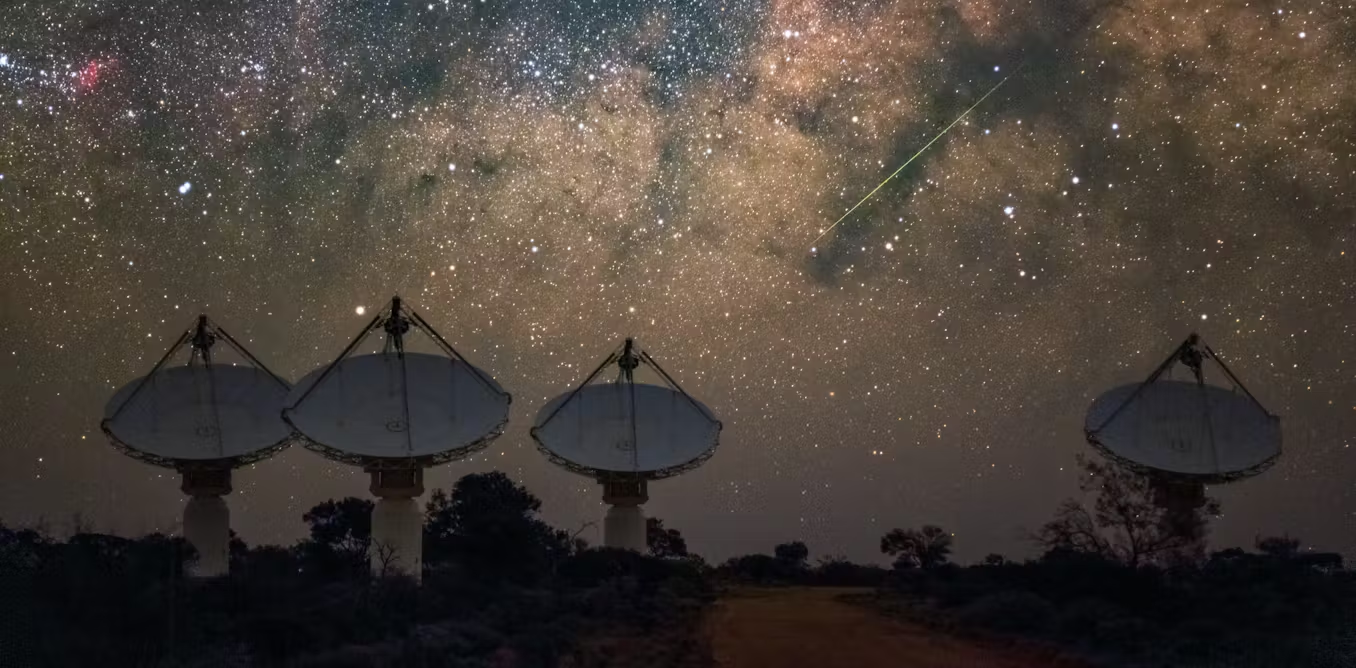
The SKA's datacenter in Western Australia, nearly complete, is protected by two Faraday cages to prevent RF leaks that could interfere with the world's largest radio telescope, which aims to explore the universe with unprecedented sensitivity. The project involves extensive antenna installation and will continue until 2029, with scientific proposals starting in 2024 and initial tests in 2027.
NASA and partners are deploying the LuSEE-Night radio telescope on the Moon’s far side to avoid Earth's radio interference, aiming to explore the universe's Dark Ages and potentially revolutionize lunar-based cosmic observation, with future plans to transform lunar craters into massive radio dishes.
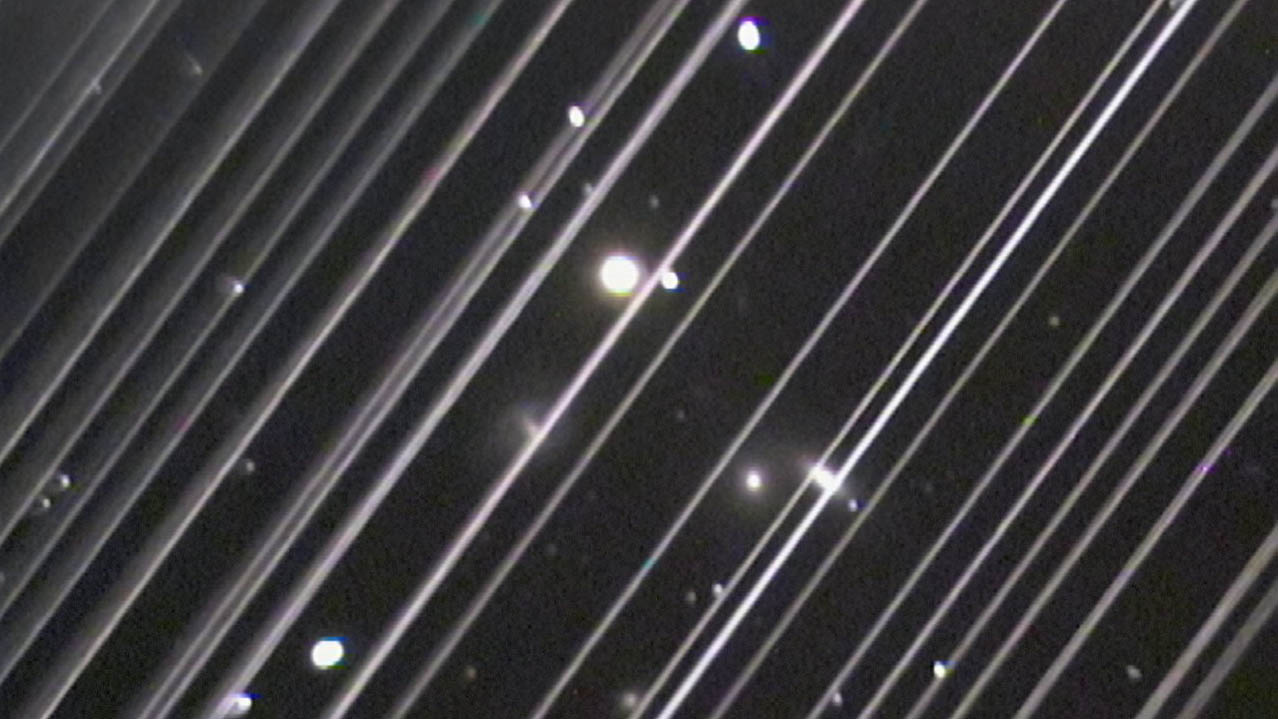
A study analyzing 76 million radio telescope images found that SpaceX's Starlink satellites cause significant interference, affecting up to 30% of some datasets, with over 112,000 emissions detected from 1,806 satellites, including unintended emissions in protected radio bands, raising concerns about the impact on astronomical research and the need for updated regulations.
A rare snowfall in the Atacama Desert has temporarily halted operations of the ALMA radio telescope array, highlighting potential impacts of climate change on extreme weather events in this hyper-arid region, which could affect future astronomical observations.
Astronomers using the ASKAP radio telescope in Australia detected a brief, bright radio burst originating from within 4500 km of Earth, traced to the old Relay 2 satellite, likely caused by an electrostatic discharge or space debris impact. This discovery highlights the potential for ground-based monitoring of satellite activity and the ongoing search for cosmic signals.
Astronomers have discovered the largest black hole jet ever observed, stretching about 200,000 light-years, in a distant quasar from when the universe was less than 1.2 billion years old, revealing insights into early galaxy evolution and black hole activity using advanced radio and infrared telescopes.
NASA is planning to build the Lunar Crater Radio Telescope on the moon's far side by the 2030s to study the universe and avoid interference from Earth's atmosphere and satellite signals, with funding and technical development currently underway.