Tag

Human Health

All articles tagged with #human health

Global Genomic Study Links Farming Shift to Broad Human Adaptation
science8 days ago

Global Genomic Study Links Farming Shift to Broad Human Adaptation

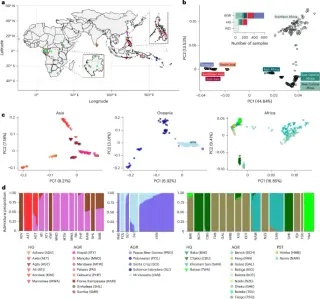
A large-scale genomic analysis of 1,092 individuals across Africa, Asia, and Oceania reveals that the transition from foraging to farming drove widespread human adaptation. The study finds that selection pressures affected not just farmers but also hunter-gatherers and pastoralists, particularly in immune, metabolic, and reproductive pathways. Crucially, the research highlights that non-coding regulatory regions, rather than just protein-coding genes, played a central role in these evolutionary changes, challenging previous views that focused solely on agricultural populations.

New Study: Microplastics Generate DNA-Damaging Radicals in Water

New Study: Microplastics Generate DNA-Damaging Radicals in Water

A new study published in Nature reveals that microplastics are not chemically inert when exposed to water. Researchers from Columbia University and UC Berkeley found that microplastics spontaneously generate hydroxyl free radicals, which can damage DNA, proteins, and red blood cells. This challenges the long-held belief that plastics are stable and safe, suggesting a new mechanism for how microplastics cause oxidative stress and cellular damage in the human body.

Study in Nature Reveals Microplastics Generate Harmful Free Radicals in Water
science1 month ago

Study in Nature Reveals Microplastics Generate Harmful Free Radicals in Water

A new study published in Nature challenges the long-held belief that plastics are chemically inert. Researchers from Columbia University found that when microplastics interact with water, they spontaneously generate reactive oxygen species (ROS), or free radicals. These unstable molecules can damage cells and DNA. The study tested six common plastics, finding that more hydrophobic types like polyethylene and polypropylene produced the most ROS. When exposed to mouse red blood cells, these radicals caused cell rupture and shape changes. While the research does not prove direct human disease causation, it offers a mechanism for how microplastics may cause oxidative stress and inflammation in the body, where water is abundant. This finding adds to concerns about microplastics found in food, water, and human tissues.

Water Activates Plastic to Create Harmful Radicals, Study Finds
science1 month ago

Water Activates Plastic to Create Harmful Radicals, Study Finds

A new study in Nature reveals that water, not just the plastic itself, may be responsible for making microplastics harmful to human health. The research shows that when fossil-fuel-based plastics interact with water, they generate unstable hydroxyl radicals that damage red blood cells and proteins. This finding challenges the long-held belief that plastic is chemically inert and suggests that the water-rich environment of the human body could amplify the toxic effects of plastic pollution.

Hidden Evolutionary War in Testicles Boosts Disease-Causing Sperm Mutations
science2 months ago

Hidden Evolutionary War in Testicles Boosts Disease-Causing Sperm Mutations

A new study reveals that mutations in sperm-producing stem cells compete for dominance inside the testes, often at the expense of healthy cells. This 'survival of the fittest' process favors mutations linked to developmental disorders and cancer, significantly increasing the likelihood that older men pass these genetic risks to their offspring.

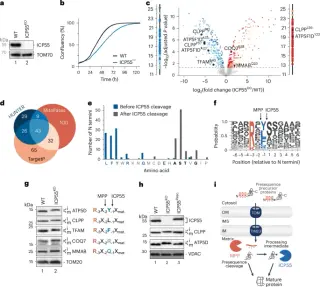
ICP55 Enzyme Stabilizes Mitochondrial Complexes via Single Amino Acid Cleavage
science2 months ago

ICP55 Enzyme Stabilizes Mitochondrial Complexes via Single Amino Acid Cleavage

A new study in Nature reveals that the enzyme ICP55, which removes a single amino acid from mitochondrial proteins, is critical for maintaining the structural integrity of large protein complexes. Loss of ICP55 leads to widespread destabilization of these assemblies, shifting them toward smaller subcomplexes. This finding highlights a previously unknown layer of mitochondrial homeostasis and explains why mutations in this gene cause severe human diseases.

100 Trillion Neutrinos and Dozens of Muons Pass Through Your Body Every Second
science2 months ago

100 Trillion Neutrinos and Dozens of Muons Pass Through Your Body Every Second

Approximately 100 trillion neutrinos pass through every human body each second, originating mostly from solar nuclear fusion. While these 'ghost particles' rarely interact with matter, cosmic rays generate secondary muons that penetrate the atmosphere, with tens to hundreds passing through a person per second. These particles pose negligible health risks, contributing only about 0.4 millisieverts of radiation annually, comparable to a few chest X-rays.

Ancient Viral Infections Built the Placentas That Allow All Mammals to Reproduce
science3 months ago

Ancient Viral Infections Built the Placentas That Allow All Mammals to Reproduce

Approximately 8% of the human genome consists of inherited retroviral sequences. Evolution repurposed one specific viral gene, syncytin, to create the placenta, a structure essential for mammalian reproduction. This process occurred independently across multiple mammal lineages, demonstrating how ancient infections became fundamental biological tools.

NASA Sets First Mars Dust Exposure Limits to Protect Future Crews
space3 months ago

NASA Sets First Mars Dust Exposure Limits to Protect Future Crews

NASA has established the first permissible exposure limits for Martian dust to protect future astronauts. A new working group concluded that while Mars dust is toxic, strict standards must balance safety with operational feasibility. The report emphasizes prevention, such as keeping dust out of habitats and monitoring air quality, rather than relying on medical treatments after exposure.

business9 months ago

Merck Restructures Human Health to Accelerate Launches Across a Diversified Portfolio

Merck is reorganizing its Human Health unit into two business units—Oncology and Specialty, Pharma & Infectious Diseases—to sharpen commercial execution for a broader portfolio. New leaders Jannie Oosthuizen (Oncology) and Brian Foard (Specialty, Pharma & Infectious Diseases) will report to CEO Robert Davis, while Chirfi Guindo leads Strategic Access, Policy & Communications. The move aims to better advance Merck’s widening pipeline, with about 80 Phase 3 trials and more than 20 growth drivers anticipated in the coming years.

Wealthy Areas Boost Wildlife and Your Health
environment1 year ago

Wealthy Areas Boost Wildlife and Your Health

The luxury effect describes how wealthier urban areas tend to have higher biodiversity, including plants, animals, and indoor arthropods, which can positively impact human health by increasing exposure to microbial ecosystems. This pattern, observed in various cities worldwide, highlights social and environmental inequalities and suggests that preserving biodiversity in urban settings could help address health disparities and ecological challenges.