Tag

Oxidative Stress

All articles tagged with #oxidative stress

Frequent Ejaculation Linked to Healthier Sperm, Review Finds
health14 days ago

Frequent Ejaculation Linked to Healthier Sperm, Review Finds

A review of nearly 150 studies finds that regular ejaculation or sex can help sperm quality, while abstinence modestly degrades it via increased oxidative stress and DNA damage, reducing viability and motility in humans and other animals. A recent IVF trial suggested higher fertilization success when men ejaculate within 48 hours of sample collection, though the impact on natural fertility remains unclear. The findings could lead clinics to reassess abstinence guidelines and emphasize sperm quality alongside quantity, while general health benefits of regular sexual activity appear unaffected.

Centenarian Blood Reveals a 37-Protein Blueprint for Slower Aging
science1 month ago

Centenarian Blood Reveals a 37-Protein Blueprint for Slower Aging

Swiss researchers comparing blood from ages 30–60, 80–90, and 100+ found 37 proteins (about 5% of the 700+ measured) in centenarians that resemble the young group more than octogenarians, suggesting key aging mechanisms can be slowed. These proteins affect immunity, metabolism, red blood cell recycling, extracellular matrix maintenance, and oxidative stress, aligning with inflammaging and underscoring lifestyle factors—nutrition, exercise, and social connections—as actionable ways to promote healthy aging. Published in Aging Cell.

Ultra-long runs may speed up red blood cell aging, study finds
science1 month ago

Ultra-long runs may speed up red blood cell aging, study finds

A study of 23 runners found that very long-distance races can injure red blood cells, reducing their flexibility and accelerating aging due to inflammation and oxidative stress, with longer races like the UTMB causing more damage; researchers caution the small sample size and call for more research into training and recovery strategies to minimize cellular damage.

Extreme Endurance Running Might Accelerate Red Blood Cell Aging
health1 month ago

Extreme Endurance Running Might Accelerate Red Blood Cell Aging

A study in Blood Red Cells & Iron finds ultramarathon races can damage red blood cells, making them less flexible due to mechanical stress and inflammation/oxidative stress; signs of accelerated aging appear after 40‑km races and worsen after 171‑km events, though long‑term effects and duration of damage are unclear; findings could influence training, recovery, and blood storage research, but the study has a small sample size and limited sampling points.

Erythritol May Undermine Brain Shield, Raise Stroke Risk
science2 months ago

Erythritol May Undermine Brain Shield, Raise Stroke Risk

New lab and observational evidence suggests the sugar substitute erythritol can damage cells of the blood-brain barrier, trigger oxidative stress, and lower nitric oxide while raising endothelin-1, potentially narrowing cerebral vessels and hindering clot dissolution—factors that could elevate stroke risk; these findings align with studies linking erythritol to higher cardiovascular events, though most experiments used isolated cells and require validation in more realistic models.

Scientists uncover the cause of 'old people' smell and how to eliminate it
health7 months ago

Scientists uncover the cause of 'old people' smell and how to eliminate it

Research reveals that the distinct 'old people smell' is caused by increased levels of the chemical 2-nonenal, which results from oxidative stress breaking down skin fats. Consuming mushrooms, rich in antioxidants like ergothioneine and spermidine, can help reduce this odor by neutralizing 2-nonenal, as traditional methods like showering and perfume are ineffective.

Daily Almond Consumption May Boost Health and Protect DNA
health7 months ago

Daily Almond Consumption May Boost Health and Protect DNA

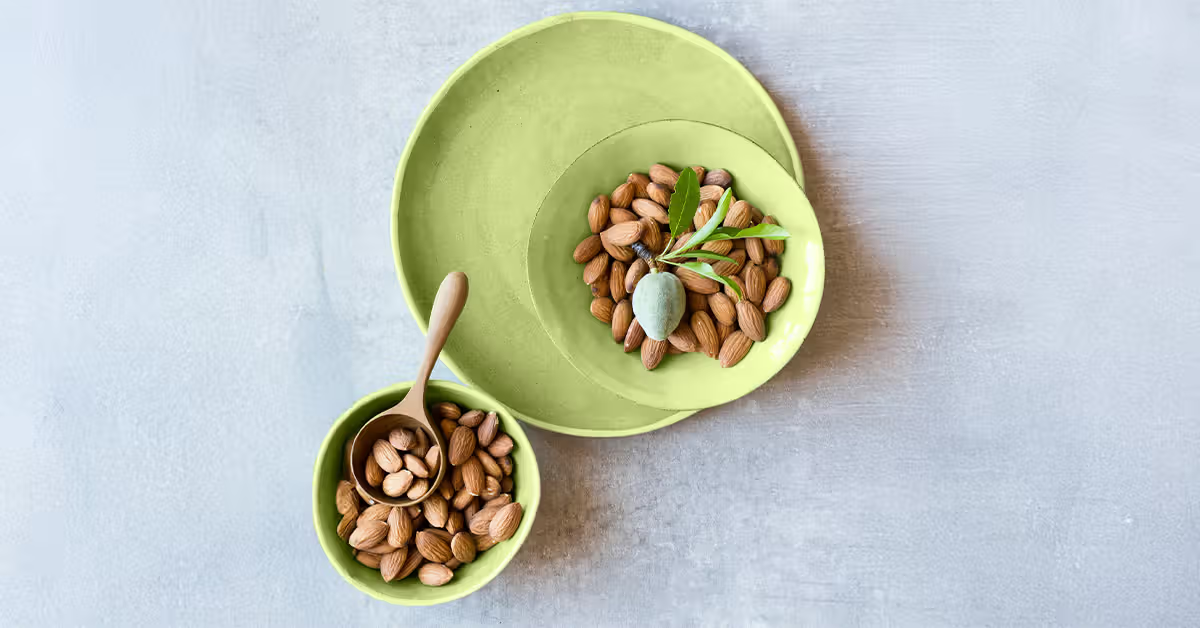
Eating about 22 almonds a day may help reduce oxidative stress and improve overall oxidative health, potentially extending health span, according to a systematic review of multiple studies. Almonds are rich in antioxidants like vitamin E and polyphenols, which combat cellular damage, and incorporating them into the diet can be a proactive, low-risk strategy for disease prevention. However, due to their calorie content, almonds should replace other snacks rather than be added on top of a normal diet.

Intermittent Fasting May Hinder Hair Growth, Study Finds
health1 year ago

Intermittent Fasting May Hinder Hair Growth, Study Finds

A study published in Cell Press reveals that intermittent fasting, while beneficial for metabolic health, may slow hair regrowth by causing hair follicle stem cells (HFSCs) to undergo apoptosis due to oxidative stress and free fatty acid buildup. In mice, fasting led to slower hair regeneration, and a small human trial showed an 18% reduction in hair growth speed. Antioxidants like vitamin E were found to mitigate these effects, suggesting potential solutions to this unintended consequence of fasting.

DNA Damage: A Crucial Factor in Macular Degeneration
health1 year ago

DNA Damage: A Crucial Factor in Macular Degeneration

Researchers have identified accumulated DNA damage in the retina as a key factor in age-related macular degeneration (AMD), a leading cause of blindness in people over 50. The study, published in Aging Cell, suggests that targeting specific retinal cells could lead to treatments that slow or stop AMD progression. The research highlights the importance of DNA repair in maintaining retinal health and suggests potential interventions to counteract oxidative stress and enhance DNA repair. The study involved collaboration from multiple universities and was supported by various foundations and the NIH.

"Reusing Frying Oil Linked to Increased Risk of Neurodegeneration, Scientists Warn"
health2 years ago

"Reusing Frying Oil Linked to Increased Risk of Neurodegeneration, Scientists Warn"

A recent study presented at Discover BMB 2024 suggests a correlation between extended ingestion of reheated cooking oils and accelerated neurodegeneration, as evidenced by higher levels of neurotoxicity in rats fed diets high in such oils. The consumption of reheated oils disrupts the gut-brain-liver axis, leading to increased oxidative stress and inflammation, precursors to neurodegenerative conditions. Reheating oils at high temperatures leads to the formation of harmful compounds, impacting human health with elevated cholesterol levels, inflammation, and potential liver damage. Dietary interventions rich in omega-3 fatty acids, antioxidants, and probiotics are recommended to mitigate these risks.