Tag

James Webb

All articles tagged with #james webb

Webb Spots Rock-Forming Clouds On One Hemisphere Of A Distant Hot Jupiter
space12 days ago

Webb Spots Rock-Forming Clouds On One Hemisphere Of A Distant Hot Jupiter

NASA’s James Webb Space Telescope analyzed WASP-94A b by splitting its transit into the cooler, cloudier morning limb and the hotter, clearer evening limb. The observations suggest mineral clouds (likely magnesium silicate) form as gas cools on the morning side and evaporate on the scorching dayside, leaving the evening limb relatively clear and rich in water absorption. This limb-by-limb spectroscopy reveals a weather-driven 3D structure that a single averaged atmospheric model would miss, highlighting a mineral-cloud cycle on a tidally locked exoplanet and showcasing a method to map exoplanet weather even when the planet isn’t spatially resolved.

Webb Telescope Turns Time Machine, Revealing Galaxies Moments After the Big Bang
space26 days ago

Webb Telescope Turns Time Machine, Revealing Galaxies Moments After the Big Bang

NASA’s James Webb Space Telescope uses its larger 6.5-meter mirror and infrared vision to peer back to the universe’s earliest epochs, capturing galaxies formed within a few hundred million years after the Big Bang and pushing the record beyond Hubble’s reach (e.g., MoM-z14 at ~13.5 billion years ago). Webb reveals a cosmic dawn that is brighter and more chemically evolved than pre‑Webb models predicted, with some galaxies seen just 50–300 million years after the Big Bang—reminding us that each image is both a snapshot of the present instrument and a window into a long-ago cosmos that has since evolved.

JWST Spots Crowded Galaxy Merger at Cosmic Dawn Enriching Surrounding Gas
space1 month ago

JWST Spots Crowded Galaxy Merger at Cosmic Dawn Enriching Surrounding Gas

JWST has imaged JWST’s Quintet, a merger of at least five galaxies at redshift ~6.7 (about 800 million years after the Big Bang), revealing a compact, clumpy system with ~17 galaxy-sized clumps, a combined star-formation rate around 255 solar masses per year, and a halo of oxygen-emitting gas (O III) and Hβ linking the galaxies. The presence of metal-enriched gas around the system shows heavy elements were already dispersed into the surrounding medium by intense interactions, implying the early universe was chemically mature and dynamically complex far earlier than some models predict and potentially related to the emergence of massive, quiescent galaxies later on.

Webb telescope spots mysterious red dots that baffle scientists
science5 months ago

Webb telescope spots mysterious red dots that baffle scientists

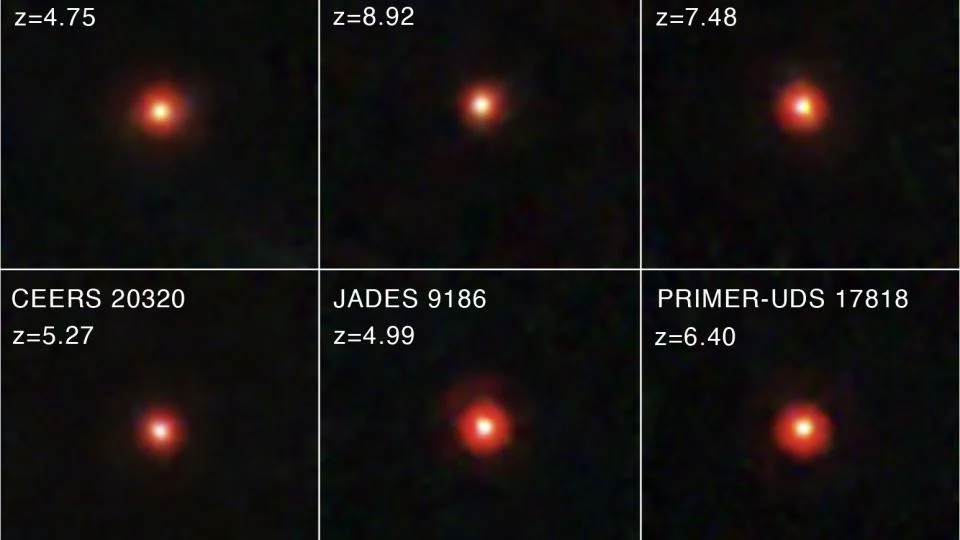
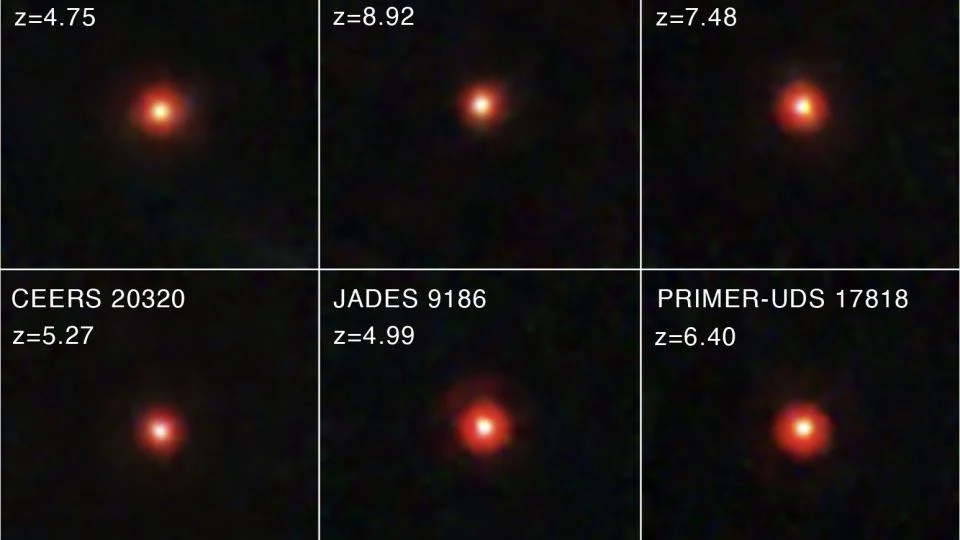
NASA’s James Webb Space Telescope images reveal hundreds of faint red dots dubbed little red dots (LRDs). While many researchers suspect they are powered by growing black holes in the early universe, their exact nature remains unclear, with hypotheses ranging from dust-enshrouded black holes to emission from dense hydrogen gas, and even a possible new class of objects called black-hole stars or quasi-stars, exemplified by the enigmatic feature “The Cliff.” The findings could reshape ideas about black-hole formation, but there is no consensus yet.

Webb telescope uncovers mysterious red dots, leaving scientists guessing
science5 months ago

Webb telescope uncovers mysterious red dots, leaving scientists guessing

NASA's James Webb Space Telescope has detected hundreds of tiny red points—dubbed little red dots (LRDs)—in deep-field images. Their nature remains uncertain, with leading ideas ranging from growing black holes shrouded by gas or dust to exotic 'black hole star' or quasi-star scenarios, and even hints from discoveries like 'The Cliff' that a new kind of cosmic object may exist; researchers hope closer local LRDs and continued Webb observations will reveal how these objects fit into black hole formation and galaxy evolution.

Webb Discovers Ultra-Early Galaxy MoM-z14 That Challenges Early-Universe Theories
space6 months ago

Webb Discovers Ultra-Early Galaxy MoM-z14 That Challenges Early-Universe Theories

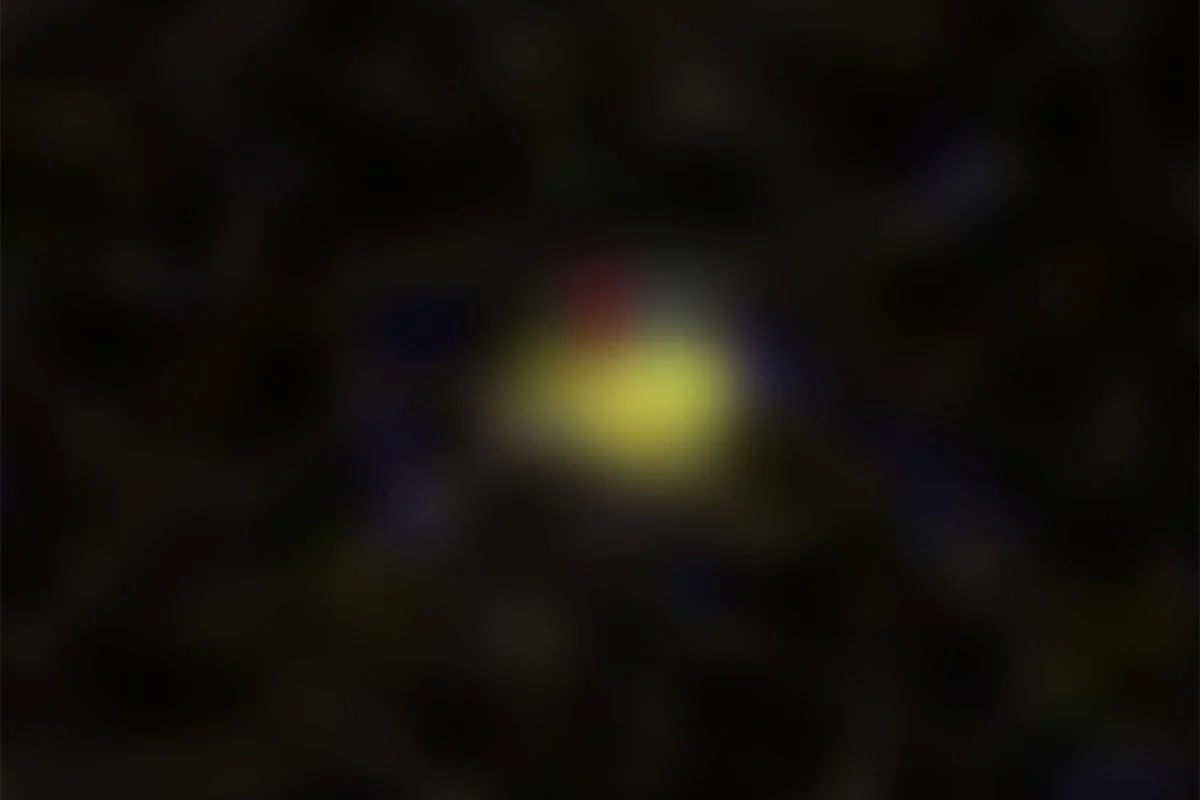
NASA's James Webb Space Telescope identified the galaxy MoM-z14 as it appeared about 280 million years after the Big Bang (redshift 14.44), meaning light has traveled roughly 13.5 billion years. Its brightness and nitrogen enrichment exceed predictions for such an early object, challenging current models and hinting at new physics or star-formation pathways during the epoch of reionization; follow-up spectroscopy is needed to confirm details and refine our picture of the early Universe.

Webb Telescope Captures Star’s Final Breath as Smoky Columns in Helix Nebula
science6 months ago

Webb Telescope Captures Star’s Final Breath as Smoky Columns in Helix Nebula

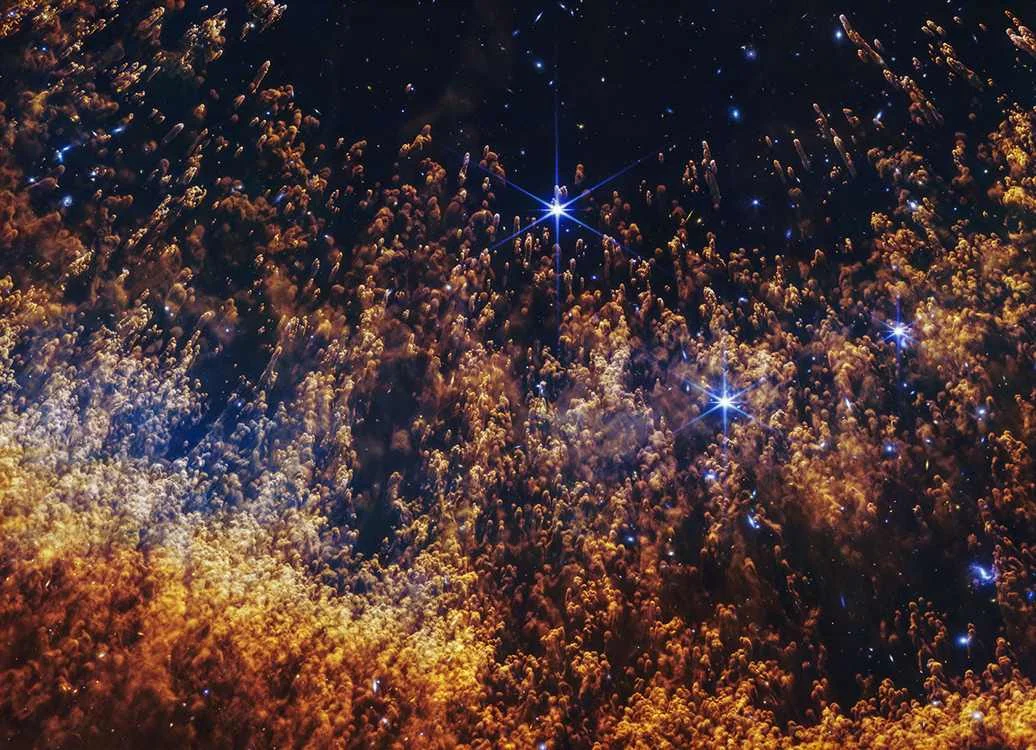
A new James Webb Space Telescope image reveals the dying breath of the star at the heart of the Helix Nebula as blue-hot gas columns colliding with a ring of cooler material, with a second ground-based image offering a reverse perspective. The colorful gas will cool and disperse, seeding future stars and planets, billions of years from now. The Helix Nebula is about 650 light-years away and has been observed for two centuries, with NASA noting the final breath transforms into the raw ingredients for new worlds.

NASA's Hubble and Webb Capture Eerie 'Blood-Soaked Eyes' Galaxies
science1 year ago

NASA's Hubble and Webb Capture Eerie 'Blood-Soaked Eyes' Galaxies

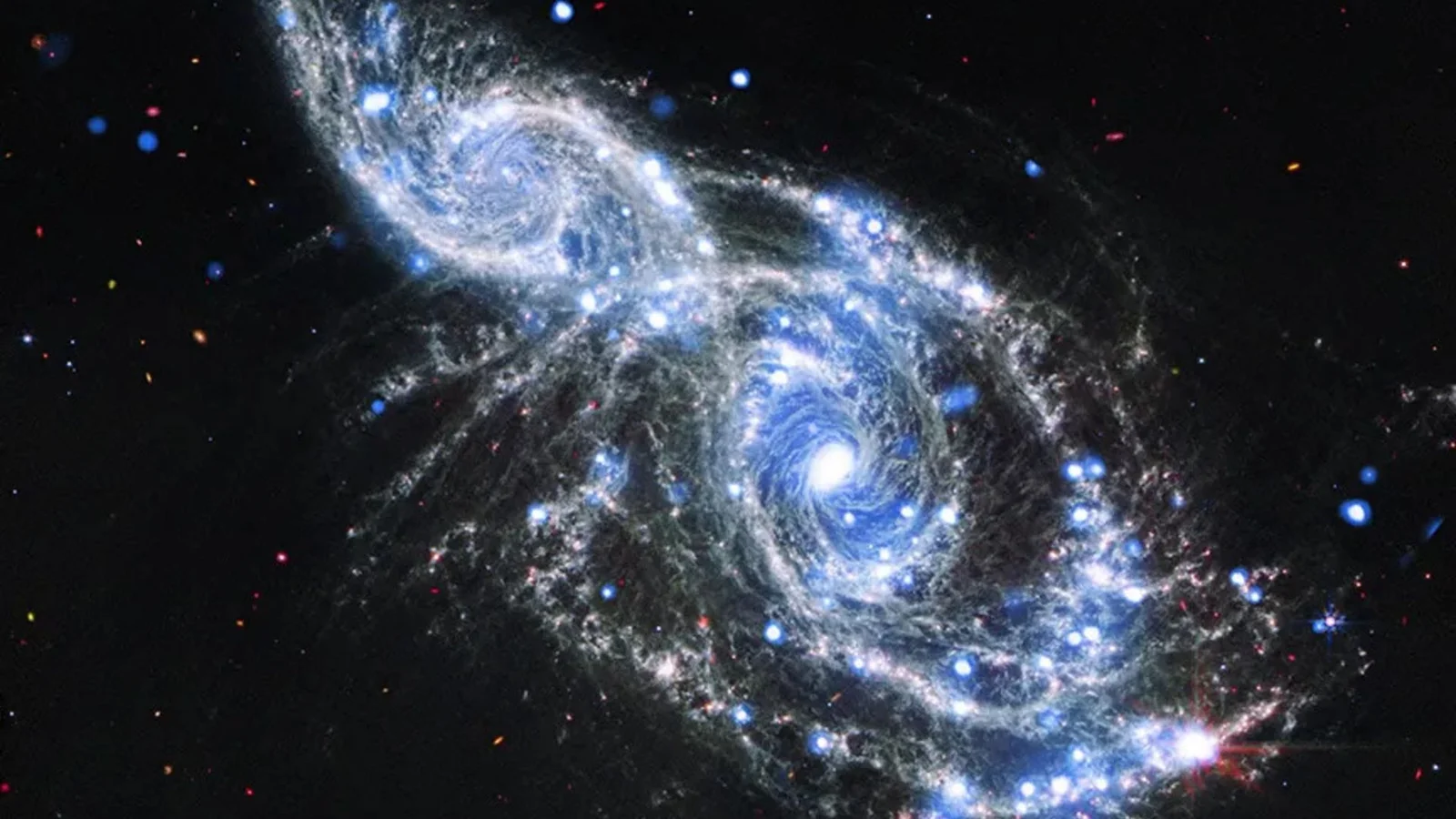
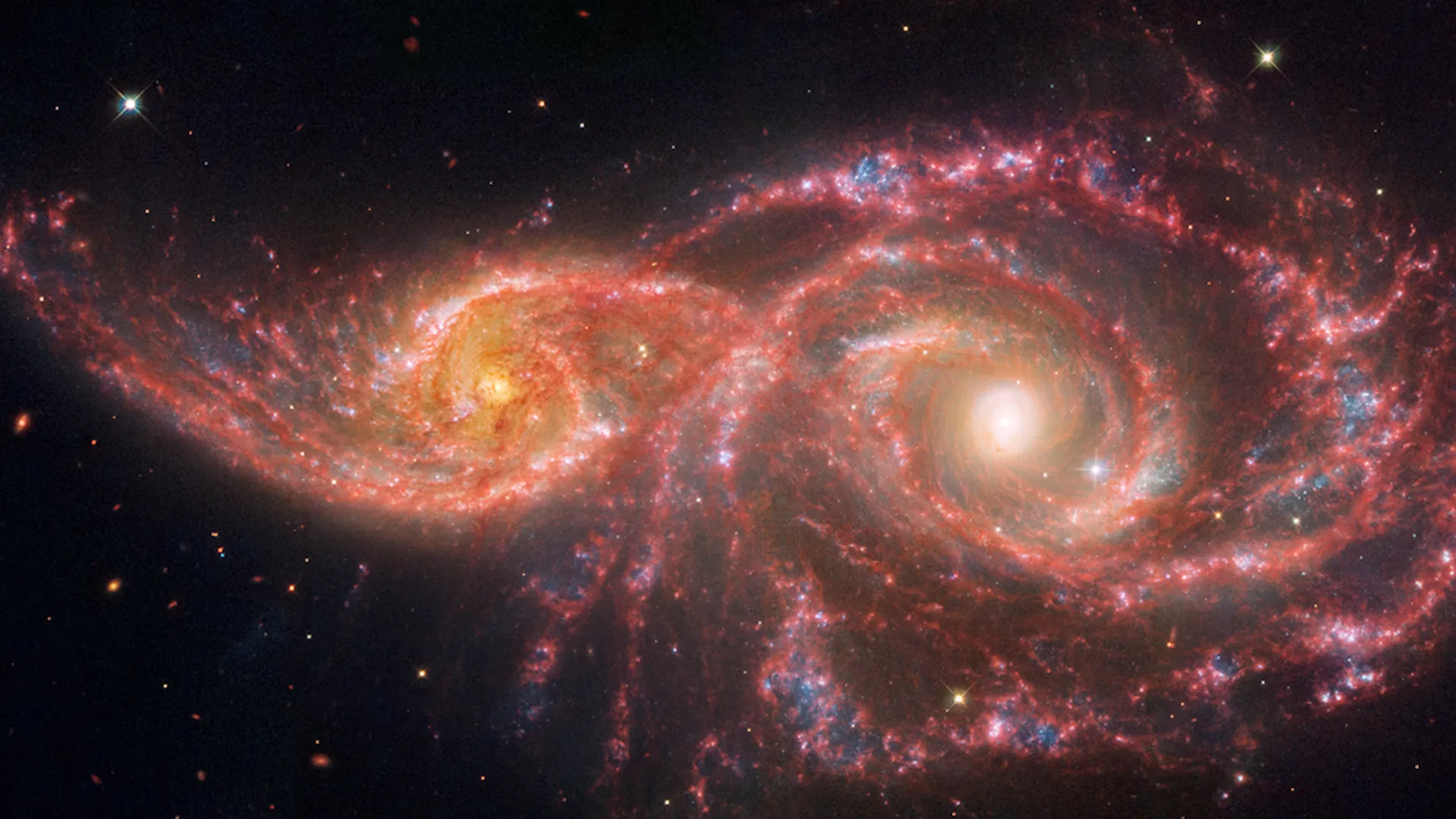
NASA has released a video captured by the Hubble and James Webb Space Telescopes showing two distant galaxies, IC 2163 and NGC 2207, colliding and forming a figure resembling 'blood-soaked eyes.' The galaxies, located about 80 million light-years from Earth, are in the early stages of collision, which is causing rapid star formation. Over millions of years, they are expected to continue interacting, potentially merging into a single galaxy with a central 'cyclops eye.'

"James Webb Telescope Captures Stunning Images of Star Birth"
science2 years ago

"James Webb Telescope Captures Stunning Images of Star Birth"

The latest photo captured by the James Webb Space Telescope shows a baby star in the Orion constellation, providing a glimpse into what our Sun may have looked like during its birth. The image reveals powerful shocks and jets of energy, indicating the violent nature of star formation. Scientists believe that the outflows of gas seen in the photo are likely used to regulate the star's birthing process. Although the protostar itself is hidden behind a dense disc of gas and dust, the image offers a breathtaking view and highlights the transformative impact of the James Webb telescope on our understanding of the universe.

Unraveling the Brightness of Webb's Early Galaxy Images
science2 years ago

Unraveling the Brightness of Webb's Early Galaxy Images

Scientists have finally found an explanation for the unusually bright images of early galaxies captured by the James Webb telescope. A new study published in The Astrophysical Journal Letters suggests that bursts of star formation in these galaxies could have caused the high levels of brightness observed. Computer simulations supported this theory, indicating that the deviations from the standard model of cosmology were associated with these star formation events. This finding reassures astronomers that our model of the universe's evolution is not entirely broken, but rather incomplete.

"Revolutionizing Astronomy: The Moon's Big Telescope"
science-and-astronomy2 years ago

"Revolutionizing Astronomy: The Moon's Big Telescope"

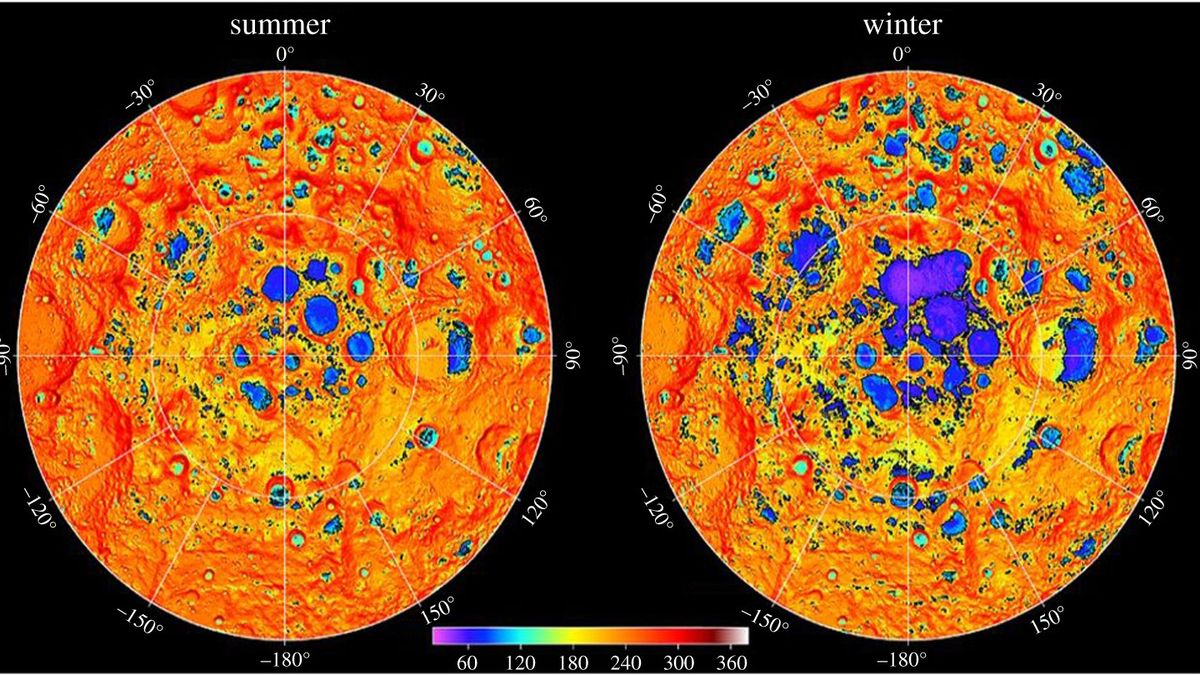
Scientists propose placing a 42-foot-wide infrared telescope inside a permanently shadowed crater near one of the moon's poles, which could be more sensitive than NASA's James Webb Space Telescope and detect parts of the electromagnetic spectrum that are currently invisible to Webb. The lunar telescope could also analyze the atmospheres of exoplanets and potentially help in the search for life beyond Earth. The telescope's location in a cold lunar crater would allow it to detect far infrared wavelengths, which cannot be seen by existing telescopes, and gather valuable data about the distant universe.

"James Webb's Mind-Blowing Discovery: Ancient Quasars Illuminate Cosmic Web and Galaxies"
astronomy3 years ago

"James Webb's Mind-Blowing Discovery: Ancient Quasars Illuminate Cosmic Web and Galaxies"

The James Webb Space Telescope has made a groundbreaking discovery by capturing starlight from ancient quasars, allowing astronomers to observe galaxies that existed when the universe was less than one billion years old. The observed galaxies have masses between 30 billion and 130 billion times that of the sun, with black holes weighing 200 million to 1.4 billion solar masses. This finding provides valuable insights into the early universe and supports the theory that quasars are formed through galactic mergers that fuel supermassive black holes.