Tag

Sleep Science

All articles tagged with #sleep science

Circadian Delays: New Research Links Late Sleep Patterns to ADHD Biology
health-and-science2 days ago

Circadian Delays: New Research Links Late Sleep Patterns to ADHD Biology

Emerging research suggests a significant link between ADHD and delayed circadian rhythms, often referred to as being a 'night owl.' A 2025 review indicates that adults with ADHD experience melatonin onset approximately 90 minutes later than the general population, while children show a delay of about 45 minutes. This biological timing difference may explain why many individuals with ADHD struggle with early mornings and school schedules, shifting the focus from behavioral discipline to physiological timing.

New Study Finds Humans, Not Dogs, Disrupt Sleep During Co-Sleeping
science2 days ago

New Study Finds Humans, Not Dogs, Disrupt Sleep During Co-Sleeping

A new University of Toronto study published in PLOS One indicates that sleeping with dogs does not negatively impact human sleep quality or duration. Using activity trackers on 25 people and 38 dogs in southern Ontario, researchers found that humans are more likely to disturb their dogs' sleep than vice versa. While some participants reported poor sleep when sharing a bed with multiple dogs, objective data showed no significant difference in sleep metrics compared to sleeping apart. The findings suggest that dogs may actually help regulate human sleep schedules by acting as 'zeitgebers,' providing consistent cues for bedtime and routine.

Sleep, Exercise, and Breathing: Three Ways to Boost Brain Waste Clearance
health4 days ago

Sleep, Exercise, and Breathing: Three Ways to Boost Brain Waste Clearance

The brain’s glymphatic system, a network of spaces around blood vessels, clears metabolic waste using cerebrospinal fluid. Its function declines with age and can be impaired by inflammation or poor cardiovascular health, contributing to neurodegenerative diseases. Three science-backed methods to enhance this system include prioritizing non-REM sleep, engaging in consistent moderate-intensity exercise, and practicing deep breathing techniques.

New Study Links Plant-Forward Diets to Deeper Sleep and Lower Heart Rates
health-and-nutrition16 days ago

New Study Links Plant-Forward Diets to Deeper Sleep and Lower Heart Rates

A large-scale study published in Nature Health finds that diets high in fiber and plant diversity improve sleep quality and lower nighttime heart rates. While heavier evening meals may extend sleep duration, they do not improve sleep quality and can raise heart rates. Experts emphasize overall dietary patterns over specific meal timing.

Sleep Regulation, Hemophilia Therapy, and Parkinson’s Advocacy Take Center Stage at 2026 Lasker Awards
science29 days ago

Sleep Regulation, Hemophilia Therapy, and Parkinson’s Advocacy Take Center Stage at 2026 Lasker Awards

The 2026 Lasker Awards honor sleep-regulation breakthroughs by Emmanuel Mignot and Masashi Yanagisawa (orexins and wakefulness), a pioneering hemophilia A therapy by Kunihiro Hattori, Takehisa Kitazawa, and Tomoyuki Igawa (emicizumab, Hemlibra), and Michael J. Fox’s Parkinson’s advocacy via the Public Service Award; each prize is $250,000 and the honors will be bestowed in New York City on Sept. 17.

Sleep Expert Reveals Surprising Reason to Use Your Phone in Bed
health1 year ago

Sleep Expert Reveals Surprising Reason to Use Your Phone in Bed

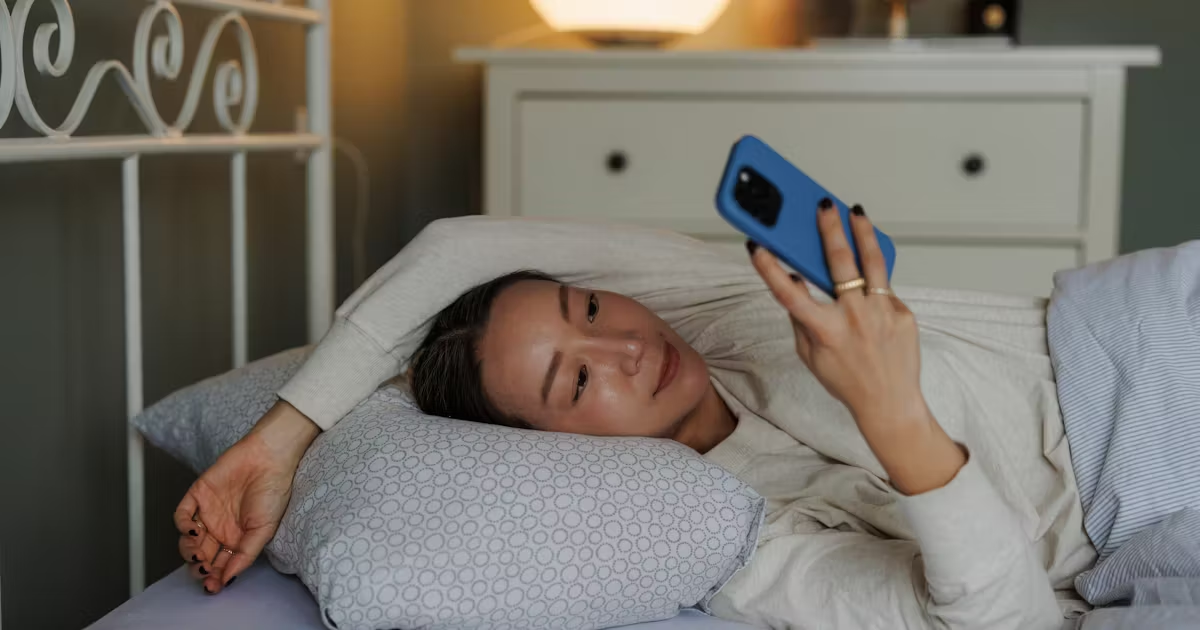
Recent research suggests that blue light from screens does not significantly disrupt sleep, and the real issue is staying up too late or stress. Using devices before bed can be helpful for some, as it reduces racing thoughts, but moderation and intentional use are key. The common advice to avoid screens before sleep may be based on myths, and understanding individual sleep patterns is more important.

"The Truth About Sleep Positions: Debunking Bedtime Myths for a Better Night's Rest"
health-and-wellness2 years ago

"The Truth About Sleep Positions: Debunking Bedtime Myths for a Better Night's Rest"

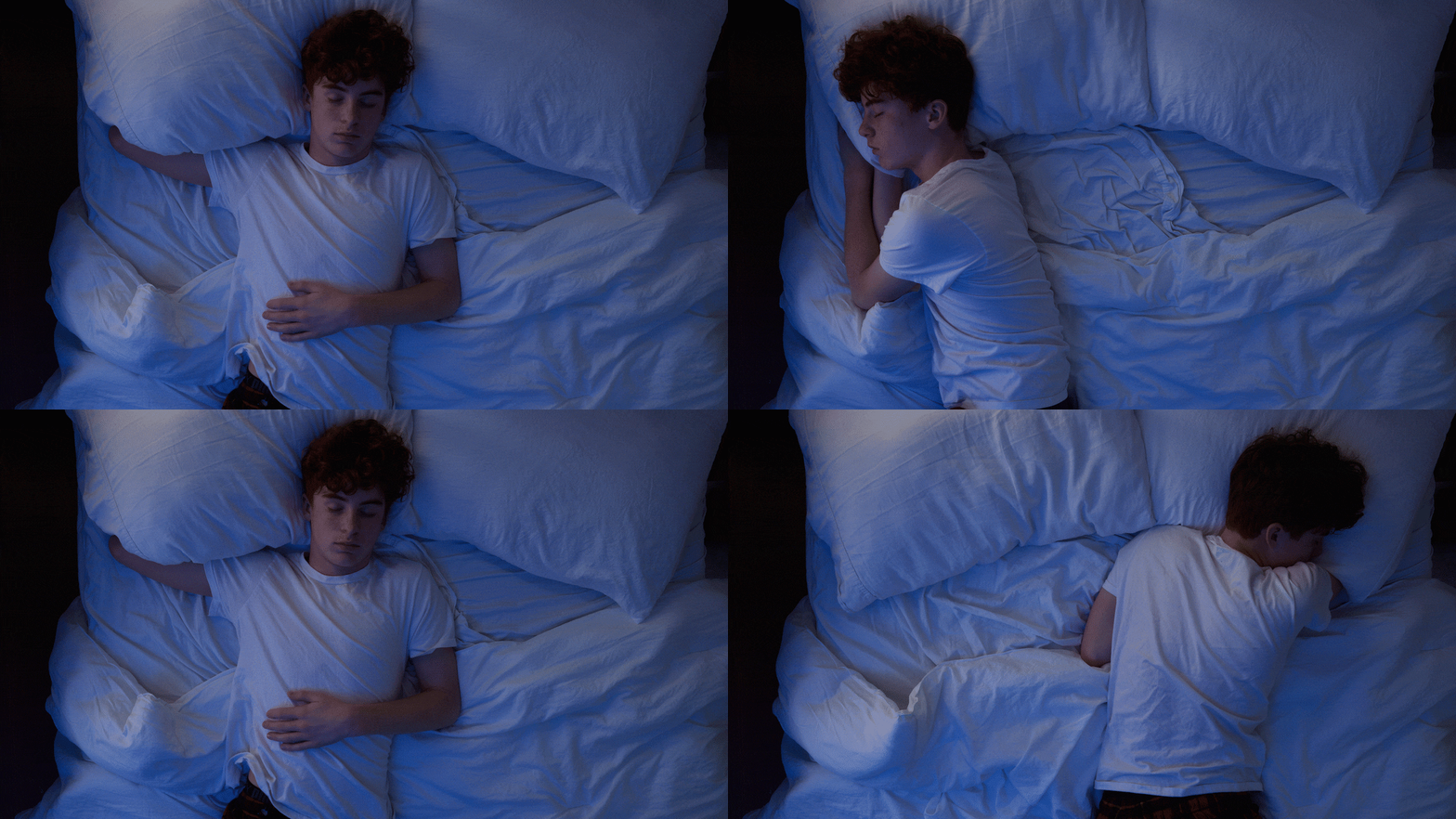
Sleep positions are more a reflection of anatomy and physiology than personality or preference, and once asleep, the body is in charge of its position. While certain positions may be more comfortable for specific conditions, controlling sleep positions is difficult and may not be worth the effort. Fancy sleep training devices and old-school methods like taping a tennis ball to the back to prevent back sleeping can be disruptive and uncomfortable, leading to sleepless nights and potential health issues. Instead of worrying about sleep positions, it's best to focus on how you feel when you wake up, as well-rested individuals without sleep apnea or pain don't need to be concerned about their sleep positions.