Tag

Wound Healing

All articles tagged with #wound healing

Tiny jellyfish sparks a blueprint for scar-free, rapid wound repair
science12 days ago

Tiny jellyfish sparks a blueprint for scar-free, rapid wound repair

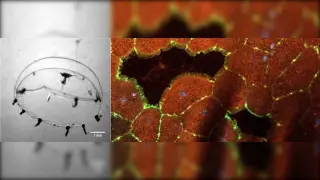
Researchers studying the tiny jellyfish Clytia hemisphaerica show its epithelial cells can close wounds in minutes without scarring, via a two-stage process: lamellipodia extend across the damaged basement membrane to cover the gap, then an actomyosin cable contracts to pull cells together and expel debris. For larger wounds, a collective sheet migration restores tissue. Because the jellyfish lacks inflammation and blood vessels, scientists can observe the core mechanics of wound repair in real time, providing a simplified model that could inform future regenerative medicine, though direct translation to humans remains uncertain.

Two-Growth-Factor Trick Sparks Regeneration in Mice, Skipping Scar Formation
science21 days ago

Two-Growth-Factor Trick Sparks Regeneration in Mice, Skipping Scar Formation

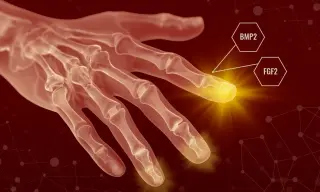
A two-step treatment using growth factors FGF2 and BMP2 reprograms fibroblasts at wound sites to form a blastema-like structure in mice, enabling bone, ligaments and skin to regrow rather than scar. While not a perfect replica of the original anatomy, the approach suggests regeneration in mammals can be steered away from scarring and toward rebuilding tissue, with potential to improve healing after amputations; BMP2 is FDA-approved for certain uses and FGF2 is in clinical trials, possibly speeding translation to humans.

Light-activated nanotech could accelerate wound healing by killing bacteria
health23 days ago

Light-activated nanotech could accelerate wound healing by killing bacteria

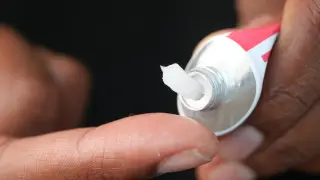
Researchers are developing light-activated nanomaterials that convert light into heat or reactive chemicals to kill bacteria in wounds, potentially speeding healing. In mouse and pig studies, these therapies reduced infections by up to ~99% and promoted faster wound closure, including approaches like a lysozyme-containing gel activated by near-infrared light and magnesium-enhanced immune response, as well as gold–graphene oxide nanoparticles that generate toxic reactive oxygen species under blue light. While promising for chronic wounds and device-related infections, the techniques still require safety testing and cost reduction before clinical use.

Two-step growth-factor therapy hints at hidden regenerative powers in mammals
science27 days ago

Two-step growth-factor therapy hints at hidden regenerative powers in mammals

Texas A&M researchers report that sequentially applying FGF2 after wound closure and BMP2 days later can redirect the mammalian healing response from scar formation toward true tissue regeneration, enabling regrowth of bone, joints, ligaments, and tendons in amputated animal models. The work suggests mammals have dormant regenerative capacity that can be unlocked without adding external stem cells, though the regeneration is not an exact replica of the original anatomy and the approach remains early-stage with potential clinical implications.

Copper-Peptide GHK-Cu: A Skin-Repair Promise with Caution
health1 month ago

Copper-Peptide GHK-Cu: A Skin-Repair Promise with Caution

GHK-Cu is a naturally occurring copper peptide (glycyl-L-histidyl-L-lysine bound to copper) that the body makes but which declines with age; it’s found in some topicals, hair products and experimental supplements, and is being explored for skin firming, elasticity, wound healing and possibly hair growth and brain health. While topical use appears generally safe and may offer retinoid-like benefits with less irritation, evidence is early and mostly preclinical; injectable or oral forms lack solid human data and can raise safety concerns. Many products aren’t FDA-approved for anti-aging, and copper dosing must be careful to avoid toxicity, especially in people with copper metabolism issues—consult a healthcare professional before use.

Graphene oxide: selective bacteria killer that spares human cells
science2 months ago

Graphene oxide: selective bacteria killer that spares human cells

KAIST researchers reveal that graphene oxide selectively disrupts bacterial membranes by binding to a molecule (POPG) present in bacteria but not human cells, killing a broad range of bacteria including drug-resistant strains while leaving human cells unharmed; when used as nanofibers, it stops bacterial growth and promotes faster wound healing, and its antibacterial properties endure after repeated washing, with real-world uses in antibacterial toothbrushes and textiles.

Honey: potent wound ally but not a universal cure
health3 months ago

Honey: potent wound ally but not a universal cure

Honey has antimicrobial components and may aid wound healing, but it is not an antibiotic and its effects vary by source; medical-grade honey is used topically for wounds due to sterilization requirements, while raw honey can carry botulism spores and should not be given to infants under 12 months. Evidence for cough relief and gut health is limited and inconclusive, and standardizing non-Manuka honeys for clinical use remains challenging.

Serine Shortage Reprograms Hair Follicle Stem Cells for Faster Wound Healing
science5 months ago

Serine Shortage Reprograms Hair Follicle Stem Cells for Faster Wound Healing

Rockefeller University researchers found that when serine levels drop, the integrated stress response activates and hair follicle stem cells reduce hair production to prioritize skin repair, speeding wound healing; boosting serine has limited effect due to the body's tight control over its circulation, though restoring serine in cells lacking it can partly rescue hair growth—pointing to diet or drug strategies to modulate serine/ISR for faster healing.

Red Hair Gene Linked to Chronic Wound Healing Issues
health7 months ago

Red Hair Gene Linked to Chronic Wound Healing Issues

Research suggests that the MC1R gene, known for influencing red hair and skin pigmentation, also plays a crucial role in wound healing by regulating inflammation. Disruption of MC1R is linked to chronic wounds that fail to heal, and activating this pathway with topical drugs has shown promising results in improving healing in experimental models, offering potential new treatments for chronic wounds.

"Ants' Healing Power: A Key to Understanding Drug-Resistant Bacteria"
science-and-nature2 years ago

"Ants' Healing Power: A Key to Understanding Drug-Resistant Bacteria"

Sub-Saharan Matabele ants have a remarkable ability to heal their wounded comrades by producing and applying antimicrobial substances to infected injuries, with potential implications for human medicine in the fight against drug-resistant bacteria. The ants' behavior has led scientists to study their wound-care approaches and the substances they produce, which could offer insights for new anti-infectives discovery. The ants' precision hunting and social behavior, including performing a type of triage for injured individuals, have sparked interest in further research into wound care in the animal kingdom.