Tag

Paleoclimate

All articles tagged with #paleoclimate

Bone Isotopes Reveal Wet Climate Boosted Early Maize Adoption in Mexico's Tehuacan Valley
archaeology5 days ago

Bone Isotopes Reveal Wet Climate Boosted Early Maize Adoption in Mexico's Tehuacan Valley

A study of 180 animal bones from Puebla, Mexico, indicates that a shift to wetter, forested conditions in the highlands facilitated the initial spread of maize farming. Researchers found that the driest periods, such as the El Riego phase, preceded the arrival of maize, while the subsequent wetter Abejas phase coincided with the oldest local corn cobs. Although climate played a role, the authors emphasize that social and economic factors also drove the transition to intensive agriculture.


125,000-Year-Old Poisoned Stone Points Found at Ancient Saudi Lakeshore
archaeology7 days ago

125,000-Year-Old Poisoned Stone Points Found at Ancient Saudi Lakeshore

Researchers at the 'Uruq Aljelibah site in Saudi Arabia discovered 125,000-year-old stone points with chemical traces of the arrow poison tree, Acokanthera schimperi. Found beside an ancient freshwater lake in the Empty Quarter, these artifacts suggest early humans used complex, composite hunting weapons to hunt large animals like hippos and buffalo. The discovery, published in Science, indicates that Arabia supported settled human populations during humid periods, challenging the view of the region as merely a migration corridor.

Submerged 'Aquaterra' Could Rewrite Human History as Sea Levels Rise
science10 days ago

Submerged 'Aquaterra' Could Rewrite Human History as Sea Levels Rise

Geographer Jerome Dobson’s concept of 'Aquaterra' highlights a 22.5-million-square-kilometer landmass currently underwater that may hold key to early human history. Rising seas are eroding coastal sites, such as Roanoke’s Fort Raleigh, while recent studies in the Americas have uncovered submerged pre-contact settlements, suggesting that major historical timelines may need revision.

Ancient Sea-Level Maps Reveal Four Rapid Earth Axis Shifts During the Dinosaur Era
science1 month ago

Ancient Sea-Level Maps Reveal Four Rapid Earth Axis Shifts During the Dinosaur Era

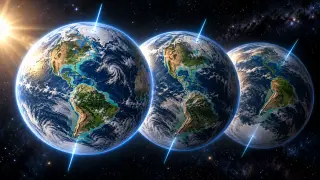
A new study in Science identifies four intervals of rapid true polar wander in the last 320 million years, challenging the view that Earth's solid exterior has only shifted slowly. Led by Mathew Domeier at the University of Oslo, the research uses ancient sea-level changes rather than magnetic data to detect these events. The strongest signals occurred during the Jurassic and Cretaceous periods, suggesting the planet’s crust and mantle reoriented rapidly relative to its spin axis, potentially altering global climate and habitats.

Mantle Uplift Prepared Antarctica for Ice Sheet Formation 34 Million Years Ago
science2 months ago

Mantle Uplift Prepared Antarctica for Ice Sheet Formation 34 Million Years Ago

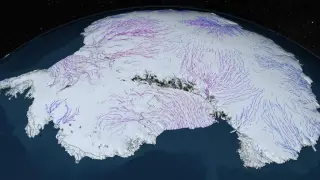
A 2026 study in Science suggests that East Antarctica’s continental ice sheet formed 34 million years ago despite global temperatures being 5°C warmer than today. The research attributes this to slow mantle processes that lifted the interior plateau over 100 million years, creating high-elevation seedbeds for permanent snow. While falling carbon dioxide remains the primary trigger for glaciation, this tectonic uplift lowered the cooling threshold required for ice to persist.

Greenhouse Warming Breaks Centuries-Old Link Between Pacific and Indian Oceans
science2 months ago

Greenhouse Warming Breaks Centuries-Old Link Between Pacific and Indian Oceans

A new study in Nature Communications reveals that the long-standing climate link between the Pacific and Indian Oceans has broken down due to human-caused warming. While the Pacific Walker circulation strengthened since the 1980s, the Indian Ocean Basin Mode has warmed steadily since the 1950s, reversing their historical correlation. This decoupling, driven by greenhouse gas emissions, undermines climate predictability for regions like Africa and Asia, though a similar but temporary disruption occurred in the 19th century due to volcanic eruptions.

Stone Tools in Saudi Desert Hint at Neanderthal Presence 55,000 Years Ago
science3 months ago

Stone Tools in Saudi Desert Hint at Neanderthal Presence 55,000 Years Ago

A new study suggests Neanderthals may have inhabited the Nefud Desert in Saudi Arabia 55,000 years ago, based on stone tools found near an ancient lake. Researchers used statistical analysis of tool shapes to identify the makers, as no bones or DNA were found. This finding expands the known range of Neanderthals into the Arabian interior.

New Sediment Data Suggests Mount Toba Eruption Caused Minimal Climate Impact
science3 months ago

New Sediment Data Suggests Mount Toba Eruption Caused Minimal Climate Impact

A study analyzing high-resolution sediment cores from Lake Chala in East Africa indicates that the massive Mount Toba eruption 74,000 years ago had a far smaller climate impact than previously hypothesized. The research suggests the eruption caused only about 0.5 degrees of cooling for roughly 18 months, challenging theories that it nearly caused human extinction.

Curiosity’s ‘Sea of Polygons’ in Valle Grande Offers Unprecedented Clues to Mars’ Watery Past
space3 months ago

Curiosity’s ‘Sea of Polygons’ in Valle Grande Offers Unprecedented Clues to Mars’ Watery Past

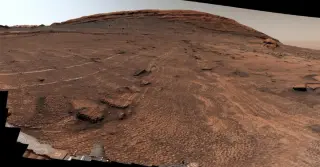
NASA’s Curiosity rover has identified a vast expanse of honeycomb-shaped polygonal fractures in the Martian valley of Valle Grande, marking the largest such discovery in the mission’s 14-year history. Captured on June 19 and 20, 2026, the 360-degree panorama reveals these 1.5-to-3-inch features stretching across the landscape, wrapping around a 20-foot butte named Miraflores. While similar patterns have been seen before, this extensive field suggests significant ancient water activity, potentially offering new insights into Mars’ habitability and the geological processes that shaped its surface.

Lakes Forged by Cosmic Impacts: A Global Tour of Meteor Crater Lakes
science4 months ago

Lakes Forged by Cosmic Impacts: A Global Tour of Meteor Crater Lakes

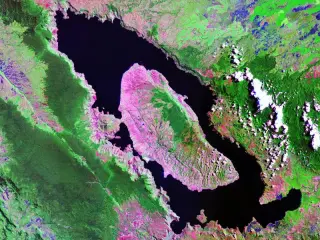
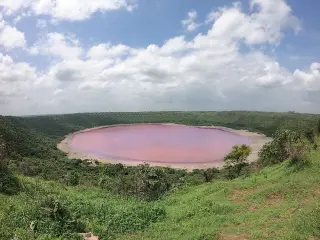
Earth hosts around 200 meteor impact craters, but only about 30 contain permanent lakes. The article spotlights seven notable crater lakes—Lake Manicouagan (Canada), Lake Bosomtwe (Ghana), Karakul Lake (Tajikistan), Lonar Lake (India), Mistastin Lake (Canada), Lake Elgygytgyn (Russia), and the Clearwater Lakes (Canada)—explaining how impacts carve basins that fill with water, preserve records of ancient climates, and serve as analogs for planetary geology, while also offering scientific, cultural, and travel value.

Malaria as the Invisible Cartographer of Ancient Africa
science7 months ago

Malaria as the Invisible Cartographer of Ancient Africa

A Science Advances study shows malaria risk helped shape where Sub-Saharan Africans lived over 74,000 years, using mosquito distribution models and paleoclimate data to compute a 'malaria stability index' and revealing humans avoided high-malaria zones until around 14,000–13,000 years ago, a shift that aligns with the emergence of the sickle cell mutation and highlights disease as a key driver of ancient human geography and population structure.

Humans Are Lengthening Earth's Day, New Study Finds
science8 months ago

Humans Are Lengthening Earth's Day, New Study Finds

Researchers show Earth's day is lengthening by about 1.33 milliseconds per century due to climate-driven mass shifts from melting ice, using fossil foraminifera and a physics-informed deep learning model; the trend could soon surpass the Moon's influence, with implications for communications and space navigation, per a Journal of Geophysical Research: Solid Earth study.

Did a Passing Star Trigger Earth's 56-Million-Year Warming?
science1 year ago

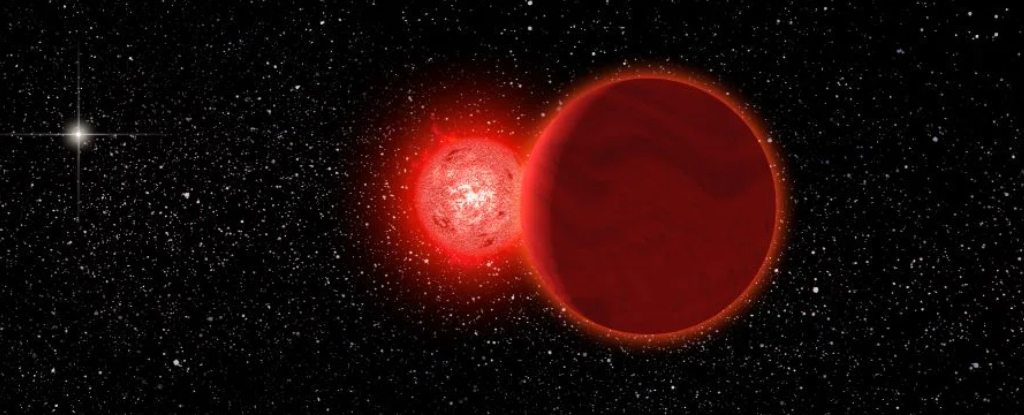
Did a Passing Star Trigger Earth's 56-Million-Year Warming?

Recent research suggests that passing stars, or stellar flybys, did not influence Earth's climate over the past 56 million years, including during the Paleocene-Eocene Thermal Maximum, when significant global warming occurred. Advanced models incorporating comprehensive Solar System dynamics show no link between stellar flybys and climate shifts, challenging earlier hypotheses that such events triggered major climatic changes.

Stellar Flybys and Their Impact on Earth's Climate History
science1 year ago

Stellar Flybys and Their Impact on Earth's Climate History

Recent research suggests that stellar flybys have likely not influenced Earth's past climate changes over the last 56 million years, challenging earlier hypotheses. Using comprehensive solar system models, scientists found no significant impact of passing stars on Earth's orbital stability or climate events like the Paleocene-Eocene Thermal Maximum, emphasizing the importance of detailed modeling in understanding celestial influences on our planet.