Tag

Tidal Forces

All articles tagged with #tidal forces

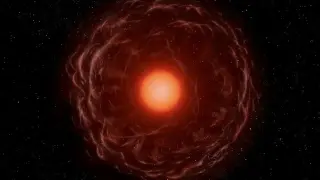
Earth's fate in the Sun's death: a tug-of-war between tides and mass loss
science23 days ago

Earth's fate in the Sun's death: a tug-of-war between tides and mass loss

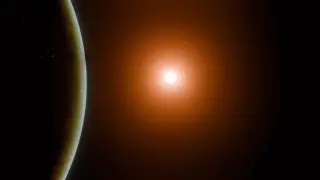
New stellar-evolution models suggest Earth could survive the Sun's expansion into a red giant, depending on whether tidal forces pulling Earth inward or mass loss from the Sun's outer layers dominates. If tides prevail, Earth is engulfed; if mass loss dominates, Earth escapes to a wider orbit. Observations of the nearby dying star L2 Puppis support potential survival for Earth, while Mercury and Venus are likely doomed. Future observations, including ESA's PLATO mission, may provide a clearer answer.

Cosmic Flybys May Have Triggered Earth’s Mass Extinctions, New Theory Suggests
science27 days ago

Cosmic Flybys May Have Triggered Earth’s Mass Extinctions, New Theory Suggests

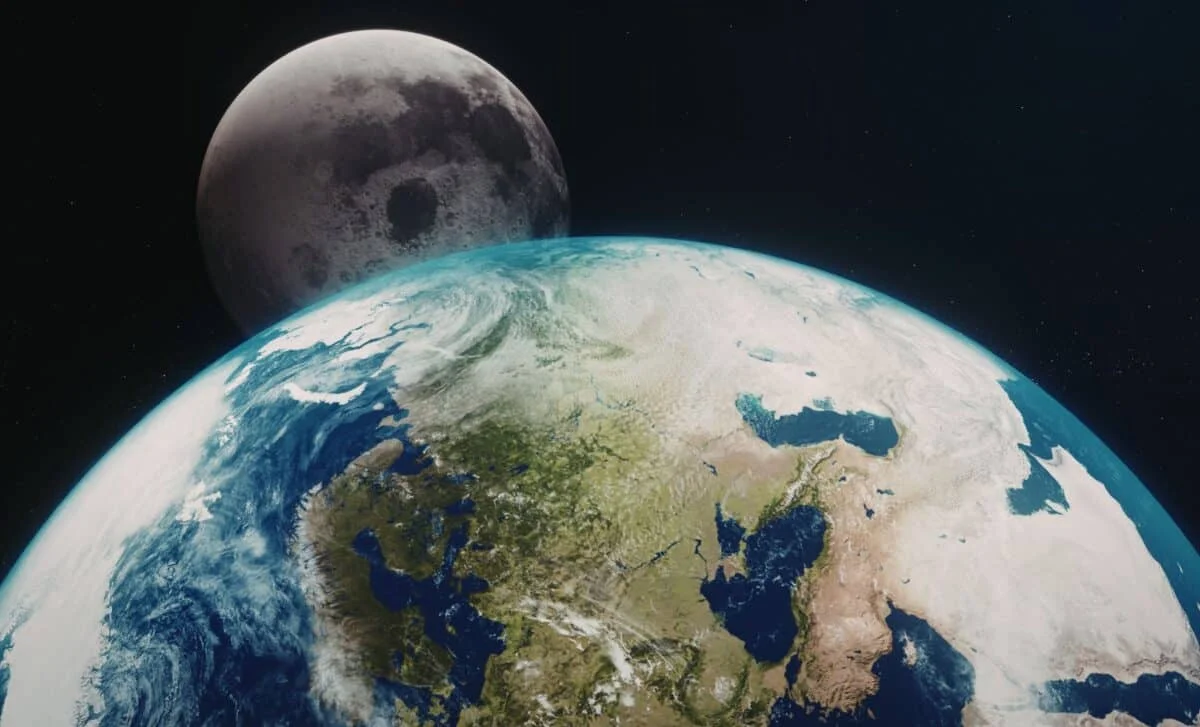
A new preprint by Daniele Fargion proposes that flybys of planetary-mass objects in the outer Solar System could generate strong tides, volcanism, and climate upheavals on Earth, contributing to past mass extinctions beyond the Chicxulub event. The idea emphasizes tidal effects from near-passages (not direct collisions) and links several geological anomalies to such events; the hypothesis is controversial and based on correlations in the geological record. The paper, presented in 2025 and available on arXiv, underscores the possibility that distant, massive objects occasionally influence Earth’s history.

Could Distant Planetary Flybys Have Triggered Earth's Mass Extinctions?
science27 days ago

Could Distant Planetary Flybys Have Triggered Earth's Mass Extinctions?

A conference-backed hypothesis by Daniele Fargion suggests gravitational tides from flybys of planetary-mass bodies or outer Solar System dwarfs near Earth could have driven major extinctions by triggering huge tides, volcanism, climate shifts, and altered meteoritic delivery. Citing correlations with known extinctions (including the Permian/Triassic) and clues in the Earth–Moon system, the idea is speculative and not yet dated or widely validated, but it frames tidal encounters as a possible common cause alongside impacts and volcanism.

Moon's Gentle Tug Lengthens Earth's Day, Not a Heist
space1 month ago

Moon's Gentle Tug Lengthens Earth's Day, Not a Heist

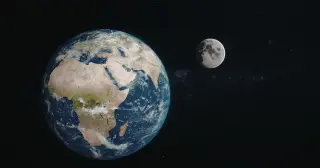
Earth’s rotation is slowing due to tidal interactions with the Moon, lengthening the day while the Moon slowly drifts outward at about 3.8 cm per year. The transfer conserves angular momentum, so nothing is stolen—past days were shorter, with a lengthy pause around 19 hours for roughly a billion years before the gradual increase resumed. The present rate and historical timeline vary with continental configurations and tidal dynamics.

Phobos May Shatter Earlier Than Expected in Violent Tidal Breakup
astronomy2 months ago

Phobos May Shatter Earlier Than Expected in Violent Tidal Breakup

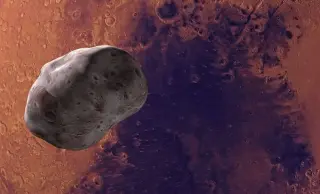
New research suggests Mars’s inner moon Phobos could break apart much sooner than the Roche limit due to its rubble-pile makeup and increasing tidal distortion. Initial surface shedding is predicted around 2.25 Mars radii, with larger fragmentation at about 2.15–2.13 RM, and instability near ~2.09 RM that could trigger breakup. Debris from these events may re-impinge on Phobos, accelerating destruction in a scenario called a sesquinary catastrophe. The MMX mission, launching in 2026, will study Phobos’s interior to refine these timelines.

Moon Slowly Recedes, Extending Earth's Day by Fractions Each Year
science4 months ago

Moon Slowly Recedes, Extending Earth's Day by Fractions Each Year

NASA measurements show the Moon is moving away from Earth at about 3.8 centimeters per year, transferring rotational energy from Earth to the Moon and gradually lengthening the length of a day. Fossil shells indicate shorter past days (roughly 23.5 hours around 70 million years ago), and the ongoing tidal evolution will continue to lengthen Earth's day by tiny amounts over millions of years.

Moon's Drift Away from Earth and Its Future Impact
science7 months ago

Moon's Drift Away from Earth and Its Future Impact

The Moon is gradually drifting away from Earth at about 3.8 centimeters per year, a process driven by tidal interactions that have influenced Earth's rotation and the Moon's orbit over billions of years. This slow migration will eventually lead to a longer day length and possibly a tidal lock, with profound implications for Earth's future and the solar system's stability, especially as the Sun ages.

Scientists Explain Why Days Are Getting Shorter
science10 months ago

Scientists Explain Why Days Are Getting Shorter

Earth's days are slightly getting shorter due to factors like atmospheric winds, ocean currents, Earth's internal movements, and lunar gravitational pull, with the shortest day on August 5, 2025, measuring just 86,399.99867 seconds. These tiny variations, measurable with precise instruments like atomic clocks and quasars, impact systems like GPS and are influenced by both short-term weather patterns and long-term geophysical processes.

Physicist Explains Why the Moon Is Gradually Moving Away from Earth
science10 months ago

Physicist Explains Why the Moon Is Gradually Moving Away from Earth

The Moon is gradually moving about 1.5 inches away from Earth each year due to tidal forces caused by gravity, which also slightly slows Earth's rotation. This process has been ongoing for billions of years and will continue until the Moon becomes tidally locked with Earth, but these changes are extremely slow and won't affect our daily life for millions of years.

"The Potential Link Between Total Solar Eclipses and Earthquakes"
science2 years ago

"The Potential Link Between Total Solar Eclipses and Earthquakes"

The relationship between total solar eclipses and earthquakes has been a topic of speculation for centuries, with some research suggesting a possible correlation between seismic activity and the alignment of the Sun, Moon, and Earth. While some studies have found a weak link between tidal forces and earthquakes, the influence of the Moon on tectonic activity remains a highly controversial and debated topic among geologists.